Davide Bartesaghi thought he would become AC Milan’s hero. Two goals from the 19-year-old defender proved not enough to help the top club beat Jay Idzes’ Sassuolo. The Italian did, however, follow in the footsteps of club legend Paolo Maldini.
AC Milan 2-2 Sassuolo: Bartesaghi’s brace lights up San Siro, but two disallowed goals and a late equaliser deny Milan full points.
AC Milan and Sassuolo played out a dramatic 2-2 draw in a match that had almost everything: an early away shock, a teenage defender turning into an unlikely match-winner, two goals ruled out, and a late response that left Milan relieved not to lose but frustrated not to win. For long spells, Milan looked like they had done enough to consolidate their position at the top of the table, yet the final whistle confirmed a shared afternoon in which fine margins dictated the outcome.
The build-up already carried a few talking points for the home side. Milan had to manage without Santiago Giménez again, with the former Feyenoord striker missing for weeks due to an injury situation that has only grown more unclear as time has passed. Cheveyo Balentien was also unavailable, another absence that reduces options when games demand changes in tempo or profile. Luka Modric, however, did start and offered a familiar blend of experience and game management in midfield, a valuable asset in a league where matches often swing on small moments. Sassuolo arrived with proven leadership too, naming Nemanja Matic and Jay Idzes in the starting line-up, signalling that they were prepared to compete physically and stay organised under pressure.
In the opening phase, Milan tried to establish control through possession and width, but Sassuolo were the team that struck first. The visitors took the lead with a goal that felt both audacious and technically precise. Ismael Kone caught the moment perfectly, beating Mike Maignan with a subtle outside-of-the-right-foot touch to make it 0-1. It was the kind of finish that instantly changes the mood in the stadium, forcing Milan from a controlled plan into a more urgent chase.
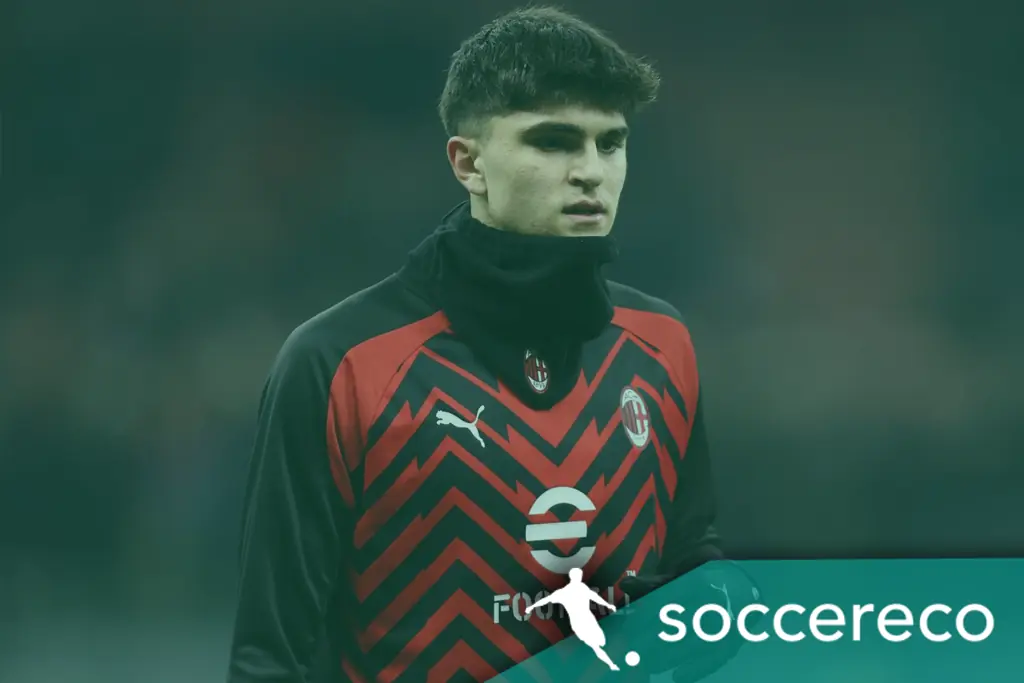
Milan’s response was direct and purposeful. The home side pushed higher, increased the speed of circulation, and began to look for deliveries into the box, especially toward the far post. That approach paid off when Davide Bartesaghi found space where Sassuolo could not afford to allow it. Ruben Loftus-Cheek produced a superb cross, and Bartesaghi, unmarked at the back post, finished to make it 1-1. The equaliser was important in the context of the match, but it also carried a significant personal and historical dimension. It was Bartesaghi’s first goal for AC Milan, and it made him the first defender since Paolo Maldini in 1988 to score for the club in that particular statistical context, a striking note given the weight of Maldini’s name in Milan’s identity.
Instead of settling after that moment, Bartesaghi looked energised by it. His confidence grew, his forward runs became more assertive, and Milan increasingly targeted areas where Sassuolo were struggling to maintain compactness. Before the break, Bartesaghi produced an even bigger contribution, completing the turnaround with a second goal to make it 2-1. He beat the Sassuolo goalkeeper at the near post, a finish that underlined both his timing and his conviction. For Milan, it felt like the ideal platform: recover from an early setback, go into half-time ahead, and then use experience to control the second half.
What followed after the interval was a reminder that matches can turn not only on goals scored but also on goals that almost count. Milan thought they had extended their advantage and effectively ended the contest when Christian Pulisic headed in, but the goal was ruled out due to a foul by Loftus-Cheek in the build-up. Later, Adrien Rabiot also appeared to have found the net, only for that effort to be disallowed for offside. In practical terms, those decisions kept the scoreline tight. In psychological terms, they kept Sassuolo alive. A side that might have felt beaten at 3-1 instead remained within one goal and could approach the final phase believing that one decisive sequence would bring them level.
Milan continued to create moments, but the match began to show the familiar pattern of a team pressing for a third goal while exposing just enough space to invite danger. Sassuolo grew in confidence, their transitions became cleaner, and Milan’s need to push numbers forward started to open channels for counter-attacks. It was a period where Modric’s composure and Milan’s experience were supposed to steady the game, yet football often refuses to follow script when the scoreline remains tight.
With roughly fifteen minutes remaining, Sassuolo delivered the punch that changed the story again. Armand Laurienté made it 2-2 after a flowing attacking move, punishing Milan for not making their dominance count when they had the chance. From Milan’s perspective, the equaliser felt like a consequence of two factors coming together: missed separation on the scoreboard, and a momentary loss of control at a critical time. From Sassuolo’s perspective, it was a reward for staying in the match and continuing to believe that Milan’s advantage was fragile.
The closing minutes were open, tense, and full of threat at both ends. Laurienté came close to turning Sassuolo’s comeback into a complete heist when he hit the post, a moment that will have briefly frozen San Siro. Milan also had opportunities to win it late, including a Christopher Nkunku effort that flashed just wide. Those chances underlined how quickly the match had shifted from Milan protecting a lead to both sides chasing a decisive moment.
In the wider context of the league, the result has immediate significance. The draw kept Milan at the top, but it also reduced the margin for error at a point in the season when every dropped point can reshape the table. Napoli and Internazionale can still overtake Milan if they win their Sunday evening matches against Udinese and Genoa respectively, increasing the pressure on the Rossoneri to convert strong performances into victories. It also arrives at a time when Serie A narratives are not only being written on the pitch, since talk of billion-euro bids and ownership decisions is also dominating the Italian football conversation, adding another layer of intensity to a season where scrutiny is constant.
For Milan, there were clear positives. The reaction to conceding early was strong, the delivery for the equaliser was excellent, and the team showed enough attacking variety to score twice and threaten more. Above all, Bartesaghi’s performance stood out as a rare and compelling headline: two goals from a 19-year-old defender, including a historic milestone linked to Maldini, is not a storyline that comes around often. At the same time, Milan will view this as a match they should have won. Two disallowed goals, however justified, are still two moments where the game almost became secure, and the late equaliser proved costly.
Ultimately, Milan escaped defeat, but they did not fully capitalise on a position of strength. Sassuolo earned their point through resilience and a strong finish, while Milan were left to reflect on a game where they did enough to take the lead, but not enough to turn control into certainty.
Updated: 02:49, 14 Dec 2025