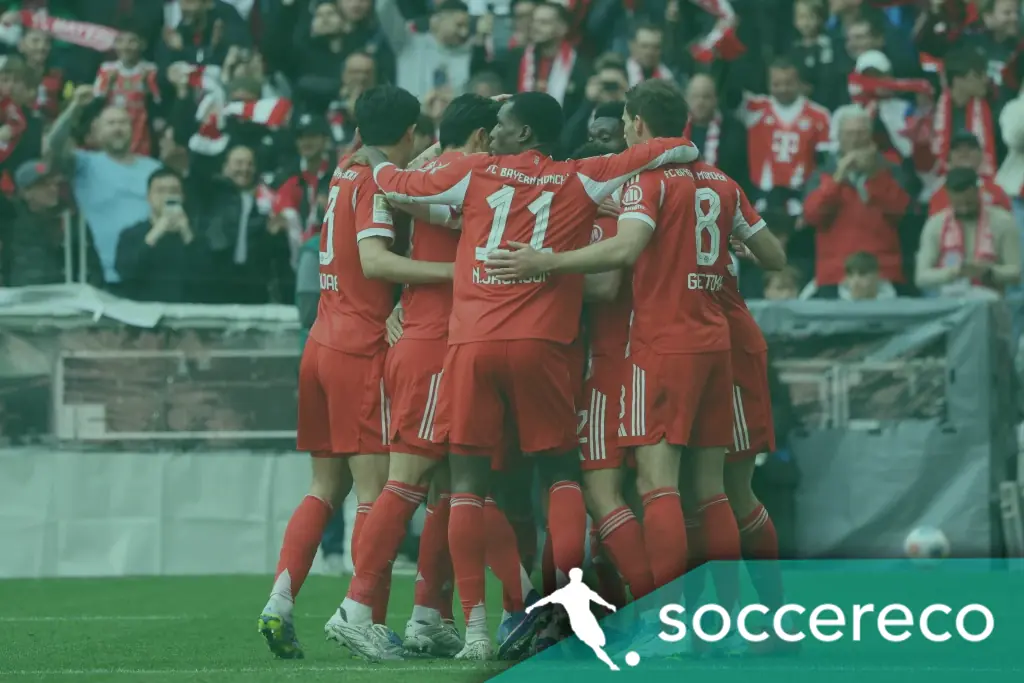
Gareth Bale is not surprised that Xabi Alonso has already been dismissed in his first season at Real Madrid. According to the Welshman, who won the Champions League five times with Los Blancos, you do not need to be a great tactician to be Real Madrid coach.
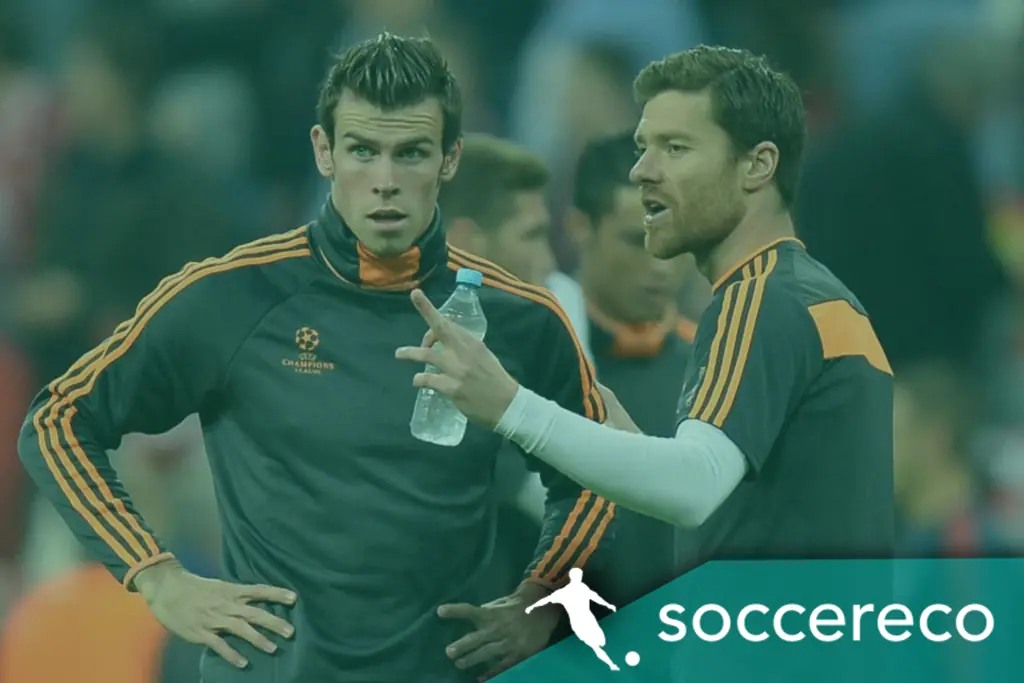
Alonso, who arrived last summer with enormous expectations after the extraordinary work he had done at Bayer Leverkusen, was seen by many as the natural heir to Carlo Ancelotti.
Young, intelligent, modern and already deeply connected to Real Madrid through his playing career, he looked like the ideal figure to guide the club into a new era. Yet, according to Bale, the reality of managing Real Madrid has very little to do with simply being an elite tactician.
That is what makes Bale’s comments so revealing. The former Wales star knows the internal dynamics of Real Madrid better than most. He spent years inside one of the most demanding dressing rooms in world football, won the Champions League multiple times, worked with some of the biggest coaching names in the game and experienced first-hand how power operates behind the scenes at the club. When he says he was not surprised to see Alonso dismissed so early, it is not just a casual opinion. It is a judgement based on experience, on observation and on a deep understanding of the difference between coaching a normal top club and coaching Real Madrid.
Alonso’s arrival had initially felt like the continuation of a brilliant rise. At Bayer Leverkusen, he had built a side admired across Europe for its structure, discipline and tactical clarity. His team was organised, intense and highly responsive to his ideas. The collective worked because every player seemed committed to the same model. That kind of success naturally increased the excitement around his appointment in Madrid. There was a sense that Real were bringing in one of the game’s brightest coaching minds, someone capable of modernising the team while also restoring a clear football identity.
But Bale’s remarks suggest that the challenge in Madrid is not whether a coach has ideas. The challenge is whether those ideas can be imposed on a group of elite stars who are not always receptive to heavy tactical control. In Germany, Alonso’s structured methods had been embraced. At the Bernabéu, they reportedly met resistance. That contrast says a great deal about the cultural difference between clubs. At Leverkusen, a coach may be able to demand strict adherence to a system and expect near total commitment. At Real Madrid, where the dressing room is full of established superstars, huge personalities and players accustomed to status and freedom, the same methods can quickly become a problem.
Bale’s view is blunt: if a manager pushes too hard at Real Madrid, the players can turn against him. It is a simple statement, but one that captures the fragility of authority at a club where the pressure is relentless and patience is limited. Real Madrid is often discussed as the pinnacle for coaches, but Bale’s words remind us that it can also be one of the least forgiving environments in football. Winning is not enough on its own. A manager has to control egos, maintain emotional balance, keep important players engaged and do all of it while living under permanent scrutiny from the board, the media and the fans.
What Bale seems to be arguing is that the Real Madrid job is less about tactical innovation and more about human management. That may sound surprising in an era when football conversation is dominated by systems, pressing schemes, positional play and data-driven analysis. Yet Bale, who lived through the club’s most successful modern period, insists that man-management is the real currency in Madrid. A coach there must know when to push, when to step back, when to simplify and when to protect the dressing room from unnecessary tension.
To support that argument, Bale looked back at his time under Zinedine Zidane, one of the most successful coaches in Real Madrid history. Under Zidane, Real won the Champions League three seasons in a row, a feat that may never be repeated in the modern game. Yet Bale paints a picture of a coach whose methods were far less tactically obsessive than many would imagine. According to him, the team often did only the basics in training: some possession work, some finishing drills and very limited attention to elaborate defensive preparation, even before major games against opponents such as Barcelona or Bayern Munich.
That description is fascinating because it goes against the common image of elite football as a world of endless tactical detail. Bale’s point is not that Zidane lacked football intelligence. On the contrary, Zidane’s genius may have been in understanding exactly how much information his squad needed and, just as importantly, how much it did not need. Rather than overwhelming world-class players with instructions, Zidane appears to have trusted their talent, experience and instinct. He relied on simplicity, authority and emotional control. He understood that at a club like Real Madrid, overcoaching can sometimes be more damaging than undercoaching.
Bale also makes another important observation about Zidane: respect came naturally because of his stature as a former player. This matters enormously. Zidane was not just any coach. He was one of the most admired footballers of his generation, a global icon with an aura that few figures in the sport can match. When someone like that speaks in a dressing room, players listen differently. His credibility did not need to be manufactured through long tactical presentations or strict disciplinary structures. It already existed. His past gave him authority before he even opened his mouth.
That kind of natural authority is incredibly valuable at a superclub. It creates obedience without friction. Players do not feel lectured by someone who has never lived their reality. They feel guided by a figure who has already conquered the summit. Bale’s comment that Zidane even joined training sessions reinforces the point. He was not a distant instructor. He remained close to the football itself, close to the rhythm of the players, close to the feeling of the group. That presence likely strengthened the bond between coach and squad, even if Bale jokingly noted that Zidane could still leave him out afterwards.
If Zidane represented the power of status and simplicity, Ancelotti represented something slightly different: emotional intelligence at the highest level. Bale was clear in saying that Ancelotti was the best coach he worked with at Real Madrid, and the reasons he gave are extremely telling. He did not praise him first for tactical systems or training ground innovation. He praised him for the way he handled people. In Bale’s description, Ancelotti had a rare ability to make every player feel valued, even when they were not in the team. That is one of the hardest skills in elite football. Managing the starting eleven is relatively easy compared to managing the frustrations of those left out.
At Real Madrid, this challenge is magnified because the players who are unhappy are often world-famous stars with strong personalities and enormous self-belief. Keeping them motivated, calm and committed is an art in itself. Bale suggests that Ancelotti mastered that art better than anyone. He could make a player feel important, trusted and connected to the project even during difficult moments. That emotional reassurance helps prevent divisions from forming inside the squad. It creates an environment where players continue to give everything, rather than withdrawing or becoming disruptive.
At the same time, Bale was careful to stress that Ancelotti was not soft. He may have acted like a friend, but he could be ruthless when standards dropped. If a player trained badly, Ancelotti would let him know. If the team needed a strong reaction at half-time, he could explode. The brilliance, according to Bale, was in his balance. He knew how to be warm without becoming weak, and demanding without becoming oppressive. That balance is probably the defining quality of great Real Madrid managers. Too soft, and the dressing room loses discipline. Too hard, and the players push back. Too tactical, and the message becomes exhausting. Too relaxed, and the structure disappears. The margin for error is tiny.
This is the context in which Bale’s comments about Alonso become especially significant. Alonso may have arrived with a sophisticated football brain and a successful recent track record, but intelligence alone does not guarantee survival at Real Madrid. In fact, Bale seems to suggest that being overly committed to a strict tactical or disciplinary framework can be counterproductive there. A club like Madrid demands flexibility not just in formation or selection, but in personality. A manager must adapt his methods to the unique psychology of the institution.
That does not mean tactics are irrelevant. Bale himself acknowledged that a Real Madrid coach still needs tactical competence. The point is that tactics cannot dominate the job. At Madrid, the dressing room is too powerful, the expectations too high and the personalities too influential for a manager to behave like a laboratory thinker detached from human realities. The coach must sense the mood, read the room and understand that winning the trust of key players is often as important as winning the tactical battle.
There is also a broader historical truth in Bale’s comments. Real Madrid has long been a club where relationships matter as much as plans. Across different eras, many successful managers there have thrived not because they reinvented football, but because they understood how to lead elite winners. The best ones recognise that the club’s stars are not just components in a system. They are central figures in the identity of the team, and handling them badly can destabilise everything. The coach must create harmony without surrendering control, and that is one of the hardest contradictions in sport.
In Alonso’s case, the disappointment is particularly sharp because he seemed so well suited to the role from the outside. He knew the club, understood the spotlight, had the pedigree and had already proved himself in one of Europe’s top leagues. But Bale’s testimony is a reminder that Real Madrid has its own internal logic. Success elsewhere does not automatically translate. A method that works beautifully in one dressing room can fail in another. What wins admiration in Germany can generate resistance in Spain. What players accept at an emerging project may be rejected at a club where nearly every individual sees himself as a star.
Bale’s comments may also revive an old debate about whether the modern obsession with tactics sometimes overlooks the human side of management. In elite football, there is often a tendency to frame coaches as geniuses or failures based on systems, patterns and game models. But dressing rooms are emotional spaces. They are shaped by trust, pride, insecurity, hierarchy and mood. A coach who cannot manage those dynamics will struggle, no matter how advanced his ideas may be. At Real Madrid, perhaps more than anywhere else, that truth becomes unavoidable.
In the end, Bale’s reflections are about more than just Alonso. They are about the unique demands of leading one of the biggest clubs in the world. They are about why some brilliant coaches fail and why others succeed even without overwhelming their players with tactical detail. They are about the hidden side of management that supporters do not always see: the conversations, the emotional handling, the respect, the tension and the delicate equilibrium required to keep a superstar squad functioning.
For Alonso, the lesson is harsh but clear. Coaching Real Madrid is not simply a test of football intellect. It is a test of personality, authority and adaptability. Bale, having lived through the inner workings of the club under multiple managers, believes that the essential job is to manage players first and systems second. Whether one agrees fully or not, his words carry weight because they come from someone who saw the machine from the inside and experienced the difference between coaches who connected with the dressing room and coaches who risked losing it.
That is why his verdict resonates so strongly. In Madrid, brilliance on the tactics board can help, but it is rarely enough on its own. To survive, a manager must know how to lead stars, protect egos, enforce standards and preserve unity. According to Bale, that is where Ancelotti excelled, where Zidane found his own winning formula and where Alonso, despite all his promise, appears to have fallen short