Borussia Dortmund have reportedly signed Genk talent Karetsas for €35 million, making him the Belgian club’s most expensive outgoing transfer.
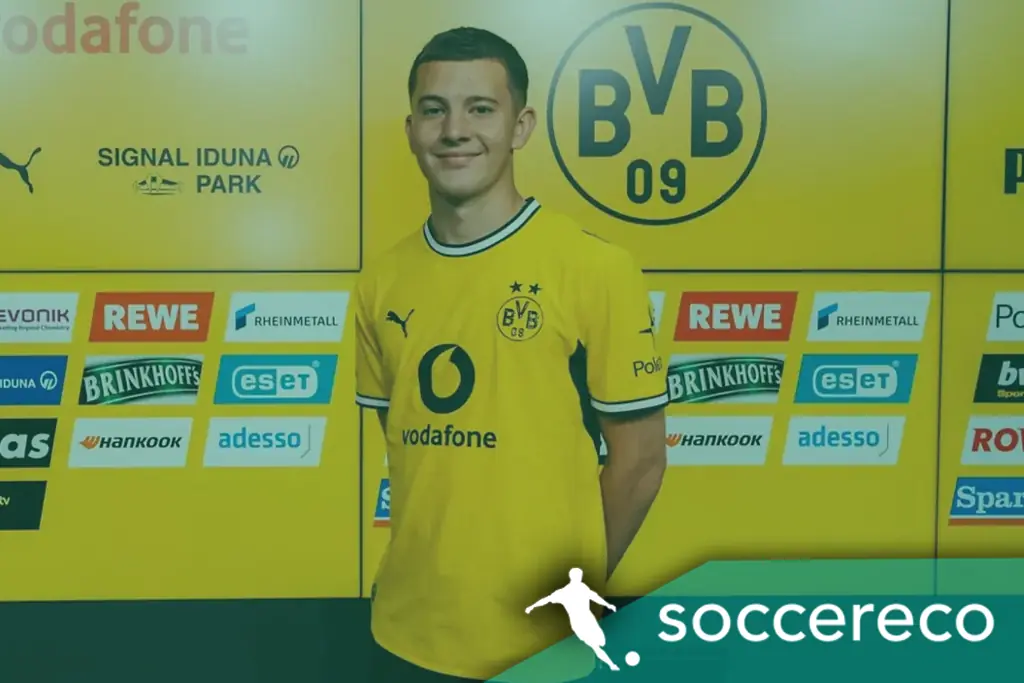
Borussia Dortmund Complete €35 Million Deal for Genk Talent Karetsas
Borussia Dortmund have reportedly completed the signing of Karetsas from Genk in a deal worth approximately €35 million. The transfer represents another major investment in youth by the German club and confirms Dortmund’s determination to continue identifying some of the most promising players in European football before they reach the peak of their careers.
Karetsas had been on Dortmund’s radar for a considerable period, with the Bundesliga club closely following his development in Belgium. The German side have built an international reputation for recognising young talent, providing players with meaningful first-team opportunities and helping them develop in an environment where progress is often prioritised over immediate perfection.
The reported €35 million fee makes Karetsas the most expensive player ever sold by Genk. It is another significant achievement for the Belgian club, whose ability to develop young players and sell them for substantial profits has become one of the central features of its sporting and financial model.
Dortmund Continue Their Successful Recruitment Strategy
Borussia Dortmund’s interest in Karetsas is entirely consistent with the recruitment strategy the club have followed for many years. Rather than competing only for established stars at the height of their market value, Dortmund regularly attempt to sign talented players before they become global names.
The approach has allowed the club to attract players who might struggle to receive regular football immediately at other major European teams. Dortmund can offer a combination of high-level domestic competition, Champions League exposure and a realistic pathway into the starting line-up.
Erling Haaland, Jude Bellingham and Ousmane Dembélé are among the most famous examples of players who used Dortmund as an important stage in their development. Each arrived with considerable potential, became a key figure in Germany and later completed a major transfer elsewhere.
Those examples have strengthened Dortmund’s reputation among young players and their representatives. The club can present clear evidence that talented footballers are given opportunities and are not simply recruited to increase the size of the squad.
Karetsas will now attempt to follow a similar path. The pressure created by a €35 million transfer should not be underestimated, but Dortmund’s experience working with young players may provide him with the patience and support required to adapt.
A Record-Breaking Departure for Genk
For Genk, the transfer represents another important moment in the club’s history. Karetsas becomes their most expensive outgoing player, surpassing the previous record established by the sale of Tolu Arokodare to Wolverhampton Wanderers.
Arokodare moved to the Premier League club for approximately €26 million in the summer of 2025 before later joining Ajax. At the time, that deal was viewed as another major success for Genk’s recruitment and development structure.
Only one year later, the Belgian club have reportedly broken the record again. The size of the Karetsas transfer demonstrates how effectively Genk have positioned themselves within the European market.
Belgian clubs cannot normally compete financially with the leading teams in England, Germany, Spain or Italy. Their success therefore depends on intelligent recruitment, youth development and the ability to sell players at the correct moment.
Genk have become particularly effective in this area. The club identify players early, provide them with first-team opportunities and allow them to develop in a competitive but relatively stable environment.
When those players attract interest from wealthier leagues, Genk are prepared to negotiate, but they rarely allow their best assets to leave without receiving a substantial fee.
€185 Million Generated From Player Sales
Genk’s recent transfer figures illustrate the strength of the club’s model. Over the previous three seasons, the Belgian side have reportedly generated approximately €185 million through player sales.
During the same period, they spent around €51 million on incoming transfers. The difference between those amounts highlights the club’s ability to create value rather than relying on excessive investment.
That financial performance does not happen accidentally. It requires cooperation between scouts, coaches, academy staff and the sporting department. Players must be identified before their market value becomes too high, and they must then receive the correct environment in which to improve.
Genk also need to remain competitive on the pitch while regularly losing important players. That is one of the most difficult aspects of the model. Selling a leading talent may be financially attractive, but it creates an immediate sporting problem.
The club must therefore prepare potential replacements before a major departure occurs. Young players from the academy are gradually introduced, while external signings are often made with future development in mind.
Karetsas is another example of that process producing a considerable return. Genk invested time, coaching and first-team opportunities in the player, and Dortmund are now prepared to pay a record fee for his potential.
Karetsas Developed Entirely at Genk
Karetsas has a particularly strong connection with Genk because he was born in the city and developed through the club’s academy. Although he represents Greece at international level, his football education took place in Belgium.
Genk identified him at a young age and gave him the opportunity to progress through every stage of the youth structure. His development was carefully managed until he was considered ready to compete at senior level.
Progressing from the academy to the first team is never straightforward. Talented youth players must adapt to the physical demands, tactical detail and pressure associated with professional football.
Karetsas was able to make that transition and eventually established himself as an important member of the senior squad. He leaves Genk after making 92 appearances, scoring 6 goals and providing 23 assists.
The statistics show that his contribution extended beyond goals. Karetsas developed a reputation for creating opportunities, linking different phases of the attack and providing teammates with chances in dangerous areas.
His 23 assists are particularly significant for a player still at an early stage of his career. They indicate an ability to recognise passing options and influence matches through creativity rather than relying exclusively on individual finishing.
Why Dortmund Believe Karetsas Can Succeed
Dortmund’s willingness to pay €35 million suggests that the club view Karetsas as more than a long-term development project. Although he will need time to adapt, the German side are likely to expect him to compete for first-team minutes relatively quickly.
The Bundesliga could suit his qualities. German football often provides young attacking players with space to express themselves, particularly in matches played at a high tempo.
Dortmund also encourage technical players to make decisive contributions in advanced areas. The team’s attacking structure regularly depends on players who can receive possession between defensive lines, carry the ball forward and create opportunities for teammates.
Karetsas has already demonstrated many of those qualities in Belgium. The challenge will be producing them consistently against stronger opponents and under greater pressure.
At Genk, he developed in familiar surroundings and understood the expectations of the club. At Dortmund, every performance will receive more attention, while competition for places will be significantly stronger.
However, the German club’s history suggests that age will not prevent him from playing. Dortmund have repeatedly trusted young players when they have shown that they are tactically and physically prepared.
The Pressure of a €35 Million Transfer
The size of the transfer fee will inevitably create expectations. Karetsas is not arriving as an unknown academy player who can develop without external pressure. He becomes one of Genk’s most valuable exports and an important investment for Dortmund.
Supporters will want to see evidence of his talent, while the German media will analyse his performances closely. Every strong match will increase excitement, but periods of inconsistency may immediately lead to questions about the transfer fee.
Dortmund must therefore protect the player during the adaptation period. Young talents rarely develop in a completely linear way. Strong performances can be followed by difficult matches, particularly when moving to a new league and country.
The club’s coaching staff will need to determine how quickly Karetsas should be introduced. Giving him too much responsibility immediately could increase the pressure, but limiting his opportunities could delay his progress.
A balanced approach is likely. Karetsas may initially be used in selected matches or introduced from the bench before gradually receiving a more important role.
A Path Followed by Several Dortmund Stars
Dortmund’s recent history contains several examples that could encourage Karetsas. Haaland arrived in Germany as a highly rated young striker and quickly became one of the most feared goalscorers in European football.
Bellingham joined from Birmingham City while still in the early stages of his professional career. At Dortmund, he developed into a complete midfielder, gained Champions League experience and eventually became one of the most valuable players in the world.
Dembélé also used his time in Germany to demonstrate his ability at the highest level. His performances for Dortmund attracted Barcelona, who completed a major transfer to sign him.
The careers of those players were not identical, but they shared one important element: Dortmund provided a platform on which their potential could become established performance.
Karetsas will not be expected to copy any of them directly. His development will depend on his own qualities, position and response to the demands of German football.
Nevertheless, the club can point to those successful examples when explaining why Dortmund remains one of the most attractive destinations for ambitious young players.
Genk’s Academy Receives Further Recognition
The transfer is also another source of recognition for Genk’s academy. Developing a player capable of attracting a €35 million offer from Dortmund demonstrates the quality of the club’s youth system.
Academies are not judged only by the number of players who reach the first team. They are also evaluated according to whether those players are technically, physically and mentally prepared for professional football.
Karetsas completed the entire pathway at Genk and made almost 100 senior appearances before leaving. That is an important detail because the club did not simply produce a talented youth international and sell him before he had contributed to the first team.
He provided sporting value before generating a significant financial return. That combination represents the ideal outcome for a development-focused club.
The transfer may also help Genk attract other talented young players. Families and representatives can see that the club offers a genuine route from youth football to major European competitions.
A promising player joining Genk can reasonably believe that strong performances will be recognised by leading clubs. Karetsas is now the latest example supporting that argument.
Dortmund Investing in Potential and Resale Value
Although Dortmund’s immediate priority will be helping Karetsas contribute on the pitch, the financial logic behind the transfer is also clear. The club have regularly generated large profits by signing young players before selling them later in their careers.
A €35 million fee is already substantial, meaning Karetsas will need to develop considerably for Dortmund to produce a major future profit. However, the club believe his potential justifies the investment.
If he becomes an important Bundesliga and Champions League player, his market value could increase significantly. Europe’s wealthiest clubs regularly pay enormous fees for young attackers who have already demonstrated their quality at a high level.
Dortmund’s objective will not necessarily be to sell him immediately after his breakthrough. The German club want to compete for trophies and require talented players to remain for meaningful periods.
Nevertheless, the possibility of future resale value remains an important part of the strategy. Signing players with room for development allows Dortmund to strengthen the team while protecting the club financially.
Genk Must Now Replace His Creativity
The financial success of the transfer does not remove the sporting challenge for Genk. Karetsas contributed 23 assists during his first-team career and played an important role in creating chances.
Replacing that creativity will not be easy. Genk may already have a younger player prepared to receive more responsibility, or the club could invest part of the transfer income in an external replacement.
The Belgian side are unlikely to spend the entire €35 million on one player. Their established model is based on distributing resources carefully and identifying footballers whose value can increase over time.
Genk may use the income to strengthen several positions, improve contracts for important squad members and continue investing in the academy.
The club’s recent transfer performance suggests that the sporting department will already have prepared for this possibility. Dortmund’s interest was known for some time, allowing Genk to evaluate alternatives before the deal was completed.
A Significant Step for Karetsas
For Karetsas, leaving Genk represents the most important move of his career so far. He is departing the club where he grew up and entering an environment with different expectations, greater attention and stronger competition.
The emotional aspect should not be ignored. Genk is not simply the club that gave him first-team football. It is the club from his home city and the place where he completed his entire football education.
Leaving such familiar surroundings can be difficult, but the move also reflects the progress he has made. Dortmund would not invest €35 million unless they believed he was capable of becoming an important player.
The transfer gives him access to one of Europe’s largest stadiums, an intense football culture and regular matches against high-level opponents.
He may also have the opportunity to compete in the Champions League, where performances receive worldwide attention. Strong displays in that competition could quickly raise his reputation beyond Belgium and Germany.
Dortmund Supporters Will Expect Excitement
Dortmund supporters have traditionally embraced young attacking players who perform with confidence and imagination. The club’s atmosphere rewards players prepared to take risks and attack opponents directly.
Karetsas will be expected to bring creativity and unpredictability to the team. His record at Genk suggests that he is capable of providing assists and connecting effectively with teammates.
However, Dortmund fans will also demand commitment without the ball. Modern attacking players must contribute to pressing and defensive organisation, particularly in a team that wants to recover possession quickly.
Adapting to those tactical demands may be one of the key stages of his development. Technical ability can earn opportunities, but tactical discipline will determine how consistently he remains in the team.
Another Example of Belgium’s Development Role
The deal also demonstrates the important role played by Belgian football within the European transfer market. Clubs such as Genk provide young players with opportunities before they are ready to move directly into the most demanding leagues.
The Belgian competition offers a valuable balance. It is competitive enough to test young players but still provides more opportunities than many of Europe’s wealthiest leagues.
Players can gain senior experience, make mistakes and gradually develop their tactical understanding. When they are ready, clubs in Germany, England, Spain and Italy often become interested.
Genk have become one of the strongest examples of this system. Their ability to produce and improve players has created a sustainable cycle in which sporting development leads to financial strength.
The €35 million Karetsas transfer is one of the clearest demonstrations of how valuable that model has become.
A Deal That Benefits All Parties
The transfer appears to offer clear advantages for Dortmund, Genk and Karetsas. Dortmund secure one of the most highly rated young players developed in Belgian football.
Genk receive a club-record fee and further confirmation that their academy and transfer strategy are functioning successfully.
Karetsas gains the opportunity to continue his development at a club recognised throughout Europe for trusting young talent.
There are still risks. Dortmund are making a considerable investment, Genk must replace an important creative player and Karetsas must adapt to a more demanding level.
However, the logic of the deal is clear. Dortmund believe they are signing a player with the quality to become an important figure in Germany, while Genk have once again converted youth development into both sporting and financial success.
Karetsas Ready for the Next Chapter
Karetsas leaves Genk after 92 appearances, 6 goals and 23 assists. Those numbers represent the conclusion of one stage of his career and the beginning of a much more demanding challenge.
At Dortmund, he will be compared with other young talents who successfully developed at the club. Those comparisons are inevitable, but Karetsas must be allowed to establish his own identity and progress at his own pace.
The reported €35 million fee ensures that attention will follow him from the beginning. Dortmund will expect quality, supporters will expect excitement and Genk will watch proudly as another academy graduate attempts to succeed on a larger European stage.
The transfer also confirms that both clubs remain committed to their established strategies. Dortmund continue to invest aggressively in elite young talent, while Genk continue to develop players capable of generating record-breaking transfers.
Whether Karetsas eventually follows Haaland, Bellingham and Dembélé in becoming an international star will depend on his development over the coming seasons. What is already clear is that Borussia Dortmund consider him capable of taking that path and are prepared to make a major financial commitment to help him do so.