Ruud van Nistelrooij will return to the Netherlands national team as assistant coach on February 1. Ronald Koeman is adding the 49-year-old former international to his coaching staff ahead of this summer’s World Cup.
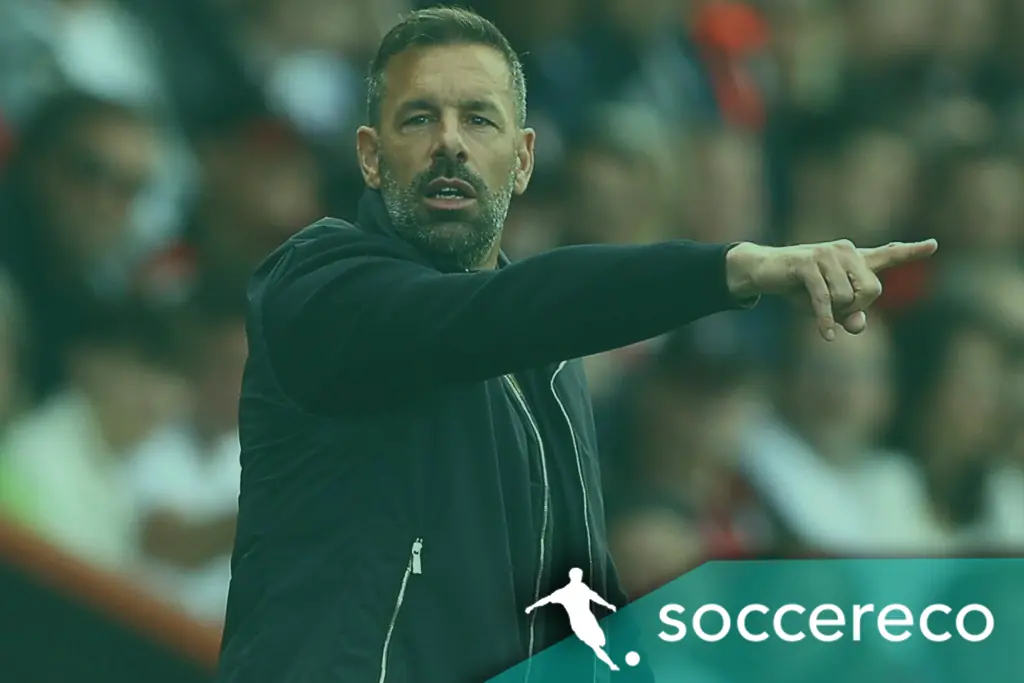
Ruud van Nistelrooij’s return to the Netherlands national team set-up marks a familiar chapter in both his post-playing career and the KNVB’s ongoing effort to surround Ronald Koeman with a staff capable of handling the pressures of a World Cup cycle.
The former elite striker will come back as assistant coach from February 1, strengthening a technical team that already includes Koeman’s brother Erwin and longtime Dutch football figure Wim Jonk. For Van Nistelrooij, it is not simply a new appointment, but a continuation of a pathway that has repeatedly brought him back into the Oranje environment at key moments.
This will be the third time Van Nistelrooij takes on an assistant role with the national team, underlining how consistently he has remained close to the Dutch elite pathway since retiring as a player. Between 2020 and 2021, he was part of Frank de Boer’s staff, operating as a key lieutenant during a period when the national team was navigating the unusual disruption caused by Covid. That era also carried a significant turning point for Koeman himself. Any immediate collaboration between Koeman and Van Nistelrooij did not materialize then because Koeman accepted the Barcelona job, while the European Championship was pushed back by a year, reshaping international planning and creating a different technical trajectory for the Netherlands.
Even before his spell with De Boer, Van Nistelrooij had already spent time on the Oranje bench. From 2014 to 2016, he worked as an assistant under Guus Hiddink and Danny Blind, gaining early experience in the realities of international coaching: short preparation windows, constant squad turnover, the need for clear messaging, and tactical clarity that can be implemented quickly. Those years helped establish him not just as a former superstar forward, but as someone the KNVB could integrate into senior technical structures.
What makes his latest appointment especially notable is the breadth of his recent work outside the national team. In the last few years, Van Nistelrooij transitioned from assistant roles into leadership positions, taking on head coach responsibilities at PSV and later at Leicester City. Those jobs exposed him to the full scope of modern club management: week-to-week tactical preparation, dealing with dressing-room dynamics over a long season, handling media pressure, and managing performance expectations at institutions where results drive everything. After leaving Leicester last summer, he also worked alongside Erik ten Hag at Manchester United, and following Ten Hag’s dismissal, he briefly stepped in as interim manager. That experience, even if short, tends to sharpen a coach’s ability to make fast decisions, communicate under pressure, and stabilize a squad in a turbulent moment.
For Koeman, adding Van Nistelrooij is not presented as change for change’s sake, but as a targeted reinforcement for a specific objective: the World Cup in North America. Koeman’s public explanation points to three pillars. First, Van Nistelrooij’s understanding of the game at the highest level, including what it takes to perform in the biggest tournaments. Second, the way his personality and approach fit with both staff and players, which matters in a national-team environment where harmony, clarity, and trust can be decisive. Third, and perhaps most practically, his attacking background. Koeman explicitly highlighted that Van Nistelrooij can offer extra individual support to the forwards, suggesting a hands-on role in refining movement, decision-making in the box, finishing routines, and the small details that often separate strong teams from tournament-winning teams.
That point also reflects a broader international trend: elite national teams increasingly build specialist support around their attacking players, because tournament football often comes down to converting limited chances. Van Nistelrooij’s profile is naturally suited to that. As a striker, he was known for efficiency, penalty-box instincts, and a clinical approach rather than flashy improvisation. Translating that mentality into coaching can be particularly valuable when working with younger forwards who need structure, repetition, and specific situational guidance rather than general tactical theory.
From Van Nistelrooij’s perspective, the return is framed as both an honor and a challenge, and the timing adds weight to his words. He played for the Netherlands at major tournaments, including the 2006 World Cup and the European Championships of 2004 and 2008, so he understands the intensity of representing Oranje on the biggest stage. He also arrives with a strong personal record as an international, having scored 35 goals in 70 appearances, a statistic that reinforces the credibility he brings when speaking to attackers about standards and execution. His statement makes clear he believes this assistant role suits him, not as a step backwards from head coaching, but as a position where his experience across multiple roles can be applied effectively, especially with a World Cup in view.
The integration begins quickly. Van Nistelrooij is expected to be on the bench already in March for friendly matches against Norway and Ecuador, giving him immediate proximity to the squad and a practical runway to build relationships. Those fixtures are likely to serve a dual purpose: preparation for the summer tournament and an internal calibration phase, allowing Koeman and his staff to test combinations, evaluate form, and refine training priorities. Early involvement also means Van Nistelrooij will be part of the entire build-up, rather than joining late in the cycle, which is often when assistants struggle to make a real impact.
The KNVB’s broader logic is also made explicit through Nigel de Jong’s comments. As director of top football, and as a former national-team teammate of Van Nistelrooij, De Jong emphasized that a major tournament places heavy demands on both players and staff. His focus was not only on maintaining quality, but on guaranteeing enough individual attention during the tournament period. That is a revealing point: at World Cups, staff workloads multiply, from opponent analysis to recovery planning to player management, and it becomes difficult to give each player the tailored input they need. By adding a third assistant, the Netherlands aim to increase bandwidth, improve specialization, and ensure that both tactical and individual coaching needs are met without overloading any single staff member.
In practical terms, Van Nistelrooij’s appointment suggests the Netherlands are preparing for a World Cup campaign with a more segmented, high-support technical structure. Koeman retains overall control, with trusted assistants alongside him, but the presence of a specialist with elite striker pedigree can help sharpen the team’s edge in the areas that often decide knockout matches. It is also a move that blends continuity with added expertise: Van Nistelrooij knows the national-team environment, understands the KNVB culture, and has already worked at the highest level in both international and club contexts.
As the World Cup start date approaches, the key question will be how Koeman uses him. If Van Nistelrooij becomes central to attacker development, finishing preparation, and match-specific offensive planning, the Netherlands could gain a marginal advantage that matters in tournament football. For Van Nistelrooij, it is another opportunity to contribute to Oranje in a role that aligns with his experience, and to do so on the biggest stage, which, by his own admission, makes the challenge even more meaningful.