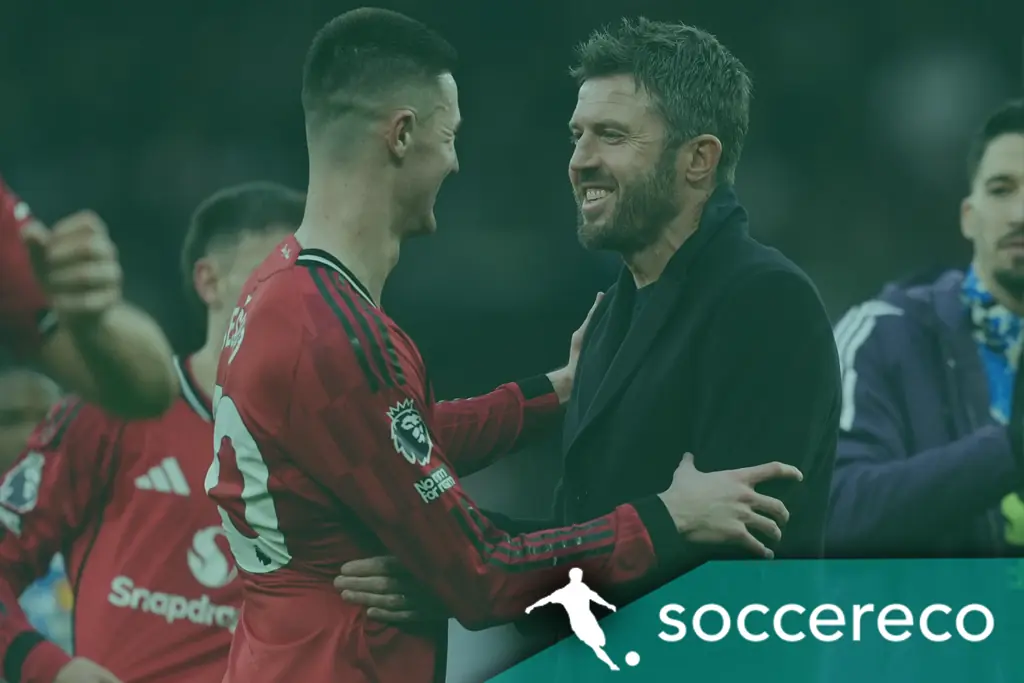
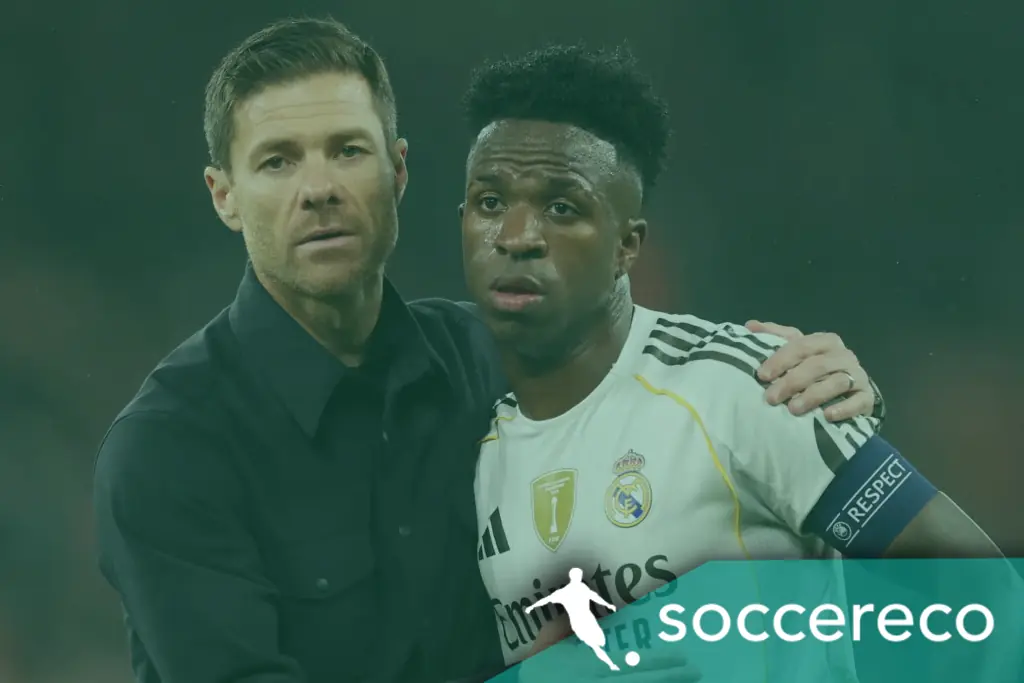
The win over Alavés has given Xabi Alonso some breathing room. After Rodrygo’s winning goal, the embattled Real Madrid coach was hugged by Vinícius Júnior, who had been at odds with him earlier this season.
Real Madrid had to dig deep again at Estadio Mendizorrotza, in a night that felt less like a routine league fixture and more like a test of nerve, authority, and togetherness in La Liga.
The stadium atmosphere carried the usual Basque edge, Alavés played with the urgency of a side that senses vulnerability in a giant, and Madrid’s performance had the familiar pattern of a team still searching for its cleanest, most convincing version under its new coach.
The decisive moment arrived with around fifteen minutes remaining, when Rodrygo produced the action that finally tilted the game. It was the kind of intervention that changes not only a scoreboard, but the emotional temperature around a manager. Until then, Madrid’s evening had been tense and uneven, with control coming in phases rather than in sustained stretches. When the goal went in, the storyline immediately expanded beyond the pitch.
Instead of celebrating only with teammates, Vinícius Júnior made a deliberate beeline for the bench. The embrace he gave Xabi Alonso was brief, but loaded. In Spain, gestures like that are never treated as casual, especially when there has been noise in recent weeks about dressing-room harmony and about Alonso’s relationship with some of his biggest personalities. The timing of it mattered as much as the hug itself: a high-pressure La Liga match, a late winning goal, and a public moment of unity in full view of cameras.
Spanish media framed it as something far bigger than a show of emotion. The reporting emphasised that the image suggested a closing of the chapter opened earlier in the season, when Vinícius reacted poorly to a substitution against Barcelona. That episode had become a reference point in discussions about Alonso’s ability to impose his authority at Real Madrid, particularly with players who are used to having influence on outcomes and on decision-making. In that sense, the embrace functioned like a message. Whether intended or not, it read as a signal that any internal friction has cooled, or at least that both sides understand the value of being seen moving forward together.
There was, however, another layer to Vinícius’s night, and it had nothing to do with the bench. His relationship with Spanish refereeing remains a volatile subject, and the match offered another flashpoint. Late in the game, he went down after contact with Nahuel Tenaglia inside the area and appealed for a penalty. The decision did not go his way. In the closing stages, emotions were already stretched by the narrow margin and by Madrid’s difficulty in turning pressure into safety. The incident added fuel, and Vinícius’s reaction reflected how personally he now seems to take these moments. Reports described him protesting forcefully toward the officials, insisting it was obvious. Tenaglia, for his part, was said to have replied with a cutting remark that the referee would not give it because of who Vinícius is. Even without official confirmation of the exact words, the point is clear: Madrid’s star winger feels targeted, opponents feel he is protected, and referees remain stuck in the middle of a narrative that keeps repeating.
That tension is part of what makes Madrid’s current period so unstable. When a team is not dominating La Liga games, every marginal call feels amplified. When confidence is fragile, any dispute with officials becomes a referendum on respect and status. And when the coach is under scrutiny, every camera angle becomes evidence for one interpretation or another.
In that context, the importance of the result cannot be overstated. Real Madrid ultimately left Vitoria-Gasteiz with a 2-1 victory over Alavés in La Liga, and the relief around Alonso was almost as visible as the joy among the players. It was not simply three points. It was a small lifeline in an environment where draws feel like crises and narrow wins still invite scepticism.
Marca’s assessment focused heavily on the manager’s situation, portraying the late winner as vital for Alonso’s immediate survival and for the mood around him. The tone was not celebratory so much as diagnostic. The suggestion was that Alonso looks constrained by pressure, and that the job is changing him in real time. The calm, analytical figure associated with his playing career and his early coaching identity has, in their framing, been replaced by someone forced into constant crisis management. Even the football, in that reading, is shifting from a tactical project to an exercise in endurance. When a club like Madrid is described as surviving rather than controlling, it is rarely meant as praise.
AS leaned into the human dynamics and the internal politics. Their emphasis was that Alonso is winning a crucial battle that precedes any tactical refinement: securing the dressing room. At Madrid, the coach’s authority is always provisional until the squad buys in, and that support can evaporate quickly when results wobble. The message from AS was that the atmosphere has turned, that a sense of collective backing has returned, and that Vinícius’s gesture was the most visible proof. They interpreted it as a moment that re-establishes Alonso’s standing after a period in which he appeared close to losing important trust.
Both interpretations can be true at once. Alonso can be under suffocating pressure and still be regaining the squad’s confidence. The win can be vital and still not solve the deeper problems. The embrace can be sincere and still be strategic, a recognition that a fractured public image helps no one when the La Liga calendar is dense and the stakes keep rising.
From a sporting perspective, the match also reinforced Madrid’s current profile. They can find solutions through individual quality, and they can change La Liga games late, but they are not consistently imposing their will. Against a committed Alavés side, Madrid had to fight for rhythm, for space, and for a sense of security. That is why Rodrygo’s decisive action mattered so much. In seasons where Madrid chase La Liga and other trophies, these are the nights that separate contenders from merely talented teams. The team that wins when it is not playing well often stays alive in every competition. The team that drops these games rarely gets the time to rebuild momentum.
Now the schedule offers no pause for reflection. Real Madrid are back in action on Wednesday in the Copa del Rey, with an away match against Talavera, a lower-division side currently placed nineteenth in the third tier. On paper it is the kind of fixture that should allow rotation and control, but the reality is that cup ties can become traps when a favourite is dealing with doubt and when the opponent plays with nothing to lose. For Alonso, it is another chance to show authority, pick the right balance, and avoid the kind of uncomfortable narrative that erupts if a giant stumbles.
Then comes La Liga’s final match of the calendar year on Saturday at home to Sevilla. That match carries its own weight, not only because of the opponent’s profile, but because the Bernabéu crowd and the Madrid media rarely allow ambiguity. A strong performance can accelerate the sense that Alonso is stabilising the project. Another shaky night, even with a win, can keep the debate alive about whether this is progress or simply damage control.
For now, the defining image from Vitoria is the simplest one: Vinícius stepping toward his coach, embracing him, and offering the kind of public unity that can calm a storm, at least for a few days.
Updated: 11:34, 16 Dec 2025