Argentina face criticism after players turned away during Spain’s World Cup trophy ceremony, prompting Dani Olmo and Spanish media to condemn the gesture.
Argentina Face Backlash After Turning Away During Spain World Cup Trophy Ceremony
Argentina have come under intense criticism following the closing ceremony of the World Cup final after several players appeared to turn their backs while Spain received the trophy.
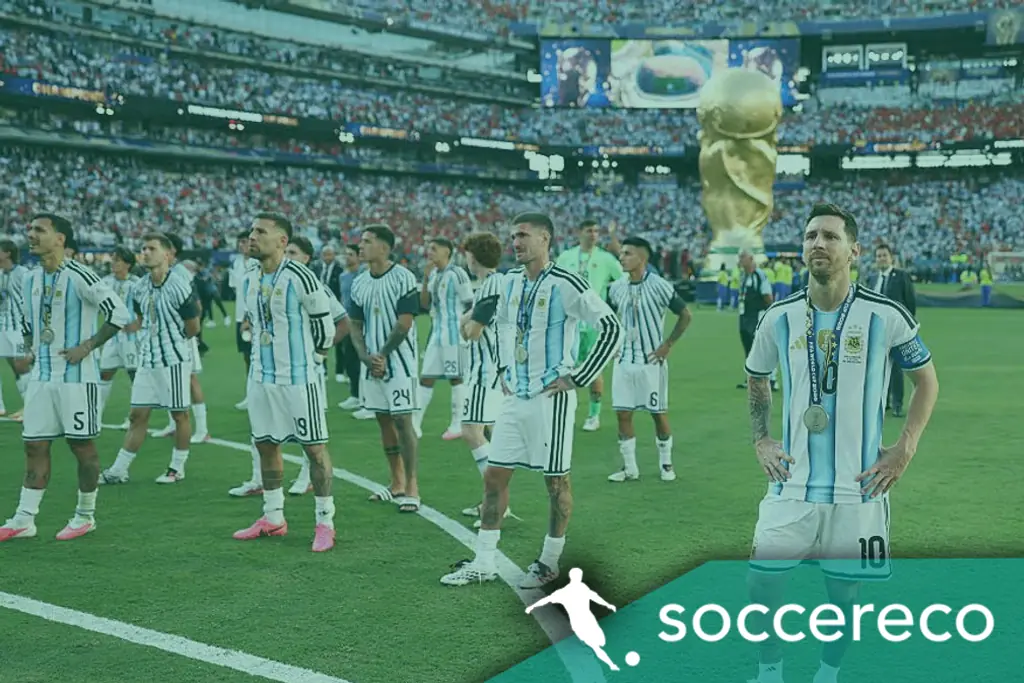
Spain defeated Argentina 1-0 in a tense final to become world champions, but the discussion after the match quickly moved beyond the football. Images from the presentation ceremony showed members of the defeated Argentina squad facing away from the podium while the Spanish players collected their medals and prepared to lift the trophy.
Instead of remaining in position and applauding the new champions, the Argentinians appeared to direct their attention towards their own supporters. The gesture immediately attracted attention and was interpreted by many observers as a deliberate refusal to recognise the Spanish victory.
The reaction in Spain was particularly strong. Players, journalists and supporters accused Argentina of showing a lack of respect during one of the most important ceremonial moments in international football.
Dani Olmo was among those who responded publicly. The Spain international addressed the incident on social media and reminded the Argentina players of the responsibility carried by elite footballers.
“We are role models for many generations. You should be as well,” Olmo wrote.
His message was brief, but its meaning was clear. Players competing in a World Cup final are watched by millions of people around the world, including young supporters who view them as examples both on and off the pitch.
For Olmo, the actions during the presentation did not meet the standards expected from players representing a national team on the biggest stage in football.
The trophy ceremony traditionally provides a final moment of respect between the two teams. The defeated side receives its medals before remaining nearby as the winners step onto the podium and lift the trophy.
It is rarely a comfortable experience for the losing players. They have just seen their greatest sporting ambition disappear, often after years of preparation and several weeks of intense competition.
Nevertheless, remaining present and recognising the winners has long been treated as an important demonstration of sportsmanship.
That is why the images of Argentina caused such controversy. The players were not criticised simply for appearing disappointed. Their disappointment was natural after losing a World Cup final by a single goal.
The criticism focused on the decision to turn away at the exact moment Spain were being recognised as champions.
Mundo Deportivo described the incident as the “ugly image of Argentina” and argued that Lionel Scaloni team had failed to show the respect normally expected from the losing finalists.
“The Argentinians turned their backs on the world champions as they lifted the trophy,” the Spanish newspaper wrote.
“The lack of sportsmanship shown by Lionel Scaloni players was clear after the final whistle.”
The newspaper also highlighted the traditional behaviour of losing teams during major finals.
“Traditionally, the losing team remains to watch its opponent receive the title, but the Argentinians preferred to acknowledge their supporters while the Spanish players collected the trophy and their medals.”
That interpretation became central to the debate. Argentina may argue that the players were thanking the supporters who had followed them throughout the tournament, but the timing created the impression that they were refusing to watch Spain celebrate.
In a different moment, applauding their supporters would have been viewed as a positive gesture. After reaching another World Cup final, the Argentina players had every reason to recognise the fans who travelled in large numbers and created intense support throughout the competition.
However, doing so while Spain were lifting the trophy made the action appear dismissive towards the champions.
Diario AS reacted even more strongly, calling the photograph an “image of shame”.
“These are embarrassing scenes, with Argentina turning their backs on the Spanish team,” the newspaper wrote.
“The troubled conclusion to the World Cup final took an unpleasant turn because of the Argentinians.”
AS connected the ceremony to the general atmosphere of the match, which had already been marked by tension, physical confrontations and repeated disputes.
“This gesture, which is highly unusual during an awards ceremony, symbolised a match in which Argentina focused more on dirty tricks than on football,” the newspaper added.
“Their contempt for the champions has sparked outrage around the world.”
The criticism reflected the emotional atmosphere surrounding the final. Spain entered the match as European champions and produced another disciplined performance to defeat the defending world champions.
The only goal was enough to separate the teams, with Spain protecting the lead and resisting Argentina attempts to force their way back into the contest.
For La Roja, the victory completed an extraordinary period of success. After winning the European Championship, Spain added the World Cup and confirmed their position as the strongest national team of the current era.
The celebrations were therefore expected to be one of the defining images of the tournament. Instead, part of the attention was taken by the behaviour of the runners-up.
Argentina had entered the final attempting to defend the title they won in Qatar. Victory would have made them only the third nation to win consecutive World Cups, following Italy and Brazil.
The defeat ended that ambition and brought an emotional conclusion to a tournament in which Scaloni side had won every previous match.
Argentina had also arrived with the strongest attack in the competition and with Lionel Messi leading their attempt to retain the trophy.
Spain, however, once again demonstrated the defensive strength that had carried them through the tournament. They conceded only one goal during the entire competition and denied Argentina in the most important match.
The frustration among the South American players was visible after the final whistle. Several fell to the pitch, while others stood in silence as the Spanish celebrations began.
Such reactions are common after a World Cup final. The losing players know they may never have another opportunity to compete for the trophy, and the emotional impact can be overwhelming.
The issue was not the disappointment itself, but how that disappointment was expressed during the ceremony.
Some observers suggested that the Argentina players may not have intended to insult Spain. They may simply have wanted to thank their supporters before leaving the field.
Even so, the visual impression was extremely damaging. In major sporting events, images often become more powerful than explanations.
A photograph showing players with their backs turned while the trophy is being lifted can easily be interpreted as disrespect, regardless of the intention behind it.
The controversy also placed additional pressure on Scaloni and the Argentina Football Association to explain what happened.
As head coach, Scaloni is responsible not only for tactics and team selection but also for the conduct of the squad during official events.
There has been no indication that he instructed the players to turn away, but Spanish media still referred to the group collectively as Scaloni players when criticising the incident.
For Argentina, the situation is especially uncomfortable because the national team had developed a strong image of unity and commitment during its recent period of success.
The squad were admired for their determination, emotional connection with supporters and loyalty to one another.
Those qualities helped them win the Copa América and the World Cup, turning Scaloni team into one of the most celebrated groups in Argentina football history.
The ceremony now risks adding a negative final image to an otherwise impressive campaign.
Spain players were understandably unhappy. Winning the World Cup should have allowed them to celebrate without controversy, but the behaviour of their opponents became part of the story.
Olmo response suggested that the Spanish squad viewed the gesture as more than a misunderstanding.
His reference to future generations underlined the wider importance of sportsmanship. Footballers at this level influence how young players understand victory, defeat and respect.
Celebrating success is easy. Accepting defeat with dignity is far more difficult, which is precisely why it is treated as such an important part of sport.
The traditional applause from the losing finalists does not mean they are happy with the result. It represents recognition that the opposing team earned the right to celebrate.
Spain had defeated Argentina on the pitch and deserved the opportunity to receive the trophy without the moment being overshadowed.
The controversy is likely to continue because the incident involved two of the biggest national teams in world football.
Argentina and Spain already share a strong football connection through players, coaches and clubs. Many Argentine stars have developed their careers in Spain, while Messi became a global icon during his years at Barcelona.
That connection made the final especially significant and increased the expectation that the ceremony would be handled with mutual respect.
Instead, the ending created tension between the two camps and produced headlines that had little to do with the quality of the match.
Spanish media also linked the ceremony to what they considered Argentina overly aggressive approach during the final.
The match included several confrontations and interruptions as Argentina attempted to prevent Spain from establishing their passing rhythm.
Physical football is not automatically unsporting, particularly in a World Cup final where the competitive intensity is enormous.
However, when combined with the images from the presentation, the aggressive approach contributed to the argument that Argentina had allowed frustration to control their behaviour.
For Spain, none of the controversy changes the result. They are world champions after completing one of the most impressive defensive campaigns in the history of the competition.
The players eventually lifted the trophy and celebrated with supporters, coaches and members of the technical staff.
The victory secured Spain second World Cup title and completed another European Championship and World Cup double, repeating the achievement of the generation that won Euro 2008 and the 2010 World Cup.
For Argentina, the defeat ended their reign as world champions but did not erase everything they achieved during the tournament.
They reached another final, remained competitive until the end and confirmed their place among the strongest teams in international football.
Yet the response to defeat will now form part of how their campaign is remembered.
The players may eventually provide their own explanation. They could argue that they were acknowledging the Argentina supporters rather than intentionally disrespecting Spain.
That explanation may reduce some of the criticism, but it will not completely remove the impact of the images.
Moments after major finals are recorded from every angle, shared immediately on social media and analysed across different countries.
Actions that last only a few seconds can become permanent parts of sporting history.
The photograph of Argentina facing away while Spain celebrated is likely to remain one of those images.
It captures the pain of defeat, but for Spanish observers it also represents a failure to respect the new champions.
The incident demonstrates how quickly the narrative surrounding a final can change. One moment Spain were celebrating a historic victory. The next, the discussion centred on whether Argentina had behaved appropriately.
Supporters will continue debating the intention behind the gesture, but the reaction from Olmo and the Spanish media leaves little doubt about how it was received.
Spain expected recognition from their opponents. Argentina chose to turn towards their own supporters.
That decision transformed a traditional post-match moment into one of the most controversial images of the World Cup.