Abroad, there is considerable interest in the Netherlands national team after Barcelona icon Xavi was appointed head coach on Wednesday. The KNVB has surprised many with the appointment. Here is an overview.
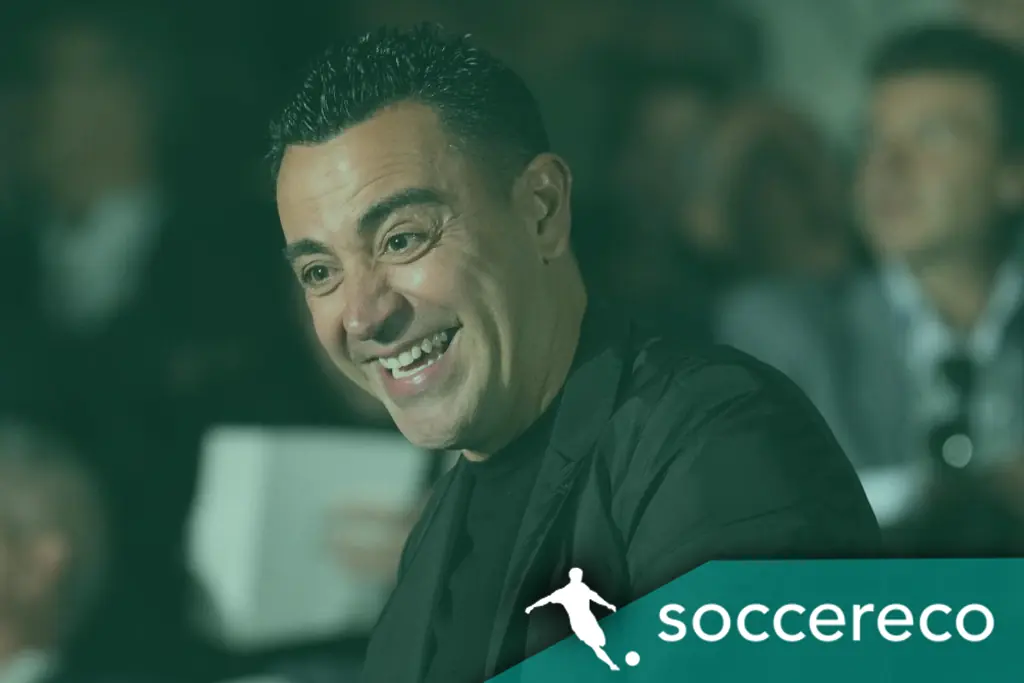
Xavi Appointment as Netherlands Coach Sparks Surprise Across Europe
Xavi Hernández's appointment as the new head coach of the Netherlands has generated considerable attention across Europe, with newspapers in Spain, Belgium, France and Germany all highlighting how unexpected the decision is. The former Barcelona midfielder and coach has signed a 4-year contract running until the 2030 World Cup and becomes the first foreign manager to lead Oranje since Austrian Ernst Happel in 1978. The KNVB spent around 6 weeks searching for a successor to Ronald Koeman and initially appeared determined to appoint another Dutch coach, but after considering several alternatives eventually turned to one of the biggest names available on the international market. Xavi has been away from management since leaving Barcelona in 2024 and had repeatedly been linked with major club jobs, but the opportunity to work with a national team appears to have provided the type of challenge he had been waiting for.
In Spain, Marca immediately focused on the remarkable coincidence surrounding the appointment. Xavi is once again succeeding Ronald Koeman, just as he did at Barcelona in 2021 when the Dutchman was dismissed and Xavi returned to the club where he had become a legend as a player. This time the circumstances are very different, but the sequence is the same: Koeman leaves and Xavi is chosen to take over. The Spanish newspaper also pointed out that Xavi had resisted several opportunities to return to club management after leaving Barcelona, preferring to wait until he felt the right project had emerged. His name had appeared on the shortlists of several leading European clubs, but a national-team role increasingly appealed to him because of the different rhythm of international football and the possibility of working on a long-term project without the relentless daily pressure associated with elite club management.
Spain Sees a Coach Shaped by Barcelona and Cruyff
Spanish coverage has naturally focused heavily on Xavi's footballing identity and what he could bring to the Netherlands. Marca described him as a coach who helped give Barcelona renewed energy by trusting younger players and providing opportunities to talents such as Lamine Yamal, Pau Cubarsí and Gavi. His time as a club coach also brought 8 trophies, including a league title and the Spanish Super Cup with Barcelona, giving him a record that goes beyond the enormous reputation he built during his playing career. For the Netherlands, the attraction is obvious: Xavi's footballing philosophy has been strongly influenced by the positional and possession-based ideas associated with Barcelona, many of which themselves developed from the legacy of Johan Cruyff.
That connection makes the appointment particularly intriguing. Cruyff remains one of the most influential figures in both Dutch and Barcelona football history, and Xavi spent much of his playing career inside a system shaped by those principles. His approach generally places importance on controlling matches through possession, positional discipline, technical midfielders and building attacks from the back. Those concepts are hardly foreign to the Netherlands, meaning the KNVB have chosen an outsider whose footballing ideas are nevertheless closely connected to the traditional identity of Dutch football. The challenge will be adapting those principles to international management, where coaches have far less training time with their players and must simplify tactical concepts compared with the daily work possible at club level.
Belgian Media Surprised by Foreign Appointment
In Belgium, the biggest story has been the simple fact that the Netherlands have chosen a foreign coach at all. HLN described Xavi as a major and surprising appointment after a lengthy search that featured numerous candidates, including Roberto Martínez. The Belgian newspaper emphasised the size of Xavi's reputation, describing him as one of the greatest midfielders in football history and the central organiser of the golden era enjoyed by both Barcelona and Spain. His arrival gives Oranje a coach with enormous international status, even if his managerial career remains considerably shorter than the playing career that made him one of the defining footballers of his generation.
Nieuwsblad took the discussion further by placing the decision in the wider history of Dutch coaching. The newspaper described it as remarkable that a country once famous for exporting coaches around the world has now turned abroad for the national-team position. For decades, Oranje were associated with a succession of major Dutch coaches such as Rinus Michels, Guus Hiddink, Dick Advocaat, Leo Beenhakker, Louis van Gaal, Bert van Marwijk, Marco van Basten and Frank Rijkaard. Those coaches represented different generations but were all connected, in one way or another, to the idea of a recognisable Dutch football identity. Appointing Xavi therefore breaks with a long tradition, even if the Spaniard's philosophy may ultimately prove highly compatible with that same tradition.
KNVB Search Eventually Led Away From Dutch Candidates
L'Équipe reported that it took the Netherlands approximately 6 weeks to identify Koeman's successor. According to the French newspaper, the KNVB initially preferred to appoint a Dutch coach and explored several possibilities before changing direction. Arne Slot, formerly of Liverpool, was reportedly considered, as were Erik ten Hag, now technical director at FC Twente, and PSV coach Peter Bosz. Michael Reiziger's name also entered the discussion, while Louis van Gaal was said to have more or less offered himself as an option. None of those routes ultimately produced an appointment, and the Dutch federation gradually widened its search before reaching an agreement with Xavi.
The timing also suited the former Barcelona coach. Xavi spent the previous 2 years away from management, using that period to consider carefully what direction he wanted his career to take next. During that time he was strongly linked with Manchester United, Ajax and opportunities in Saudi Arabia, but none developed into a return to the touchline. In recent months, however, he had increasingly suggested that coaching a national team appealed to him. International football offers a very different working environment, with fewer matches, longer breaks between camps and less of the daily political and media pressure that can surround major clubs. After his demanding final period at Barcelona, that appears to have become an important factor in his thinking.
Four Years to Build Towards the 2030 World Cup
The length of Xavi's contract is another important part of the appointment. By agreeing a deal until the 2030 World Cup, the KNVB are giving him a full cycle rather than treating him as a short-term solution. That should allow him time to introduce his ideas gradually, identify the players best suited to his system and develop a clear structure around the national team. Unlike at club level, where managers can recruit players specifically for tactical roles, Xavi will have to work with the characteristics available within Dutch football. His task will therefore be to adapt his preferred style rather than simply recreate Barcelona with different players.
The Cruyff connection will inevitably be discussed throughout that process. Xavi's philosophy is rooted in many of the same principles that shaped Barcelona under Cruyff, who himself had an enormous influence on Dutch football and was Koeman's coach at the Catalan club. That historical link gives the appointment a certain logic despite Xavi's nationality. The Netherlands have chosen a foreign coach, but not one with a footballing identity completely detached from their own traditions. If anything, the KNVB appear to believe that Xavi can reinterpret familiar Dutch principles through the experience he accumulated at Barcelona and with the Spanish national team.
First Match Brings Immediate Showdown With Germany and Klopp
Attention in Germany has already moved towards Xavi's first match in charge, and Bild described the appointment as a coaching bombshell. Oranje will face Germany in Amsterdam on 24 September in the Nations League, giving Xavi an immediate high-profile test. The fixture will carry even greater interest because it is also expected to be Jürgen Klopp's first match as Germany head coach. Two internationally renowned coaches beginning new national-team eras against each other will ensure that the game receives attention far beyond the Netherlands and Germany.
For Xavi, there will be little opportunity to ease himself into the role. The rivalry with Germany carries considerable historical importance, and the match will immediately provide clues about how he intends to structure the Netherlands. Supporters will be looking for signs of his preferred possession game, his midfield organisation and the extent to which he is willing to trust younger players in the same way he did at Barcelona. At the same time, international football rarely allows enough preparation time for complex systems to be implemented immediately, so the first months are likely to involve a gradual process rather than an instant transformation.
The appointment has nevertheless succeeded in creating excitement and curiosity across Europe. Spain sees another chapter in Xavi's career and another remarkable link with Koeman, Belgium views the decision as a surprising departure from Dutch tradition, France has focused on the long search that eventually led the KNVB towards a foreign coach, and Germany is already looking ahead to the September meeting with Klopp. What unites the different reactions is the sense that the Netherlands have made a bold choice. Xavi arrives with enormous status, a clearly defined football philosophy and 4 years to shape Oranje in his image. Whether that gamble succeeds will only become clear over time, but his first challenge is already approaching quickly.