It quickly became clear that UEFA is unhappy with FIFA’s plans for the World Cup. European football associations are also strongly opposed to the world governing body’s sales plans. International media report that a boycott is being discussed. Even the Prime Minister of the United Kingdom has already spoken out.
European Nations Discuss Possible Boycott Over FIFA World Cup Investment Plans
A major dispute has erupted between some of the most powerful organisations in international football after FIFA revealed plans that could allow private investors to acquire a financial stake in commercial activities connected to the World Cup. The proposal has provoked an immediate and unusually strong reaction from UEFA, with reports suggesting that European football associations are preparing to discuss a coordinated response that could include a boycott of FIFA competitions.
According to Sky Sports, the disagreement began after FIFA presented plans to establish a new commercial company known as FIFA Forward Enterprise. The organisation would manage commercial rights and revenue connected to the World Cup and other major FIFA competitions. External investors could reportedly purchase a minority stake in the new company, while FIFA would maintain overall control of football governance, tournament organisation and sporting decisions.
The proposed company has been valued at approximately 20 billion dollars, with FIFA potentially selling a stake of up to 20 per cent. Such a transaction could raise several billion dollars for the governing body. FIFA argues that the money would be reinvested into football development, infrastructure and financial support for national associations around the world. However, opponents believe the proposal would create an unacceptable relationship between the most important competition in international football and private investment groups primarily seeking financial returns.
UEFA Draws a Clear Line Against Private Investment
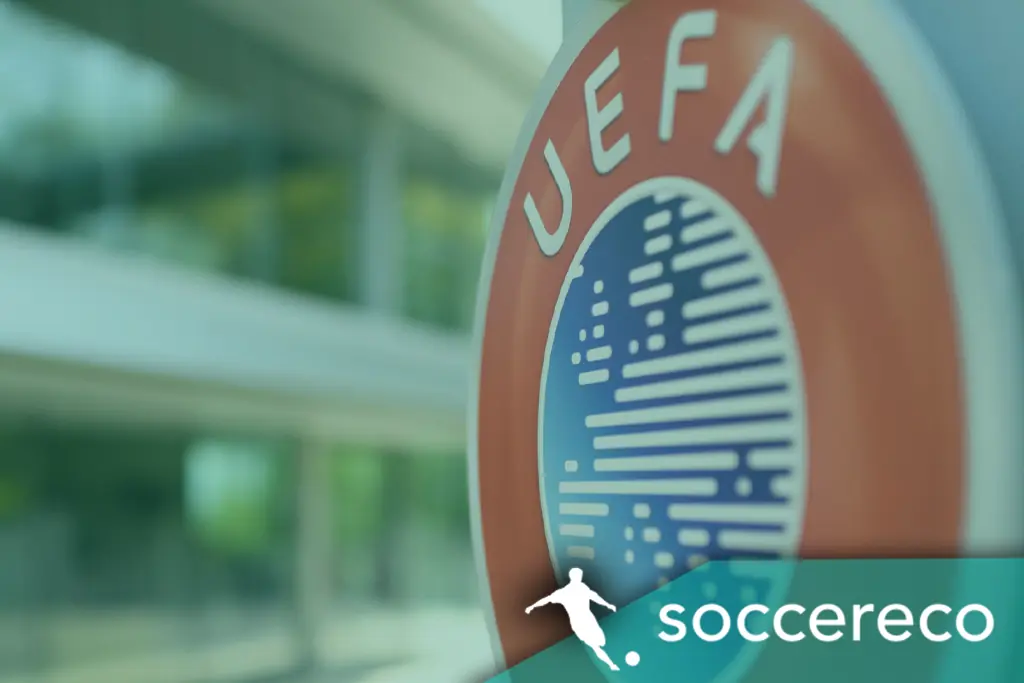
UEFA responded quickly after the plans became public on Tuesday. The European governing body made it clear that it considers the proposal to be much more than a normal commercial agreement. In its view, selling part of the World Cup business to external investors could change the fundamental structure of international football and create long-term consequences that would be difficult to reverse.
“This crosses a line that football’s governing organisations should never cross. UEFA is taking this extremely seriously. All national football associations should do the same,” the European governing body said in its statement.
The strength of that language reflects the level of concern inside European football. UEFA has frequently disagreed with FIFA over the international calendar, tournament expansion, player workload and the balance of power between clubs, leagues and national teams. This latest dispute, however, appears to go further because it concerns the ownership and commercial future of the World Cup itself.
For UEFA and its supporters, the central issue is not simply whether FIFA can generate more money. The concern is that investors could eventually influence decisions about tournament formats, match schedules, broadcasting arrangements and the frequency of major competitions. Even if FIFA retains formal control, critics fear that the presence of investors could create pressure to maximise revenue and produce increasingly frequent or expanded tournaments.
European Associations Consider Their Response
International reports suggest that European national associations are expected to discuss the proposal and consider how they should respond collectively. A possible boycott has reportedly been mentioned as one of the options available, although no final decision has been announced and no European association has formally confirmed that it will withdraw from a competition.
German newspaper BILD reported that discussions could involve a boycott of all FIFA competitions, including both the men’s World Cup and the Club World Cup. Such a move would represent one of the most serious confrontations in the history of international football. European countries include many of the strongest and most commercially valuable national teams in the sport, while European clubs provide a large proportion of the leading players who participate in FIFA tournaments.
A widespread European boycott would therefore have major sporting and financial consequences. A World Cup without countries such as England, France, Germany, Spain, Italy, Portugal or the Netherlands would lose many of its leading teams, biggest stars and largest television audiences. The Club World Cup would face similar problems if major European clubs were prevented from taking part or chose to support the position adopted by their national associations.
However, a boycott would also carry significant risks for UEFA and its members. Players could lose the opportunity to represent their countries on the biggest stage, supporters could be denied the chance to follow their national teams and associations could face legal or disciplinary action. For that reason, the possibility of a boycott may initially be used as a form of political pressure rather than an immediate commitment to withdraw.
FIFA Defends the Commercial Proposal
FIFA has defended the project by arguing that it would retain control over all football matters. Under the reported structure, private investors would acquire only a minority interest in the commercial company and would not be given authority over competition rules, sporting decisions or the governance of international football.
The governing body also believes the agreement could unlock significant new funding for its 211 member associations. The additional revenue could be used to support grassroots football, improve stadiums and training facilities, develop women’s football and provide greater financial assistance to countries with limited resources.
That argument may appeal to many smaller associations outside Europe. A large number of FIFA members depend heavily on development payments from the organisation and could benefit substantially from an increase in available funding. This creates a potential division between wealthier football regions, which may be more concerned about governance and commercial influence, and smaller associations that see the proposal as an opportunity to obtain essential investment.
UEFA nevertheless believes that the potential financial benefits do not justify selling a stake connected to the World Cup. Its position is that football governing bodies have a responsibility to protect competitions for future generations rather than treating them as commercial assets that can be partially transferred to private investors.
Andy Burnham Publicly Supports the UEFA Position
The controversy has also moved beyond football administration and entered the political debate. United Kingdom Prime Minister Andy Burnham publicly supported the UEFA position in a message posted on X. He argued that the World Cup should remain under the control of the football community and should not be treated as a product that can be sold to investors.
“Let me be clear: football does not belong to investors. It belongs to the people who fill the stadiums and stand on the touchlines week after week, whether it is raining or the sun is shining. The World Cup is not a product and therefore it should not be sold. It is the greatest competition in world sport. You can explain the deal however you like, but once you have sold even the smallest part of it, it is over. Football belongs to the fans. It always has and it always will.”
His intervention gives the opposition to the proposal greater political weight. Burnham has long been associated with debates about supporter representation and the role of communities in football. His comments also reflect a broader concern among fans that the sport is becoming increasingly controlled by commercial interests, broadcasters, investment funds and wealthy owners.
Supporters have already experienced major changes to the football calendar, including expanded international tournaments, longer club competitions and a growing number of matches. The possibility of private investors obtaining a stake in the World Cup has therefore intensified existing fears that financial growth is being prioritised over sporting tradition, player welfare and the interests of supporters.
A Defining Battle Over the Future of International Football
The coming discussions between European associations could determine whether the dispute develops into a genuine institutional crisis. UEFA may seek further information, legal guarantees or major changes to the proposal before deciding what action to take. FIFA, meanwhile, will need to convince its critics that private investment would not weaken its independence or allow commercial interests to influence the future of the World Cup.
Much will depend on the support FIFA receives from its member associations. If a majority backs the plan, UEFA could struggle to prevent it through normal voting procedures. European countries would then have to decide whether to accept the decision, challenge it through football institutions or escalate their opposition by refusing to participate in FIFA competitions.
For the moment, a boycott remains a possibility rather than a confirmed course of action. Nevertheless, the fact that such an extreme measure is reportedly being discussed demonstrates how seriously UEFA and several European associations view the proposal. What began as an attempt to increase the commercial value of FIFA competitions has quickly become a wider argument about ownership, governance and the identity of international football.
The dispute is ultimately about more than financial figures or company structures. It raises a fundamental question about whether the World Cup should be treated as a commercial asset capable of attracting private shareholders or as a sporting institution that belongs collectively to national associations, players and supporters. The answer could shape the relationship between FIFA and UEFA for years and determine how the biggest competition in football is financed, governed and protected in the future.