Schalke 04 have taken points off Bayern Munich in their first home match since returning to the Bundesliga. It is the first point for the Royal Blues since their promotion back to the top flight.
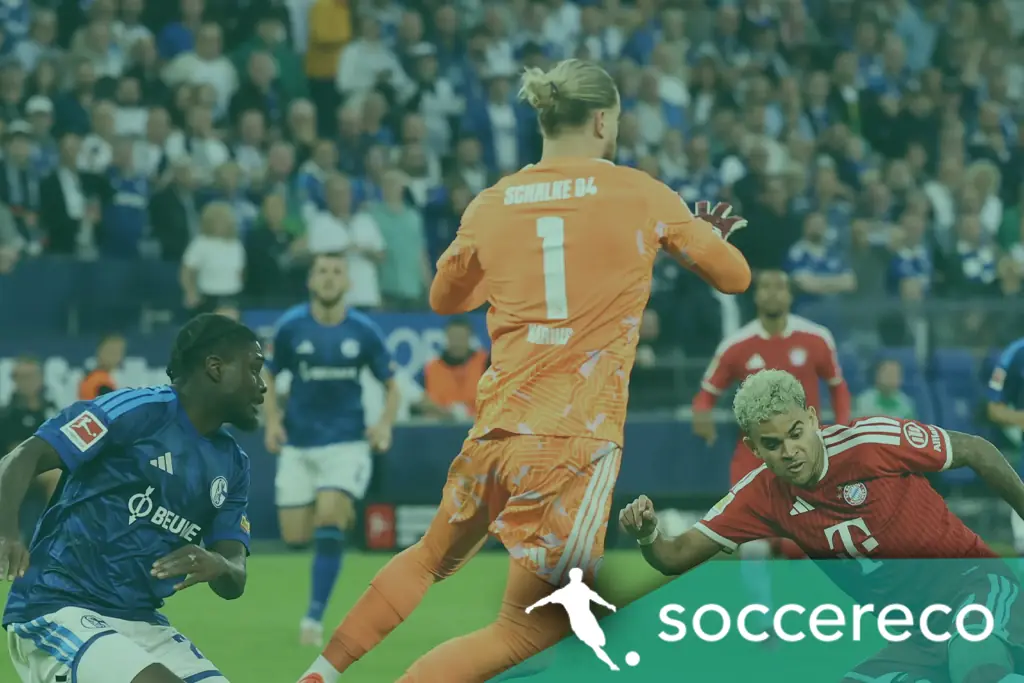
Schalke hold Bayern to goalless draw in first home match back in Bundesliga
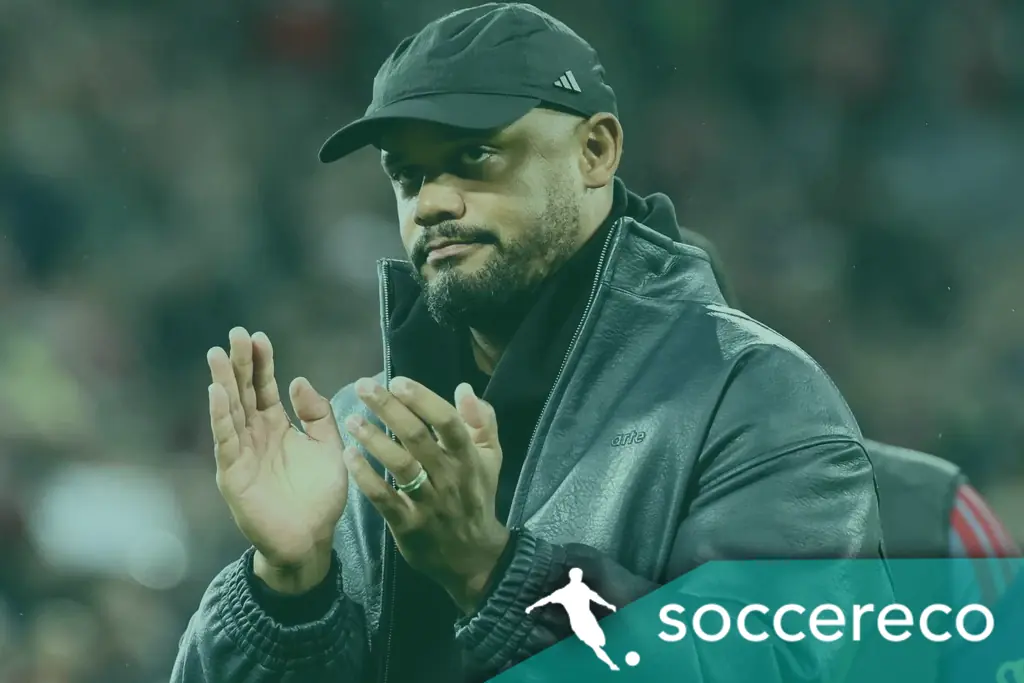
Schalke 04 earned their first point since returning to the Bundesliga by holding Bayern Munich to a 0-0 draw in Gelsenkirchen, producing a disciplined defensive performance against the reigning champions and responding in the best possible way to their opening-day defeat. Bayern arrived after a dominant 5-1 victory over VfB Stuttgart in the first round, but Vincent Kompany side were unable to reproduce the same attacking fluency against a Schalke team that defended compactly, remained organised for the full 90 minutes and received enormous support from the home crowd.
The first surprise came before kick-off when Kompany decided to leave Harry Kane and Michael Olise on the bench. The decision attracted attention because Bayern Champions League match against Bodø/Glimt is not until Thursday, meaning there was still a significant recovery period available. Without two of their most influential attacking players from the start, Bayern struggled to create the kind of clear opportunities that had characterised their performance against Stuttgart. They controlled long periods of possession but found very little space between the Schalke defensive lines, with the promoted side refusing to become stretched and forcing Bayern to circulate the ball in areas that caused little immediate danger.
Ismael Saibari was given his first start since moving from PSV and was used as a striker, another notable choice from Kompany. The Morocco international had impressed after coming off the bench against Stuttgart, providing two assists during a lively cameo, but his first start proved considerably more difficult. Schalke defended with numbers around their own penalty area and prevented Saibari from finding the spaces in which he could receive possession facing goal. His clearest opportunity of the first half came with a shot from the edge of the box, but the effort sailed around two metres over the crossbar and did not trouble Loris Karius.
Nathaniel Brown and Luis Díaz also attempted to provide Bayern with greater threat from wider positions, but Schalke remained comfortable for much of the first half. Karius, the former Liverpool goalkeeper, was not forced into a major save before the interval, which reflected how well the home side limited Bayern despite spending long periods without the ball. Rather than trying to match Bayern through possession, Schalke accepted that they would have to defend for long spells and concentrated on maintaining their shape, protecting central areas and preventing the visitors from creating simple combinations close to goal.
Kompany reacted at half-time by introducing Kane in place of Brown, a clear indication that he was dissatisfied with Bayern lack of penetration in the opening 45 minutes. The England striker immediately gave the visitors a more recognised reference point through the middle and allowed Bayern to play more directly around the penalty area. The pressure increased further around ten minutes into the second half when Olise replaced Saibari and Jamal Musiala came on for Lennart Karl, giving Kompany three of his most creative and dangerous attacking players on the pitch for the final phase of the match.
The substitutions changed the rhythm of the game. Bayern began to spend even more time around the Schalke penalty area and forced the home side deeper, with the visitors moving the ball more quickly and creating greater pressure through Kane, Olise and Musiala. Schalke, however, refused to lose their organisation. Every Bayern attack was met by defenders willing to close spaces, block passing lanes and compete for second balls, while the atmosphere inside the stadium grew louder as the possibility of an unexpected point became increasingly realistic.
The longer the match remained goalless, the more confidence Schalke appeared to gain. Bayern still controlled the territorial battle, but the champions were unable to create a sustained series of high-quality chances. The home side defended with impressive concentration and avoided the individual errors that can quickly punish teams facing attackers of Bayern quality. Karius also provided reassurance behind the defence, dealing confidently with the situations that reached his area and helping Schalke manage the final stages under growing pressure.
Kane eventually came closest to breaking the deadlock shortly before full-time. The striker found enough space to direct an effort towards the top corner, but Karius reacted brilliantly and managed to tip the shot away, producing the decisive save of the evening. It was the moment that effectively preserved Schalke point and confirmed the goalkeeper as one of the key figures in a performance built around defensive resilience.
For Bayern, the draw represents an early setback after such an emphatic opening victory. Their 5-1 win against Stuttgart had suggested the champions were immediately operating at a high level, with the attack combining fluently and substitute Saibari making a major impact with two assists. The contrast in Gelsenkirchen was significant. Bayern had more possession, more attacking quality available and eventually introduced Kane, Olise and Musiala, but they still could not find a way through.
The dropped points are particularly notable when compared with last season. Bayern did not suffer their first setback in the Bundesliga until the tenth round of the campaign, whereas this time they have already failed to win in their second league match. It is far too early for the result to have major consequences in the title race, but it serves as an immediate reminder that even the strongest squads can struggle when opponents defend with discipline and refuse to give them the spaces they normally exploit.
Kompany will inevitably face questions over his starting selection, especially the decision to begin with Kane and Olise on the bench. Rotation is a normal part of managing a squad involved in domestic and European competitions, but the timing of the Champions League fixture means the decision will attract additional scrutiny. Bayern looked more dangerous after the changes, yet even with their leading attacking players on the pitch they could not find the goal required to turn pressure into victory.
Saibari experience also illustrated the difference between making an impact as a substitute and starting against a compact defensive opponent. Against Stuttgart he had entered a match with spaces already appearing and immediately exploited them, but against Schalke he was asked to lead the line from the beginning against a team defending deep. He struggled to impose himself and was replaced after 55 minutes, although the match also provided another important stage in his adaptation to Bayern following his move from PSV.
For Schalke, the result carries much greater emotional significance. Their return to the Bundesliga had begun with a 3-0 defeat against Augsburg, a difficult result that immediately highlighted the challenge of adapting once again to the top level. Facing Bayern in the first home fixture could hardly have represented a more demanding assignment, but Schalke responded with exactly the type of performance required to restore confidence.
The point was earned through organisation rather than luck alone. Schalke restricted Bayern for most of the first half, remained disciplined after the visitors introduced their stars and survived the final period when pressure was at its highest. The ability to stay concentrated for the entire match will be particularly encouraging for the coaching staff, because newly promoted teams often suffer most when they are forced to defend for extended periods against superior individual quality.
The home supporters also played an important role in maintaining the intensity of the performance. Every successful defensive action was celebrated, and as the minutes passed the stadium increasingly sensed that Schalke were capable of securing something from the game. That connection between players and supporters was especially visible during the final stages, when Bayern pushed for a winner but the home side continued to defend with energy rather than retreating into panic.
Karius save from Kane became the defining moment. A goalkeeper with extensive experience at major clubs, including Liverpool, he was called upon when Schalke defensive structure was finally breached and responded with the kind of intervention required in matches against elite opposition. Without that save, Bayern might have escaped with all three points despite struggling for much of the evening, but Karius ensured Schalke defensive effort was rewarded.
The result also provides Schalke with a psychological lift before the next rounds of the season. One point from two matches is still a modest total, but taking that point against Bayern changes the tone of their start considerably. The team has now shown that it can compete against the strongest side in the country when the defensive structure and collective effort are maintained, something that could prove important as Schalke attempt to establish themselves again in the Bundesliga.
Bayern, meanwhile, will have to regroup quickly before turning their attention to Europe. The Champions League meeting with Bodø/Glimt now follows a frustrating domestic result, and Kompany will want a much sharper attacking display. The depth of the squad remains one of Bayern greatest strengths, but the Schalke match showed that rotating key players can still affect the fluidity of the team, particularly when facing an opponent prepared to defend very deep.
In the end, the 0-0 draw represented two completely different outcomes for the two clubs. For Bayern, it was two points dropped and the first reminder of the season that dominance of possession does not automatically produce victory. For Schalke, it was a memorable first point back in the Bundesliga and an early sign that they may be capable of making their home ground a difficult place for even the biggest teams to visit.
After the disappointment of the defeat to Augsburg, Schalke needed a response and produced one against the most demanding opponent possible. Bayern arrived in Gelsenkirchen as champions and heavy favourites, but left without scoring and without the three points they expected. For the promoted side, the goalless draw may ultimately be remembered as one of the first important moments of their return to Germany top flight.