Wayne Rooney calls for disciplinary action against Lisandro Martinez after the defender criticised Manchester United management following a 2-0 defeat to Atletico Madrid.
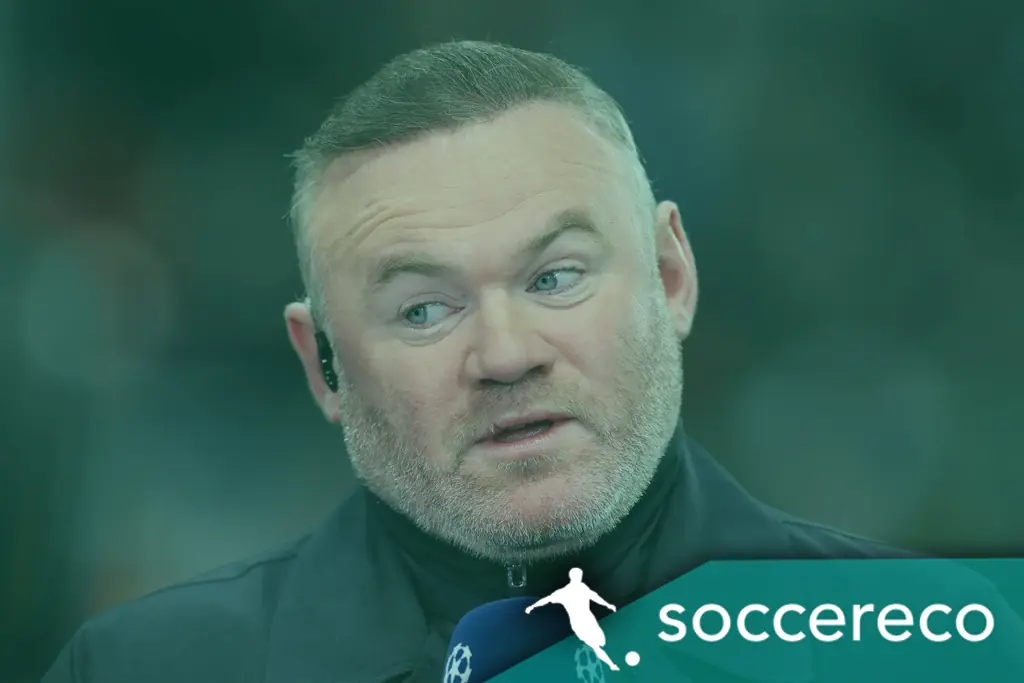
Wayne Rooney demands action against Lisandro Martinez after Manchester United defeat to Atletico Madrid
Manchester United's growing crisis has taken another dramatic turn after Wayne Rooney called for disciplinary action against Lisandro Martinez following the Argentine defender's public criticism of the club's management. The former United striker believes Martinez crossed a line by questioning the decisions being made behind the scenes immediately after another disappointing Champions League performance, warning that such comments risk creating further divisions at a time when the team desperately needs unity.
The controversy followed Manchester United's 2-0 defeat away to Atletico Madrid in the second round of the Champions League league phase. Michael Carrick's side endured another frustrating evening, conceding after just 50 seconds before eventually suffering a fifth consecutive match without a victory. The result intensified scrutiny of the manager, the players and the club's recruitment strategy, with Martinez choosing the aftermath of the defeat to deliver an unusually direct assessment of United's problems.
The Argentina international insisted that Manchester United require greater investment and stronger players if they are to compete consistently at the highest level. He also singled out technical director Jason Wilcox, making clear that he expected more from those responsible for shaping the squad. Although Martinez acknowledged that the players themselves must improve, his decision to discuss the club's internal problems publicly immediately attracted attention.
Rooney, speaking as a pundit on Amazon Prime, reacted critically to those remarks. While acknowledging that Martinez is entitled to express frustration over the club's performances, the former England captain argued that a player should not publicly challenge the leadership in a way that could undermine his teammates and manager.
The disagreement has added another uncomfortable dimension to an already difficult period at Old Trafford. Manchester United are struggling for results, Carrick is facing increasing pressure, and attention has now shifted towards whether the club should respond formally to comments made by one of its senior defenders.
Rooney believes Martinez crossed the line with public criticism
Wayne Rooney has never been unfamiliar with controversy during his own career, and he acknowledged that experience when discussing Martinez's interview. The former striker admitted that he frequently spoke openly as a player and understood the temptation to express strong opinions after disappointing performances. Nevertheless, he believes there are limits to what should be discussed publicly, particularly when a club is already struggling.
"It's a difficult situation because I was always someone who spoke my mind when I was a player, and it's natural to want to express your opinion, but I think he may have gone too far," Rooney explained.
He argued that concerns about recruitment, squad depth and decisions made by senior officials should normally be addressed through conversations with the manager or within the club rather than through interviews conducted immediately after matches.
"That's something for the manager to deal with, and it should remain an internal matter. The fans want to hear from the players and see that they genuinely care about the team," Rooney added.
His criticism highlights an important distinction between expressing disappointment and publicly questioning the direction of an organisation. Footballers are regularly expected to explain poor results and accept responsibility, especially when supporters are frustrated. However, the situation becomes more complicated when a player uses that opportunity to identify senior officials as part of the problem.
Martinez's remarks went beyond a conventional assessment of the performance against Atletico Madrid. By demanding more investment and specifically mentioning Jason Wilcox, he brought the club's recruitment decisions into a discussion that would normally focus on the match itself.
For Rooney, that approach risked distracting attention from the players' responsibilities. Manchester United had just suffered another defeat, yet the conversation quickly moved towards what the club had failed to provide rather than what the team had failed to deliver on the pitch.
Rooney did not dispute that the squad could benefit from additional quality. His objection concerned the way Martinez communicated that opinion and the potential consequences of publicly questioning the club's management during a difficult period.
Rooney questions whether Martinez planned the interview
Perhaps the most controversial part of Rooney's response was his suggestion that Martinez's intervention may have been carefully considered rather than an emotional reaction to the defeat.
The former Manchester United forward questioned why the Argentine defender had chosen that particular moment to speak so openly about the club's recruitment strategy. He also wondered whether Martinez had discussed the message with his representatives before delivering it publicly.
"I think what Lisandro Martinez did was very deliberate. Why give that interview immediately after this match? Did he volunteer to do it himself? I rarely hear him speak," Rooney said.
"It seemed planned, something he had discussed with his representatives before making it public. It's sad because, at a time when you need all the players to stick together, you shouldn't be making public what is happening at boardroom level," he continued.
Those comments represent Rooney's interpretation of the interview rather than evidence that Martinez coordinated his remarks in advance. There has been no indication in the account of the incident that the defender's representatives were involved in preparing his statements.
Nevertheless, Rooney clearly regarded the timing as significant. Manchester United were already dealing with mounting criticism after a poor start to the season, and a difficult European night in Madrid provided another reason for questions to be asked about the club's direction.
By choosing that moment to demand stronger investment, Martinez ensured that his comments would become part of the wider debate surrounding United's problems. Whether the interview was planned or spontaneous, it drew attention to the relationship between the playing squad and the officials responsible for assembling it.
Rooney believes that such interventions can be particularly damaging when results are poor. A successful team may find it easier to absorb disagreements because positive performances reduce external pressure. When a side has gone several matches without winning, however, public criticism can intensify uncertainty and create questions about the level of unity inside the dressing room.
Martinez demands greater investment and challenges Jason Wilcox
The interview that triggered Rooney's reaction began with Martinez offering a severe assessment of Manchester United's performance against Atletico Madrid. The Argentina international did not attempt to defend the team's display and suggested that what happened in Spain reflected deeper problems within the club.
"Very poor. I have to control myself. But it's an exact reflection of what our club looks like right now," Martinez said.
His frustration was not limited to the immediate result. The defender argued that Manchester United had failed to build adequately on their previous campaign and suggested that the club needed to become more ambitious in the transfer market.
"We had a fantastic season last year, and now we expect more from the people above us. We need more players to compete," he explained.
Martinez then drew a direct comparison with Atletico Madrid, praising the Spanish club's squad and acknowledging that the hosts had deserved their victory.
"Many teams have strengthened their squads with several new players, just like Atletico Madrid, who have an excellent team and deserved to win today," he continued.
The defender's remarks reflected a belief that Manchester United lack the necessary depth and quality to compete effectively against strong European opposition. Although United possess experienced international players, Martinez clearly feels that further recruitment is required across the squad.
He also made his dissatisfaction with the club's technical leadership explicit.
"I expected more from everyone. More investment, without a doubt. I expect more from our technical director, Jason Wilcox, to be honest," Martinez said.
However, his comments were not entirely directed at the management. He acknowledged that the players must also accept responsibility for the results and improve their performances.
"And from the players as well, of course. We have to do more. But it's important to build a strong team so we can compete on nights like this," he concluded.
That final acknowledgement is important because it shows Martinez was not attempting to remove all responsibility from the squad. His argument was that Manchester United need improvements both on the pitch and in the decisions being made at the highest levels of the club.
Rooney nevertheless believes the defender's message created an unnecessary public confrontation. The disagreement is therefore less about whether Manchester United need better players and more about who should raise those concerns, when they should be discussed and how they should be communicated.
Rooney turns criticism towards the performances of Martinez
Although Rooney accepted that Manchester United need additional investment, he also questioned whether Martinez is in a position to demand stronger players when his own performances have not consistently reached the required standard.
The former United captain suggested that significant recruitment could create greater competition for places and potentially threaten Martinez's position in the team.
"It's obvious that Lisandro Martinez cares and wants the club to spend more money and sign more players. Although, to be honest, if that happens, I think he could be one of the first to leave because of his own performances," Rooney said.
"His level hasn't been good enough, but I think he is right in some respects: the club needs to invest more, both in attack and defence," he added.
Rooney's assessment was particularly direct because it challenged the credibility of Martinez's complaints. In his view, a player calling for higher standards elsewhere in the organisation must also demonstrate that he is consistently meeting those standards himself.
He pointed to Martinez's injury record as another reason why the defender has struggled to establish the impact many supporters expected when he arrived at Old Trafford.
"To be honest, I don't think Lisandro Martinez has managed to build a genuine connection with the supporters since arriving because he's suffered so many injuries," Rooney explained.
The former striker was careful to distinguish between questioning the player's contribution and dismissing his footballing ability.
"The truth is, I like him. I think he's a good player, but he's been injured so often that, considering what Manchester United paid for him, he hasn't delivered what was expected," he said.
Injuries can prevent players from maintaining rhythm, building partnerships and contributing consistently over an entire season. For a defender, those interruptions can be particularly disruptive because defensive relationships often depend on familiarity and coordinated movement.
Nevertheless, Rooney believes Manchester United's expectations remain high regardless of those difficulties. He argued that Martinez must demonstrate his value through consistent performances, especially after publicly challenging the quality of the squad around him.
Public criticism raises questions about respect for teammates
Another major concern raised by Rooney was the possible effect of Martinez's comments on the rest of the Manchester United squad.
Although the Argentine defender criticised recruitment decisions rather than directly attacking individual teammates, Rooney believes the underlying message could be interpreted as suggesting that the current players are not good enough.
"I also think it's a little disrespectful to his teammates because he's suggesting they aren't good enough," the former striker argued.
That interpretation reflects the delicate nature of public discussions about squad strengthening. Every professional club attempts to improve its playing resources, and footballers generally understand that new signings are necessary for long-term success. However, when a player demands additional recruitment immediately after a defeat, teammates may perceive those comments as an attempt to shift responsibility for poor results.
Manchester United's situation makes the issue particularly sensitive. The team have struggled for consistency, pressure on the manager has increased and supporters are questioning whether the current squad can meet the club's ambitions.
Against that backdrop, Rooney believes the players must concentrate on restoring confidence rather than creating further uncertainty about the quality of their colleagues.
He also reminded Martinez that being a World Cup winner brings expectations of leadership and performance.
"As a footballer, you have to move forward. You have to go out onto the pitch and show that you're a world champion," Rooney said.
The reference to Martinez's international achievements was intended to emphasise the standards expected from a player with his experience. Having been part of Argentina's World Cup-winning squad, the defender is familiar with the demands of competing at the highest level and the importance of maintaining a united group.
Rooney believes that experience should now be used to help Manchester United recover from their difficulties rather than contributing to a public dispute about recruitment.
Rooney urges Manchester United to consider disciplinary action
Rooney went beyond criticising the interview and suggested that Manchester United's leadership should consider taking formal action against Martinez.
"The club's management needs to look into this situation and will probably have to take action because it's disrespectful to the entire club," he said.
He acknowledged that United have problems and that supporters naturally want stronger players, but insisted that the squad must accept the responsibility of working with the resources currently available.
"Yes, there are problems. Everyone wants more players and better players, but these are the players we have," Rooney continued.
Any disciplinary response would involve a delicate decision for the club. Manchester United must protect the authority of their manager and senior officials while also recognising that players can legitimately express disappointment about performances and the direction of the team.
A measured internal conversation could address the concerns raised by Martinez without creating another public controversy. More serious action, however, would signal that the club considers his comments incompatible with the standards expected from its players.
Rooney did not identify a specific punishment. His position was that the club should examine the matter and determine whether the defender's public criticism warrants consequences.
At a time when United need greater consistency and a stronger collective response, the management will be conscious that an extended dispute involving Martinez could become another distraction from the team's sporting problems.
Atletico Madrid stun Manchester United after just 50 seconds
The controversy emerged from a Champions League match that went wrong for Manchester United almost immediately. Carrick's side arrived in Madrid hoping to improve their results and produce a convincing response to the criticism surrounding their domestic performances, but Atletico Madrid took control of the scoreline within the opening minute.
Pablo Barrios scored after just 50 seconds, providing the hosts with an extraordinary start and forcing United to reconsider their approach before the match had properly settled into a rhythm.
Conceding so early is particularly damaging for a team already struggling for confidence. Instead of gradually establishing possession and building control, Manchester United were immediately required to chase the game against opponents comfortable with protecting an advantage.
Atletico Madrid's early goal also allowed the home crowd to become an influential presence. The hosts had a lead to defend and opportunities to exploit the spaces that United might leave while attempting to equalise.
Despite the difficult opening, Carrick's team remained within one goal for much of the encounter. Atletico had another effort disallowed towards the end of the first half, but the score remained 1-0 at the interval.
That margin gave United a realistic opportunity to recover. A single successful attacking move could have restored parity, and the visitors still had sufficient time to change the direction of the contest.
However, the match ultimately demonstrated the difficulties Manchester United are experiencing when attempting to recover from setbacks. Although Carrick later suggested that his players improved as the encounter progressed, they were unable to transform that improvement into a goal.
The hosts maintained their advantage and eventually secured the victory after another decisive incident in the second half.
Leny Yoro red card ends hopes of Manchester United comeback
Manchester United's task became considerably more difficult in the 74th minute when French defender Leny Yoro was sent off.
The dismissal left the visitors with ten men while they were already trailing, reducing their chances of finding the equaliser and forcing Carrick to manage the final stages with a numerical disadvantage.
Playing with ten men against Atletico Madrid presented a particularly demanding challenge. United needed to retain enough attacking ambition to pursue a goal without leaving excessive space for the hosts to exploit.
The balance proved difficult to maintain, and Atletico Madrid scored their second goal just five minutes after Yoro's dismissal, extending their advantage in the 79th minute.
At 2-0, the match was effectively beyond Manchester United's reach. The visitors had struggled to create a successful response while playing with eleven men, and the combination of a two-goal deficit and a numerical disadvantage made a late recovery increasingly unlikely.
The defeat was another example of United being unable to manage key moments effectively. Conceding almost immediately placed them under pressure, while the red card and subsequent second goal removed their remaining opportunity to recover.
For Carrick, the match offered both tactical and psychological concerns. His players needed to respond to an early setback, maintain discipline and take advantage of the periods when they were competitive. Ultimately, United failed to do enough in those areas to avoid another disappointing result.
Bruno Fernandes and Diogo Dalot unable to prevent European defeat
Portuguese internationals Bruno Fernandes and Diogo Dalot were both included in Manchester United's starting lineup against Atletico Madrid, but their presence was not enough to prevent another defeat.
Fernandes remains an influential figure within the team, particularly through his experience, creativity and leadership. However, United's recent struggles have demonstrated that individual quality alone cannot compensate for problems in collective organisation and consistency.
Dalot also faced another demanding evening as the visitors attempted to respond to Atletico Madrid's early advantage. When a team concedes so quickly, the responsibilities of defenders and midfielders can become more complicated as greater risks are taken in possession.
The match once again highlighted the need for Manchester United to function more effectively as a unit. Attacking players require reliable support from midfield, while defenders must remain organised even when the team is chasing a result.
The difficulties encountered in Madrid cannot be reduced to the performances of individual players. Conceding in the opening minute, failing to equalise and eventually finishing with ten men reflected broader problems that Carrick must address.
Martinez's subsequent criticism of recruitment suggests that he believes the current squad lacks sufficient depth to handle those demands consistently. Rooney, however, argues that the players already at the club must first demonstrate that they can perform at the level expected of Manchester United.
Michael Carrick admits Manchester United changed too much defensively
Following the defeat, Michael Carrick acknowledged that Manchester United had once again failed to produce the performance required to compete successfully.
The manager admitted that the early goal had placed his team in a difficult position, although he believed there had been some improvement as the match progressed.
"The start put us in a difficult position, but I feel we grew into the game," Carrick explained.
He also suggested that changes made to the team's defensive organisation may have contributed to the difficulties encountered during the match.
"We tried to do different things, and defensively, we probably changed too much. We definitely have to find a way forward," he added.
Those comments reflect the challenge facing a manager attempting to find solutions during a prolonged period of disappointing results. Tactical adjustments can help address weaknesses, but repeated changes may also make it more difficult for players to develop the understanding and consistency required to perform effectively.
Defensive stability is particularly important when a team is already struggling for confidence. Players need clear responsibilities and reliable relationships with their teammates, especially when facing opponents capable of punishing hesitation.
Carrick appears to recognise that Manchester United must establish a more consistent approach. His admission that the team may have changed too much suggests he is considering whether the search for immediate solutions has created additional uncertainty.
The manager's challenge is to identify a structure that allows United to defend more reliably without sacrificing their ability to create chances. Achieving that balance will be essential if the team are to end their winless sequence.
Five matches without a win deepen Manchester United crisis
The defeat against Atletico Madrid extended Manchester United's winless run to five matches across competitions. During that sequence, Carrick's side have recorded two draws and three defeats, a run that has increased the pressure on the manager and intensified concerns about the direction of the season.
United entered the European encounter already under scrutiny after a disappointing start to their Premier League campaign. Results had failed to match expectations, and supporters were growing increasingly frustrated by the team's inability to turn competitive performances into victories.
The Champions League offered an opportunity to change that narrative. A positive result away to Atletico Madrid could have provided confidence and demonstrated that the team were capable of responding effectively to adversity.
Instead, United suffered another defeat and produced the kind of performance that has become familiar during their recent struggles. They conceded early, failed to make their periods of improvement count and ultimately lost control of the contest following a second-half dismissal.
The result also increased attention on Carrick's position. The manager has previously appealed for patience and argued that successful football projects require time to develop, pointing to managers such as Diego Simeone and Mikel Arteta as examples of the benefits of continuity.
However, patience becomes more difficult to maintain when results continue to deteriorate. Manchester United supporters expect improvement, and the club's status creates pressure to recover quickly from disappointing performances.
Carrick must now manage several challenges simultaneously: improving the team's tactical organisation, restoring confidence among the players and addressing the potential consequences of Martinez's public criticism.
The situation is especially delicate because the comments from the Argentine defender have brought the club's recruitment strategy into the debate. Questions are no longer limited to whether Carrick can improve the performances of the current squad. There is now an additional discussion about whether senior officials have provided the manager with the resources required to compete.
Recruitment debate reveals growing frustration at Old Trafford
Martinez's demand for greater investment touches on a recurring issue in modern football: the relationship between a club's recruitment strategy and the performances expected from its players.
Elite teams require a combination of individual quality, squad depth and tactical organisation. Successful recruitment can strengthen competition for places and provide managers with additional options, but new signings do not automatically resolve problems in collective performance.
Manchester United's difficulties against Atletico Madrid illustrated that distinction. The visitors struggled from the opening seconds and were eventually reduced to ten men, issues that cannot be explained entirely by the number of players signed during the transfer window.
At the same time, Martinez's comments suggest that at least one member of the squad believes the club must improve the resources available if it wants to compete consistently in demanding European fixtures.
Rooney's response was therefore not a complete rejection of that argument. The former striker agreed that United could benefit from investment in both attack and defence, but questioned why Martinez felt it necessary to make that criticism publicly.
The disagreement illustrates how two positions can coexist. Manchester United may require stronger recruitment, while the players currently representing the club remain responsible for delivering better performances.
For technical director Jason Wilcox and the wider management structure, Martinez's comments have created another issue to address. The club must evaluate the sporting needs of the squad while ensuring that internal concerns do not develop into public disagreements capable of affecting team morale.
The most effective response may depend on whether the criticism reflects a wider feeling within the dressing room or simply Martinez's personal frustration following the defeat. The information available does not establish that other players share his assessment of the club's leadership.
What is clear is that the timing has made the interview difficult to ignore. Manchester United are experiencing a poor sequence of results, and any suggestion of disagreement between players and senior officials is likely to receive considerable attention.
Manchester United face difficult decisions after Rooney intervention
Wayne Rooney's call for disciplinary action has added pressure on Manchester United to decide how they should respond to Martinez's comments.
The former England striker believes the defender was disrespectful towards the club and potentially towards his teammates. He also questioned whether Martinez's contribution on the pitch has been sufficient to justify such a public challenge to the management.
However, Martinez's original interview was driven by frustration over a disappointing Champions League result and his belief that the squad requires additional strengthening. He also acknowledged that the players themselves must improve, making his comments broader than a simple attempt to blame others.
Manchester United must therefore consider the intention behind the remarks, their potential impact on the dressing room and whether an internal response is necessary.
For Carrick, maintaining unity will be particularly important. The manager is already under pressure to improve results, and an unresolved dispute involving one of his defenders could make that challenge more complicated.
The immediate sporting priority remains ending the five-match winless sequence. United need greater defensive stability, more effective attacking performances and better control of decisive moments if they are to recover.
The defeat in Madrid provided another reminder of how costly individual incidents can become. Barrios scored after just 50 seconds, forcing the visitors to chase the match, while Yoro's dismissal in the 74th minute made an already difficult situation considerably worse.
Those moments will require attention regardless of any decision made about Martinez. Public disagreements over recruitment may dominate headlines, but Manchester United's recovery ultimately depends on producing better performances and collecting victories.
A divided response to a crisis that Manchester United must resolve
The controversy involving Lisandro Martinez and Wayne Rooney reflects the wider uncertainty surrounding Manchester United. A disappointing Champions League defeat has developed into a public argument about recruitment, player responsibility and the standards expected from individuals representing the club.
Martinez believes greater investment is necessary to compete against teams such as Atletico Madrid. His frustration after the match was clear, and his criticism of Jason Wilcox demonstrated that he expects improvement from the club's senior leadership as well as from the players.
Rooney accepts that Manchester United need strengthening but believes the defender chose the wrong moment and method to communicate his concerns. He has questioned Martinez's performances, referred to his repeated injuries and suggested that the club should consider disciplinary action.
The disagreement has exposed a difficult question for United: how to encourage accountability and honesty without allowing public criticism to undermine the unity required during a challenging period.
Meanwhile, Carrick remains responsible for reversing a sequence of results that has increasingly damaged confidence. Five consecutive matches without a victory have left the manager facing significant pressure, and another disappointing European performance has done little to convince supporters that the team are moving in the right direction.
Manchester United's leadership must now decide whether Martinez's intervention warrants an official response while also addressing the wider sporting problems identified by the defender and his former club captain.
For Martinez, the challenge will be to support his demands for higher standards through his own performances. For Carrick, it will be to restore defensive organisation and a sense of collective purpose. For the club's senior officials, the priority will be ensuring that recruitment decisions and the wider sporting strategy provide a coherent direction.
Rooney's criticism has made the dispute more visible, but the fundamental issue remains unchanged. Manchester United are not producing the results expected of a club with their history and ambitions, and the latest defeat has intensified questions throughout the organisation.
Whether United choose to discipline Martinez or address the matter internally, the club cannot afford to allow the controversy to overshadow the need for improvement. The next performances will determine whether Carrick's side can begin rebuilding confidence or whether the pressure surrounding Old Trafford will continue to increase.
After another difficult night in Madrid, Manchester United are facing more than a debate about one player's interview. They must restore unity, clarify their sporting direction and demonstrate that the current squad is capable of responding to adversity. Until results improve, the questions raised by Martinez and Rooney are likely to remain part of a much larger discussion about the future of the club.