Cristiano Ronaldo leaves Portugal's training camp after a dispute with Jorge Jesus, sparking European media reaction and uncertainty over his international future.
Cristiano Ronaldo Leaves Portugal Camp After Dispute With Jorge Jesus as European Media Reacts to Shock Departure
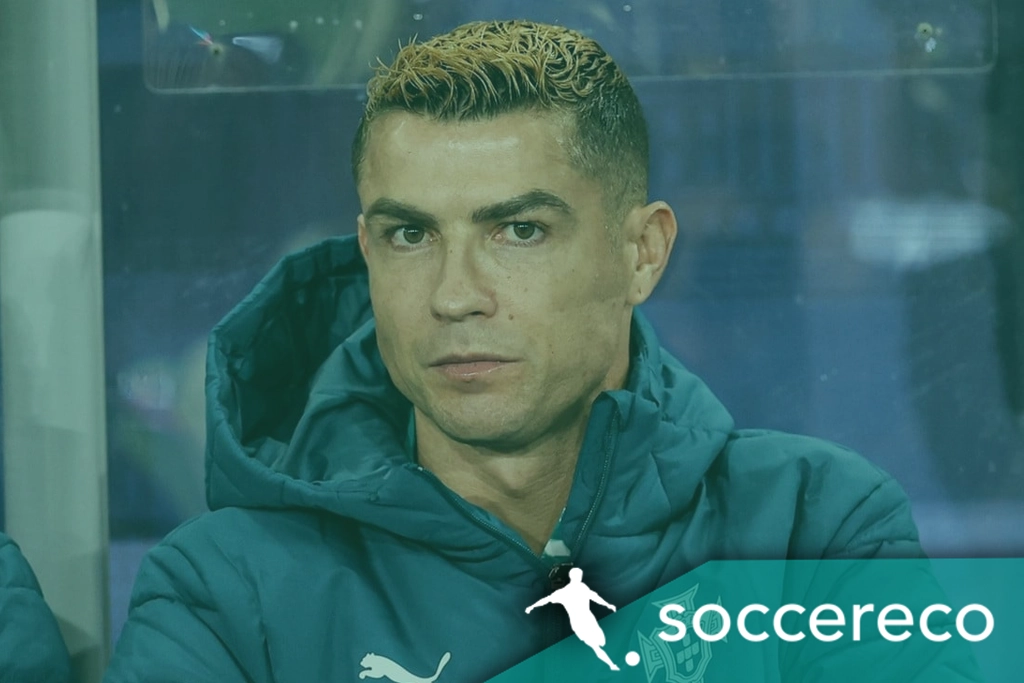
Cristiano Ronaldo has abruptly left the Portuguese national team training camp in Copenhagen following a disagreement with head coach Jorge Jesus, triggering a major controversy that has dominated sports newspaper headlines across Europe and raised the possibility that the 41-year-old forward has played his final match for Portugal. The captain's unexpected departure came ahead of Thursday's UEFA Nations League encounter against Denmark, with Portuguese newspaper O JOGO reporting that his decision is irreversible and that he does not intend to represent the national team again. The circumstances of his exit, which followed comments made by Jesus during a press conference, have prompted widespread international reaction, while Ronaldo himself has promised to explain the reasons behind his decision to the Portuguese public in due course.
The situation unfolded on Wednesday afternoon when Ronaldo left Portugal's training facilities in Copenhagen without participating in the session alongside his teammates. The forward had travelled to the Parken Stadium with the rest of the national team delegation but did not take part in the scheduled training activities. According to information published by O JOGO, he subsequently departed in a vehicle assigned to Portuguese Football Federation staff, before leaving the hotel where the squad was staying while his teammates were still completing their preparations. By the time the remaining players returned to their accommodation, Ronaldo had already left, meaning he did not say goodbye to the squad before ending his participation in the international gathering.
Portuguese Football Federation president Pedro Proença and national team coach Jorge Jesus reportedly attempted to convince the captain to reconsider his position, but their intervention was unsuccessful. Both officials were absent when the national team returned to the hotel, with reports indicating that discussions had continued in an effort to resolve the disagreement. Despite those attempts, Ronaldo maintained his decision and arranged to leave Denmark, with Spanish newspaper Marca reporting that the Portuguese international had called upon his private jet to transport him from Copenhagen to Madrid. His departure brought an abrupt end to a training camp that had already been marked by questions surrounding his absence from Portugal's previous match against Norway.
The controversy rapidly spread beyond Portugal, with several of Europe's most prominent sports newspapers featuring Ronaldo's departure on their front pages. In Spain, where the former Real Madrid player remains one of the most recognizable figures in the country's football history, Marca made the incident its leading story, placing a large photograph of the Portuguese captain on the cover alongside a headline announcing that he had left the national team. The Madrid-based publication emphasized that Ronaldo had abandoned the Portuguese camp following Jorge Jesus's press conference, while also highlighting the forward's promise to reveal what he described as the truth behind his decision. The newspaper devoted considerable attention to the timing of the announcement and the possibility that the disagreement could bring his international career to an unexpected conclusion.
Another Madrid newspaper, AS, also referred to Ronaldo's departure on its front page, suggesting that the incident could represent a definitive farewell to the Portuguese national team. The publication focused on the uncertainty surrounding the forward's future and the serious consequences of his disagreement with Jorge Jesus, particularly given Ronaldo's longstanding position as captain and leading goalscorer. In Catalonia, Mundo Deportivo adopted a similarly prominent approach, reporting that the Portuguese striker had reacted angrily before leaving the training camp. Sport, meanwhile, did not make the controversy a principal front-page story, instead choosing to highlight the performances of Lamine Yamal with the Spanish national team.
The reaction was not limited to Spanish newspapers. In France, L'Équipe reported on the circumstances surrounding Ronaldo's departure, presenting the situation as a potentially decisive development in the final stages of his international career. Italian publications also gave the story significant prominence, with La Gazzetta dello Sport describing the turmoil surrounding the Portuguese forward and his decision to leave the national team while promising an explanation. Corriere dello Sport adopted a particularly striking headline, describing the incident as an expression of CR7's fury and emphasizing the abrupt nature of his departure from the Portuguese camp.
Tuttosport, another leading Italian sports newspaper, concentrated on the remarks made by Jorge Jesus immediately before the situation escalated. The publication recalled the Portuguese coach's insistence that he alone was responsible for deciding which players would feature in the team, regardless of their reputation or status. According to the newspaper, those comments left Ronaldo furious and contributed to the breakdown between the captain and the national team management. The prominence of the story in Italy also reflects Ronaldo's previous spell at Juventus, where his performances ensured that developments involving the Portuguese international continue to receive extensive media attention.
The disagreement between Ronaldo and Jesus appears to have intensified following Portugal's 2-1 victory over Norway in Oslo. During that encounter, the Portuguese captain remained among the substitutes despite warming up for a significant period during the second half. Ronaldo had been preparing to enter the match, but Jesus ultimately decided against introducing him, leaving the experienced forward on the bench throughout the game. The decision immediately generated questions about Ronaldo's position within the squad and the role he would occupy under the current coaching staff, particularly as the captain had previously been a regular presence in the Portuguese starting lineup.
Following the victory, Ronaldo's disappointment became a subject of discussion after he headed towards the dressing room rather than joining his teammates in acknowledging the travelling Portuguese supporters. Jorge Jesus subsequently addressed the incident, explaining that his decisions had been determined by the requirements of the match and maintaining that Ronaldo had been informed about the possibility of remaining on the bench. The coach acknowledged that preparing to enter a game without eventually being used could be frustrating, but argued that such circumstances were part of football and did not justify questioning the manager's authority over substitutions.
The situation continued to attract attention when Ronaldo did not participate in subsequent collective training sessions. Jesus attempted to play down suggestions of a serious disagreement, explaining that the forward had been following an individual programme involving mobility and strengthening work. He rejected the interpretation that Ronaldo had refused to train and indicated that the player was expected to return to the group. Nevertheless, reports emerging from the Portuguese camp suggested that discussions were taking place regarding Ronaldo's involvement and the conditions under which he would continue to contribute to the national team.
Those discussions appeared to have produced an understanding before Wednesday's press conference, but the relationship deteriorated again when Jesus publicly addressed Ronaldo's position. The coach insisted that the captain's achievements and reputation did not provide any automatic guarantee of playing time, explaining that all members of the squad were subject to the same technical decisions. He also emphasized that he had always respected the careers of established players while retaining complete responsibility for team selection, a principle that he said would remain unchanged regardless of the individuals involved.
"A player's status does not give him any special rights. Status means respecting their careers, as I do with everyone, with Cris and with other players I have coached throughout my career. I always discuss what I want to do and the plan I have drawn up with the player, but ultimately, I am the one who makes the decisions," Jesus told reporters during the press conference. The Portuguese coach then reinforced his position when addressing the possibility of using Ronaldo as a substitute, stating that his responsibility was to make decisions according to the needs of the team rather than the expectations of individual footballers.
"If I need you for 30 minutes, you will play. If I don't, you won't play. No player will ever change my decisions. Not him, not anyone in football. Not even a club president. Never, absolutely not!" Jesus declared. The comments were widely reproduced by European sports publications and became central to the reporting surrounding Ronaldo's subsequent departure. Although the coach presented his position as a general principle governing team selection, the remarks were interpreted in the context of the controversy surrounding the captain's absence against Norway.
According to O JOGO, Ronaldo was in the dressing room when he heard Jesus's statements and felt that the coach had failed to respect the understanding previously reached between them. The forward reportedly considered that the public comments went beyond what had been agreed privately, contributing to his decision to abandon the training camp. The precise terms of those conversations have not been disclosed, and Ronaldo has not yet provided a detailed public account of what he believes happened. However, the timing of his departure, immediately after the press conference, has been a central element in reports linking the dispute to the coach's remarks about team selection.
The presence of Pedro Proença in Copenhagen added another dimension to the situation, with the Portuguese Football Federation president becoming directly involved in attempts to manage the disagreement. Proença and Jesus reportedly held discussions with Ronaldo in an effort to convince him to remain with the national team for the fixtures against Denmark and Norway. Despite those conversations, the captain chose to leave, with the decision becoming public shortly afterwards. The unsuccessful intervention meant that the federation was forced to acknowledge the departure of its most experienced international player at a particularly sensitive moment in the Nations League campaign.
Ronaldo subsequently issued a statement confirming that he had decided to leave the national team camp following Jesus's press conference and a conversation with the federation president. The Portuguese captain did not announce his retirement explicitly but made clear that he intended to provide further information about the circumstances of his departure. His message also included a farewell to his teammates and a wish for Portugal to succeed in its forthcoming international commitments, despite his decision not to remain with the squad.
"Following the national team coach's press conference, and after a conversation with the president of the Portuguese Football Federation, I made the decision to leave the national team training camp. In due course, I will tell all Portuguese people the truth about the reasons that led to my departure from the national team, to which I have always been fully dedicated. Now is the time to wish Portugal and all my teammates, without exception, the very best of luck," Ronaldo wrote in his public statement.
The reference to revealing the truth has attracted particular attention, with the forward indicating that his current explanation does not represent a complete account of the events that led to his exit. Ronaldo has not specified when he intends to address the matter again, leaving several questions unanswered about his relationship with Jesus and the Portuguese Football Federation. His statement nevertheless confirmed that the decision was directly connected to developments involving the national team coach and federation president, rather than simply reflecting a physical problem or an inability to participate in the remaining fixtures.
The Portuguese Football Federation responded shortly afterwards with a brief official announcement confirming Ronaldo's departure. The governing body avoided discussing the disagreement with Jesus or addressing speculation about whether the captain would return for future international gatherings. Instead, the federation emphasized that Portugal would continue preparing for the upcoming Nations League matches with the remaining members of the squad, seeking to maintain attention on the team's sporting commitments.
"The Portuguese Football Federation announces that Portuguese international Cristiano Ronaldo has left the national team training camp currently taking place in Copenhagen. Preparations for the matches against Denmark and Norway, the latter scheduled to take place at the Estádio do Dragão, will continue as planned with the remaining 24 players selected for the squad. The entire delegation remains fully focused on the national team's upcoming commitments and on achieving the objectives that have been established," the federation stated.
Although the official communication confirmed the captain's departure, it offered no indication of whether further meetings would take place or whether the federation considered the matter definitively closed. That absence of detail has contributed to uncertainty about Ronaldo's international future, particularly after O JOGO reported that the forward had made an irreversible decision not to represent Portugal again. The newspaper's account suggests that the disagreement has developed beyond the immediate question of his involvement against Denmark and could mark the conclusion of an international career that began in 2003.
If that information is confirmed, Ronaldo's last appearance for Portugal would have been the match against Wales at the Estádio José Alvalade, where the Portuguese captain started before being substituted during the second half. João Félix scored the winning goal in that encounter, which could now acquire additional historical significance as the final occasion on which Ronaldo represented his country. The possibility of such an ending has attracted considerable attention because there had been no formal announcement that the forward intended to retire from international football, and his departure occurred in the middle of an active international gathering.
Ronaldo's career with Portugal spans more than two decades and includes some of the most important achievements in the history of the national team. Since making his senior international debut in 2003, he has established himself as Portugal's record appearance holder and leading international goalscorer, while also becoming one of the most recognizable figures in world football. His international career includes victory at UEFA Euro 2016, when Portugal defeated France in the final, and success in the inaugural UEFA Nations League in 2019. Those achievements have contributed to his longstanding status within Portuguese football and explain why the circumstances of his possible farewell have attracted such widespread attention.
At 41, Ronaldo remains one of the most experienced players available to Portugal, but the dispute with Jesus has brought into focus the question of how his role within the national team would evolve. The forward has spent much of his international career as an automatic selection, regularly occupying a central position in Portugal's attacking structure. Jesus's decision to leave him on the bench against Norway, followed by his public insistence that no player would receive preferential treatment, represented an indication that the coaching staff intended to determine his involvement according to individual match requirements.
The situation is particularly notable because Ronaldo and Jesus had already worked together at Al-Nassr in Saudi Arabia. Their previous professional relationship meant that the two men were familiar with each other's methods and expectations before the coach assumed responsibility for Portugal. Nevertheless, their cooperation at international level has become the subject of intense scrutiny following the disagreement over Ronaldo's playing time and the subsequent breakdown in communication reported by the Portuguese media.
Meanwhile, Portugal must continue its preparations for the encounter against Denmark without the captain who has represented the country for more than 23 years. The match in Copenhagen takes place against the background of a controversy that has dominated the build-up, with Jorge Jesus now responsible for selecting his attacking lineup from the remaining players. Gonçalo Ramos, who made a decisive contribution against Norway, is among the options available to the coach, while the absence of Ronaldo also removes one of the squad's most experienced figures from the dressing room and the field.
After facing Denmark, the Portuguese national team is scheduled to return home for its next Nations League fixture against Norway at the Estádio do Dragão. The federation has insisted that preparations will continue as planned with the remaining 24 players, despite the departure of its captain. However, questions surrounding Ronaldo are likely to remain prominent as the international campaign continues, particularly if the forward provides the detailed explanation he promised in his statement.
The controversy has also placed Jorge Jesus under increased media attention, with his management of Ronaldo's situation now being discussed across several European countries. While the coach has consistently defended his authority over team selection, the decision of the Portuguese captain to leave the camp has transformed what initially appeared to be a disagreement over playing time into a much broader dispute. The reports concerning private conversations between the two men have not been accompanied by a full public explanation, meaning that important details remain dependent on accounts published by the Portuguese media.
For the time being, the immediate facts are that Ronaldo has left Portugal's training camp, the Portuguese Football Federation has officially confirmed his departure and the player has promised to reveal his reasons at a later date. O JOGO maintains that the decision is irreversible and that the captain's international career has come to an end, although Ronaldo has not issued a formal retirement announcement. With Portugal preparing for its next competitive match and European newspapers continuing to follow developments, attention now turns to whether the forward will provide further clarification and whether the events in Copenhagen will ultimately mark his definitive farewell to the Portuguese national team.