Uli Hoeness raises concerns over Jamal Musiala's health and Bayern Munich future, discussing his recovery, medical condition and contract until 2030.
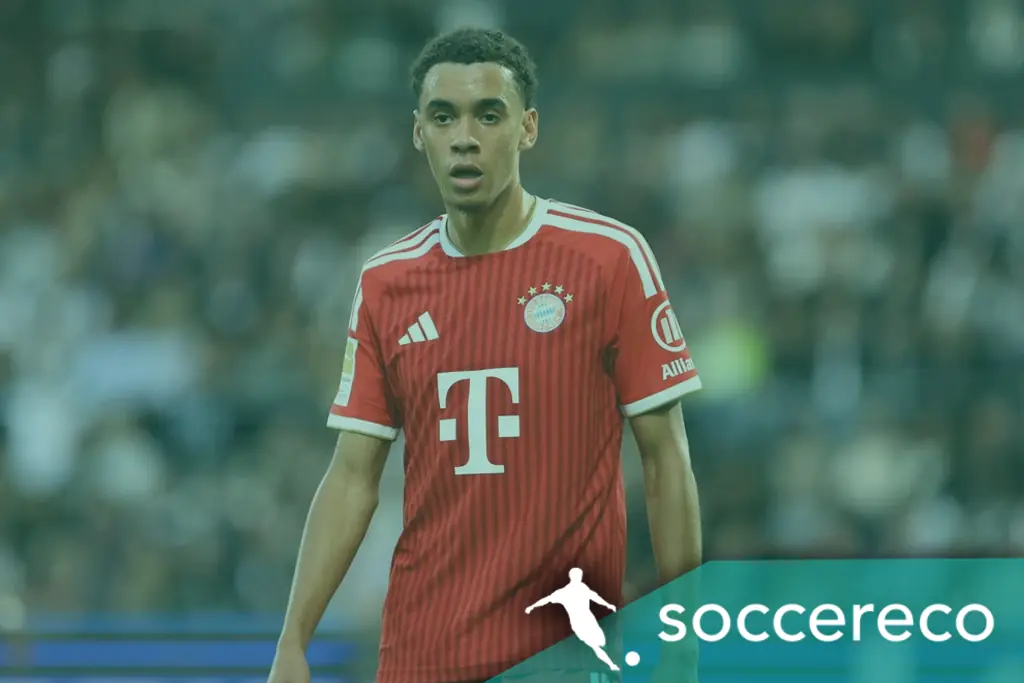
Uli Hoeness Raises Concerns Over Jamal Musiala's Future as Bayern Munich Face Difficult Questions
Bayern Munich honorary president Uli Hoeness has expressed serious concerns about Jamal Musiala's long-term sporting future after revealing that the German international is dealing with a neurological condition that cannot easily be cured, although its symptoms can be managed with treatment. The 23-year-old attacking midfielder has endured a difficult period involving several injuries and two frightening incidents during pre-season, leaving questions about when he will return to competitive action and whether he can eventually rediscover the exceptional form that established him as one of Europe's most exciting young footballers.
Speaking on German broadcaster BR's Sonntags-Stammtisch programme on Sunday, November 8, Hoeness acknowledged the uncertainty surrounding Musiala's recovery and the difficulties the situation creates for Bayern. The influential club figure described the midfielder's circumstances as a dilemma, explaining that his medical condition requires ongoing management and that nobody can guarantee he will return to the same level of performance he demonstrated before his recent setbacks. His comments have attracted considerable attention in Germany, particularly because Musiala remains one of Bayern's most valuable players and is under contract until June 2030.
The situation is especially sensitive because Musiala had already been working to rebuild his career following a serious injury sustained during the 2025 FIFA Club World Cup. After returning to competitive football, he experienced two episodes of apparent loss of consciousness in August 2026 and subsequently disclosed that he had been diagnosed with temporary absence seizures associated with a neurological dysfunction. Although the player publicly expressed optimism and confirmed that he was receiving specialist medical care, another muscular injury in September interrupted his season and prevented him from establishing consistent playing time.
Hoeness's remarks have therefore introduced another dimension to an already complicated situation. While the Bayern official questioned whether Musiala would recover his previous sporting level, he also emphasised the importance of supporting the player rather than treating his circumstances purely as a financial problem. His comments highlighted the responsibilities of a major football club when an important player experiences health difficulties, raising questions about the balance between sporting expectations, long-term contracts and the welfare of the individuals involved.
Hoeness Admits Bayern Are Facing a Difficult Situation
During his television appearance, Hoeness spoke openly about the uncertainty surrounding Musiala's future and acknowledged that Bayern cannot yet know how the player's condition will affect his long-term performances. The club's honorary president explained that the neurological problem is not something that can necessarily be resolved through a straightforward course of treatment. However, he also indicated that appropriate medication and medical management could help control its effects, allowing Musiala to continue working towards his return to professional football.
"He has an illness that cannot easily be cured, but it can be controlled to some extent with medication," Hoeness explained when discussing the midfielder's situation. The statement reflected the uncertainty surrounding a condition that Musiala himself had previously described as manageable with medical support. Nevertheless, Hoeness went further by questioning whether the player would eventually regain the physical and technical sharpness that had made him such an influential figure for Bayern and the German national team.
The distinction between managing a medical condition and recovering elite sporting performance is central to the concerns raised by the Bayern official. Professional football places extraordinary demands on players, particularly attacking midfielders such as Musiala, whose performances rely heavily on acceleration, changes of direction, close control and the ability to make decisions under pressure. Returning to training after a prolonged absence is an important step, but rebuilding competitive rhythm and physical confidence can require additional time. Those considerations become even more significant when a player has experienced several separate setbacks within a relatively short period.
However, Hoeness's comments should not be interpreted as a medical conclusion that Musiala will be unable to recover his previous form. The available information does not establish how the condition will affect his long-term career, and the player's own medical team remains responsible for assessing his fitness and determining the appropriate treatment. His ability to return to competition will depend on specialist medical assessments and his progress through rehabilitation rather than public predictions about his future.
Two Frightening Incidents During Bayern Munich's Pre-Season
The concerns surrounding Musiala first became public in August 2026 after the midfielder experienced two alarming incidents during Bayern Munich's preparations for the new campaign. The first occurred during a friendly against RB Leipzig, when Musiala suddenly collapsed without appearing to make contact with another player. Teammates quickly reacted to the situation, and the German international received medical attention before being withdrawn from the match. The incident raised immediate concerns because it appeared unrelated to a conventional football injury.
Only a few days later, on August 18, another similar episode occurred during Bayern's friendly against Heidenheim. Musiala had entered the match as a second-half substitute but was forced to leave the field after approximately eight minutes following another collapse. The repetition of the incident intensified public concern, with supporters questioning whether the midfielder was dealing with an underlying medical condition. Bayern's medical staff provided assistance, while the club and player began addressing the circumstances surrounding the episodes.
Following the match against Heidenheim, Musiala published a personal statement on social media explaining that he had been diagnosed with brief absence seizures resulting from a neurological dysfunction. He described the episodes as temporary and treatable, while acknowledging that the incidents could appear frightening to people watching from the stands or on television. The midfielder also thanked supporters for their messages and confirmed that he was receiving specialist care.
Musiala's message was notably reassuring. Rather than suggesting that he was preparing to step away from football, he explained that he felt positive about his situation and wanted to continue pursuing his professional career with the approval of the medical specialists responsible for his treatment. He also emphasised the importance of maintaining normal daily activities and remaining connected to his teammates, describing football as an important part of his life.
The player's statement provided the clearest public account of his condition, although he also requested that the more personal aspects of his medical situation remain private. That distinction is important because the information released by Musiala does not provide a complete medical history or establish a definitive long-term prognosis. While Hoeness has now discussed the challenges associated with managing the condition, the precise treatment arrangements and their implications for the midfielder's career remain matters for Musiala and his medical specialists.
A Difficult Recovery Following the 2025 Club World Cup Injury
Musiala's latest health concerns have arrived after an exceptionally challenging period in his career. In July 2025, the German international suffered a serious injury during Bayern Munich's FIFA Club World Cup quarter-final against Paris Saint-Germain in the United States. The midfielder was involved in a collision with goalkeeper Gianluigi Donnarumma and sustained a fractured fibula together with a dislocated and fractured ankle. The injury required surgery and forced him into a lengthy period of rehabilitation, interrupting his development at a time when he had established himself as one of Bayern's most important attacking players.
The severity of that setback meant Musiala missed approximately six months of competitive football before returning to the Bayern squad in January 2026. His recovery required careful management because restoring mobility, strength and confidence after such a significant injury is a demanding process. Bayern coach Vincent Kompany made clear at the time that the club would not expect Musiala to reproduce his best performances immediately, emphasising the importance of gradually reintegrating him into competitive action.
The rehabilitation process was particularly frustrating because the injury occurred after an impressive 2024/25 campaign in which Musiala had contributed significantly to Bayern's attacking performances. His ability to carry the ball through crowded defensive areas, create chances and score important goals had established him as a central figure in the team's plans. The lengthy absence therefore affected both the player's personal development and Bayern's attacking options, forcing the coaching staff to adapt while waiting for one of their most influential performers to return.
After overcoming the initial injury, Musiala faced further challenges during 2026. His participation at the World Cup did not provide the return to form he had hoped for, while the subsequent neurological episodes during pre-season created additional uncertainty. A hamstring injury sustained while on international duty with Germany towards the end of September then forced him onto the sidelines again. The accumulation of these setbacks explains why his recovery is being monitored so carefully, although each medical issue requires its own assessment and should not automatically be assumed to have the same cause.
For a player who had previously demonstrated remarkable consistency at such a young age, the repeated interruptions have made it difficult to establish the training rhythm required for elite performance. Musiala has spent considerable periods either recovering from injuries or attempting to regain match fitness, limiting his opportunities to develop continuity with teammates. Nevertheless, his age and previous achievements remain important reasons for Bayern to approach the situation with patience rather than make premature conclusions about his future.
Musiala Returns to Bayern Training but Comeback Date Remains Uncertain
Despite the concerns expressed by Hoeness, Bayern recently received encouraging news regarding Musiala's physical recovery. The midfielder returned to team training in early November after spending more than six weeks away from competitive football because of the hamstring injury sustained with Germany. The development represented an important step forward, allowing him to participate in collective exercises again after completing an individual rehabilitation programme.
Bayern assistant coach Aaron Danks confirmed that Musiala had rejoined the group and described the development as positive. However, the coaching staff decided that the away match against Mainz on November 7 would arrive too early for the attacking midfielder. Rather than rushing him back into competitive action, Bayern intended to use the international break to continue his conditioning programme and help him rebuild the physical preparation necessary for Bundesliga and Champions League football.
The decision reflects the importance of managing Musiala's return carefully, particularly after the repeated physical interruptions he has experienced during the past year. Although returning to group training represents significant progress, it does not automatically mean that a player is ready to complete 90 minutes in a competitive match. The medical and coaching staff must consider endurance, muscle strength, recovery between sessions and the physical demands associated with high-intensity competition before authorising a return.
Bayern have not announced a definitive date for Musiala's competitive comeback, and the club has avoided establishing an unnecessary deadline. That approach allows the player to concentrate on improving his condition without the additional pressure of meeting a public timetable. It also means that the latest positive developments in training should be considered separately from the longer-term medical questions raised by Hoeness. The hamstring rehabilitation is progressing, but the broader assessment of Musiala's health remains under the supervision of the specialists treating him.
Musiala's Contract Until 2030 Creates Another Challenge for Bayern
Beyond the sporting uncertainty, Hoeness also addressed the contractual implications of Musiala's situation. The German international signed a long-term extension with Bayern Munich in February 2025, committing himself to the club until June 30, 2030. The agreement represented a major statement of confidence from Bayern's management, who regarded the midfielder as one of the central figures around whom the team's future could be built.
At the time of the extension, Bayern officials praised Musiala's exceptional technical qualities, his importance to the club's identity and his potential to become one of the defining players of his generation. The midfielder also expressed his satisfaction at remaining in Munich, where he had progressed from the youth academy to the first team after arriving from Chelsea in 2019. The agreement underlined the long-term ambitions shared by the player and the club, making his subsequent health difficulties an especially sensitive issue.
During his recent television appearance, Hoeness acknowledged that Musiala continues receiving the salary established in his contract despite the uncertainty surrounding his return to competitive football. He invited viewers to imagine how inappropriate it would be for Bayern to question a player's agreement simply because his present circumstances prevented him from delivering the sporting performances originally expected. The hypothetical example highlighted the tension between a club's financial responsibilities and its obligation to support an employee experiencing medical difficulties.
Importantly, Hoeness did not announce that Bayern had decided to terminate Musiala's contract or reduce his salary. His comments were framed around a hypothetical situation and accompanied by an emphasis on the club's responsibility to stand behind the player. Although the remarks have generated discussion about the long-term financial implications of Musiala's situation, there has been no official confirmation of a decision to end the agreement that currently runs until 2030.
For Bayern, the challenge extends beyond the financial value of the contract. Musiala has become an important symbol of the club's sporting project and remains one of the most recognisable players in German football. His development from an academy prospect into an established international has created a strong connection with supporters, making his welfare an important concern for the wider Bayern community. Any decisions concerning his sporting future will therefore carry significance beyond the immediate composition of the first-team squad.
Hoeness Comments Spark Debate Over Support for Injured Players
The statements made by Hoeness have prompted discussion in Germany about the way football clubs and prominent officials should communicate publicly about players experiencing health difficulties. While the Bayern honorary president emphasised the importance of supporting Musiala, his questions about the midfielder's ability to regain his previous level of performance have also attracted criticism. Some observers believe that raising such concerns publicly can place additional pressure on a young player already dealing with a complicated recovery.
Achim Beierlorzer, the coach of FC Ingolstadt, was among those who questioned the usefulness of the comments. Speaking to German broadcaster BR, Beierlorzer argued that the remarks created unnecessary controversy and did not help Musiala, Bayern or the wider squad. Although he acknowledged that the club faces a challenging situation, he suggested that public speculation about the player's future could make an already sensitive matter more difficult to manage.
Former Bayern Munich and Germany captain Lothar Matthäus offered a different interpretation, suggesting that Hoeness may have intended his comments as a form of motivation rather than criticism. According to Matthäus, challenging Musiala's ability to recover his previous level could encourage the midfielder to demonstrate that he remains capable of performing at the highest standard. That interpretation highlights the different ways in which public statements from influential football figures can be understood, particularly when they involve questions about a player's long-term career.
The debate also reflects the broader responsibilities facing professional clubs when dealing with medical information. Players are public figures whose performances are regularly discussed, but health-related matters remain highly personal and require particular sensitivity. While supporters naturally want updates about the availability of important footballers, speculation about long-term medical outcomes can create confusion when detailed clinical information has not been released. Musiala's own request for privacy therefore remains an important consideration as the discussion continues.
Bayern Munich Remain Committed to Musiala's Recovery
For Bayern Munich, the immediate priority remains supporting Musiala through his rehabilitation and allowing him to progress towards competitive football at an appropriate pace. The player has already demonstrated considerable determination by returning from the serious injury suffered at the Club World Cup and continuing his career after the neurological episodes during pre-season. His recent participation in team training represents another positive development, even though questions remain about the longer-term implications of his medical condition.
The club's sporting department has repeatedly emphasised the importance of player welfare, particularly during a season affected by several injuries and health-related absences. Bayern sporting director Max Eberl has previously highlighted that health must take priority over football, a principle that remains relevant when considering Musiala's circumstances. Maintaining that approach will be particularly important as the midfielder attempts to rebuild his fitness without exposing himself to unnecessary pressure.
From a sporting perspective, Musiala's eventual return would provide Bayern with an additional creative option capable of influencing matches through individual skill and attacking intelligence. His close control, ability to move between defensive lines and effectiveness in crowded areas have made him a distinctive presence in the team's attacking structure. However, the coaching staff must balance the desire to reintegrate an important player with the need to ensure that he is physically prepared for the intensity of elite competition.
The coming weeks will provide further opportunities to assess his progress, particularly as the November international break creates additional space for individual training and physical preparation. Bayern have avoided placing a precise timetable on his return, allowing the medical specialists and coaching staff to make decisions based on his condition rather than the demands of the fixture calendar. That cautious approach is consistent with the club's earlier handling of his rehabilitation following the 2025 Club World Cup injury.
Hoeness's latest comments have brought renewed attention to an uncertain chapter in Musiala's career, but they do not establish that his best days as a footballer are behind him. The German international has publicly expressed confidence in his medical treatment, while Bayern have confirmed encouraging progress in his recovery from the latest muscular injury. His contract remains valid until 2030, and the club continues to support him during a period that has presented considerable challenges both on and off the pitch.
Ultimately, Musiala's situation illustrates how quickly circumstances can change for even the most talented footballers. At just 23, he has already achieved major success with Bayern Munich and Germany, yet the past 18 months have required him to confront difficulties extending far beyond the normal demands of professional competition. His immediate objective is to continue recovering under specialist supervision and return to football when medically cleared. Whether he eventually rediscovers the remarkable performances that made him one of Europe's leading young players remains uncertain, but Bayern's responsibility is to provide the support and patience required to give him the opportunity to do so.