FIFA faces controversy after allegedly covering nearly $4 million in US taxes for Gianni Infantino, raising serious questions about governance and transparency.
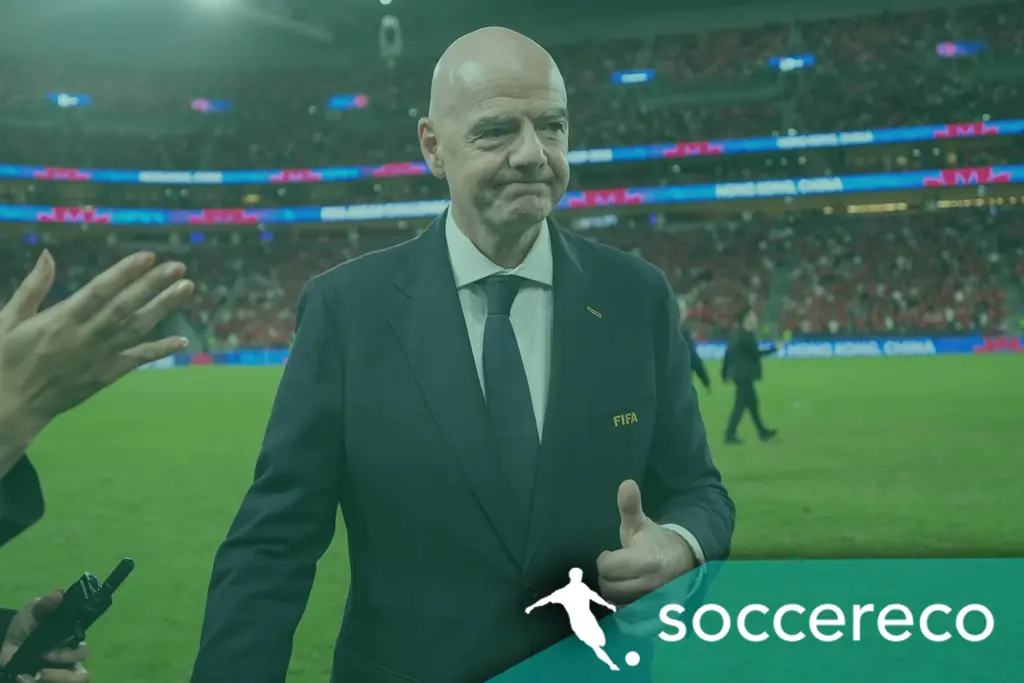
FIFA Faces New Controversy Over Nearly $4 Million in Tax Payments for Gianni Infantino
FIFA and its president, Gianni Infantino, are facing renewed scrutiny following revelations that football's global governing body agreed to cover almost $4 million in United States taxes on behalf of its president. According to investigations published on November 2 by French newspaper Le Monde and The New York Times, the arrangement relates to the years 2024, 2025 and 2026, a period during which Infantino spent considerable time living in Miami as part of his responsibilities surrounding the 2026 World Cup. The payments, estimated at approximately €3.6 million, have raised questions about financial transparency, internal governance and the special benefits available to senior officials within an organisation that has repeatedly promised to improve its standards of accountability. Although FIFA insists that its procedures comply with applicable regulations, the disclosures have generated fresh debate about the financial arrangements surrounding its most powerful executive.
The controversy centres on a tax equalisation arrangement originally introduced to protect FIFA employees who were required to relocate from Switzerland to the United States for professional reasons. The mechanism was intended to ensure that workers would not suffer additional financial disadvantages or receive unexpected benefits simply because their employment obligations required them to live in another country. However, documents examined by the newspapers suggest that the arrangement was subsequently extended to Infantino, despite his position as an elected official rather than an ordinary employee. That distinction has become particularly important because the original policy was designed for staff members working on FIFA competitions, while the organisation's president occupies a different position within its governance structure.
At the centre of the decision was Bruno Chiomento, a Swiss financial specialist who has maintained a longstanding relationship with Infantino and now chairs FIFA's Independent Governance, Audit and Compliance Committee. According to the investigation, Chiomento played an important role in securing approval for the tax arrangement, arguing that the organisation should assume the additional financial burden created by its president's extended presence in the United States. His involvement has attracted attention not only because of his professional responsibilities but also because of questions surrounding his independence and the benefits he has personally received from FIFA. The revelations have therefore developed into a broader examination of how financial decisions affecting the organisation's most senior officials are proposed, approved and monitored.
FIFA Tax Arrangement Raises Questions About Gianni Infantino's Financial Benefits
The origins of the controversy can be traced to FIFA's preparations for major international tournaments in North America, particularly the expanded Club World Cup held in 2025 and the men's World Cup staged across the United States, Mexico and Canada in 2026. Organising competitions of that magnitude required the governing body to establish an extensive operational presence in the United States, with employees relocating temporarily from Switzerland to support planning, administration and tournament delivery. Such international assignments can create complicated tax obligations, especially when staff members become liable for income tax in their temporary country of residence while maintaining financial and personal connections with their original location. To address those difficulties, FIFA introduced a policy designed to prevent employees from being financially penalised simply because their professional duties required them to work abroad.
Under the tax equalisation system, the organisation calculates the amount of tax an employee would normally have paid if they had remained in Switzerland and compares it with the obligations generated by working in another jurisdiction. Where the foreign assignment creates a higher tax burden, the employer can cover the additional amount, allowing the employee to remain in approximately the same financial position. These arrangements are not unusual among multinational companies and international organisations, particularly when staff members are required to relocate for extended periods. The controversy surrounding Infantino therefore concerns less the existence of tax equalisation itself than the circumstances in which FIFA's policy was extended to its president, the calculation used to determine his contribution and the level of transparency surrounding the decision.
According to Le Monde, FIFA introduced the arrangement for employees in December 2023, before the issue of Infantino's own American tax obligations became a significant matter for the organisation's remuneration committee. The president had established a substantial presence in Miami, where he was involved in preparations for the international competitions hosted in North America. His extended stays created tax consequences that differed from those associated with remaining in Switzerland, prompting discussions about whether FIFA should compensate him for the additional financial burden. The central issue was whether an arrangement originally established for employees could appropriately be applied to an elected president whose compensation and benefits were already governed by separate internal provisions.
The investigation indicates that the decision eventually resulted in FIFA assuming responsibility for the American taxes calculated for Infantino over the three-year period. The total is estimated at nearly $4 million, although the reports describe the figure as covering the arrangement through 2026 rather than establishing that every associated payment had already been completed when the findings were published. That distinction is important because the financial commitment covers several tax years and depends on calculations made regarding Infantino's obligations in the United States. Nevertheless, the scale of the arrangement has attracted considerable attention, particularly given FIFA's status as a nonprofit sports governing body responsible for administering substantial revenues generated by international football.
Bruno Chiomento Played a Key Role in Approving the Payments
One of the most significant elements of the investigation concerns the involvement of Bruno Chiomento, whose professional responsibilities place him close to the structures responsible for supervising FIFA's financial governance. The Swiss accountant, a former chairman of Ernst & Young's Swiss business, was involved in a meeting of the remuneration subcommittee held in Bangkok in May 2024. During that meeting, according to documents examined by The New York Times, Chiomento raised the question of Infantino's American tax liabilities and proposed that FIFA cover the additional costs created by the president's relocation. The other members of the three-person committee reportedly accepted the proposal without extensive discussion, establishing the basis for an arrangement that would subsequently generate considerable financial consequences.
The proposal was based on the argument that Infantino's presence in the United States was connected to his professional responsibilities and should therefore be treated in a manner comparable to the arrangements available to employees working on World Cup preparations. Chiomento maintained that the president should not personally bear the additional tax burden resulting from an assignment undertaken on FIFA's behalf, a position that ultimately received the necessary approval. However, internal concerns reportedly emerged about extending the policy beyond its original scope, particularly because the president's elected status distinguished him from ordinary employees. Those concerns became more significant when the organisation examined how much Infantino should contribute personally and whether the financial benefit should be publicly disclosed.
Chiomento's responsibilities have since expanded, with the Swiss official becoming chairman of FIFA's Independent Governance, Audit and Compliance Committee in May 2025. The committee plays an important role in overseeing governance standards and reviewing issues involving the organisation's senior leadership, while Chiomento also chairs the body responsible for determining remuneration arrangements. Holding those responsibilities places him in a particularly influential position when financial decisions involve senior executives, including Infantino himself. Critics of the arrangement have therefore questioned whether sufficient safeguards existed to ensure that decisions affecting the president were assessed independently, especially when the individuals involved had longstanding professional or personal connections.
The issue is further complicated by reports that Chiomento has himself benefited from financial and material arrangements that differ from those available to other committee leaders. According to the investigations, his remuneration was changed from an annual amount of $250,000 to 250,000 Swiss francs, a decision that increased its value when converted into dollars. Other committee chairmen reportedly continued to receive their remuneration in dollars, making Chiomento's arrangement unusual within the organisation's internal structures. Such benefits do not automatically establish that any improper decision occurred, but they have added to questions about the independence of officials responsible for approving financial advantages for FIFA's senior leadership.
Internal Documents Reveal Concerns Over the Tax Calculations
The investigation also examined the process used to calculate Infantino's American tax obligations and determine whether he should personally contribute towards the amount. According to Le Monde, FIFA commissioned external specialists to assess the situation, including Swiss tax expert Dominik Bürgy and Zurich lawyer David Zollinger. The latter's involvement was particularly sensitive because Zollinger has also acted as Infantino's personal lawyer in legal matters in Switzerland, creating questions about the independence of advice used to determine a benefit for the president. FIFA's own administrative personnel reportedly expressed reservations about involving individuals with close professional connections to Infantino in decisions affecting his personal financial arrangements.
The calculations considered what Infantino's tax position might have been had he spent a different amount of time in Switzerland rather than the United States. According to the documents examined by Le Monde, the experts concluded that the hypothetical additional tax he would have incurred in Switzerland for 2024 and 2025 was zero Swiss francs under the assumptions used in their assessment. As a result, the American tax liability was treated as an additional burden arising from his professional assignment, rather than an obligation for which he would need to make a substantial personal contribution under the equalisation mechanism. That interpretation supported the conclusion that FIFA should cover the entire American amount calculated for the period.
The findings have generated concern because different assumptions about residence, taxation and employment status can have considerable consequences when calculating financial benefits. For ordinary employees, tax equalisation generally involves determining a hypothetical home-country liability and ensuring that the employer covers only the relevant difference associated with an international assignment. In Infantino's case, the reported calculations resulted in an arrangement under which FIFA assumed responsibility for the American tax bill, while the president continued to handle his personal obligations in Switzerland. Whether that treatment was appropriate under the organisation's internal rules remains central to the debate, particularly because those rules were designed to distinguish between the benefits of employees and those of elected officials.
Le Monde also reported that the arrangement was known to a relatively small group of people inside FIFA, despite its substantial financial value. The restricted circulation of information attracted further attention because the organisation has repeatedly emphasised the importance of transparency in executive remuneration following earlier governance controversies. The New York Times reported that the benefit had not been separately disclosed in the public filings examined by its journalists, even though other elements of senior executive compensation were subject to reporting requirements. The issue is therefore not limited to whether the payments were authorised internally, but also extends to whether the nature and value of the arrangement were sufficiently transparent to the wider football community.
Infantino's Compensation Has Increased Considerably During His Presidency
The controversy surrounding the tax payments comes against the background of substantial increases in Gianni Infantino's overall remuneration since he became FIFA president in February 2016. According to financial information previously examined by Le Monde, his remuneration at the beginning of his presidency was approximately 1.5 million Swiss francs annually, without the significant bonus arrangements subsequently included in his compensation. By 2024, the total reported cost of his remuneration and related benefits had increased considerably, reflecting a combination of salary, bonuses and other forms of compensation. The evolution of those figures has already attracted scrutiny because Infantino originally came to power following a period in which FIFA publicly committed itself to reforming executive privileges and improving financial accountability.
Documents filed with the United States Internal Revenue Service indicated that Infantino's total reported compensation for 2024 reached approximately $6.13 million. That amount included around $2.95 million in base salary, $1.87 million in bonuses, approximately $1.15 million in other reportable compensation and a further $155,000 associated with retirement and deferred remuneration. These figures illustrate the scale of the financial arrangements surrounding FIFA's president, although the newly reported American tax arrangement must be considered separately rather than automatically added to every previously disclosed amount. The distinction matters because different accounting categories can cover overlapping obligations, and the available reporting does not establish that all benefits should be combined as entirely additional payments.
FIFA is one of the most financially significant organisations in international sport, generating substantial revenues from broadcasting rights, sponsorship agreements and major tournaments. The expansion of the men's World Cup to 48 teams and the development of other international competitions have increased the commercial importance of its activities, creating additional financial resources but also greater expectations regarding how those resources are administered. Supporters of Infantino's leadership point towards the growth of FIFA's revenues and the funding distributed to national associations, while critics argue that such financial success does not remove the obligation to maintain transparent and independently supervised executive compensation. The latest investigation has brought those competing assessments into sharper focus by examining the benefits received by the individual ultimately responsible for leading the organisation.
Further Questions Emerge Over Housing, Travel and Security Benefits
The tax revelations form part of a broader investigation into the financial and material benefits available to Infantino and people close to him. According to The New York Times, FIFA has also covered accommodation costs associated with the president's extended presence in Miami, with the organisation reportedly spending approximately $600,000 annually on housing in the city. The investigation also described accommodation arrangements in Switzerland and previous housing expenses in Paris, reflecting the international nature of Infantino's professional responsibilities. While organisations with globally active executives often provide accommodation and travel support, the scale and conditions of such benefits can become significant governance issues when they involve elected officials responsible for overseeing the organisation's resources.
Additional questions have emerged concerning security and transport arrangements during the 2026 World Cup, particularly services made available to Infantino's family. Le Monde reported that the president requested additional protection and transportation for his wife during a period covering the tournament, with Chiomento approving the arrangements. The newspaper indicated that the associated changes contributed to a substantial increase in FIFA's contractual commitments to a private security provider, while internal personnel reportedly questioned the necessity of certain services. FIFA has maintained that the arrangements involving its president's transport and contractual benefits complied with the relevant regulations, although the disclosures have raised further questions about how such decisions were evaluated.
The investigation also examined the privileges made available to individuals involved in FIFA's governance structures during the World Cup. Chiomento reportedly received extensive access to matches, including prestigious hospitality areas and travel arrangements that were not routinely available to other committee leaders. Those benefits are relevant to the wider controversy because the independence of an oversight official can be questioned when that person receives special treatment from the same organisation whose leadership decisions they are expected to examine. Receiving hospitality or travel benefits does not itself prove that a committee member acted improperly, but the circumstances underline the importance of clear policies governing conflicts of interest and the acceptance of privileges.
Another aspect of the reporting concerned changes to FIFA's internal rules regulating compensation, expenses and benefits for senior officials. According to documents examined by the newspapers, lawyer Gianni Rizzello was involved in preparing revisions to those provisions, despite having longstanding connections with Infantino. The changes reportedly provided greater flexibility in certain areas, including hospitality, gifts, travel and accommodation, while also expanding arrangements concerning the remuneration of committee officials. The involvement of individuals connected to senior leadership in drafting rules that could directly benefit that leadership has prompted questions about whether sufficient separation existed between the people preparing the regulations and those who would benefit from them.
FIFA Rejects Suggestions That It Violated Its Regulations
FIFA has defended its procedures and rejected suggestions that the organisation failed to comply with its internal governance framework or applicable legislation. In its response to the reporting, the governing body maintained that its rules, processes and legal obligations had been followed, while also emphasising that compensation arrangements involving senior management were subject to independent auditing. The organisation did not provide a detailed public breakdown of the tax calculations described in the investigations, leaving several aspects of the arrangement dependent on the documents examined by journalists and the explanations provided by people familiar with the matter. Its response nevertheless makes clear that FIFA disputes the suggestion that the reported payments necessarily demonstrate misconduct.
A source close to FIFA also defended the tax equalisation policy, explaining that the organisation applies the mechanism to representatives who spend extended periods working in the United States, including members of its management. According to that explanation, Infantino's American tax obligations arose from his professional responsibilities, while he continued to meet his personal tax commitments in Switzerland. The argument presents the arrangement as an employment-related financial adjustment rather than an additional personal reward, although the distinction between staff members and elected officials remains an important part of the controversy. Without access to the complete internal documentation and an independent assessment of the applicable rules, the public reporting does not by itself establish that a criminal offence occurred.
FIFA has also stressed that its commercial activities have generated substantial revenue for international football, an argument frequently advanced when defending the work of its leadership. The governing body distributes significant financial resources to national associations and supports competitions, development programmes and infrastructure projects across the world. However, the question raised by the investigation is separate from the organisation's commercial success, focusing instead on whether decisions concerning executive benefits were made through appropriate procedures and disclosed with sufficient transparency. Even financially successful institutions remain responsible for ensuring that remuneration policies are administered consistently and that individuals with potential conflicts of interest are subject to effective oversight.
New Revelations Revive Debate Over FIFA Governance and Transparency
The latest allegations are especially sensitive because they come more than a decade after FIFA became the centre of an international corruption scandal that fundamentally changed its leadership and governance structures. The investigations and arrests involving senior football officials in 2015 damaged the organisation's reputation and generated demands for sweeping reforms to the administration of world football. Infantino, who was elected president in 2016, assumed leadership during that period of institutional reconstruction and presented improved transparency, accountability and financial discipline as important elements of FIFA's future. Those commitments created expectations that decisions involving the compensation and privileges of senior officials would be subject to particularly strong safeguards.
Under the reforms introduced following the earlier crisis, FIFA established additional governance mechanisms intended to separate decision-making responsibilities and increase scrutiny of financial and administrative arrangements. Independent committees were expected to play an important role in supervising sensitive matters, particularly when decisions involved individuals occupying powerful positions within the organisation. The current controversy has therefore placed the effectiveness of those structures under examination, with the role of Chiomento and the reported involvement of Infantino's personal legal advisers attracting particular attention. The central issue is whether the mechanisms designed to ensure independence operated as intended when the financial interests of FIFA's president were being considered.
The revelations also arrive during an important period for Infantino's presidency. Having led FIFA since 2016, the Swiss-Italian official is preparing to seek another mandate at the organisation's presidential election scheduled for March 18, 2027, in Rabat, Morocco. His leadership has been associated with major changes to international football, including the expansion of the World Cup and the increasing commercial importance of FIFA competitions, but it has also attracted criticism over governance decisions, financial arrangements and relationships with influential political and business figures. The tax investigation adds another issue to that broader debate at a time when national football associations are assessing the organisation's leadership and future direction.
The relationship between FIFA and its member associations makes questions of transparency particularly important because those associations participate in the organisation's governance and ultimately determine its leadership through elections. Decisions concerning executive compensation, committee privileges and the allocation of institutional resources can influence perceptions of whether the organisation is being administered in the interests of football as a whole. Critics of the reported arrangements may therefore seek clearer explanations of how the payments were approved, what safeguards were applied and whether the benefits were independently assessed. FIFA, meanwhile, maintains that its governance framework remains effective and that the relevant decisions complied with established requirements.
Tax Payments Put FIFA's Internal Oversight Under Renewed Scrutiny
The investigation has also raised a wider question about the balance between administrative independence and the authority exercised by an organisation's elected leadership. In principle, remuneration committees and audit bodies are intended to operate with enough separation from senior executives to make objective decisions, particularly when those decisions carry substantial personal financial consequences. That responsibility becomes more complicated when committee members have longstanding relationships with the individuals whose benefits they assess, or when they themselves receive exceptional treatment from the organisation. The circumstances described by Le Monde and The New York Times illustrate why international governing bodies are expected to establish clear procedures for declaring potential conflicts of interest and ensuring that sensitive decisions can withstand independent examination.
One important distinction is that a payment can be authorised under an internal policy without necessarily satisfying every expectation of transparency or good governance. Similarly, the existence of a professional relationship or personal connection does not automatically invalidate a decision, but it can create circumstances in which additional safeguards are necessary to protect confidence in the process. The reported concerns surrounding Chiomento, the participation of Infantino's personal lawyer and the limited public disclosure of the arrangement therefore require separate consideration rather than being treated as proof of a single conclusion. Each element contributes to the broader question of whether FIFA's systems provided sufficient independent oversight when significant financial benefits were approved for its president.
The amount involved has made the matter particularly prominent. Nearly $4 million in tax obligations over three years represents a substantial financial commitment, even for an organisation with FIFA's resources and international responsibilities. The arrangement is also connected to a broader set of compensation and expense provisions that have developed during Infantino's presidency, making it difficult to assess the controversy solely as an isolated tax decision. For observers concerned with the administration of international football, the issue is whether the organisation can demonstrate that such expenditure was justified, consistently authorised and subject to meaningful scrutiny.
The available reporting leaves several important questions unresolved, including the precise breakdown of the American tax obligations for each year, the extent of the benefit's disclosure through FIFA's accounting and reporting systems, and the detailed reasoning behind extending the original employee policy to an elected official. Those questions cannot be answered conclusively from the publicly available statements alone, particularly because tax residency and international compensation arrangements can involve complex legal and financial considerations. What the investigations have established is that the decision was made through internal FIFA structures and that significant concerns were reportedly raised about its application and transparency. Whether further clarification or independent examination will follow remains uncertain.
Infantino Faces Renewed Pressure to Explain Financial Arrangements
For Gianni Infantino, the revelations create another difficult public relations challenge at a time when FIFA is seeking to present itself as an increasingly influential and commercially successful institution. The president has overseen major changes to the structure of international football, including the largest men's World Cup in history, but the organisation's growth has also increased scrutiny of its financial decisions and relationships with senior officials. The latest investigation places particular attention on the personal benefits associated with the presidency and the role of the committees responsible for approving them. Although FIFA insists that its procedures were legitimate, the absence of a detailed public explanation of the tax arrangement leaves room for continued debate.
The position of Bruno Chiomento is similarly important because his responsibilities extend beyond the approval of individual payments. As chairman of FIFA's Independent Governance, Audit and Compliance Committee, he occupies a role intended to strengthen confidence in the organisation's internal controls and decision-making procedures. Reports that he helped secure a substantial financial arrangement for Infantino, while also receiving special benefits himself, have inevitably raised questions about the independence of those controls. However, the investigation does not establish that Chiomento personally profited from approving the president's tax payments, and any assessment of potential misconduct would require evidence beyond the existence of the reported relationships and benefits.
FIFA's response will be significant in determining how the controversy develops. A fuller explanation of the legal basis for applying tax equalisation to elected officials, the calculations supporting the amount involved and the procedures used to assess potential conflicts of interest could help clarify the questions raised by the investigations. Equally important would be an explanation of how the relevant benefits were reflected in FIFA's financial reporting and whether independent auditors examined their treatment under the applicable standards. Such information would allow the football community to distinguish between arrangements that may be unusual but permitted and decisions that could indicate weaknesses in internal governance.
The controversy ultimately extends beyond the financial circumstances of a single official. FIFA administers the world's most widely followed sport and exercises considerable influence over national associations, international tournaments and the distribution of football revenues, making confidence in its governance an essential institutional concern. Decisions involving millions of dollars in executive benefits inevitably attract attention, particularly when they are approved through committees whose independence forms part of the organisation's own reform commitments. The investigations published by Le Monde and The New York Times have brought those issues back into focus, challenging FIFA to explain not only why Infantino's American taxes were covered but also how the decision was reached and supervised.
For now, the governing body continues to defend the legality and legitimacy of its financial arrangements, while the documents examined by journalists have prompted questions that remain unanswered in full. The estimated $4 million tax commitment, the role of Bruno Chiomento and the reported involvement of individuals connected to Infantino have combined to create another significant controversy surrounding FIFA's leadership. As the organisation approaches its next presidential election, the debate over executive privileges, independent oversight and financial transparency is likely to remain an important part of the wider discussion about its future. The central question is no longer simply how much FIFA agreed to pay on behalf of its president, but whether the organisation can demonstrate that such a decision was consistent with the standards of accountability it has pledged to uphold.