Zinédine Zidane refuses to panic after France's 3-1 defeat to Italy in the Nations League, with Kylian Mbappé potentially returning for the crucial Turkey clash.
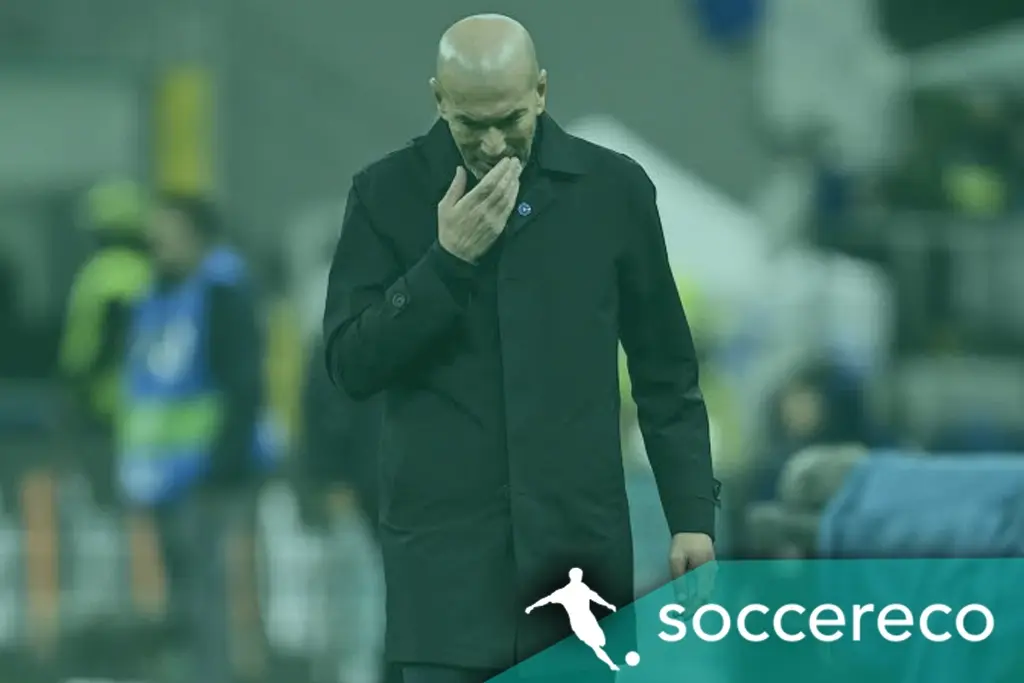
Zinédine Zidane Refuses to Panic After France Suffer First Defeat Against Italy in Nations League
Zinédine Zidane has urged France to remain calm after suffering his first defeat as national team manager, insisting that the 3-1 loss to Italy at San Siro should be treated as an important learning experience rather than a reason for concern. The French coach admitted that his players struggled to maintain their defensive organisation during the second half, but believes the performance contained enough positive elements to provide encouragement ahead of Sunday's decisive UEFA Nations League encounter against Turkey.
France arrived in Milan unbeaten under Zidane, having collected three victories and a draw from their opening four matches in the competition. That impressive start had placed Les Bleus in a strong position to qualify for the knockout stages, but Italy's comeback victory has complicated the situation in Group A1 and increased the pressure on the final round of fixtures.
Michael Olise gave France an early advantage after capitalising on a mistake by Gianluigi Donnarumma, raising hopes that the visitors could secure another important result. However, Francesco Pio Esposito equalised before half-time, and second-half goals from Davide Frattesi and Esposito completed an impressive comeback for Roberto Mancini's side.
The result ended Zidane's unbeaten beginning as France coach and allowed Italy to move above the French in the Nations League standings. Both teams now have ten points, with Belgium just one point behind, meaning the battle for qualification remains open ahead of Sunday's decisive matches.
Despite the disappointment, Zidane has refused to question the overall direction of his team. Speaking after the defeat, the former Real Madrid manager acknowledged the mistakes that contributed to Italy's victory while emphasising that France must respond with confidence rather than allow one difficult evening to undermine their progress.
France Make Promising Start Before Italy Fight Back
The opening stages at San Siro suggested that France were capable of continuing their unbeaten run. Zidane's players began with intensity and looked comfortable in possession, creating opportunities while preventing Italy from establishing their usual rhythm.
Playing in difficult conditions under heavy rain, France demonstrated confidence in their attacking combinations. Désiré Doué threatened the Italian defence, while Adrien Rabiot and Lucas Da Cunha also tested the hosts during an encouraging opening period.
The visitors were rewarded in the tenth minute when Donnarumma made a costly mistake while attempting to build from the back. His misplaced pass presented Olise with an opportunity, and the French attacker reacted quickly, moving past a defender before finishing confidently to give his team the lead.
It was another important contribution from Olise, who has been one of France's most influential attacking players throughout the competition. His goal was his fifth in five Nations League appearances this season, highlighting his growing importance in Zidane's plans.
France continued to threaten after taking the lead, but Italy gradually began finding opportunities to exploit spaces in the visitors' defensive structure.
The equaliser arrived in the 26th minute when Nicolò Cambiaghi produced a dangerous attacking move down the flank. His delivery found Francesco Pio Esposito, who finished clinically to restore parity and bring the San Siro crowd back into the match.
The goal changed the momentum of the contest. Italy began playing with greater confidence, while France were forced to respond to a home side increasingly willing to attack.
Nevertheless, the French still created opportunities before the interval. Bradley Barcola came particularly close to restoring the advantage when his curling effort struck the post, leaving Donnarumma beaten but denying the visitors a second goal.
At half-time, the score remained 1-1, and France could reasonably feel that they had produced enough attacking football to deserve more. However, the second half would expose weaknesses that Zidane later identified as the main reasons for his team's defeat.
Defensive Problems Prove Costly in the Second Half
The match became increasingly difficult for France after the interval as Italy adopted a more aggressive approach, attacking the spaces behind the French defensive line and creating problems in individual situations.
Rayan Cherki almost put France ahead with a powerful effort that Donnarumma diverted onto the post, but the opportunity was followed by sustained Italian pressure.
One of the most significant problems emerged on France's right defensive side, where Malo Gusto struggled to contain Cambiaghi's movement. The Italian attacker repeatedly threatened with his pace and willingness to attack defenders directly.
Italy were awarded a penalty around the hour mark after Gusto brought down Cambiaghi inside the penalty area. Sebastiano Esposito stepped forward, but his attempt went wide, temporarily allowing France to escape without conceding.
The missed penalty could have provided Zidane's players with an opportunity to regain control. Instead, Italy maintained their attacking momentum and took the lead only three minutes later.
Federico Dimarco, who had recently entered the match, delivered a dangerous ball into the area, where Davide Frattesi arrived to finish and put Italy 2-1 ahead.
For France, the second goal represented a decisive turning point. Having enjoyed several promising attacking moments earlier in the evening, the visitors suddenly appeared less comfortable in possession and increasingly vulnerable when attempting to recover their defensive positions.
Italy continued to attack and were awarded another penalty when Dayot Upamecano fouled Antonio Vergara inside the area.
This time, Francesco Pio Esposito took responsibility and made no mistake, scoring from the spot in the 75th minute to complete his double and extend Italy's advantage to 3-1.
France attempted to respond during the closing stages, but their attacks lacked the precision and control displayed earlier in the match. Italy managed the remaining minutes effectively and secured a deserved victory that dramatically improved their position in the group.
Zidane Admits France Failed to React When Under Pressure
After the final whistle, Zidane was particularly concerned by the way France responded when Italy became more dangerous. Although the French manager acknowledged his team's positive first-half performance, he admitted that the players had struggled to follow their tactical instructions during the most difficult periods.
Speaking to TF1, Zidane explained that France had started the game well and should have continued building on the elements that were working effectively.
"There were positive things, particularly in the first half, when we should have continued doing what we were doing well," he explained.
However, the manager recognised that individual duels and defensive situations became increasingly problematic as the contest progressed.
"We lost the match, so naturally there were aspects that became more complicated, especially in the physical battles and one-on-one situations, where we weren't quite good enough," Zidane admitted.
Those difficulties were particularly evident after Italy's second goal. France appeared to lose some of their tactical discipline, creating opportunities for the home side to exploit spaces and launch additional attacks.
The coach believes his players must become better at maintaining their structure when facing opponents capable of changing the momentum of matches.
"When we came under pressure, we didn't know how to react or stick to our established playing system. We managed to do that in the first half, but when they took the lead, we lost our organisation a little, particularly defensively," he said.
Zidane's comments suggest that the defeat was not simply a consequence of missed chances or individual mistakes. The French manager believes the team must improve its collective response to adversity, particularly when opponents increase their intensity or take control of important periods.
That is an area he considers essential for a squad with ambitions of competing for international trophies.
France Created Chances but Could Not Maintain Their Advantage
Although the final score reflected Italy's superiority in the second half, France were not without opportunities to influence the outcome.
The visitors enjoyed considerable possession and created several promising attacking situations, particularly during the opening 45 minutes. Their ability to move the ball between the lines and reach dangerous areas demonstrated that the attacking principles introduced by Zidane can be effective against strong international opponents.
Olise's early goal was an example of the team's ability to punish mistakes, while the efforts from Barcola and Cherki that struck the woodwork illustrated how close France came to adding to their total.
However, those missed opportunities became increasingly significant as Italy grew stronger.
At this level, failing to convert promising attacking situations can leave a team exposed, particularly against an opponent capable of scoring several goals from a relatively limited number of clear chances.
France's inability to restore their lead before the interval meant that Italy remained within reach. Once the home side established control in the second half, the visitors no longer had the same authority over the match.
Zidane acknowledged the disappointment of seeing his team fail to capitalise on those opportunities, but he was more concerned about the defensive problems that developed as the game progressed.
The manager believes the team must improve its work without possession, particularly its ability to protect vulnerable areas and respond collectively when the opposition begins creating chances.
Rather than focusing exclusively on the finishing, Zidane wants his players to understand why they became increasingly vulnerable in defensive situations.
Those lessons will form an important part of the analysis ahead of France's final Nations League group match.
Zidane Refuses to Panic Following First Defeat as France Manager
Despite the disappointment of losing his unbeaten record, Zidane was determined to maintain a balanced perspective after the match.
The French coach insisted that the result should not overshadow the progress his team has made since he took charge of the national side.
France had previously won away against Turkey and Belgium, drawn with Italy and beaten Belgium convincingly at home. Those performances provided evidence of the squad's ability to compete successfully against strong opponents.
One defeat, even against a direct rival, does not automatically invalidate that progress.
"This wasn't a match in which we failed to show up. There are things we need to improve. I told the players that we shouldn't panic," Zidane explained.
The manager acknowledged that France became more vulnerable as the game progressed, but suggested that the margin of defeat did not entirely reflect their contribution during the opening stages.
His comments were intended to reassure the squad while making clear that improvements are necessary.
For Zidane, the priority is ensuring that the players respond constructively rather than allowing frustration to affect their confidence before the next fixture.
The coach explained that he had already delivered that message in the dressing room, encouraging the players to rest, recover and concentrate on the decisive match against Turkey.
France will carry out a detailed assessment of the Italy encounter when the squad returns to Bordeaux, but Zidane does not intend to make dramatic changes simply because his team has suffered its first defeat.
His challenge is to preserve the positive attacking qualities demonstrated in recent matches while improving the defensive balance that was missing during the second half in Milan.
Italy Continue Strong Recovery Under Roberto Mancini
While France were left disappointed, the result represented another encouraging moment for Italy under Roberto Mancini.
The Italian manager has overseen an improvement in the national team's performances, and the victory against France provided evidence of his side's ability to compete against elite international opposition.
Italy demonstrated resilience after conceding an early goal, refusing to abandon their attacking approach despite France's initial superiority.
Francesco Pio Esposito emerged as the outstanding figure with two goals, continuing his development into an important attacking option for the national team.
The Inter Milan forward showed composure to equalise during the first half and then took responsibility from the penalty spot when Italy were awarded their second opportunity of the evening.
Frattesi also made a decisive contribution, arriving in the right position to convert Dimarco's delivery and put the hosts ahead.
Italy's performance was particularly impressive because it combined attacking quality with a strong collective response after the interval. Their willingness to challenge France physically and exploit defensive weaknesses proved decisive.
The victory also extended Italy's unbeaten sequence to four matches and moved them into first place in Group A1.
For Mancini, the result strengthens confidence ahead of the final group encounter against Belgium, another match with important qualification consequences.
France Face Decisive Nations League Qualification Battle
The defeat in Milan has complicated France's position in the UEFA Nations League, although Zidane's team still control their own qualification prospects.
After five matches, Italy lead Group A1 with ten points, level with France but ahead on their head-to-head record. Belgium sit just one point behind in third place following their 2-1 victory over Turkey, while the Turkish national team remain without a point.
With the top two teams advancing to the Nations League quarter-finals, the final round of matches will determine which countries progress.
France host Turkey on Sunday, November 15, while Belgium welcome Italy in the group's other decisive encounter.
A victory against Turkey would guarantee France's place in the quarter-finals, regardless of the result between Belgium and Italy. A draw would also be sufficient to secure qualification, although winning would provide a more convincing response to the defeat at San Siro.
Another loss, however, could leave France vulnerable to being overtaken, depending on the outcome of the other fixture.
Those circumstances make Sunday's encounter particularly important, even though France will begin as the more experienced side against a Turkish team that has lost its opening five group matches.
Zidane knows that his players cannot afford to underestimate their opponents. The defeat against Italy has demonstrated that periods of defensive uncertainty can quickly change the outcome of an international match.
For France, the objective is therefore straightforward: regain confidence, produce a controlled performance and secure the result required to continue their Nations League campaign.
Kylian Mbappé Could Return for Crucial Turkey Encounter
One of the most encouraging developments for Zidane ahead of the final group match concerns the possible return of Kylian Mbappé.
The Real Madrid forward missed the defeat against Italy after experiencing muscular discomfort, prompting the French medical staff to adopt a cautious approach rather than risk aggravating the problem.
Mbappé's absence deprived France of one of the world's most dangerous attacking players, particularly in situations requiring pace, individual quality and clinical finishing.
Although Olise, Barcola and other attacking players created opportunities in Milan, Mbappé's ability to turn difficult situations into goals remains an important asset for the national team.
Zidane has expressed optimism that the forward could be available against Turkey, explaining that the decision to leave him out against Italy was intended to protect his physical condition.
The manager indicated that the injury was not considered serious and that the intention is for Mbappé to return if he responds positively to treatment and training.
His availability would provide France with additional attacking flexibility. Mbappé can operate through the centre or attack from wider positions, creating space for teammates while constantly threatening opposition defenders with his movement.
His presence would also give Zidane an experienced player capable of influencing high-pressure matches, something that could prove valuable with qualification at stake.
However, France are unlikely to take unnecessary risks if the forward continues experiencing discomfort. The medical staff will assess his condition before the match, and any decision regarding his involvement will depend on whether he is sufficiently fit.
Ousmane Dembélé was another important attacking player unavailable against Italy, further reducing Zidane's options in the final third.
The possible return of Mbappé would therefore be a welcome development as France attempt to recover from Thursday's setback.
Defensive Organisation Becomes Zidane's Main Priority
Beyond the immediate importance of Sunday's result, the defeat against Italy has highlighted tactical issues that Zidane will need to address as he continues developing the national team.
France possess considerable attacking talent, with players capable of producing decisive moments through individual skill and intelligent movement. However, maintaining defensive stability has become an important challenge, particularly against opponents prepared to attack aggressively.
The problems against Italy were especially noticeable during transitions and individual defensive situations.
When France lost possession, the Italian attackers were often able to identify space and isolate defenders. Cambiaghi's movement caused repeated difficulties, while the home side's willingness to attack the penalty area eventually produced two penalties.
Those incidents contributed significantly to the final result, but Zidane's concerns extended beyond individual mistakes.
The manager believes France must improve their collective response when opponents gain control. That requires better communication, stronger positioning and greater discipline when defending without the ball.
Maintaining the team's tactical structure after conceding is another area that requires attention. France appeared increasingly disorganised once Italy moved ahead, suggesting that the squad must become more comfortable dealing with difficult moments.
Zidane has already identified those weaknesses and intends to use the match as an opportunity for improvement.
The former Real Madrid manager built his coaching reputation through his ability to manage major personalities and prepare teams for important encounters. His experience in high-pressure matches could prove valuable as France attempt to recover from their first setback under his leadership.
However, international football presents different challenges from club management. Coaches have limited time to work with their players, meaning tactical adjustments must often be implemented during short training periods between competitive matches.
That reality makes the upcoming preparation for Turkey particularly important. Zidane will have to address the problems exposed by Italy while ensuring that his players remain physically and mentally prepared for another demanding encounter.
France Determined to Respond Against Turkey
For France, the immediate priority is recovering quickly from the disappointment at San Siro.
Zidane has already made clear that he does not want his players dwelling excessively on the defeat. While the performance must be analysed carefully, the team has little time to make adjustments before returning to competitive action.
The squad will regroup in Bordeaux, where preparations for Turkey will focus on restoring defensive discipline and ensuring that the attacking players continue creating opportunities.
France can take encouragement from their earlier meeting with Turkey, when they secured a 1-0 away victory in September. That result forms part of the positive foundation established during Zidane's first months in charge.
Nevertheless, the manager will demand a more complete performance this time. The defeat against Italy demonstrated that a promising start is not enough if the team cannot maintain its concentration throughout the match.
With a place in the quarter-finals at stake, France will need to combine attacking ambition with greater defensive control.
Mbappé's possible return could provide an important psychological and sporting boost, but Zidane will also expect improvements from the players who featured in Milan.
The coach's message has remained consistent since the final whistle: France must learn from the defeat without allowing it to undermine the progress already made.
His first loss as national team manager has introduced a new challenge, but it has not ended France's Nations League ambitions.
Victory against Turkey would secure qualification, restore confidence and demonstrate that the team can respond positively when confronted with adversity.
For Zidane, that reaction will be more important than the loss of his unbeaten record. After five matches in charge, the French coach has experienced his first significant setback, and the next encounter will provide an immediate opportunity to show how much his team has learned.