Lens dismiss Yannick Cahuzac after a disastrous run of results, including a 9-1 Champions League defeat, with Pierre Sage emerging as a possible replacement.
Lens Sack Yannick Cahuzac After Disastrous Run as Pierre Sage Emerges as Potential Replacement
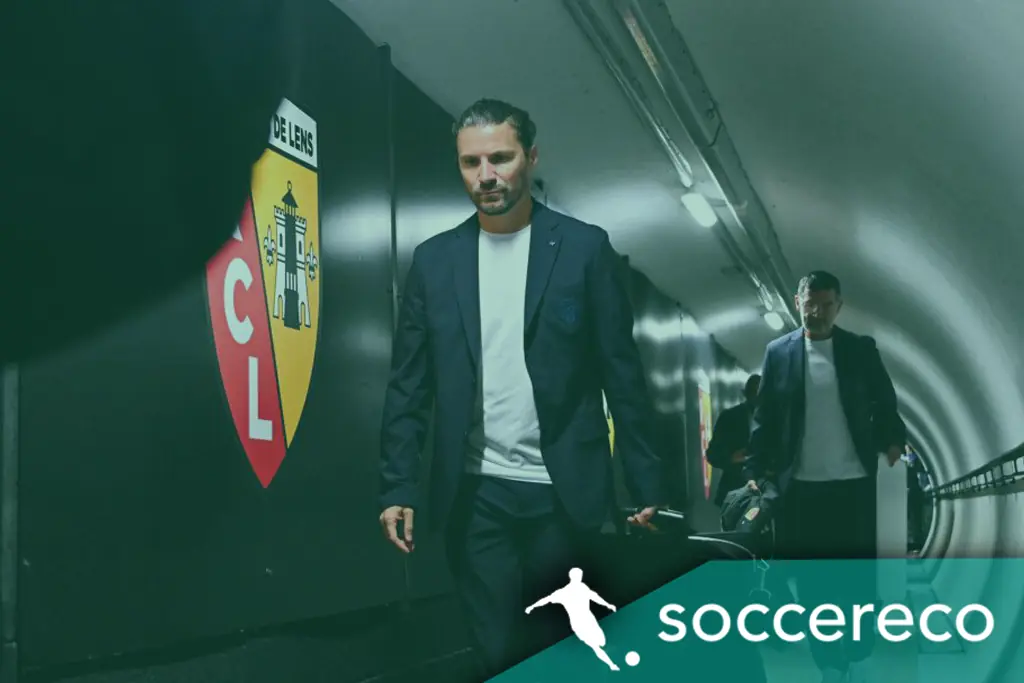
Yannick Cahuzac has been dismissed as head coach of RC Lens following a disastrous sequence of results that left the French club struggling in Ligue 1 and facing serious questions about its future in the Champions League. The 41-year-old manager, who was promoted from assistant coach on September 15, lasted less than two months in charge before the club's hierarchy decided another managerial change was necessary. According to L'Équipe, the decision was reached following a meeting of senior officials on Monday evening, with Sunday's 2-1 home defeat against Marseille proving to be the final setback in an increasingly difficult period for the team.
The departure comes just six days after Lens suffered a humiliating 9-1 defeat against Como at the Stade Bollaert-Delelis, one of the heaviest results in Champions League history. That extraordinary collapse, combined with consecutive domestic defeats against Lille and Marseille, convinced the club's management that Cahuzac was no longer the right person to lead the team forward. Although the former midfielder had initially shown encouraging signs after replacing Dino Toppmöller, his inability to reverse the recent decline ultimately brought his brief managerial spell to an end.
Lens are now preparing to appoint their third head coach of the 2026/27 season, an unusual situation for a club that entered the campaign with ambitions of competing for European qualification while maintaining a competitive presence in the Champions League. The search for a successor is already underway, with former manager Pierre Sage reportedly among three candidates being considered. His potential return has attracted particular attention because the French coach is himself facing an uncertain future at Crystal Palace, where a difficult start to the Premier League campaign has placed his position under considerable pressure.
Lens Board Makes Another Managerial Change After Marseille Defeat
Cahuzac's departure follows a turbulent period during which Lens repeatedly struggled to produce the performances expected of a team competing in European football. The Frenchman had been promoted to the senior coaching position in September after the dismissal of Dino Toppmöller, who had been unable to establish consistency during the opening weeks of the season. Cahuzac was already familiar with the players and the working environment at the club, having joined the coaching staff in July as an assistant, and his appointment initially appeared to offer an opportunity for stability without introducing another completely new managerial structure.
However, that familiarity was not enough to prevent the team's problems from becoming increasingly severe. Lens collected three Ligue 1 victories during Cahuzac's tenure, but those positive results were overshadowed by six defeats across domestic and European competitions. The situation deteriorated particularly quickly towards the end of October and the beginning of November, when a sequence of disappointing performances exposed defensive weaknesses and raised questions about the team's ability to compete against stronger opponents.
According to French media reports, the club's directors met on Monday evening to assess the consequences of the latest defeats and determine whether Cahuzac should remain in charge. The discussion followed an especially damaging week in which Lens had conceded 12 goals across three consecutive losses. The decision to remove the manager was reported on Tuesday, November 10, bringing an abrupt conclusion to a coaching spell that had begun with considerable optimism but ended amid growing frustration.
Cahuzac is also expected to leave Lens entirely rather than return to his previous position as assistant coach. That distinction is significant because the club initially promoted him from within the existing technical structure, hoping his knowledge of the squad would help ensure continuity following Toppmöller's departure. His exit therefore represents a more substantial restructuring of the coaching staff, with the next manager likely to require the freedom to establish a new working environment and introduce different tactical ideas.
Historic 9-1 Champions League Defeat Against Como Accelerates the Crisis
The most damaging result of Cahuzac's tenure came on November 4, when Lens suffered an extraordinary 9-1 home defeat against Como in the Champions League. The Italian club, managed by Cesc Fàbregas, produced a devastating attacking performance that exposed the French team's defensive organisation and left supporters stunned at the Stade Bollaert-Delelis. Lens entered the encounter hoping to secure an important European result, but their hopes disappeared almost immediately as Como repeatedly exploited gaps in the home defence.
Greek striker Anastasios Douvikas opened the scoring in the seventh minute and completed a remarkable hat-trick before the hour mark. Nico Paz, Lucas Da Cunha, Marc-Oliver Kempf, Mattia Liberali, Martin Baturina and Matteo Papaccioli also found the net as Como delivered one of the most astonishing performances of the Champions League campaign. Ruben Aguilar scored Lens's only goal in the second half, but his effort provided little consolation during an evening that became increasingly painful for the home supporters.
Conceding nine goals in front of their own fans was an extraordinary setback for a club whose identity has traditionally been closely associated with intensity, organisation and the formidable atmosphere at Bollaert-Delelis. The result went far beyond an ordinary European defeat, raising serious concerns about the team's confidence, defensive discipline and ability to respond when matches began moving against them. Lens appeared increasingly vulnerable as Como continued attacking, with the visitors finding space and creating opportunities almost every time they advanced into dangerous positions.
Cahuzac acknowledged the severity of the defeat afterwards and accepted responsibility for the team's performance. Speaking following the match, the coach described the result as a humiliation and admitted that he had made mistakes in his management of the encounter. He also recognised that the players needed to recover their pride before facing Marseille in Ligue 1 only a few days later. His response reflected the disappointment surrounding the club, but it also demonstrated the scale of the challenge he faced in attempting to rebuild confidence after such a damaging result.
The defeat against Como was especially concerning because Lens had already struggled in the Champions League during October. A 2-0 home loss to Sporting CP was followed by a 3-0 defeat away to Club Brugge, leaving the French side facing an increasingly difficult European campaign. The problems therefore extended beyond one exceptional evening, with the team repeatedly finding itself unable to match the attacking efficiency and defensive organisation of its opponents. By the time Como arrived in France, confidence had already been affected by disappointing results, and the nine-goal collapse intensified the crisis dramatically.
Marseille Deliver the Final Blow at Stade Bollaert-Delelis
Lens returned to Ligue 1 action on Sunday, November 8, determined to respond to the humiliation against Como and demonstrate that the team remained capable of competing at a higher level. However, the encounter against Marseille began in the worst possible way, with Amine Gouiri opening the scoring for the visitors after only two minutes. The early goal placed immediate pressure on Cahuzac's players, who were already dealing with the disappointment of their Champions League defeat and the growing frustration surrounding the club.
Despite the difficult start, Lens produced a more determined performance and gradually began creating opportunities. Florian Thauvin emerged as one of the team's most influential players, helping the hosts establish a greater attacking presence against Marseille. The French international eventually equalised in the 20th minute, connecting with a cross from Florian Sotoca and directing a powerful header beyond goalkeeper Jeffrey de Lange. The goal brought renewed energy to the stadium and suggested that Lens might be capable of producing the response their supporters had been demanding.
The home side continued competing throughout the first half, with Yassine Titraoui and other attacking players testing Marseille's defensive organisation. However, the visitors remained dangerous whenever they moved forward, and both teams entered the interval with the score level at 1-1. For Cahuzac, the performance represented an improvement on the disastrous display against Como, but the circumstances surrounding the match meant that only a positive result was likely to ease the pressure on his position.
The decisive moment arrived in the 82nd minute when substitute Keyliane Abdallah restored Marseille's advantage. The young forward reacted quickly inside the penalty area after an attacking movement involving Igor Paixão, finishing from close range to make it 2-1. Lens attempted to respond during the closing stages, but the home side could not find another equaliser, leaving Marseille to celebrate an important away victory.
The defeat was particularly painful because Lens had demonstrated greater determination and attacking organisation than in their previous European encounter. Nevertheless, the result represented another missed opportunity to rebuild confidence and improve their position in Ligue 1. With Marseille collecting a fifth consecutive league victory, the contrast between the two teams was increasingly evident. One club was building momentum and moving towards the European qualification places, while the other remained trapped in a damaging sequence of defeats.
For the Lens hierarchy, Sunday's loss appears to have confirmed that the team required a different direction. Although the players had shown signs of improvement, the result extended the difficult run and left the club in 11th place with 13 points from ten league matches. The gap to the leading positions continued to grow, while the immediate priority shifted towards stabilising performances and preventing the crisis from becoming even more serious.
Early Victories Could Not Save Cahuzac After Four Defeats in Five Matches
Cahuzac's departure is particularly disappointing because his appointment initially produced several encouraging results. After beginning his tenure with a 2-1 defeat away to Monaco, the former midfielder guided Lens to a 2-1 victory over Lyon in October. The result suggested that the team was beginning to respond positively to his approach, particularly as he attempted to strengthen relationships within the squad and improve performances after a difficult opening to the campaign.
Lens followed that victory with another important domestic result, defeating Troyes 3-1 away from home. The performance demonstrated greater attacking confidence and suggested that Cahuzac's ideas were beginning to have an effect. Although the team continued struggling in European competition, the league victories offered hope that the Frenchman could establish a more consistent foundation and gradually move the club towards its original objectives.
However, the improvements proved temporary. Lens suffered a heavy 3-0 Champions League defeat against Club Brugge on October 21 before recovering to beat Paris FC 2-1 in Ligue 1 three days later. That victory became Cahuzac's final success as head coach. The team subsequently lost 1-0 away to Lille in the Derby du Nord, suffered the historic 9-1 defeat against Como and then fell 2-1 at home to Marseille.
Four defeats in five matches represented a damaging sequence, particularly because three of those losses came against opponents with considerable significance for Lens. The defeat to Lille was especially frustrating because of the rivalry between the two northern French clubs, while the result against Como attracted international attention for all the wrong reasons. The Marseille loss then eliminated any remaining sense that the team was beginning to recover. Taken together, those performances left the club's management with few reasons to believe that continuing with the existing coaching arrangement would produce an immediate improvement.
The difficulties were not limited to results. Lens repeatedly conceded goals during important periods of matches and struggled to establish a reliable defensive structure, particularly in European competition. The team also lacked consistency in possession, alternating between encouraging attacking sequences and periods in which opponents were able to control the tempo. Cahuzac attempted to introduce adjustments, but the repeated defeats suggested that the squad was finding it difficult to apply those changes effectively.
Pierre Sage Emerges as a Leading Candidate for Lens Return
With Cahuzac's departure now reported, attention has quickly turned towards the identity of his successor. According to L'Équipe, the Lens hierarchy has identified three potential candidates, although not all the names under consideration have been made public. One of the most prominent possibilities is Pierre Sage, who previously managed the club before departing during the summer to take charge of Crystal Palace in the Premier League.
Sage remains a familiar figure among Lens supporters following his previous spell in northern France. His understanding of the club's environment, squad and expectations could make him an attractive option for directors seeking a manager capable of restoring stability without requiring an extended period of adaptation. Bringing back a coach who already knows the organisation would also represent a different approach from the appointment of Toppmöller, whose arrival introduced a new technical structure at the beginning of the campaign.
However, any potential return would depend on developments at Crystal Palace, where Sage has experienced a difficult start to life in English football. The London club currently sit bottom of the Premier League with seven points from ten matches, having recorded just two victories during that period. Sunday's 3-1 home defeat against Liverpool increased the pressure on the French manager, with reports in England suggesting that Palace are considering a change during the November international break.
The situation has created an unusual possibility in which two clubs experiencing difficult starts to their respective seasons could change managers within the same week. Sage's position at Palace remains uncertain, and a departure could make him available for negotiations with Lens. Nevertheless, his return should not be considered a completed agreement, as the French club has not publicly confirmed the appointment of a successor and several candidates are reportedly being considered.
A return to Lens would also require Sage to address expectations created by his previous departure. Although he enjoyed a positive relationship with sections of the club during his earlier spell, leaving for the Premier League represented a significant change in the sporting project. If the Frenchman does return, he would need to rebuild confidence quickly and demonstrate that he is committed to providing the stability that Lens have lacked since the summer.
Lens Face a Historic Season of Managerial Instability
The dismissal of Cahuzac means Lens are preparing for a third head coach during the same Ligue 1 season, something that has not happened at the club since the 1938/39 campaign. On that occasion, Richard Buisson, Raymond François and Joseph Eisenhoffer were all involved in managing the team during a period of significant changes. The comparison highlights the unusual circumstances facing the modern club, which has moved through two managerial appointments in little more than three months.
The current instability is particularly striking when considering the progress Lens had made in recent seasons. The club developed a reputation for careful recruitment, strong collective organisation and an ability to compete against opponents with considerably greater financial resources. Its passionate supporters and distinctive stadium atmosphere became important elements of a sporting project that attracted attention throughout French football. However, repeated changes in the coaching staff now threaten to interrupt that development, making it increasingly difficult to establish a consistent tactical identity.
For players, frequent managerial changes create practical challenges because each coach introduces different expectations regarding positioning, training methods and tactical responsibilities. Individuals who were central to one manager's plans may find themselves occupying different roles under a successor, while the team as a whole must repeatedly adapt to new instructions. That process can be particularly demanding during a season involving Champions League fixtures, where preparation time between matches is already limited.
The responsibility facing the Lens directors therefore extends beyond identifying a coach capable of producing an immediate improvement. They must also determine the sporting direction they want the club to follow and provide the next manager with sufficient support to implement a coherent strategy. Without that consistency, the danger remains that another appointment could become a temporary solution rather than the beginning of a more sustainable recovery.
International Break Offers Opportunity to Rebuild Before Toulouse Match
The timing of Cahuzac's departure provides Lens with an opportunity to begin restructuring during the November international break. Although several players will be away representing their national teams, the pause in domestic competition allows the club to evaluate potential candidates and establish a clearer plan before returning to Ligue 1. The next league fixture is scheduled for November 21, when Lens host Toulouse at the Stade Bollaert-Delelis.
That encounter will carry considerable importance because Lens need to prevent their disappointing results from developing into a longer period of uncertainty. The club currently occupy 11th place with 13 points and remain seven points behind the podium, a position that falls short of the expectations associated with a team participating in the Champions League. Although the season is still in its early stages, the gap to the leading clubs could become increasingly difficult to close if the team continues dropping points.
The next manager will inherit a squad containing several experienced players, including Florian Thauvin, Florian Sotoca and Jonathan Gradit, alongside younger footballers capable of contributing to the team's development. Restoring defensive confidence will be an immediate priority after the heavy defeats suffered in European competition, but improving the team's attacking consistency will also be essential. Lens have demonstrated that they can create opportunities against strong opposition, particularly during the encounter with Marseille, yet their inability to maintain concentration throughout matches has repeatedly proved costly.
Another important challenge will involve rebuilding the relationship between the team and its supporters. The atmosphere at Bollaert-Delelis has traditionally been one of Lens's greatest strengths, but the recent results have generated understandable frustration. The 9-1 defeat against Como was particularly damaging because of its historic nature, while the subsequent loss to Marseille denied supporters the immediate response they had hoped to witness. Producing a more disciplined and competitive performance against Toulouse would therefore represent an important first step towards restoring confidence.
Cahuzac's short spell in charge will ultimately be remembered for the contrast between his promising domestic victories and the dramatic collapse that followed. His appointment offered the possibility of continuity after Toppmöller's departure, but the results deteriorated too quickly for the club's hierarchy to maintain confidence in the project. The Frenchman leaves after less than two months, with Lens facing the difficult task of appointing another manager and rebuilding a team that has struggled for consistency throughout the opening months of the season.
For Lens, the immediate priority is now to make the right appointment rather than simply react to the disappointment of recent results. Pierre Sage represents an intriguing possibility because of his previous connection with the club, but the directors must assess all available options carefully before making another significant decision. With domestic and European ambitions still at stake, the next managerial choice could have a decisive influence on the direction of the season. After a turbulent period marked by heavy defeats, coaching changes and growing frustration, Lens urgently need the stability and confidence required to move forward.