
Viktor Gyokeres makes Nations League history with Sweden, but his struggles at Arsenal raise questions over Mikel Arteta tactics and his limited playing time.
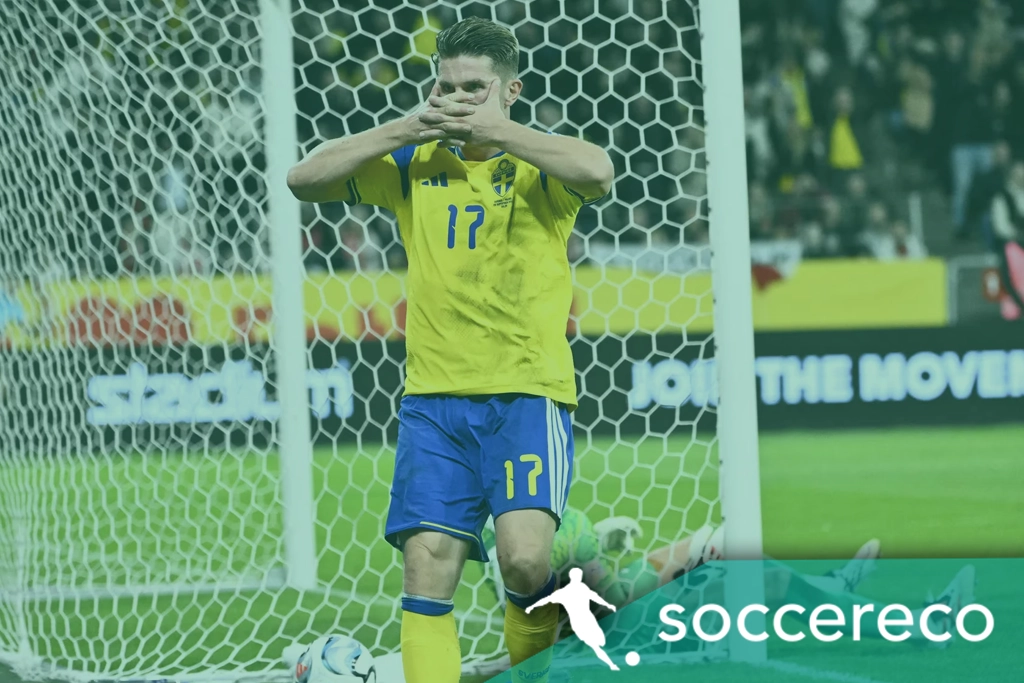
Gyokeres makes Nations League history as Arsenal struggles spark criticism in Sweden
Viktor Gyokeres continues to deliver remarkable performances for Sweden, but his contrasting fortunes at Arsenal have sparked renewed debate about whether Mikel Arteta is making the most of the former Sporting CP striker. The 28-year-old forward scored again on Friday as Sweden drew 1-1 with Bosnia and Herzegovina, becoming the first player to find the net in six consecutive Nations League matches. The achievement represents another significant milestone in his international career, although it has also brought greater attention to his difficult situation in London, where he remains behind Kai Havertz in the attacking hierarchy and has yet to score for Arsenal this season.
The contrast between club and country has become increasingly difficult to ignore. While Gyokeres continues to demonstrate his finishing ability and physical presence when representing Sweden, he has struggled to establish himself as a regular starter for Arsenal. His situation has prompted criticism in his homeland, with Swedish journalist Noah Bachner questioning whether the Premier League club have developed a tactical approach capable of bringing out the best in a player who was so prolific during his time at Sporting CP. In an opinion piece published by Expressen, Bachner suggested that the problem goes beyond individual performances and concerns the way Gyokeres is being used within the Arsenal attacking structure.
Gyokeres breaks Nations League record against Bosnia and Herzegovina
Sweden were held to a 1-1 draw by Bosnia and Herzegovina on Friday, but Gyokeres once again emerged as one of the central figures in the match. His goal extended an extraordinary scoring sequence in the Nations League, making him the first footballer to score in six successive matches in the competition. The achievement underlines the consistency he has shown for his country and provides another example of his ability to deliver regardless of the overall performance of the Swedish team.
For a striker whose club situation has attracted increasing scrutiny, the record is particularly significant. Gyokeres has continued to find the net internationally despite facing a different tactical environment and playing alongside teammates with whom he has considerably less preparation time than at club level. His ability to maintain that scoring sequence has strengthened the argument that his difficulties at Arsenal cannot simply be explained by a loss of confidence or finishing ability. The Swedish forward has continued to demonstrate that he can be effective when the circumstances allow him to use his strongest qualities.
Speaking after the match, Gyokeres expressed satisfaction with both the goal and the record, while suggesting that he hopes to extend the sequence in future appearances. He was also keen to acknowledge the encouragement he continues to receive from supporters, particularly during a period when his performances for Sweden have been more productive than those for Arsenal.
"It was a good assist and a good goal overall. It is a good record, and I will probably be able to keep improving it. Of course, it is nice that they continue to support me and follow what I do with the national team. I appreciate their support. They are fantastic," the striker said.
His reaction reflected the satisfaction of reaching an individual milestone without losing sight of the wider team. Although Sweden were unable to secure victory, Gyokeres continued his impressive Nations League scoring record and once again demonstrated his importance to the national side. The challenge now is translating that productivity into more consistent performances at Arsenal, where the competition for attacking positions and the demands of a different system have made his adaptation considerably more complicated.
Swedish journalist questions Arsenal treatment of Gyokeres
The situation has attracted particularly strong criticism from Noah Bachner, who used his column in Expressen to argue that Gyokeres is playing for a team whose football does not naturally suit his characteristics. The journalist went as far as suggesting that somebody should release the striker from Arsenal, an expression of frustration at the contrast between his international performances and his limited impact in the Premier League.
"Someone should free Viktor Gyokeres from Arsenal," Bachner wrote, before explaining that the Sweden international has continued scoring regardless of the tactical approach adopted by his national team. According to the journalist, the recent international matches have provided further evidence of a problem that had already been identified before the forward began playing for Arsenal.
Bachner argued that the difference in goals between club and country is only one part of the story. In his view, the more important issue concerns the situations in which Gyokeres receives the ball, the responsibilities he is given and the attacking patterns around him. The journalist believes Arsenal have adopted a style that can be highly successful collectively but does not consistently create the conditions in which the Swedish striker is most effective.
The criticism is particularly interesting because it does not simply dismiss the tactical quality of Arteta approach. Bachner acknowledged that Arsenal have demonstrated the effectiveness of their football through major achievements, including Premier League success and reaching the Champions League final. His argument is that a system capable of producing outstanding collective results may still be unsuitable for the individual characteristics of a particular forward.
That distinction places the debate in a different context. Rather than suggesting Arsenal should abandon everything that has made them successful, the Expressen journalist questioned whether the club have found a sufficiently effective way to incorporate Gyokeres into their existing approach. For a player recruited after establishing himself as one of the most dangerous strikers in Portuguese football, the difference between his previous role and his current responsibilities has become a central issue.
Why Arsenal style is under scrutiny
According to Bachner, one of the fundamental difficulties is the controlled and calculated nature of Arsenal attacking football. Arteta team frequently seek to establish possession, organise their attacking movements and create opportunities through structured combinations. That approach requires patience and technical precision, but the Swedish journalist believes it can also leave Gyokeres isolated and reduce the opportunities for him to attack open spaces.
The striker built much of his reputation at Sporting CP through his capacity to combine physical strength, explosive acceleration and direct movement towards goal. He is particularly dangerous when he can receive the ball while moving forward, attack defenders who are retreating and use his pace to create shooting opportunities. When possession develops slowly and opposition defences have time to establish their positions, those situations can become more difficult to create.
Bachner argument is that Arsenal do not always provide the type of service that allows Gyokeres to express those qualities. Instead of receiving passes into open areas where he can accelerate towards goal, the forward can find himself operating between defenders in crowded attacking spaces. In those circumstances, the characteristics that made him so effective in Portugal may be less visible, even when he is working hard to contribute to the team.
It is an interpretation rather than a universally established explanation for his difficulties, but the contrast with Sweden has given the debate fresh momentum. Under Graham Potter, the national team appears determined to create opportunities that suit the striker movement. The Sweden coach has openly discussed the importance of finding Gyokeres in space and allowing him to exploit situations where his physical attributes and attacking instincts can make a decisive difference.
For Arsenal, the challenge is more complicated because the team already possess an established tactical identity and several attacking players with different characteristics. Altering the system to accommodate one striker could affect the balance of the wider side, particularly when Arteta is attempting to maintain consistency across domestic and European competitions. The question is therefore whether small adjustments in movement and service could make Gyokeres more effective without requiring a fundamental change in the way Arsenal play.
Graham Potter explains how Sweden get the best out of Gyokeres
Sweden head coach Graham Potter offered a strikingly positive assessment of Gyokeres after the draw against Bosnia and Herzegovina. The English coach praised not only the striker goal but also his overall contribution, highlighting his leadership, his involvement of teammates and the different attacking dimension he provides to the national side.
"He was absolutely incredible today. The way he leads the line, the way he brings all the players into the game, the way he adds a completely different dimension to our football, the fact that he scored again... He is in fantastic form," Potter said.
The comments were significant because they illustrated how much the Sweden coaching staff value Gyokeres beyond his finishing ability. Potter views the striker as a player capable of influencing the entire attacking structure, drawing opponents into difficult positions and creating opportunities for teammates through his movement. His physical presence also gives Sweden a direct outlet when they need to move the ball forward quickly or relieve pressure.
Potter then explained an important part of the tactical thinking behind his use of the forward. Rather than expecting Gyokeres to adapt entirely to an existing attacking structure, the Sweden coach said he attempts to position the player where his qualities can have the greatest influence on the match.
"I try to put Viktor in positions where he can play to his strengths. He is good at finding spaces and exploiting them, so we try to get the ball into those areas. He is a world-class player when it comes to creating those kinds of opportunities," Potter explained.
That description provides an interesting comparison with the criticism directed at Arsenal. Potter has identified the importance of creating space and delivering the ball into areas where Gyokeres can attack defenders. Bachner, meanwhile, believes those are precisely the conditions that the striker has not consistently enjoyed at club level. The two assessments come from different perspectives, but both place considerable emphasis on the relationship between tactical structure and individual performance.
Sporting CP performances remain an important reference point
Gyokeres established himself as an outstanding attacking presence during his time at Sporting CP, where his combination of pace, physicality and finishing made him one of the most recognisable forwards in Portuguese football. His performances attracted attention from major European clubs and ultimately created the expectations that have followed him to Arsenal.
The move to England represented a significant new challenge. The Premier League offers a demanding competitive environment, and joining a club with established tactical principles requires a player to adapt to teammates, positioning and attacking movements that may differ substantially from those he experienced previously. For a striker, even relatively small changes in the timing of passes or the position from which he receives possession can influence the number and quality of scoring opportunities available.
At Sporting, Gyokeres became accustomed to playing a central role in attacking moves and using his acceleration to exploit situations before opposition defences could reorganise. His transition to Arsenal has placed him in a team where possession can be more measured and where attacking responsibilities are distributed across several players. The difference does not necessarily make one system better than the other, but it can influence how naturally a player performs within each structure.
The fact that Gyokeres continues to score for Sweden suggests that many of the qualities that made him successful in Portugal remain intact. His confidence in attacking space, willingness to make demanding runs and instinct for finding goals have all been visible during the international campaign. Those performances have also increased the expectation that he should be capable of contributing more regularly for Arsenal.
Kai Havertz competition adds another challenge
Gyokeres difficulties have been intensified by the presence of Kai Havertz, who is currently ahead of the Swedish international in the Arsenal attacking hierarchy. Competition for a starting position is a normal part of football at an elite club, but limited playing time can make it harder for a striker to establish rhythm and develop an understanding with the players around him.
Forwards often depend on repetition and familiarity. Understanding when a teammate will deliver a pass, which spaces are likely to open and how defenders respond to particular movements can all influence attacking efficiency. A player who receives consistent opportunities may develop those relationships more naturally than one whose involvement varies from match to match.
That does not mean Gyokeres should automatically start ahead of Havertz. Arteta must make his selection decisions according to the balance he wants from the team, and different attackers can provide different tactical benefits. The Swedish forward nevertheless faces the challenge of demonstrating his value within a structure that does not always appear to emphasise the qualities for which he became famous.
His lack of goals this season has inevitably increased scrutiny, but the international record offers a reminder that judging a striker solely by his club scoring figures can produce an incomplete picture. The performances for Sweden indicate that Gyokeres remains capable of delivering decisive attacking contributions when he receives opportunities suited to his movement.
International success increases expectations at Arsenal
The six-match Nations League scoring sequence has given Gyokeres an achievement that will attract attention beyond Sweden. Becoming the first player to score in six consecutive games in the competition is a notable distinction, particularly for a forward whose club situation has been the subject of growing debate.
The record also gives the Arsenal striker something positive to build upon. Confidence can be important for any attacking player, especially one attempting to establish himself in a demanding new environment. Scoring regularly for Sweden allows Gyokeres to return to London with evidence that his ability to finish chances remains strong, even if the same consistency has not yet appeared in his Premier League performances.
For Arteta, the international matches may offer useful examples of how Gyokeres can be deployed. Potter has explained that Sweden attempt to find the striker in space and encourage him to use his movement. Whether Arsenal can incorporate similar situations within their own attacking framework is a question that could become increasingly relevant as the season develops.
There is also a broader consideration for the player himself. Gyokeres arrived at Arsenal with considerable expectations following his success at Sporting CP, and a prolonged period without goals can place pressure on any forward. Continuing to score internationally may help maintain his confidence, but supporters and observers will naturally want to see those performances reproduced more consistently in England.
Gyokeres form leaves Arsenal facing an important question
For now, Gyokeres is experiencing two very different realities. With Sweden, he is an influential attacking figure who continues to score, leads the line effectively and enjoys the confidence of his national-team coach. At Arsenal, he is still attempting to establish himself as a regular starter and find his first goal of the season while competing with Havertz for a place in the team.
The criticism from Expressen reflects growing frustration in Sweden at that contrast. Bachner believes the striker is playing for the wrong team because Arsenal controlled approach does not consistently provide the direct attacking opportunities that suit him. Potter, meanwhile, has offered an alternative example by explaining how Sweden deliberately seek to exploit the spaces Gyokeres is capable of finding.
Neither perspective changes the fact that Arsenal must balance individual requirements with collective objectives. Arteta has developed an approach designed to deliver results at the highest level, and adapting that structure to one player involves more than simply changing the positions of the forwards. However, the continued effectiveness of Gyokeres with Sweden makes his struggles at club level an increasingly prominent question.
The immediate achievement belongs to the striker. His goal against Bosnia and Herzegovina extended a remarkable Nations League sequence and strengthened his reputation as one of the most productive forwards in international football. Whether that form can now help him establish a more influential role at Arsenal remains uncertain, but his latest performance has ensured that the debate about how the London club use him is unlikely to disappear. With Potter publicly praising his qualities and Swedish observers questioning the approach adopted by Arteta, Gyokeres finds himself at the centre of a discussion that goes far beyond the simple question of why he has not yet scored for Arsenal this season.