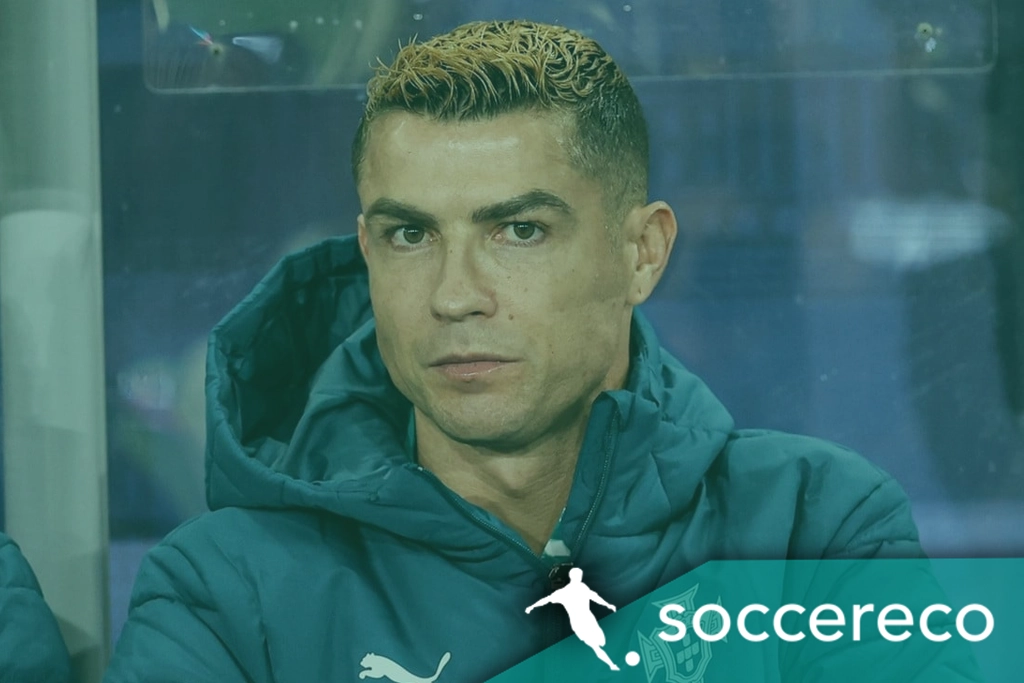
Cristiano Ronaldo has broken his silence on the dispute with Jorge Jesus, accepting responsibility for leaving Portugal camp while keeping the door open to a return.
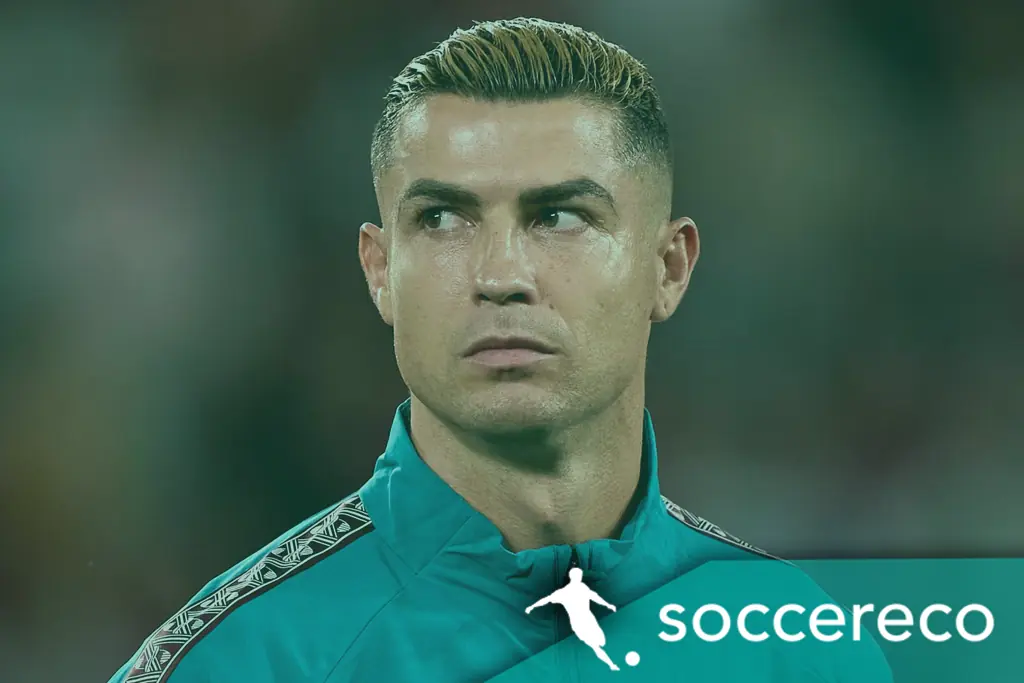
Cristiano Ronaldo breaks silence on Portugal dispute and leaves door open to national team return
Cristiano Ronaldo has broken his silence over the controversy that led to his sudden departure from the Portugal national team camp, offering his version of the events that caused a major breakdown in trust with head coach Jorge Jesus. The Al Nassr forward accused the coach of failing to keep his word on more than one occasion and said he was subjected to expressions and an aggressive tone that he did not believe he deserved, while at the same time accepting responsibility for the way he reacted and insisting that he remains willing to represent Portugal again.
The statement was significant not only because of the criticism directed at Jesus, but also because Ronaldo stopped short of announcing the end of his international career. Instead, he made clear that he is prepared to accept any disciplinary action imposed by the Portuguese Football Federation and, once that process is completed, would still be available for selection provided he remains physically fit, continues playing regularly and is able to contribute with goals.
That position immediately gave the episode a different dimension. What had initially appeared to be a definitive rupture between one of the most important players in Portuguese football history and the national team instead became a conflict that Ronaldo believes can still be repaired. His message combined frustration, regret, criticism and a clear attempt to separate his disappointment with the way certain situations were handled from his desire to continue representing Portugal.
Ronaldo says trust began to break down in Norway
According to Ronaldo, the decisive sequence began around the match in Norway. The forward explained that there had already been an established recovery plan concerning his physical management, but shortly before the match he was approached about the possibility of playing the final 30 minutes.
Ronaldo said he did not reject the idea of coming on, despite the change from the previously agreed plan. The problem, in his version of events, was that he was subsequently asked to warm up but was never introduced. For a player of his experience and status, the incident became more than a simple tactical decision because he believed it represented another example of the coach failing to respect an earlier agreement.
"The national team coach had broken his word to me," Ronaldo said, summarising the feeling that would later become central to his decision to leave the camp.
He also admitted that his reaction immediately after the match was not appropriate. Ronaldo acknowledged that he avoided greeting the supporters and instead wanted to leave the situation behind as quickly as possible.
"I just wanted everything to end with the victory and to be alone. I made the mistake of not greeting the supporters. I apologise for disappointing them," he explained.
That admission was one of the most important elements of the statement because Ronaldo did not present himself simply as the victim of the dispute. While he criticised the coach and the handling of the situation, he also accepted that his own response had consequences and that supporters who had travelled to see the national team deserved better from the captain.
Peace meeting failed to completely repair relationship
Following the growing tension in Scandinavia, an attempt was made to resolve the dispute privately. Ronaldo revealed that he met with Jorge Jesus and Simão Coutinho, the sporting director of Al Nassr and someone with strong connections to both men.
Ronaldo described the conversation as "a deep and direct moment, without filters", suggesting that both sides were given an opportunity to explain their positions openly. According to the forward, the meeting appeared to end positively, with an agreement that Jesus would publicly clarify several aspects of what had happened.
The Portuguese captain said eight specific points were discussed and prepared as the basis of the explanation that the coach should later provide to journalists. For Ronaldo, that public clarification was essential because he believed the situation had created an unfair impression about his conduct and commitment to the national team.
"We ended that meeting with the coach asking me for a hug, promising me that he would say at the press conference what he had just said to me and that the matter would be put behind us. I would not play in Denmark and I would play the match at the Dragão," Ronaldo revealed.
Those words suggested that an apparent compromise had been reached. Ronaldo would accept being left out of one game as part of the agreed physical management plan, while the coach would clarify the situation publicly and confirm that the relationship remained intact.
However, according to Ronaldo, that did not happen in the way he had expected.
Ronaldo frustrated by what Jesus did not say publicly
Before speaking to the media, Jesus reportedly held a video call with Tiago Craveiro, CEO of the CR7 brand and a former director-general of the Portuguese Football Federation. The discussion appears to have been part of the wider effort to ensure that the public explanation matched what had been privately agreed.
Ronaldo's statement later highlighted several elements that he believed were missing from the coach's public comments. That omission became another major source of frustration and further damaged a relationship that had already become fragile.
Among the points Ronaldo believed should have been communicated was a clear statement from Jesus confirming his desire to keep the forward involved with the national team.
One of the proposed messages reportedly read: "I want Cristiano in the national team. In fact, I do not just want him a little, I want him very much."
Another point was intended to defend Ronaldo's professionalism and behaviour inside the squad. According to the document described by the player, Jesus was expected to say that Ronaldo had never questioned his decisions and had remained "loyal, professional and exemplary".
Perhaps the most striking point involved Ronaldo's frustration over warming up without entering the match. The correction he wanted from Jesus reportedly included the phrase: "I was wrong to have someone of the stature of Pelé or Maradona warming up and then not bring him into the game."
For Ronaldo, these were not minor details. They were part of the agreement he believed had been reached during the private meeting and therefore became another test of trust. When the public message did not reflect what had been discussed, he felt the understanding between player and coach had once again been broken.
Departure from Portugal camp became point of no return
The accumulated frustration eventually led Ronaldo to leave the Portugal training camp before the next match. He presented that decision as the consequence of no longer believing that the agreements reached privately would be respected.
"I decided to leave the training camp without waiting for another broken promise. For me, the truth is still the most important thing in relationships between people," he said.
The decision immediately created controversy. As captain, Ronaldo was expected to remain with the squad even if he disagreed with the coach, and his departure inevitably placed additional pressure on teammates and the federation.
In his later statement, however, Ronaldo acknowledged the seriousness of that choice. He accepted that his status within Portuguese football should not protect him from consequences and even argued that the federation should punish him if it considered his behaviour deserving of disciplinary action.
"The consequence of my action must be assessed and punished by the FPF. Without mitigating circumstances, because I am the captain. I apologised, but anyone in football, regardless of each person's status, knows that the rules are the same for everyone," he stated.
That passage represented one of the clearest examples of Ronaldo attempting to balance criticism with responsibility. He maintained that he had valid reasons to be disappointed, but also accepted that walking away from the national team camp was a serious act, particularly for the captain.
Ronaldo says he is not ready to close Portugal chapter
Despite the intensity of the dispute, Ronaldo made clear that he is not yet treating the episode as the end of his international career. The forward revealed that he has kept a letter since the 2026 World Cup, prepared for the moment when he eventually decides to say goodbye to Portugal.
That farewell, however, has still not arrived. Ronaldo said he had previously considered stepping away but was persuaded by Pedro Proença during the summer to continue.
He also stressed that he was genuinely pleased when Jorge Jesus was appointed and believes the results achieved under the coach demonstrate that the decision was correct. That admission is important because it shows that his criticism is not directed at Jesus's ability as a coach, but rather at the way their personal and professional relationship was handled.
Ronaldo's final message was therefore focused on the possibility of returning rather than retiring.
"If I am physically fit, playing, and hopefully scoring goals, after serving whatever suspension is imposed on me, I will be available, as I always have been until today, to compete and win for our national team," he said.
That statement leaves the responsibility for the next stage shared between several parties. The federation must decide whether disciplinary action is required, Jesus must determine whether Ronaldo still fits into his sporting plans, and Ronaldo himself must prove that he remains physically capable of contributing at international level.
Captain accepts that teammates were affected
Ronaldo also recognised that his decision to leave the camp had consequences for the other players. Whatever the disagreement with the coach, the remaining members of the Portugal squad were left without their captain at a difficult moment.
That aspect appears to have weighed on Ronaldo in the days after his departure. His statement referred to regret over the impact on teammates and acknowledged that his behaviour went beyond a personal conflict with Jesus.
For a player who has spent much of his international career as the public face of the Portuguese national team, the admission carried particular weight. Ronaldo has regularly spoken about the pride he feels representing Portugal, and his captaincy has been an important part of that identity.
The dispute therefore created an unusual contradiction: one of the country's most committed and experienced internationals left the squad because he believed trust had been broken, yet later accepted that the act itself conflicted with the responsibility expected from the captain.
That tension is likely to define how the episode is remembered, especially if Ronaldo eventually returns. A reconciliation would allow the situation to be presented as a serious but temporary rupture, while a permanent separation would give the events in Norway much greater historical significance.
Future relationship with Jorge Jesus remains uncertain
Even if Ronaldo serves a suspension and returns to the national team, the relationship with Jorge Jesus remains the central issue. The forward's comments were unusually direct and included accusations that the coach failed to honour private agreements and communicated with him in a way he found unnecessarily aggressive.
For any successful reunion, both men would likely need to rebuild a level of trust that Ronaldo clearly believes has been damaged.
At the same time, Ronaldo's acknowledgement that he was happy with the appointment of Jesus and his praise for the team's results suggest that he has not completely closed the door to working with the coach again.
The challenge will be separating sporting decisions from personal disagreement. Jesus, as national team coach, must retain the authority to select, substitute or bench any player. Ronaldo, meanwhile, appears to accept that principle but wants communication surrounding those decisions to be transparent and consistent with what has been privately agreed.
How those expectations are reconciled could determine whether Ronaldo adds another chapter to his extraordinary international career.
Foreign media give major attention to Ronaldo statement
The impact of Ronaldo's statement extended well beyond Portugal, with several major international newspapers and broadcasters highlighting different elements of the controversy.
In Spain, Marca took a relatively broad approach, publishing headlines that encouraged readers to discover the full details rather than revealing every aspect of the statement immediately. AS focused more directly on Ronaldo's accusation that Jorge Jesus had broken his word.
France's L'Équipe followed a similar angle, emphasising the collapse of trust between the two Portuguese figures. The comments carried particular interest because Ronaldo remains one of the most recognisable footballers in the world and any dispute involving his international future attracts global attention.
Argentina's Olé used stronger language, describing Ronaldo as having revealed "the pure truth" and suggesting that he had delivered further "bombshells" about the events surrounding his departure.
Italy's La Gazzetta dello Sport focused more heavily on Ronaldo's desire to return, highlighting the fact that the statement did not amount to an international retirement announcement.
The BBC gave the story less prominence on a day dominated by England's own international commitments, but still emphasised that Ronaldo was not yet considering ending his Portugal career.
In Brazil, Globo Esporte concentrated on the collapse of trust between Ronaldo and Jesus, identifying the damaged relationship as the central element of the entire controversy.
Ronaldo leaves Portugal with decision still to make
The statement has provided greater clarity about Ronaldo's version of events, but it has not fully resolved the situation. The forward has admitted mistakes, apologised to supporters and teammates and accepted that the federation has the right to punish him. At the same time, he remains convinced that promises were broken and that the communication from the national team coach did not reflect what had been agreed privately.
For Portugal, the priority will now be to determine whether the situation can be repaired without undermining the authority of the coach or diminishing the standards expected from the captain.
Ronaldo has clearly indicated that he wants the possibility of returning. He has not announced his retirement, he has not ruled out working with Jesus again and he has even accepted the possibility of disciplinary action as part of the process.
That means the door remains open, but not without conditions. A suspension could come first, followed by a decision from the coaching staff over whether Ronaldo should be recalled. The player's form and physical condition will also remain important, particularly as he continues his career with Al Nassr.
The broader significance of the episode lies in the fact that Ronaldo's Portugal career has rarely been defined by uncertainty of this kind. For most of his international journey, the question was simply whether he would start, score and break another record. Now, the immediate issue is whether one of the longest and most successful relationships between a player and a national team can survive a serious breakdown in trust.
Ronaldo's own message suggests that he believes it can. He has accepted responsibility for leaving the camp, but he has also demanded that his version of events be heard. Most importantly, he has made clear that he is still willing to wear the Portugal shirt again.
For a player who has built much of his legacy on refusing to accept that a chapter is finished before he decides it is over, the conclusion was entirely consistent with the rest of his career. Cristiano Ronaldo is prepared to accept punishment, prepared to wait and, if the conditions are right, prepared to return once again.