Vincent Kompany confirms his recovery from a health scare and prepares to return as Bayern Munich coach against Köln after reassuring medical tests.
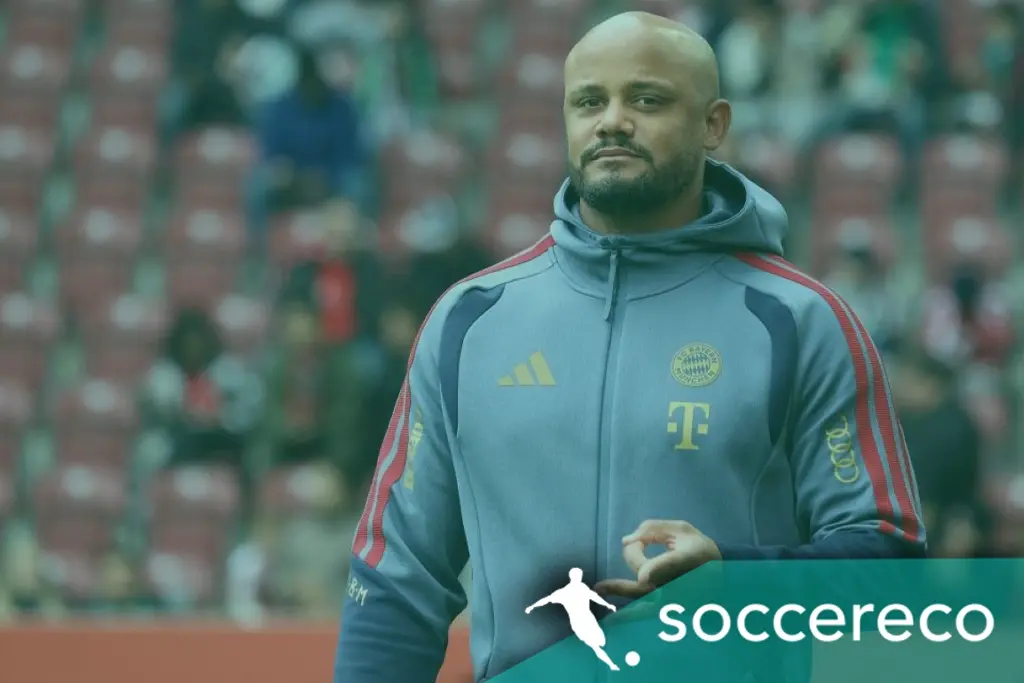
Vincent Kompany Breaks Silence on Health Scare as Bayern Munich Coach Confirms Return Against Köln
Vincent Kompany has spoken publicly about the frightening health incident that kept him away from Bayern Munich for almost a month, confirming that extensive medical examinations have found him to be in excellent health and that he is ready to resume his responsibilities as head coach. The Belgian manager, who collapsed during a training session in October and was subsequently treated in hospital, returned to the press conference room on Thursday with a message of gratitude for those who supported him and a determination to bring the focus back to football.
The 40-year-old is expected to return to the Bayern dugout on Friday, November 20, when the Bundesliga leaders welcome 1. FC Köln to the Allianz Arena. It will be his first competitive match on the touchline since the incident on October 23, which resulted in a hospital stay and several weeks of recovery. Although the experience was understandably unsettling, Kompany insisted that the medical tests had provided reassurance and that he no longer had concerns about his general health.
His appearance at Thursday's press conference also marked an important moment for Bayern, who have continued their impressive season under the temporary leadership of assistant coach Aaron Danks. During Kompany's absence, the German champions maintained their unbeaten record, recorded important domestic victories and secured an outstanding Champions League result away to Atlético Madrid. Rather than expressing frustration at having been unable to participate directly, Kompany revealed that watching his colleagues manage the team had become one of the most rewarding experiences of his coaching career.
However, the Bayern manager was equally determined to address speculation about what caused his illness. Reports in Germany had suggested that excessive coffee consumption, insufficient sleep or the demands of his profession might have contributed to the incident. Kompany dismissed attempts to establish explanations without knowing the facts, explaining that he had been suffering from an illness and had continued working at a time when he should probably have rested.
Kompany Recalls the Frightening Incident That Led to Hospital Treatment
The incident occurred on October 23 at Bayern Munich's training facilities on Säbener Straße, where Kompany was observing a session involving the club's reserve team. The former Manchester City captain suddenly became unwell and collapsed, prompting an immediate medical response. Bayern subsequently confirmed that the coach required hospital treatment and would remain under medical supervision while specialists carried out the necessary examinations. The announcement caused widespread concern, particularly because Kompany had already been experiencing symptoms of illness in the days preceding the incident.
Medical assessments identified meningeal irritation, a condition involving inflammation or irritation of the protective membranes surrounding the brain and spinal cord. The diagnosis required careful monitoring, although Bayern made clear that Kompany was receiving appropriate treatment and that his recovery would take priority over footballing responsibilities. The club did not initially establish a timetable for his return, with sporting director Max Eberl emphasising that the manager would only resume work when his health allowed him to do so safely.
Speaking about the experience for the first time since recovering, Kompany explained that he had approached the medical process in much the same way as a footballer dealing with an injury. Rather than attempting to draw conclusions before receiving the results, he concentrated on following the doctors' instructions and understanding what the examinations revealed. He acknowledged that the uncertainty had been difficult, particularly in the period immediately after the incident, but said the assessments ultimately provided considerable reassurance.
The Belgian expressed particular gratitude for the speed of the medical response and the support he received from Bayern's staff. He explained that everything had been handled exceptionally well, allowing him to concentrate on recovering rather than worrying about the organisation of the team. The attention shown by colleagues, doctors and people throughout the football community helped him maintain confidence during an unfamiliar and challenging period.
Kompany also recognised that incidents of this nature inevitably create concern about possible complications. Nevertheless, he explained that repeatedly imagining what might have happened would not have helped his recovery. His priority was to receive reliable medical information, follow the treatment process and gradually regain the confidence needed to return to his normal routine.
Bayern Coach Insists Medical Tests Confirmed He Is in Excellent Health
One of Kompany's main objectives during Thursday's press conference was to reassure supporters that the incident had not revealed an underlying problem requiring further concern. He explained that he had undergone numerous medical examinations during his recovery and that the results had been consistently encouraging. The process was thorough enough, he suggested, that doctors had effectively investigated every possible concern without identifying anything that would prevent him from resuming his responsibilities.
"All the tests I underwent were actually very positive," Kompany explained, describing the relief he felt as the medical results became available. He added that the examinations had confirmed his excellent general health and that there had been no serious findings requiring additional treatment for complications associated with the original illness. Although he acknowledged that the experience had been intense, his overriding feeling was one of gratitude that the situation had developed positively.
The manager's return has taken place gradually rather than through an immediate resumption of his full workload. Bayern confirmed on November 10 that he had returned to the club's training centre, where he continued his recovery and began reconnecting with the daily activities of the first team. He subsequently resumed responsibility for training sessions, allowing him to rebuild his routine before returning to competitive management.
Kompany also appeared at the press conference with his arm supported following treatment for a separate shoulder injury. That issue was distinct from the illness that caused his collapse, although it added another element to his rehabilitation during the weeks away from the touchline. The club's decision to manage his return carefully reflected the importance placed on achieving a complete recovery rather than allowing the pressures of competition to accelerate the process unnecessarily.
For Bayern supporters, the confirmation of his return represents encouraging news after several weeks of uncertainty. However, Kompany was reluctant to allow the discussion to remain focused exclusively on his health. Having completed the medical assessments and returned to work, he wants attention to shift towards training, team performances and the challenges facing Bayern during the remainder of the campaign.
Kompany Responds to Speculation About Coffee, Sleep and Stress
The Bayern manager also addressed the considerable speculation that emerged in Germany following his collapse. During his absence, various reports and discussions attempted to explain the incident by referring to the demanding lifestyle of professional football coaches. Excessive coffee consumption, insufficient sleep and the psychological pressure associated with managing an elite club were among the factors mentioned, although the suggestions were not supported by confirmed information about Kompany's personal habits.
Kompany made clear that he was uncomfortable with people drawing conclusions without understanding the circumstances. He acknowledged that media scrutiny is an unavoidable part of managing Bayern Munich, but argued that health-related situations require particular care because inaccurate speculation can create unnecessary concern. Discussing how much coffee he might drink or how many hours he might sleep, he explained, is meaningless when those making the claims do not possess the information required to assess his lifestyle.
The coach did not attempt to deny that rest, sleep and general physical condition are important considerations. Instead, he objected to the assumption that any one of those factors could automatically explain what happened to him. He felt that the discussion had moved beyond the available facts, allowing speculation to overshadow the actual medical circumstances and the progress of his recovery.
According to Kompany, the explanation was considerably simpler than many of the theories being discussed. He had been ill, had continued carrying out his responsibilities and had failed to give himself sufficient time to recover. Looking back, he recognised that he should have taken a break earlier rather than attempting to maintain his normal working routine while feeling unwell.
The Belgian had already acknowledged feeling ill around Bayern's Champions League encounter with Arsenal, shortly before the collapse. At the time, he continued working despite not being in his usual physical condition. He now believes that decision was a mistake, although he was careful not to present himself as a victim of exceptional professional pressure or suggest that the responsibilities of managing Bayern were necessarily responsible for his illness.
His explanation provided a more personal account of the experience without attempting to turn it into a broader medical conclusion. Kompany was reflecting on his own decisions and the circumstances that preceded his collapse, rather than offering a definitive explanation for every aspect of the condition. What mattered most to him was that the subsequent examinations were reassuring and that he had learned the importance of responding appropriately when his body required rest.
Aaron Danks Keeps Bayern Unbeaten During Kompany's Absence
While Kompany concentrated on recovering, assistant coach Aaron Danks assumed responsibility for Bayern's first team. The Englishman was supported by the wider coaching staff, who were required to maintain the team's preparation, tactical organisation and competitive standards during a period of considerable uncertainty. Such circumstances could easily have disrupted a club competing across several competitions, particularly when the absence involved the head coach rather than an individual player.
Instead, Bayern continued producing strong results. Under Danks' temporary leadership, the German champions won four matches and drew one, extending their unbeaten run across domestic and European competition. Bundesliga victories against Freiburg and Mainz were accompanied by a draw against Borussia Dortmund, while Bayern also progressed in the DFB Cup with a win over Magdeburg and secured an impressive Champions League victory away to Atlético Madrid.
Maintaining those standards required more than simply reproducing instructions previously established by Kompany. The coaching staff had to prepare for different opponents, manage player availability and make decisions during matches without the head coach present. Those responsibilities demanded confidence and a clear understanding of the tactical principles that had shaped Bayern's performances throughout the season.
Kompany was particularly complimentary about the way his colleagues handled the situation. Rather than claiming that the team had continued succeeding because of instructions issued remotely, he emphasised that those working directly with the players had been responsible for the decisions. He explained that effective management depends on possessing accurate information about the squad, training performances and the circumstances of each match, something that is far easier to obtain when working alongside the players every day.
Although Bayern remained in contact with him during his recovery, those conversations did not involve directing the team's tactical decisions. Kompany deliberately allowed his assistants to manage their responsibilities, recognising that attempting to control events from outside the training ground would have been neither practical nor appropriate. The experience reinforced his confidence in the coaching structure and demonstrated that the organisation could function effectively even when its most visible figure was temporarily unavailable.
Atlético Madrid Victory Becomes One of Kompany's Proudest Coaching Moments
Of all the matches played during his absence, Bayern's 2-0 victory away to Atlético Madrid made the greatest impression on Kompany. The Champions League encounter presented a demanding challenge against a team renowned for its competitiveness and defensive organisation, and Bayern travelled to Spain with a squad affected by several injuries. Winning under those circumstances was already an impressive achievement, but the result carried additional emotional significance for a manager watching from outside the stadium.
Kompany admitted that he thoroughly enjoyed observing the team overcome the difficulties facing them, describing the victory as one of the finest moments of his coaching career despite not being physically present. His reaction reflected more than satisfaction with the scoreline. He was particularly encouraged by the way the players and coaching staff demonstrated confidence in the principles that had been established during his time at the club, even when the usual leadership arrangements were temporarily unavailable.
There was also a sense of pride in seeing his colleagues receive recognition for their work. Danks and the other assistants had assumed additional responsibilities during a difficult period and were rewarded with a result against one of Europe's most experienced opponents. For Kompany, the victory demonstrated that Bayern's progress was based on collective understanding rather than depending entirely on his presence beside the pitch.
The result provided an important psychological boost at a time when the club was dealing with uncertainty surrounding its head coach. Winning away against Atlético required concentration, tactical discipline and the willingness to compete under pressure, characteristics that Kompany has consistently attempted to develop within his squad. Seeing those qualities expressed so clearly reinforced his belief that Bayern were moving in the right direction.
He also recognised that watching matches from a distance creates an entirely different emotional experience. A coach on the touchline can communicate with players, adjust tactical instructions and react immediately to changing circumstances. When observing remotely, those possibilities disappear, leaving the manager to experience the match more like a supporter while trusting the decisions made by colleagues. Kompany found aspects of that perspective frustrating, but the Atlético victory turned the experience into something he would remember positively.
Unexpected Absence Gives Kompany a Different Perspective on His Coaching Staff
Although the circumstances surrounding his absence were undoubtedly difficult, Kompany believes the experience provided valuable insight into how Bayern operate. For the first time in an extended period, he was able to observe the work of his colleagues without being directly involved in every decision. That distance allowed him to appreciate aspects of the organisation that can be difficult to recognise when managing training sessions, preparing tactical plans and dealing with the constant demands of competitive football.
The Belgian highlighted the different responsibilities carried by members of his coaching team, explaining that each contributes to the preparation and development of the players. René Marić plays an important role in tactical analysis, while Danks is heavily involved in planning training sessions. Floribert Ngalula contributes to individual development, particularly among younger players, and Daniel Fradley supports team meetings, analysis and work with specific groups. Other specialists are responsible for goalkeeping and physical preparation, creating a structure in which responsibilities are distributed rather than concentrated entirely around the head coach.
Kompany explained that observing those colleagues during his recovery had strengthened his appreciation of their work. He was able to see how they communicated, responded to problems and maintained standards while dealing with the additional responsibility created by his absence. The experience was particularly interesting because it demonstrated how established processes could continue functioning when circumstances changed unexpectedly.
He also acknowledged that the period gave him time to reflect on aspects of Bayern's performance that might benefit from adjustment. Rather than contemplating major tactical changes, Kompany considered small improvements that could help the team become more effective. His approach reflects the belief that progress at the highest level often depends on relatively minor details, particularly when a squad is already performing successfully across several competitions.
The coach suggested that being temporarily removed from the intensity of daily management had allowed him to examine those details from a different perspective. Watching matches without the immediate responsibility of making substitutions or adjusting instructions created opportunities to consider patterns that might otherwise receive less attention. He hopes those observations can contribute to Bayern's development during the coming months, although he remains determined not to introduce unnecessary changes to a team that has maintained excellent results.
That willingness to identify positive aspects of an otherwise difficult experience was one of the most notable elements of his press conference. Kompany did not attempt to minimise the seriousness of the incident, but he also refused to describe the entire period as wasted time. Having seen his colleagues succeed and gained a different understanding of the organisation, he believes there are lessons that can be carried forward now that he has returned.
Bayern Prepare for Köln as Kompany Returns to the Touchline
Attention now turns to Friday's Bundesliga fixture against 1. FC Köln, which will mark Kompany's first competitive appearance on the Bayern touchline since October. The match comes immediately after the November international break, creating the additional challenge of reintegrating players who have been representing their national teams. With preparation time limited, the manager must ensure that his squad quickly returns to the collective rhythm required for domestic competition.
Bayern enter the encounter at the top of the Bundesliga standings, ahead of Borussia Dortmund on goal difference. Their unbeaten record has been maintained throughout Kompany's absence, reflecting both the quality of the squad and the effectiveness of the temporary coaching arrangements. However, the German champions cannot assume that their strong position guarantees success against Köln, particularly after an international break that may have affected the physical condition and preparation of several important players.
For Kompany, the fixture carries obvious personal significance. After almost four weeks away from the dugout, he has spoken openly about his enthusiasm for returning to the atmosphere of competitive football. He explained that his motivation was particularly high because he had spent so much time waiting for the opportunity to resume his normal responsibilities. That enthusiasm, he hopes, will translate into additional energy for his players when they face Köln at the Allianz Arena.
The visitors are also aware that the manager's return could provide Bayern with an emotional boost. Köln coach René Wagner welcomed the news that Kompany was healthy enough to resume his duties, while acknowledging that his presence might give the home side additional motivation. However, Wagner has also made clear that his own team intend to approach the match positively, defending with commitment while looking for opportunities to threaten Bayern through quick attacking transitions.
From Bayern's perspective, the priority will be to maintain the standards established during Kompany's absence rather than allow the occasion surrounding his return to become a distraction. The coach has repeatedly emphasised that the most important objective is to return to footballing normality, where performances and results determine the discussion. Having spent several weeks answering questions about his health, he is eager to focus once again on the tactical and competitive challenges that define his profession.
Kompany Thanks Bayern, His Family and Fellow Coaches for Their Support
Another important part of Thursday's press conference concerned the response Kompany received from people across football. The Belgian explained that messages of encouragement had arrived from colleagues, friends and other managers, including coaches he had previously faced as an opponent. He was particularly moved by the willingness of people within a highly competitive profession to offer support when circumstances extended beyond football.
Kompany acknowledged that rival managers often spend their professional lives attempting to defeat one another, but said his experience demonstrated that those competitive relationships do not prevent genuine concern when someone encounters personal difficulties. The messages helped him appreciate the relationships that develop throughout a career, including with people whose teams have competed directly against his own. That solidarity was especially meaningful during a period when he was unable to participate in the daily routine that normally occupies so much of his attention.
He also thanked his family, the medical professionals involved in his treatment and the Bayern officials who ensured he received the support he needed. The club's response was particularly important because it allowed him to concentrate on recovering without feeling responsible for managing the team remotely. By placing his health ahead of competitive demands, Bayern created the conditions for a gradual return while allowing the coaching staff to continue their work.
The experience appears to have reinforced Kompany's appreciation of the relationships surrounding professional football. Although managers are often judged almost exclusively by victories, defeats and tactical decisions, their work also depends on the people supporting them behind the scenes. The Belgian's absence temporarily removed him from the centre of that structure, allowing him to recognise how effectively it functioned and how many individuals contributed to maintaining the club's standards.
Kompany Looks Ahead After an Unforgettable Month Away From Football
Vincent Kompany's return represents an important moment for Bayern Munich after a period that tested the club in circumstances extending far beyond normal sporting challenges. The manager's collapse on October 23 raised understandable concerns, and the subsequent diagnosis required him to step away from football while receiving medical treatment. Almost a month later, he has returned with reassuring examination results, renewed appreciation for his colleagues and a determination to resume the work interrupted by his illness.
His comments during Thursday's press conference offered a candid account of an experience that he described as intense and unfamiliar. He acknowledged that he should have listened more carefully to his body when he was unwell, rejected speculation about his lifestyle and expressed gratitude for the medical attention that allowed him to recover. Rather than focusing on hypothetical complications, he has chosen to concentrate on the positive outcome and the opportunity to return to a job he clearly enjoys.
The performances achieved by Bayern in his absence have also provided reassurance about the strength of the club's coaching structure. Aaron Danks and his colleagues maintained the team's unbeaten record, secured valuable domestic results and delivered an exceptional victory against Atlético Madrid. Kompany's pride in those achievements was evident, particularly when he discussed the pleasure of watching the team succeed without requiring his direct involvement in tactical decisions.
Friday's match against Köln will therefore represent more than a routine return to the touchline. It will mark the conclusion of a difficult period for the Bayern manager and the beginning of a new phase in which he hopes attention can return entirely to football. The club remain in a strong position in the Bundesliga and Champions League, and Kompany believes the experience has given him fresh ideas about how to improve a team that is already performing at a high level.
Above all, the Belgian wants the discussion surrounding his health to become part of the past. The support he received, the lessons learned and the success of his coaching staff will remain important memories, but he is eager to return to the familiar challenges of preparing matches, making decisions and helping Bayern compete for trophies. Having received confirmation that he is in excellent health, Kompany is ready to exchange medical updates for football analysis and focus once again on the results that matter to Bayern Munich.
His message ahead of the Köln encounter is ultimately one of reassurance and determination. He has recovered from a frightening experience, gained a new appreciation of the people working alongside him and returned to a team that continued succeeding during his absence. For Kompany, the next step is straightforward: resume his responsibilities, build on the foundations established by his colleagues and ensure Bayern continue progressing through a demanding season. After several weeks in which football became secondary, the manager is looking forward to seeing it take centre stage again.