Erling Haaland responds to critics after scoring twice in Norway's dramatic 3-2 comeback victory over Denmark to secure Nations League qualification.
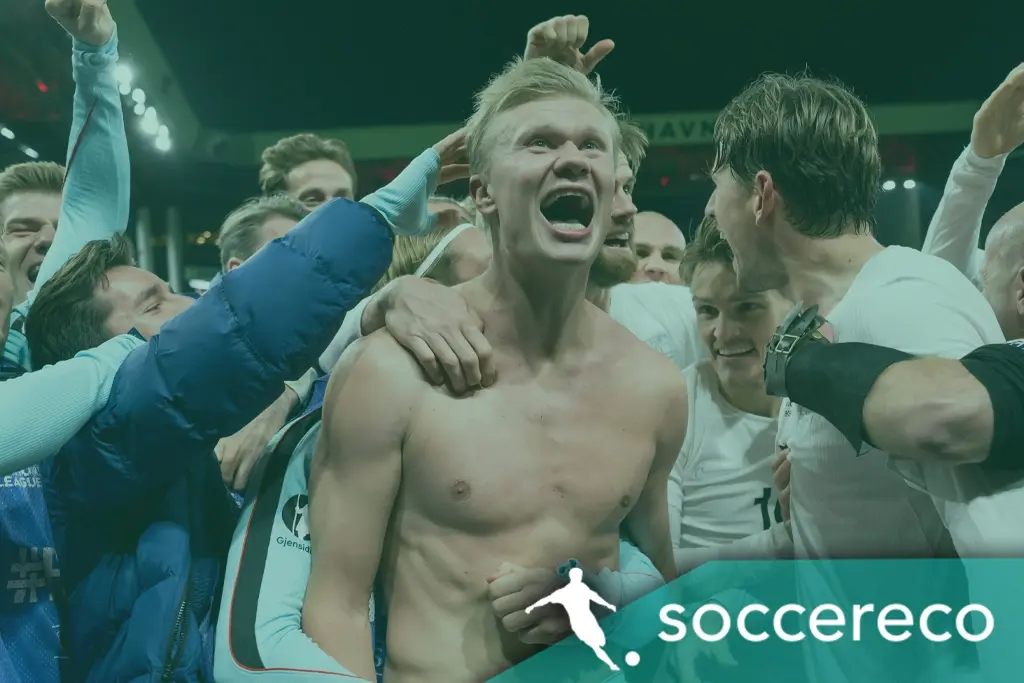
Erling Haaland Hits Back at Critics After Inspiring Norway's Dramatic Comeback Against Denmark
Erling Haaland has delivered a powerful response to those who questioned his motivation to represent Norway, scoring twice in a remarkable 3-2 victory over Denmark before addressing the controversy in a series of videos recorded aboard a private jet. The Manchester City striker had found himself at the centre of an unexpected debate following comments about the physical demands of international football, with one Norwegian television pundit even suggesting that he should be dropped from the starting lineup. Instead, Haaland produced the decisive moments in a dramatic comeback that secured Norway's place in the UEFA Nations League knockout stage.
Norway's victory in Copenhagen was extraordinary in its own right. Ståle Solbakken's team fell two goals behind inside the opening 15 minutes and appeared to be heading towards a deeply disappointing conclusion to their group-stage campaign. However, Haaland gave the visitors hope before Martin Ødegaard restored parity in the closing stages, setting up a frantic finish in which the Norwegian striker struck again deep into stoppage time. His winning goal completed an unforgettable turnaround and ensured that a week dominated by questions about his enthusiasm ended with a demonstration of his importance to the national team.
The result also gave Haaland an opportunity to address what he considered a misunderstanding of his earlier remarks. Speaking on Snapchat during his journey back to Manchester, the forward made clear that he had never questioned his desire to play for Norway. His frustration stemmed from the suggestion that admitting to physical exhaustion after a demanding match was somehow evidence of a lack of commitment, an interpretation he felt had distorted the original context of his interview.
How Haaland's Comments Sparked a Debate in Norway
The controversy began after Norway's home victory over Wales, when Haaland spoke to broadcaster TV 2 about the challenges of playing several demanding matches within a relatively short period. The striker acknowledged that the combination of physical fatigue and a relentless football schedule can sometimes make it more difficult to prepare mentally for the next fixture. His comments were intended to describe the realities of competing at the highest level, but they quickly attracted attention and became a subject of discussion across the Norwegian sports media.
Former footballer and NRK analyst Kristoffer Løkberg was particularly critical of the remarks, questioning whether Haaland should automatically retain his place if he was struggling to find the necessary motivation. Løkberg suggested that Alexander Sørloth, who was waiting for an opportunity to lead the attack, could provide a better alternative under those circumstances. His argument was that a player fully committed to the occasion might contribute more than a considerably more talented teammate operating below his usual level of intensity. Given Haaland's status as Norway's leading goalscorer and most recognisable footballer, the suggestion immediately became controversial.
There was an important distinction, however, between the point Haaland had originally made and the interpretation that followed. Acknowledging fatigue after an exhausting match does not necessarily mean that a footballer lacks the desire to represent his country, particularly when the comments are made shortly after the final whistle. Haaland had been describing the difficulty of maintaining peak physical and mental energy through a demanding schedule, something that affects players throughout the professional game. Nevertheless, the debate quickly shifted towards his commitment to Norway, placing additional attention on his performance ahead of the crucial encounter with Denmark.
For Solbakken, the discussion did not appear to create any serious uncertainty about his team selection. The Norway manager continued to trust Haaland, who had repeatedly demonstrated his ability to influence important matches through his movement, finishing and presence in the penalty area. Sørloth remained an important attacking option, but there was little indication that the coaching staff considered Haaland's comments sufficient reason to leave him out. The decision ultimately proved decisive, although Norway's difficult start in Copenhagen ensured that the striker would have to work considerably harder than expected to make his mark.
Norway Produce an Extraordinary Comeback in Copenhagen
Denmark could scarcely have imagined a better beginning to the match. Playing in front of their own supporters, the hosts established a two-goal advantage within the opening quarter of an hour and immediately placed Norway under enormous pressure. The visitors struggled to contain Denmark's attacking movements during the early stages, and what had been expected to be a closely contested Nations League encounter suddenly threatened to become a comfortable home victory. For Solbakken's side, the challenge was not simply to recover the scoreline but to regain their organisation and confidence before the contest slipped completely beyond their control.
Haaland's contribution became increasingly important as Norway attempted to respond. Despite the difficulties experienced by his teammates, the Manchester City forward continued to look for opportunities to exploit space around Denmark's defensive line, providing an attacking reference point as the visitors gradually established themselves in the match. His goal before half-time reduced the deficit and changed the atmosphere of the contest, giving Norway a realistic opportunity to recover while introducing doubt into a Danish team that had previously appeared comfortable. The strike was significant not only because of its timing but also because of the criticism that had surrounded him in the build-up.
Norway emerged for the second half with renewed determination, although Denmark continued to pose a threat and were unwilling to surrender their advantage. The visitors had to remain patient, combining periods of possession with direct attacking movements while avoiding the defensive mistakes that had undermined their opening 15 minutes. Ødegaard became increasingly influential as Norway searched for an equaliser, while Haaland's presence continued to demand attention from the Danish defenders. As the match progressed, the possibility of a comeback became more realistic, even though the home side remained ahead with time running out.
The breakthrough eventually arrived when Ødegaard brought Norway level late in the second half, completing a recovery that had looked highly improbable during the opening stages. However, the visitors were not satisfied with a draw, knowing that another goal could transform their position in the Nations League group. The closing minutes were played with extraordinary intensity as Norway continued to push forward and Denmark attempted to protect a result that had once appeared secure. With the match already deep into added time, Haaland was presented with the opportunity to settle the contest and complete an astonishing turnaround.
The striker made no mistake, scoring the decisive goal to give Norway a 3-2 victory and send his country into the knockout stage. It was a dramatic conclusion to a match in which the visitors had faced elimination, and the celebrations reflected both the importance of the result and the remarkable manner in which it had been achieved. Haaland's two goals were central to the comeback, but Norway's persistence and Ødegaard's equaliser were equally important in creating the opportunity for the late winner. After a week in which his motivation had been questioned, the striker had responded in the most convincing way available to a footballer: by delivering when his team needed him most.
Haaland Addresses the Controversy From His Private Jet
Rather than allowing the discussion to disappear after the final whistle, Haaland decided to address it directly during his journey back to England. Having travelled from the stadium to Copenhagen Airport, the Manchester City forward boarded a private jet to return to his club commitments and began recording videos for his Snapchat followers. Still visibly excited by Norway's victory, he described the match as an extraordinary experience and expressed his amazement at the way the evening had unfolded. However, his attention soon turned towards the criticism that had followed his previous interview.
Haaland explained that he had simply been exhausted after Norway's match against Wales, which had lasted almost 100 minutes including stoppage time. He felt that his observation about the difficulty of maintaining motivation during a demanding schedule had been interpreted far too literally, creating the impression that he did not enjoy representing his country. The forward insisted that nothing could be further from the truth and expressed frustration that he continued to face questions about his commitment despite everything he had contributed to the national team.
"Of course we were motivated," Haaland said, before explaining that much of the controversy had developed from comments made when he was physically tired. He acknowledged that he should perhaps have been more careful with his words, particularly because statements made immediately after matches can easily become headlines detached from their original context. His response was not an attempt to deny the demands of international football but rather to emphasise that exhaustion and motivation are not mutually exclusive. A player can be fully committed to winning while still feeling the effects of a difficult match or a demanding schedule.
The striker also reflected on how he might approach similar situations in the future. He suggested that declining interviews when he is particularly tired could be a sensible way to avoid unnecessary controversies, even if that means speaking less frequently to the media. The remark carried an element of frustration, but it also revealed his awareness that his words attract considerable attention. As one of the most prominent players in world football, Haaland understands that even relatively ordinary observations can become major talking points when interpreted as comments about his professionalism or attitude.
His message was widely understood as a response to Løkberg, although it also addressed the wider discussion surrounding his national team performances. Haaland made clear that he enjoys playing for Norway and takes his responsibilities seriously, rejecting the idea that he needs to constantly demonstrate his commitment through public statements. Having scored twice in such an important match, he was in a particularly strong position to make that argument. The victory offered a powerful contrast between the doubts expressed before kick-off and the performance that followed.
Solbakken Defends His Striker as Løkberg Responds
Norway manager Ståle Solbakken had already entered the debate immediately after the match, defending Haaland and criticising the suggestion that the striker should have been left on the bench. Speaking to Norwegian newspaper VG, the coach made clear that he disagreed with Løkberg's interpretation of the player's earlier interview. His response reflected the confidence he has consistently placed in Haaland, whose goalscoring ability remains one of Norway's greatest strengths. From Solbakken's perspective, the striker had demonstrated exactly why it would have been misguided to question his involvement in such an important fixture.
Løkberg subsequently responded to the manager's criticism and accepted that Solbakken was entitled to challenge his comments. The television analyst acknowledged that Haaland's performance had provided a clear answer to the concerns he had raised before the match, although he also suggested that his own criticism might have contributed to the striker's determination. He believed that his remarks had touched a nerve and perhaps encouraged Haaland to approach the encounter with additional intensity. It was an unusual reaction to being proved wrong, but it also helped bring a degree of humour to an argument that had attracted considerable attention in Norway.
Whether Løkberg's comments genuinely influenced Haaland's performance is impossible to determine. The striker has built his career around scoring goals under pressure and has repeatedly produced decisive contributions without requiring criticism from television pundits. Nevertheless, the sequence of events made the discussion particularly memorable, turning what might otherwise have been a routine debate about team selection into a major story surrounding Norway's qualification. Løkberg's suggestion that he had helped motivate Haaland added another dimension, even if the forward's own explanation indicated that his desire to succeed had never been in question.
A Victory That Means More Than Three Points for Norway
Beyond the individual controversy, Norway's victory represented a significant achievement for a national team attempting to establish itself among Europe's strongest competitors. Recovering from a two-goal deficit away from home required considerable resilience, particularly in a match where qualification was at stake. The character demonstrated by Solbakken's players will provide encouragement ahead of the Nations League knockout stage, although the defensive problems exposed during the opening 15 minutes also offer an important reminder of the improvements still required. Against stronger opponents, Norway cannot afford to repeatedly place themselves in situations where an extraordinary comeback becomes necessary.
The match also illustrated the value of Norway's attacking partnership between Haaland and Ødegaard. The Manchester City forward provides an exceptional finishing presence, while the Arsenal midfielder offers creativity, control and the ability to influence matches through his passing and movement. Their contributions against Denmark were crucial, but the comeback depended on a broader collective effort from a team that refused to accept defeat despite an extremely difficult start. Maintaining that balance between individual quality and collective organisation will be central to Norway's ambitions as the competition progresses.
For Haaland, the immediate focus now returns to Manchester City, where another demanding sequence of domestic fixtures awaits. His comments about fatigue have highlighted the physical pressures experienced by elite footballers who are expected to perform consistently for both club and country, often with limited time for recovery. However, the Denmark match demonstrated that acknowledging those pressures does not diminish a player's desire to compete or ability to produce extraordinary performances. If anything, the events in Copenhagen offered a reminder of how much responsibility Haaland carries whenever he represents Norway.
By the time he arrived back in Manchester, the discussion surrounding his motivation had taken on an entirely different meaning. What began with questions about whether he should even start against Denmark ended with two decisive goals, qualification for the Nations League knockout stage and a public response from the player himself. Haaland may have concluded that speaking less after exhausting matches would save him from future controversies, but his performance in Copenhagen ensured that his commitment would not be the lasting question from this international break. Instead, Norway will remember a remarkable comeback, a dramatic late winner and another occasion when their most important striker delivered under extraordinary pressure.