Vincent Kompany has put himself on a list of top coaches. After fifty Bundesliga matches, the Belgian manager has collected 126 points, beating a number of big names. Only Pep Guardiola performed even better in a top-five league.
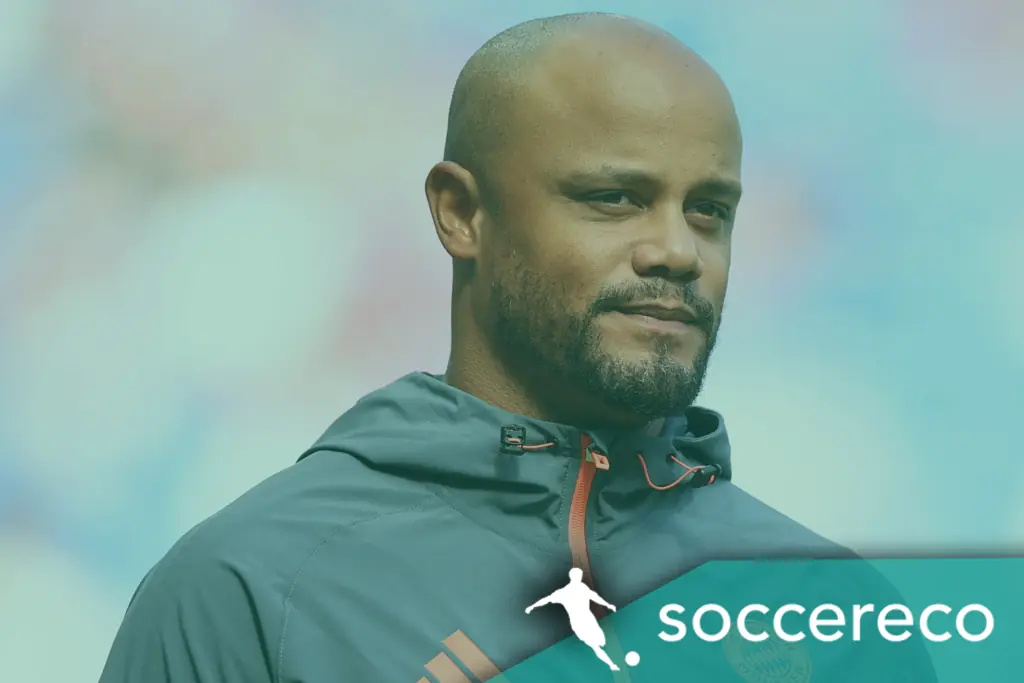
What Vincent Kompany has produced in his first season and a half in charge of Bayern Munich stands out not only because of the numbers, but because of the context behind them.
Bayern is a club where domestic success is expected rather than celebrated, and where coaches are judged with unusual speed. Even in that environment, Kompany has managed to build a run of results that places him alongside the very best starts seen by elite managers in Europe’s top leagues.
The raw record alone explains why his name is now being mentioned in the same breath as proven serial winners. After 50 Bundesliga matches, Kompany has collected 126 points out of a possible 150. That works out at 2.52 points per game, a title-winning pace in almost any era. He has lost only 2 of those 50 league games and drawn 9, meaning Bayern have taken maximum points in the vast majority of fixtures. When a coach achieves that level of consistency in Germany, the conversation quickly shifts from “good start” to “historically strong start”.
What makes the achievement even more striking is the journey Kompany took to get to this job. His coaching career began at Anderlecht, the club where he came through as a player and where expectations are significant. Despite the stature of the role, he did not collect major trophies in 3 years there. That period, however, was still a formative stage, one in which he gained first-hand experience of leading a big dressing room, working under pressure, and trying to impose a clear football identity while results are scrutinized every week.
His move to Burnley provided a different type of education. In the Championship, he was able to develop his ideas with time and build momentum, and the reward was promotion to the Premier League in his first season. That promotion mattered for more than the club’s trajectory. It strengthened Kompany’s credibility as a coach who could implement a plan over a long season, manage a squad through the physical and tactical demands of English football, and maintain performance levels with the target of finishing first rather than simply surviving.
The Premier League season that followed was harsher. Burnley’s relegation in his second season highlighted how steep the jump can be from a dominant Championship side to a Premier League team fighting for survival. For many coaches, relegation can become a label that takes years to shake. In Kompany’s case, it instead became a pivot point. Bayern’s decision to appoint him was a statement that the club valued his profile, leadership, and approach, even if his most recent result in England was negative.
At the same time, Bayern’s current squad context continues to shape expectations from week to week. With preparation and selection often influenced by absences and rotation, the build-up to key league fixtures can quickly become part of the wider narrative. You can read more about the immediate match context and availability issues in this related Bayern update, which highlights how personnel situations can impact planning even when results remain strong.
That elite pedigree matters at Bayern, because the job is not only tactical. It is also about authority, communication, and managing top-level players who are accustomed to winning and to being central figures. Kompany, as a former top defender and captain at the highest level, arrives with instant dressing-room credibility. That credibility can reduce the time a coach typically needs to establish standards, demand intensity, and make difficult decisions about roles, minutes, and accountability. Bayern coaches who struggle often struggle because they cannot align the squad quickly enough. Kompany’s early results suggest he has avoided that trap.
Becoming league champion in his first season at Bayern also changed the perception around him immediately. At many clubs, a title is the culmination of a long process. At Bayern, a title is the baseline. Winning it straight away still carries weight because it signals that the coach can handle the environment and convert pressure into performance. It also provides political capital inside the club, giving the coach more room to shape the squad, define priorities, and impose tactical habits that might take time.
In the Bundesliga, the phrase almost impossible to beat is not just a compliment, it reflects a specific type of dominance. Bayern’s ability to avoid defeat week after week typically comes from a mix of control and ruthlessness: control in possession, territorial dominance, and a defensive structure that prevents opponents from generating high-quality chances, combined with the capacity to decide games even when performances are not perfect. A record with only 2 losses in 50 games strongly suggests Bayern under Kompany have developed that combination, turning close matches into wins and refusing to collapse after setbacks.
The comparison with Pep Guardiola is unavoidable because it provides an immediate benchmark for what “best possible start” looks like at Bayern. Guardiola collected 132 points from his first 50 Bundesliga games, which equates to 2.64 points per game. Kompany’s 126 points puts him just 6 points behind that pace across the same sample. In practical terms, that gap is small enough to underline how exceptional Kompany’s start has been, while still acknowledging that Guardiola’s early Bayern period remains the reference point.
What also stands out is that the comparison being made is not limited to Bayern history. The implication is broader: that Kompany’s early points haul places him among the strongest starts by coaches in a top-five league. That matters because the Bundesliga is often viewed through the lens of Bayern’s historical strength. Posting numbers that stand out even within Bayern’s own context indicates Kompany is not simply benefiting from the club’s resources. He is delivering at a level that distinguishes him from many high-profile names who have coached elite squads in similarly favorable conditions.
Tactically, the evidence of such consistency usually points to a team that wins in multiple ways. Across a 50-game league sample, no side can rely solely on one rhythm or one match plan. Injuries, fixture congestion, opponent adjustments, and psychological fatigue all force changes. A coach who keeps winning through those variables is typically one who has created clear principles while also allowing flexibility. That might show up in Bayern’s ability to press aggressively in certain games, manage tempo and possession in others, and protect leads without retreating into passive defending. It can also show up in squad management, rotating effectively without losing cohesion, and keeping fringe players engaged so performance levels do not drop when changes are required.
There is also the broader Bayern context to consider. Bayern’s identity is built around dominance, but the modern Bundesliga is tactically sophisticated and increasingly capable of punishing mistakes. Many opponents are well-drilled, press-resistant, and dangerous in transitions. The teams that consistently take points off the league’s giants often do so through organization and clarity. For a Bayern coach to lose only 2 times in 50 league games, his side generally must be controlling the key moments: preventing transitions, winning second balls, maintaining rest defense behind attacks, and sustaining pressure long enough to force opponents into errors.
From Kompany’s perspective, this run of results also reshapes his personal narrative. The early Anderlecht period without trophies no longer reads as a failure, but as an apprenticeship. The Burnley relegation no longer defines him, but becomes part of the profile of a coach who took risks, learned quickly, and then stepped into one of the most demanding jobs in world football and immediately met the highest domestic standard. In elite coaching, perception can swing sharply. Bayern’s platform accelerates that swing, but the numbers still need to justify it. So far, they have.
The next step, and the one that always decides the ceiling of a Bayern coach, is sustainability and performance in the biggest moments. Dominating the Bundesliga is essential, but Bayern are ultimately judged on whether they remain at the very top level in Europe, and on whether their football evolves rather than stagnates. A start like Kompany’s creates optimism and credibility, but it also raises expectations further. When a coach sets a near-historic pace, the club and its supporters quickly start to demand not only winning, but winning with a distinct identity, plus continued progress across seasons.
Still, even with those caveats, the early conclusion is clear. Kompany’s first 50 Bundesliga matches have placed him in rare company, with only Guardiola producing a stronger points return in the same context. For a coach who arrived with questions attached to his short managerial track record at the very top, that is the strongest possible answer.
Updated: 12:36, 13 Jan 2026