Liverpool biggest opponent this season is Liverpool itself. Several English media outlets have reached that conclusion after Arne Slot team failed to get past Burnley on Saturday despite 32 shots on goal, drawing 1-1. A pattern is starting to emerge. This frustrating afternoon could easily have been avoided.
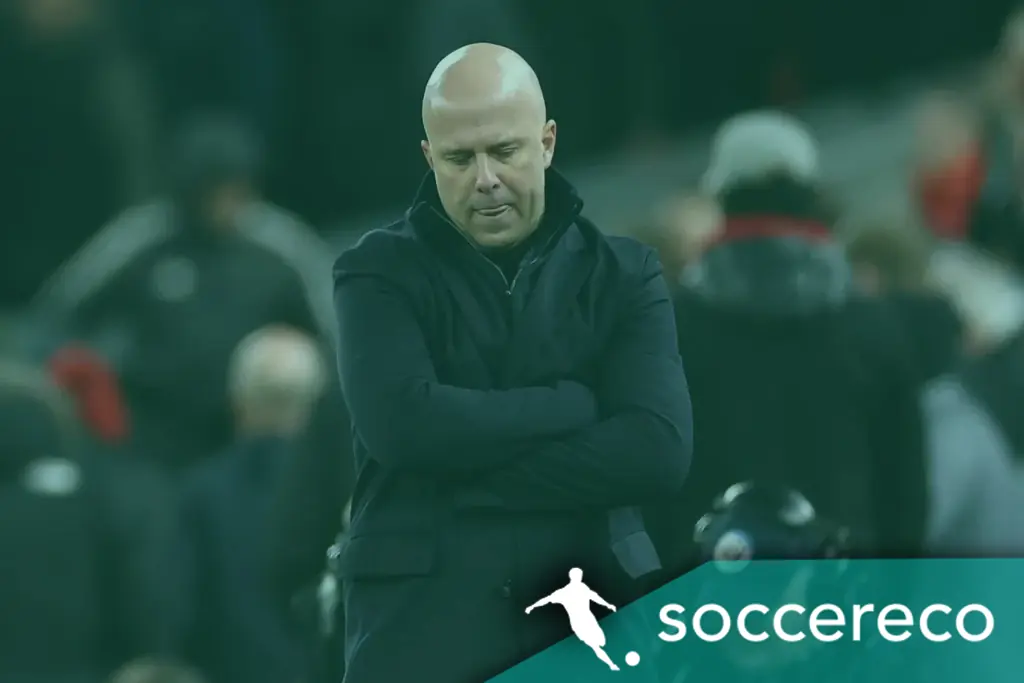
Today, Slot himself pointed out that Liverpool too often fail to take their chances, after which the opponent then scores from one of their few opportunities.
That pattern has played a major role in Sunderland and Leeds United, both newly promoted, leaving Anfield with a point this season as well. The last time The Reds failed to win a home match against each of the three promoted teams was in 1980/81. English media are therefore noting that the reigning champions are struggling to break down sides that defend deep in a low block, and the latest evidence of that weakness came again on Saturday against Burnley.
From the first whistle, the match followed a familiar script. Liverpool had the ball, dictated the rhythm, and spent long periods camped around the Burnley penalty area, trying to force openings against a compact defensive structure. Burnley, for their part, were content to absorb pressure, protect central zones, and keep their lines tight, betting that Liverpool would grow impatient or careless. In these types of games, the champion’s job is simple in theory: strike early, build a cushion, and make the opponent abandon their low block. But when that clinical edge is missing, the low block becomes not only a defensive choice but a psychological weapon, because every missed chance fuels the belief that a result is there for the taking.
Burnley match once again exposed that problem, even though Slot had worked on it specifically in training this week. It was bewildering that Liverpool did not win, but the longer Liverpool kept missing chances, the more vulnerable they became to the inevitable sucker punch that eventually arrived after Burnley only shot on target, Liverpool Echo wrote, referring to the equaliser by former Excelsior loanee Marcus Edwards. That goal came during a ten-minute spell in which The Reds briefly took their foot off the gas, allowing Burnley a rare moment to step forward and commit numbers to an attack. The consequence was harsh and immediate: despite Liverpool control and pressure, the game finished Liverpool 1-1 Burnley at Anfield, another afternoon where dominance did not translate into three points.
It was a disappointing follow-up to an excellent first half, in which Florian Wirtz capped a strong performance with a fine opening goal. Wirtz was repeatedly finding pockets of space between Burnley lines, combining neatly and speeding up Liverpool play in the final third, the kind of influence that usually turns a stubborn match into a routine victory. There were moments when Liverpool looked on the verge of tearing the game open, with quick interchanges around the box and runners trying to exploit the gaps that appear when a defence is forced to shift laterally again and again. According to The Daily Mail, Hugo Ekitike’s movement and intent added to that sense of threat, with the forward producing flashes that suggested Liverpool had enough firepower on the pitch to settle the contest well before the late drama.
But that is precisely the source of the frustration being voiced in the English press. Liverpool are not failing because they are not creating. They are failing because they are not finishing, and because the longer those missed opportunities pile up, the more the game tilts from “when will Liverpool score again” to “what happens if the opponent get one moment.” In matches like this, one lapse, one misplaced pass in buildup, one loose duel in transition can undo an hour of control. The Echo’s reading of the equaliser reflected that logic: a single Burnley shot on target should not be enough to take points from Anfield, yet it was enough because Liverpool had left the door open.
The regional paper also said it cannot remember the last time Liverpool played well for a full ninety minutes. That is a telling line, because it points to something beyond finishing: the inability to sustain intensity and precision for an entire match. Liverpool can look fluent for stretches, suffocating opponents with pressure and creating the impression that a second goal is inevitable. Then comes a dip, sometimes only for a few minutes, where the tempo drops and the opponent senses oxygen. Burnley equaliser fit that pattern, arriving in a brief period when Liverpool stopped squeezing and allowed the game to breathe, exactly the kind of window a defensive side is waiting for all afternoon.
It is leading to impatience among fans, who greeted Slot team with boos at the final whistle. The Daily Mail described Slot’s body language as he walked across the pitch, suggesting the manager was visibly frustrated and increasingly aware of the shifting mood. In the stands, the reaction was not just about one draw, but about repetition. The sense that Liverpool have seen this movie before this season, both at home and in other fixtures: control without the kill shot, then a concession that turns a win into a draw or worse.
That broader narrative is also why the “hero to zero” framing has appeared in parts of the tabloid press. “The question is whether that is fair, but it is astonishing how quickly, in the eyes of some, he has gone from hero to zero,” one outlet observed. “Six months ago, Slot could walk into any pub in the city and get a free drink after leading The Reds to the Premier League title in one of the best debut seasons as a manager. Now, if performances do not improve in the coming months, he risks being shown the door.” The underlying point is not that Liverpool are suddenly a poor side, but that at a club with Liverpool expectations, the margin between admiration and impatience can shrink rapidly when results stop matching performances.
The numbers around their season so far add weight to that anxiety. Liverpool reportedly have seventeen points fewer than they did at this stage last season, a gap that is difficult to ignore in any title defence, especially when it is being driven by draws and dropped points in matches where they have had more than enough chances to win. Those are the most damaging slips in a long campaign because they do not feel like unavoidable defeats, they feel like gifts handed to opponents.
The Times struck a slightly more patient tone, suggesting Slot has promised that the day everything clicks will come, that the performances will eventually match the results. But it also delivered the sharper conclusion that, for now, there is more self-sabotage, frustration, and costly dropped points. The Burnley match is being used as a symbol of that theme because it contained every element: early control, a deserved lead, enough chances to end it, a short lapse, and then a punishing equaliser that left Liverpool staring at another “how did that happen” final score.
In isolation, a 1-1 draw can be explained away by a stubborn opponent and a few missed finishes. In context, Liverpool 1-1 Burnley becomes another data point in a season where the champions are repeatedly forced to confront the same uncomfortable truth highlighted by the English press: when Liverpool fail to be clinical, they become vulnerable not because opponents are outplaying them, but because Liverpool are undermining themselves.