The Portuguese showdown between Benfica and FC Porto had a controversial aftermath. Benfica coach José Mourinho was sent off in the closing stages of the match and, afterwards, launched a fierce criticism of both the refereeing and Porto assistant Lucho González.
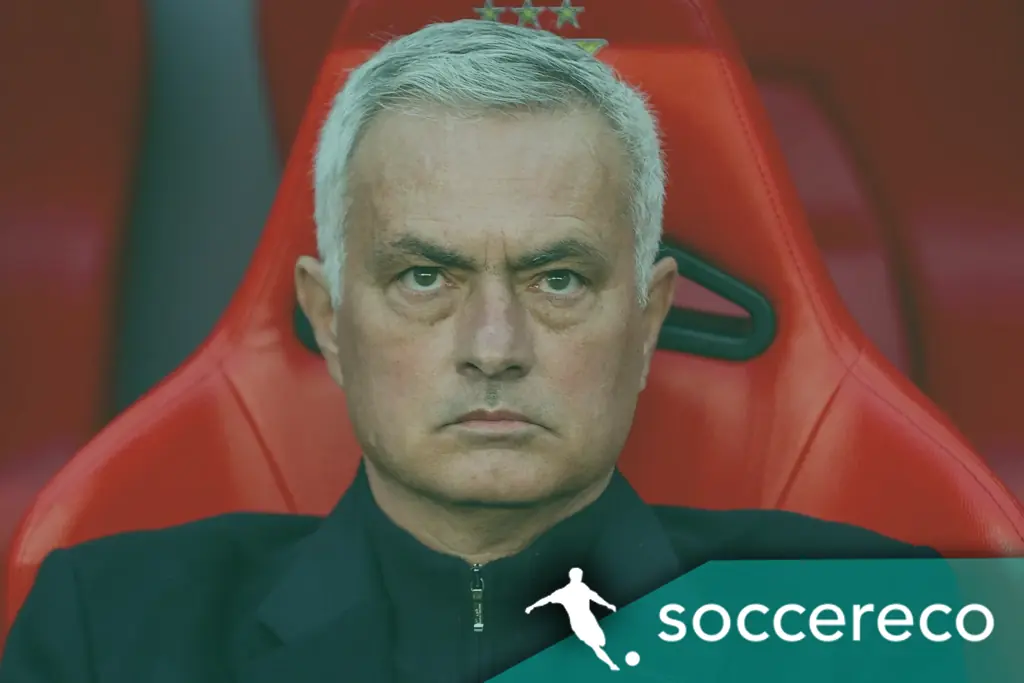
Benfica and FC Porto played out a dramatic 2-2 draw on Sunday night in a match that delivered everything expected from one of Portuguese football most intense rivalries: goals, controversy, emotion and a stormy ending that quickly became the main talking point after the final whistle.
While the result itself was significant in the context of the domestic season, much of the post match discussion focused on Benfica coach José Mourinho, who was shown a straight red card shortly after Leandro Barreiro scored the equaliser, and on the explosive comments he made afterwards about the officiating and about Porto assistant Lucho González.
The match had already been charged with tension long before the late flashpoints arrived. Meetings between Benfica and FC Porto rarely end quietly, and this latest chapter added yet another layer to the rivalry. With emotions running high on the pitch and in the technical areas, the closing stages became increasingly heated, especially after Benfica found a way back into the game. Barreiro equaliser sparked wild celebrations, but it also triggered the incident that led to Mourinho dismissal.
According to the referee version of events, Mourinho was sent off after kicking a ball in the direction of the Porto bench. That interpretation, however, was firmly rejected by the Benfica coach, who insisted after the match that the decision was based on a complete misunderstanding. Mourinho argued that he had no intention whatsoever of provoking the opposition bench and said the gesture had been misread by the officials in the middle of a chaotic and emotional moment.
Speaking after the final whistle, Mourinho made it clear that he believed the punishment was unjust and that the explanation given to him by the referee did not reflect what had actually happened. He said the ball had not been aimed at the Porto bench at all, but rather towards the stands, in what he described as a familiar celebratory act after a goal at the Estádio da Luz.
The referee said he sent me off because I kicked a ball towards the Porto bench, Mourinho said. That is completely untrue. I do not know if it was three, four or five times, but I have done that many times at the Estadio da Luz: after a goal, the ball goes into the crowd. It is a way of celebrating and giving the ball to a happy fan. I know I am not technically very good, but it was meant for the stands.
That explanation formed the basis of Mourinho frustration, but it was far from the only issue that left him angry. The experienced coach also revealed that tempers continued to flare after the sending off and that the confrontation extended into the tunnel area, where, according to his account, someone from the Porto bench repeatedly called him a traitor. Mourinho said that insult crossed a line, not because of its emotional nature, but because it directly questioned his professional integrity.
As for the red card, someone from the Porto bench was also sent off and called me a traitor in the tunnel. I want him to explain: traitor to what?
Mourinho later identified that individual as Lucho González, assistant to Francesco Farioli, and his comments on the matter were particularly forceful. The Benfica coach said the word was not used once in the heat of the moment, but repeated over and over again, which only deepened his anger. For Mourinho, the accusation was especially offensive given his history at FC Porto, where he built one of the most important stages of his managerial career and achieved enormous success before going on to establish himself as one of the most decorated coaches in world football.
Mourinho was referring to Francesco Farioli assistant Lucho González. He did not say it to me once, but twenty or thirty times, Mourinho said. When he went to Olympique Marseille in 2009, did he betray FC Porto then? A traitor to what? He could have insulted me in another way, and I might have accepted that better. But this is an attack on my professionalism.
Those remarks revealed that Mourinho saw the insult as more than just an emotional outburst. In his view, being labelled a traitor because of his professional path made no sense. He pointed to his long career, which includes spells at Porto, Chelsea, Inter, Real Madrid and Fenerbahce, and stressed that moving between clubs is part of modern football. What matters, he argued, is the honesty and commitment with which a professional performs his duties at each institution.
I worked at FC Porto in the past and gave my soul to that club. After that I went to Chelsea, Inter, Real Madrid and Fenerbahce, and I did my job everywhere. Every day I gave my soul and my life to football. That is called professionalism. Insults from fans are one thing, that is football. They are the same fans who, years ago, would not even let me walk through the city because they were kissing my feet. Now they insult me. No problem. But for a fellow professional to call me a traitor? To what exactly? I did not like that.
That part of Mourinho response is likely to resonate strongly because it touches on one of the central tensions in elite football: the difference between rivalry and professionalism. Mourinho acknowledged that hostility from supporters is part of the game, especially in a rivalry as fierce as Benfica against Porto. He appeared willing to accept abuse from the stands as an inevitable consequence of football passion. What he could not accept, however, was an accusation from someone working within the game, someone he considers to understand the realities of football careers and club movement.
The Benfica coach also reserved sharp criticism for the officiating team, particularly the fourth official. Mourinho suggested that the red card was not simply harsh but procedurally wrong, because it stemmed from poor information passed to the referee. In his version, the fourth official misread the incident and influenced the final decision in a crucial moment.
He also criticised the refereeing. I was sent off unfairly. The fourth official did a poor job throughout the match and did it again when he told the referee that I had kicked a ball towards the Porto bench.
Those comments ensured that the debate after the 2-2 draw quickly moved beyond the football itself. Instead of focusing solely on the tactical battle, the comeback, or the significance of the point for each side, attention immediately shifted to discipline, interpretation, tunnel confrontations and the wider symbolism of Mourinho relationship with Porto. Given his history there, any conflict involving him and the club carries extra weight, and his use of the word professionalism showed clearly where he felt most wounded.
From Benfica perspective, the draw may still be viewed as an important response in a high pressure game, especially after fighting back and showing character. For Porto, taking a point away from one of their biggest rivals also carries value, even if the late equaliser left a sense of frustration. But the footballing side of the result risks being overshadowed by the fallout, because Mourinho post match remarks have now opened a second contest off the pitch, one that could continue in the coming days through official reactions, disciplinary review and media debate.
What is certain is that this latest Benfica against FC Porto clash will not be remembered only for the 2-2 scoreline. It will also be remembered for Mourinho sending off, for his insistence that the incident was wrongly interpreted, for his anger at the refereeing team, and above all for his fierce rejection of the accusation that he is somehow a traitor because of his past and career choices. In typical Mourinho fashion, the result may have been shared, but the aftermath was anything but calm.