On May 2, 2016, Leicester City wrote one of the greatest football fairy tales ever by winning the Premier League; ten years later, the club was relegated to League One. The English media have been brutally harsh on the club, and especially on the way it has been run.
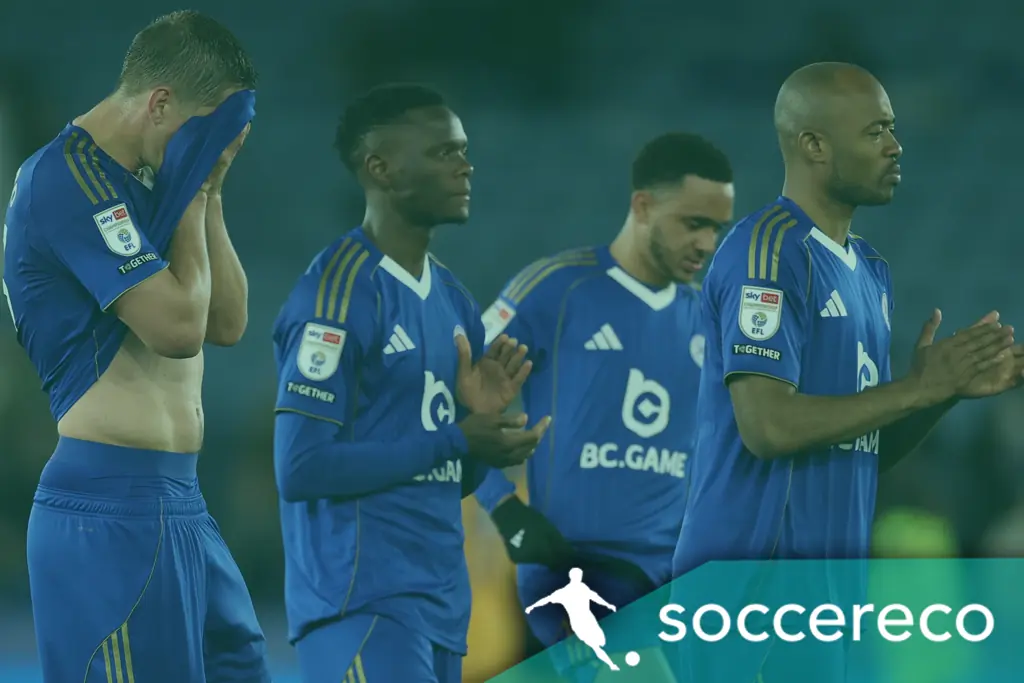
Leicester City hit rock bottom after draw with Hull confirms second straight relegation
For weeks, the feeling around Leicester City had been one of grim inevitability. The only real uncertainty was not whether relegation would happen, but when the final confirmation would arrive. After a 2-2 draw with Hull City, that moment finally came, and with it came a wave of frustration, sadness and disbelief around a club that, not so long ago, stood as one of the great modern stories in English football. Now, instead of talking about revival, growth or a return to stability, Leicester are facing the brutal reality of a second consecutive relegation and the humiliating fall into League One.
A collapse that feels almost impossible to believe
That is what makes this moment so painful for many people connected to Leicester. This is not just another relegation. It is the kind of collapse that leaves a scar on a club because of what Leicester once represented. Ten years after lifting the Premier League trophy in one of the most extraordinary title wins football has ever seen, Leicester are now looking at life in the third tier. The contrast is so extreme that it almost feels unreal. A club that once shocked the football world with its courage, energy and belief is now being held up as a warning about what happens when poor decisions pile up year after year.
The draw with Hull did not merely confirm the drop. It also exposed the emotional state of the club. There was no sense of surprise at full time, only a heavy feeling that the inevitable had finally arrived. Supporters had seen this coming. Performances had been inconsistent, confidence had been fragile, and the atmosphere around the club had been deteriorating for some time. By the final whistle, the anger was impossible to ignore. Chants against the board echoed around the ground, and that frustration reportedly spilled outside the stadium, where supporters remained for a long time to make their feelings clear.
Manager Gary Rowett did little to hide the uncertainty surrounding his own future. His comments after the match were measured, but they also carried the tone of a man who understands that the next steps will be decided above him. He made it clear that his task was to see out the season, nothing more, nothing less, and that the club itself now has to decide which direction it wants to take. There was no grand promise, no bold claim, no attempt to disguise the seriousness of the situation. Instead, there was an acceptance that difficult decisions are coming and that the club must move quickly if it wants to avoid sinking even deeper.
Rowett also spoke about responsibility, and that matters in moments like this. Managers, players, executives and owners can all point to different reasons for failure, but relegation on this scale is never caused by a single mistake. It is the result of a culture slipping, standards falling and problems being left unresolved for too long. Leicester are now paying the price for that. The manager may take his share of the blame, but the criticism from the English media has made it very clear that the spotlight is firmly fixed on the people running the club.
The reaction from the press has been ruthless. The Guardian described this as one of the strangest relegations in recent football history, and it is difficult to argue with that view. Clubs get relegated every year, but very few carry the emotional weight and historical contrast that Leicester now do. Their fall is not just about one bad season. It is about a club that once had everything in its hands and somehow let that position decay. The symbolism is brutal. A former champion is now preparing for League One football, with supporters questioning how such a collapse was even allowed to happen.
The Telegraph went even further, describing the relegation as the consequence of catastrophic mismanagement, negligence and disastrous decision making. That language is severe, but it reflects the depth of the anger around Leicester. The criticism is not aimed only at results on the pitch. It is aimed at the entire structure of the club and at the belief that warning signs were visible long before the situation became terminal. When a club reaches this point, supporters do not only ask why the team lost matches. They ask why nobody in power stepped in early enough to prevent the decline from becoming a full scale collapse.
Much of that criticism has centred on owner Aiyawatt Srivaddhanaprabha and senior football executive Jon Rudkin. The owner is not generally portrayed as someone lacking care for the club. In fact, even critical observers often accept that his intentions are good. But good intentions are not enough when a club is sliding backwards. At some point, leadership is judged by outcomes. Leicester have now gone from a recent Premier League identity to the third tier, and that makes it impossible for the ownership to escape scrutiny. If the people at the top continue to place trust in the wrong structure, then the consequences eventually become impossible to hide.
Rudkin, in particular, has become a major focus for supporter anger. As one of the key figures behind recruitment and football operations, he sits close to the biggest sporting decisions the club has made. When those decisions repeatedly fail, criticism becomes inevitable. Reports that he no longer feels comfortable moving freely around his home city underline just how toxic the atmosphere has become. That is not a healthy sign for any club. It shows how badly trust has eroded between the supporters and the leadership, and rebuilding that relationship may be just as difficult as rebuilding the squad itself.
One of the most damning details to emerge is the issue of expiring contracts. According to the criticism in the English press, Leicester are approaching the summer with 15 players running down their deals. That is not a minor administrative problem. It is a sign of a club that has lost control of its planning. Squads do not need to be perfect, but they do need direction. If too many players head into a decisive period with uncertain futures, it becomes much harder to build focus, accountability and commitment. Leicester have apparently repeated a mistake that already hurt them after their relegation from the Premier League in the 2022-23 season. That alone will infuriate supporters, because repeated errors are always harder to forgive than isolated ones.
The growing disconnect between the players and the fans has only deepened the crisis. The image of Harry Winks arguing with supporters after defeat at Portsmouth was held up as a symbol of that widening gap. Fair or unfair, moments like that shape how a season is remembered. They feed the impression of a club that has lost emotional control and no longer understands the mood of its own fanbase. In troubled seasons, supporters can accept poor form more easily than they can accept indifference, poor attitude or visible distance from the badge. Once that bond begins to fracture, every defeat feels heavier and every controversy feels more damaging.
What makes the current situation even sadder is that Leicester City are not a club without resources, history or fan support. Quite the opposite. This is still a club with a powerful story, a loyal fanbase and a recent past full of unforgettable highs. That is why the anger is so strong. Supporters are not reacting like people who have accepted permanent decline. They are reacting like people who know this club should be much better run than it has been. They believe Leicester should never have found itself in this position, and they are demanding answers from the people responsible.
The next few weeks will be crucial. There will be questions over the manager, over recruitment, over contracts, over the internal football structure and over whether the ownership is finally willing to make the decisive changes that many feel are overdue. League One is not a division any club should take lightly. It is physically demanding, emotionally draining and often far less predictable than people expect. Leicester may still carry a bigger name than most of the teams they will face there, but reputation alone wins nothing. If this club goes into next season with the same confusion, the same lack of clarity and the same poor planning, the road back could become even longer.
And yet, even at this lowest point, there remains one truth that nobody around the club can ignore. Leicester City are still a club with the capacity to recover. The fanbase is there. The identity can be rebuilt. The damage is serious, but it is not irreversible. What matters now is whether the people in charge truly understand the scale of the failure and whether they have the courage to act. Supporters have heard enough words. What they want now is leadership, accountability and a plan that actually makes sense. After a fall this dramatic, nothing less will do.