Girondins Bordeaux is getting a new majority shareholder. Several French sources reported on Thursday that current owner Gérard Lopez is set to sell two-thirds of his stake in the club to English investment firm Sparta Capital.
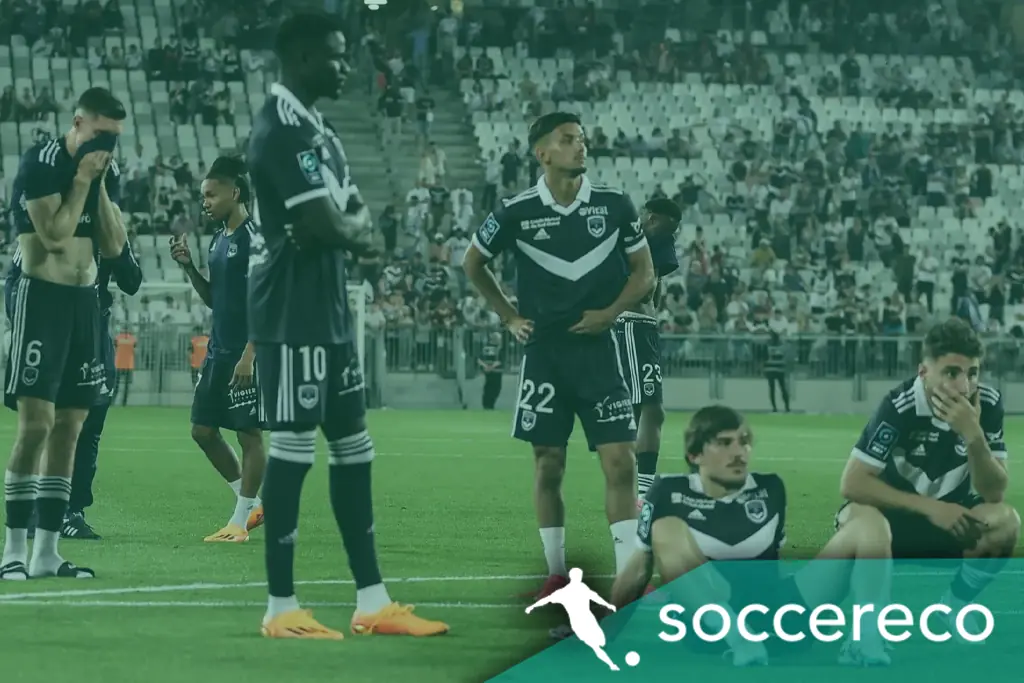
Bordeaux takeover could open a new chapter after years of financial turmoil
Girondins de Bordeaux may finally be approaching the start of a more stable period, but the proposed takeover still has one crucial hurdle to clear before the club can look ahead with real confidence. The transaction must be approved by the French football authorities, with the relevant licensing and financial control bodies expected to examine whether Sparta Capital can provide the guarantees needed to secure the future of one of France's most historic clubs.
The parties are due to meet next Tuesday, in what could become a decisive moment for Bordeaux's short-term survival and long-term reconstruction. During that meeting, Sparta Capital will have the opportunity to present its plans for the club, explain its financial structure and show how it intends to stabilise an institution that has been badly weakened by years of mismanagement, debt pressure and sporting decline.
Although the takeover would bring new investors into the club, Gérard Lopez will not disappear completely from the picture. The current owner is expected to retain a 33 percent stake in Bordeaux, a figure that is far from symbolic. By keeping that shareholding, Lopez would still have enough influence to block major strategic decisions, meaning that the future of the club would not be entirely in the hands of the new owners.
That detail is likely to attract attention among supporters, many of whom have watched Bordeaux fall from the highest level of French football to the fourth tier in a remarkably short period of time. For a club that won the Ligue 1 title in 2009 and once competed regularly in Europe, the current situation remains painful. The name Bordeaux still carries weight in French football, but the reality around the club has changed dramatically.
According to regional outlet Ici Gironde, the new owners have promised to invest 20 million euros over the next three years. That commitment would not instantly return Bordeaux to the professional elite, but it could provide the foundation the club desperately needs. Of that amount, 6 million euros would be used to deal with the most urgent financial problems, allowing Bordeaux to breathe again and prepare for the new season in the fourth tier of the French football pyramid.
Lopez is also expected to contribute a further 3 million euros, which would form part of the immediate effort to keep the club operational and compliant with financial requirements. For Bordeaux, this is not simply a question of strengthening the squad or launching an ambitious promotion campaign. Before any serious sporting project can be built, the club first needs to prove that it can meet its basic obligations, pay its bills and present a credible budget.
That is why next Tuesday's meeting is so important. Approval would not solve every problem, but it would offer Bordeaux a route forward. Rejection, on the other hand, could deepen the uncertainty around the club and create fresh doubts about its ability to move beyond the crisis that has defined recent years.
The sporting decline has been brutal. Bordeaux were relegated to the fourth level in 2024 after a series of financial setbacks, ending any remaining illusion that the club could quickly recover from its problems. Since then, the squad has included high-profile names such as Andy Carroll, while Dutch goalkeeper Jan Hoekstra is currently part of the group. However, individual names have not yet been enough to turn the club's direction around.
For supporters, the takeover would be less about glamour and more about stability. Bordeaux do not need empty promises or unrealistic talk of a rapid return to the top. They need structure, patience and a financial plan that can survive beyond one season. The club's road back will almost certainly be long, particularly from the fourth tier, where promotion is never guaranteed and where historic status alone means very little on the pitch.
Still, the proposed investment could represent an important first step. If the financial authorities approve the deal and Sparta Capital follows through on its commitments, Bordeaux would at least have the means to start rebuilding from a stronger position. That could mean improving the squad, professionalising the club's operations, rebuilding trust with supporters and creating a clearer sporting strategy.
The challenge is enormous, but Bordeaux remain a club with a powerful identity, a passionate fan base and a history that few teams in France can match. The fall has been severe, yet the potential for recovery still exists. The coming days will show whether this takeover is simply another chapter in a long period of uncertainty, or whether it can become the first serious step in Bordeaux's attempt to climb back toward the level where many still believe the club belongs.