Arsenal are facing defensive concerns ahead of the new season. According to French media, William Saliba could be sidelined for several months after suffering a back injury in the World Cup semi-final against Spain.
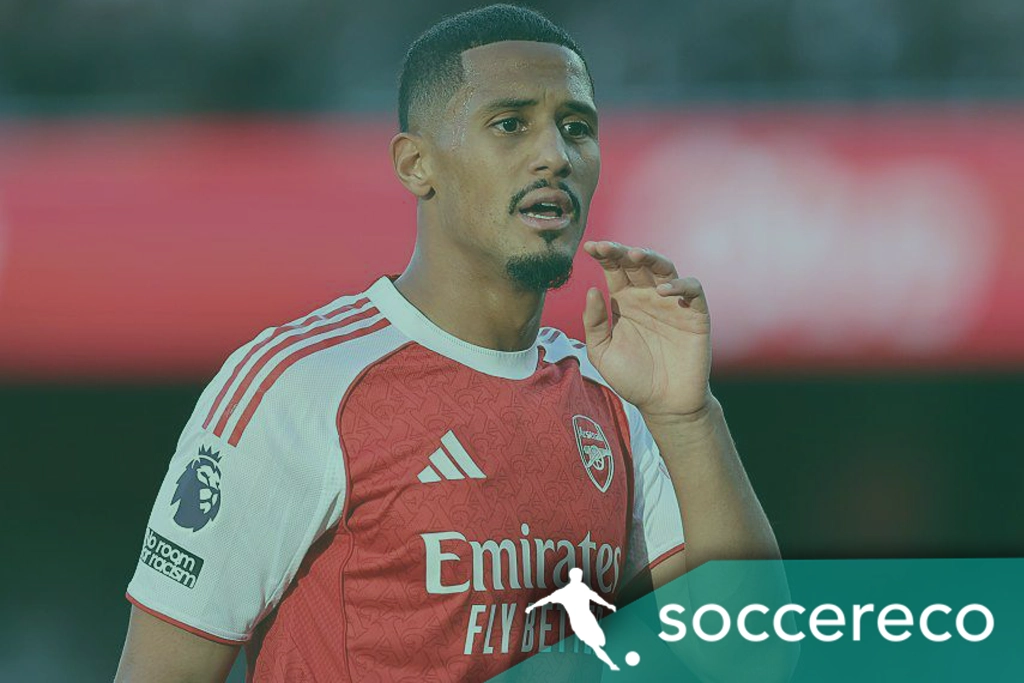
William Saliba Could Miss Several Months as Arsenal Fear Serious Back Injury
Arsenal are facing a major defensive concern ahead of the new season after William Saliba suffered a serious back problem during France 2-0 World Cup semi-final defeat against Spain.
The 25-year-old centre-back went down in visible pain during the match on 14 July and was unable to continue. His reaction immediately caused concern among the France players and medical staff, particularly because reports suggest the problem was not a new injury but the latest and most serious episode of a condition that had been affecting him for several months.
According to reports in France, Saliba told international teammate Dayot Upamecano during the semi-final that he could no longer tolerate the pain. The defender is said to have described his back as being "dead", underlining the severity of the discomfort he was experiencing on the pitch.
Saliba initially attempted to continue playing, but it quickly became clear that he was no longer capable of moving freely or performing at his usual level. After receiving treatment, he was forced to leave the field, bringing his World Cup campaign to a painful and premature conclusion.
The incident was a significant blow for France during a match in which they were already struggling to contain Spain. Saliba has become one of the most important defenders in the national team and his combination of pace, strength and composure is central to the way France build from the back.
His departure weakened the French defence at a crucial stage of the semi-final. Spain eventually secured a 2-0 victory and advanced to the final, while France were left to prepare for the third-place play-off without one of their leading centre-backs.
The immediate concern, however, extends far beyond the remainder of the tournament. L’Équipe, RMC Sport and The Times have all reported that Saliba had been suffering from chronic back pain for months before the match against Spain.
The Arsenal defender is believed to have continued playing with the help of painkillers and an individual training programme designed to reduce the pressure on his back. His workload was reportedly managed carefully at both club and international level, allowing him to train and compete despite the ongoing discomfort.
That approach appears to have worked temporarily, but the injury suffered against Spain may indicate that conservative treatment is no longer sufficient. The pain became too severe for Saliba to manage, even during one of the most important matches of his international career.
Reports suggest that the France medical staff continued the same strategy during the World Cup. Saliba allegedly received pain relief and followed an adapted training schedule between matches, with some exercises reduced or avoided in an attempt to prevent the problem from becoming worse.
The defender was still able to feature throughout the tournament, but questions are now being raised over whether he should have continued playing while dealing with such a persistent condition.
L’Équipe also reported that former France head coach Didier Deschamps may not have fully understood the seriousness of Saliba condition. The coach is said to have relied primarily on information supplied by the player and the medical staff when deciding whether the defender was fit enough to play.
Players are often desperate to remain available during major tournaments, particularly when their country has a realistic chance of winning the World Cup. Saliba may have believed that he could continue managing the pain until the competition was over.
However, back injuries can be difficult to assess and predict. A player may feel capable of completing one match before suffering a sudden increase in pain during another. The physical demands placed on an elite centre-back, including sprinting, jumping, turning and absorbing contact, can make the condition increasingly difficult to control.
Saliba situation now appears serious enough for surgery to be considered the most likely outcome. No final decision has yet been publicly confirmed, but the reports suggest that an operation may be necessary to properly address the underlying problem.
Should Saliba undergo surgery, he would face an extended period away from football. L’Équipe reported that Arsenal are preparing for the possibility that he could be unavailable for between four and five months.
RMC Sport offered an even more worrying estimate, suggesting that the recovery period could reach six months. Such a timetable would keep Saliba out for a significant part of the first half of the new season and potentially beyond the winter period.
The exact length of his absence would depend on the nature of the procedure, the severity of the injury and how his body responds during rehabilitation. Back surgery can require a cautious recovery process, particularly for a footballer whose position demands repeated physical contact and explosive movement.
Arsenal are reportedly already taking the possibility of a lengthy absence into account. The London club are believed to be discussing potential defensive reinforcements while working on the assumption that Saliba may not be available during the opening months of the campaign.
His absence would create a major problem for Mikel Arteta. Saliba has developed into one of the most important players in the Arsenal squad and is widely regarded as one of the leading central defenders in European football.
His ability to defend large spaces allows Arsenal to maintain a high defensive line and press opponents aggressively. Saliba is also calm in possession, giving the team a reliable option when building attacks from the goalkeeper and moving the ball through the defensive third.
Replacing those qualities would be extremely difficult. Arsenal have other central defenders available, but few offer the same combination of speed, physical power, positional awareness and technical quality.
The club may therefore decide that a new signing is necessary rather than relying entirely on the existing squad. Any recruitment decision would need to consider both the immediate need for cover and Saliba long-term importance once he returns.
Arsenal would not want to sign a player who blocks Saliba place in the team after his recovery, but they must also avoid beginning the season without sufficient depth in a position that could prove decisive.
The situation is further complicated by the fitness of Jurriën Timber. The Netherlands defender is still recovering from the injury that prevented him from taking part in the World Cup.
Timber is capable of playing in central defence and at full-back, making him an important tactical option for Arteta. However, Arsenal cannot be certain that he will immediately be ready to handle a demanding schedule after a long period away from competitive football.
Even if Timber returns before the start of the season, the club will need to manage his minutes carefully. Players returning from serious injuries often require time to recover their rhythm, confidence and match fitness.
Having both Saliba and Timber unavailable or operating below full fitness would place considerable pressure on the rest of the Arsenal defence. It could also affect the way Arteta wants his team to play.
Arsenal defensive structure depends heavily on defenders who are comfortable playing far from their own penalty area. Without Saliba recovery speed, the team may need to defend deeper or take fewer risks when pressing opponents.
That change could influence the entire side. A deeper defensive line creates more distance between the defenders, midfielders and forwards, potentially making it more difficult for Arsenal to control matches in the way Arteta prefers.
The timing of the injury is especially frustrating because Saliba was expected to return from the World Cup and quickly begin preparations for the new club season. Instead, he may now face medical examinations, a possible operation and a lengthy rehabilitation programme.
Arsenal will want to complete a full assessment before confirming any recovery period. The club medical staff are likely to examine the defender after his return from international duty and review the treatment he received before and during the tournament.
The club will also need to determine whether surgery is unavoidable or whether another period of non-surgical treatment could solve the problem. Given the reports of chronic pain and the severity of the incident against Spain, however, an operation increasingly appears to be the probable decision.
For Saliba, the injury represents a difficult personal setback. He had been playing on the biggest international stage and was only one match away from a World Cup final when the pain became impossible to ignore.
His determination to continue playing despite the problem demonstrates how much the tournament meant to him, but his long-term health must now become the priority.
Returning too quickly from a serious back problem would carry significant risks. Arsenal will want Saliba to recover completely rather than rushing him back for the opening months of the season and risking another setback.
The defender could therefore face a long and carefully controlled rehabilitation process. That may include an initial period of rest, followed by mobility work, strengthening exercises, individual training and a gradual return to contact sessions.
Only after completing each stage without pain would Saliba be considered ready to return to competitive football. Even then, Arsenal would probably manage his minutes before allowing him to complete full matches on a regular basis.
The uncertainty surrounding the injury is likely to influence Arsenal transfer strategy. Defensive reinforcements may now become a priority, particularly if medical examinations confirm that Saliba will be unavailable for close to half a year.
The club will need to move quickly because suitable centre-backs are rarely easy to find. Arsenal require a defender who can adapt to a possession-based system, defend high up the pitch and cope with the physical demands of English football.
A short-term solution such as a loan could be considered, although the club may prefer to sign a player capable of contributing for several seasons. Much will depend on the available options and the final medical prognosis.
For France, Saliba absence means he will take no further part in the World Cup. The team must complete the tournament without him as they attempt to recover from the disappointment of losing the semi-final.
The third-place match may offer France an opportunity to finish the competition with a victory, but Saliba attention will now turn towards his recovery and the decisions that must be taken regarding his treatment.
More detailed information is expected once the defender has undergone further examinations. Until then, Arsenal must prepare for the possibility that one of their most important players will miss a substantial part of the coming campaign.
A four to six-month absence would be a serious setback for both Saliba and Arsenal. It would remove a central figure from the defence during a crucial period and force the club to reconsider its plans before the season begins.
The hope will be that the injury is less severe than initially feared. However, the reports from France indicate that Arsenal are already preparing for a difficult scenario and may soon need to enter the transfer market in search of defensive cover.