Sébastien Migné has stepped down as Haiti head coach. The small football nation, which took part in the World Cup for the second time this year, once again failed to win on the global stage.
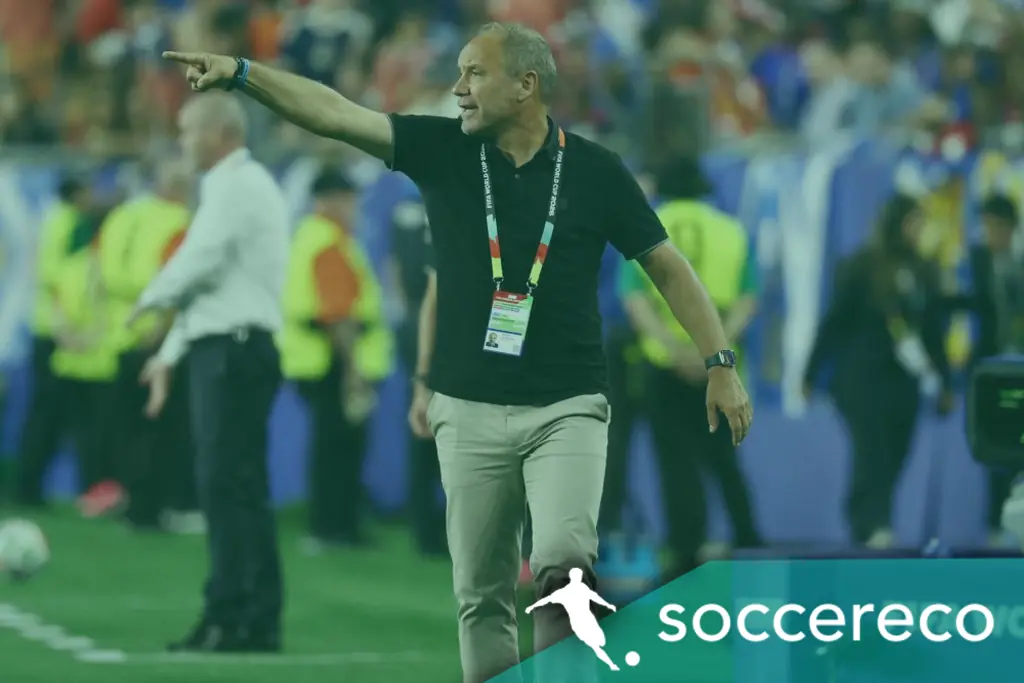
Sébastien Migné Leaves Haiti Job as World Cup Coaching Clearout Continues
Sébastien Migné has stepped down as head coach of Haiti after a difficult World Cup campaign that ended without a win for the Caribbean nation. His departure adds another name to the growing list of coaches leaving their national team roles after the tournament, turning this World Cup into something of a managerial graveyard.
Haiti arrived at the tournament with pride, emotion and a sense of history. For a country with limited resources and a modest football profile compared with the traditional powers of the game, simply reaching the World Cup was an important achievement. But once the competition began, the challenge proved extremely demanding. Haiti lost all 3 of their matches and were unable to turn their return to the global stage into a lasting sporting breakthrough.
The campaign began with a narrow 1-0 defeat against Scotland, a result that showed Haiti could compete for long periods but also highlighted the fine margins at this level. Against Brazil, the gap in quality became clearer, with Haiti losing 3-0 to one of the giants of world football. The final group match brought more goals, but also another defeat, as Morocco beat Haiti 4-2. In the end, Haiti left the tournament with 0 points, 2 goals scored and 8 conceded.
For Migné, the World Cup was both a moment of personal achievement and a painful reminder of the difficulty of managing a developing football nation on the biggest stage. He had taken charge of Haiti in March 2024 and guided the team through a period that brought rare international attention. Qualification for the World Cup was a major moment for the country, but the tournament itself underlined how hard it is to translate participation into results.
Haiti had been here before, but only once. Their first World Cup appearance came in 1974, when they were one of the surprise participants. That tournament also ended without progress from the group stage. Haiti lost 3-1 to Italy, 7-0 to Poland and 4-1 to Argentina. Those results became part of the history of Haitian football, a reminder of both the pride of reaching the World Cup and the brutal reality of facing elite opposition.
More than 50 years later, the story had clear similarities. Haiti once again earned the right to take part in the greatest football tournament in the world, but once again they could not find a win. The defeats to Scotland, Brazil and Morocco mean the country is still waiting for a first victory on the World Cup stage. That wait will now continue into another cycle, with a new coach expected to lead the next phase.
The Haiti football federation confirmed the end of the Migné era with a statement thanking the Frenchman for his work. The federation praised his professionalism, commitment and dedication, and also acknowledged his contribution to the development of Haiti as a football nation. The tone of the message suggested respect rather than conflict, with both sides now moving on after a demanding tournament.
Migné leaves with a mixed legacy. On one hand, he could not deliver a World Cup win or a place in the knockout stage. On the other, he was the coach who led Haiti during a rare appearance at the highest level of international football. For countries outside the traditional elite, the measure of success is often more complicated than simply wins and losses. Development, exposure, experience and belief also matter.
The 53-year-old French coach has built a career far away from the most obvious routes in European football. Before taking charge of Haiti, he had already worked in several unusual and demanding international roles. His coaching journey included jobs connected with Oman, DR Congo, Republic of Congo, Togo, Kenya and Equatorial Guinea. That background made him a familiar figure in international football environments where organisation, adaptability and patience are essential.
Managing a country like Haiti brings a different kind of challenge from managing one of the major football nations. The coach must deal not only with tactics and selection, but also with infrastructure, player availability, travel demands and the wider development of the national team system. For that reason, the federation chose to recognise the work done by Migné beyond the results at the World Cup.
Still, international football rarely allows much time for sentiment after a tournament. Once a World Cup ends, or once a team is eliminated, decisions come quickly. Coaches are judged on results, performances and whether a national federation believes a new voice is needed. In that sense, the departure of Migné fits into a much wider pattern at this tournament.
He is far from the only head coach leaving after the World Cup. The Netherlands, Germany, Ecuador, Ghana, Jordan, Croatia, Mexico, Portugal, Scotland, Senegal, Czechia, Tunisia, Uruguay and South Korea are all set to have a different manager in charge. That list shows the scale of the change sweeping through international football after the tournament.
Some exits are the result of disappointment. Others are planned endings, natural conclusions or decisions already made before the final matches were played. But together, they create the impression of a World Cup that has forced many national associations to rethink their future. A poor tournament can end a coaching cycle instantly. Even a respectable tournament can still lead to change if the federation believes the team has reached the end of a phase.
Tunisia have been one of the most striking examples. They did not just make 1 coaching change, but 2. During the tournament, Sabri Lamouchi was dismissed as head coach. His successor, Hervé Renard, will also not continue after the World Cup. That kind of instability shows how quickly pressure can build during a major tournament, especially when expectations are not met.
France are also preparing for a major change, although in a very different way. It has been known for some time that Didier Deschamps will step down after this World Cup. His departure marks the end of a long and hugely important era for the French national team. France still have the third-place play-off to play after losing 2-0 to Spain in the semi-final, but the future beyond Deschamps is already part of the national discussion.
Compared with France, the Haiti situation is much smaller in global attention, but it matters deeply for the country. The next appointment will be important. Haiti need a coach who can build on the World Cup experience, keep the group competitive and help the national team become more consistent. The challenge will be to avoid treating qualification as a one-off achievement and instead use it as a foundation for growth.
There were difficult moments for Haiti at the tournament, but there were also lessons. Facing Scotland, Brazil and Morocco gave the players a clear picture of the level required. The defeats were painful, but experience at that level can help a young or developing squad understand what must improve. For the federation, the task now is to turn that experience into better preparation, stronger structures and a clearer long-term plan.
Migné leaves after a short but significant spell. His time in charge will be remembered for taking Haiti to a World Cup, even if the tournament itself ended without the result the country wanted. The federation message made clear that his contribution is appreciated, but the next chapter will now be written by someone else.
For Haiti, the dream remains the same: to return to the World Cup, compete with more authority and finally win on the global stage. For Migné, another international job may follow, given his long record across different football environments. For the wider tournament, his exit is another reminder that the World Cup does not only decide matches. It also ends eras, changes careers and forces national teams to begin again.