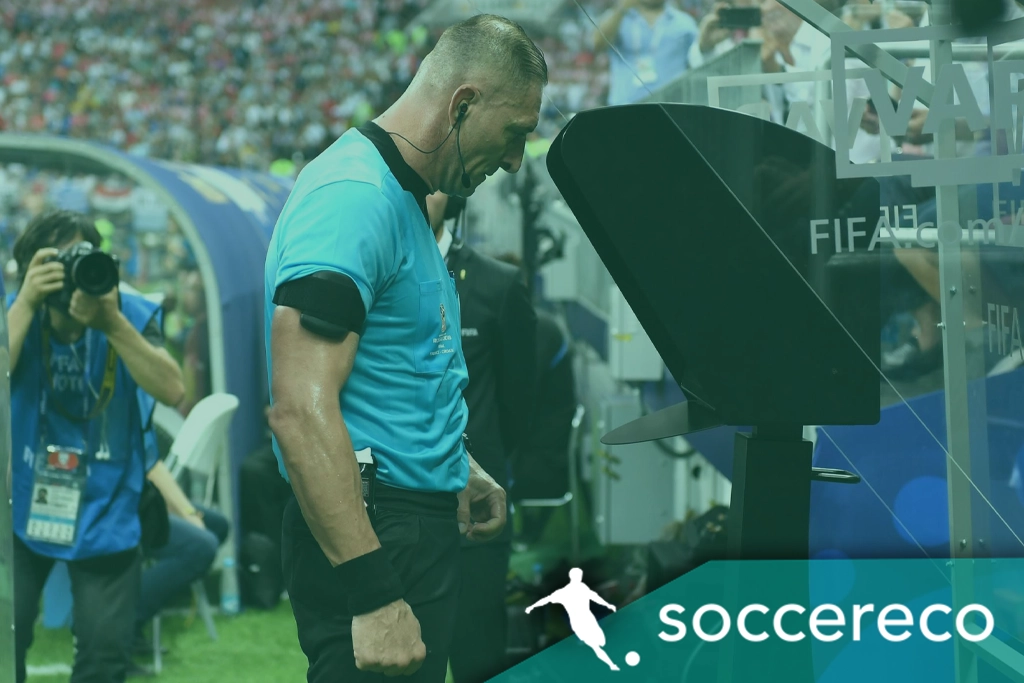
Egypt ask FIFA to investigate François Letexier after the 3-2 World Cup defeat to Argentina, with VAR decisions causing major controversy.
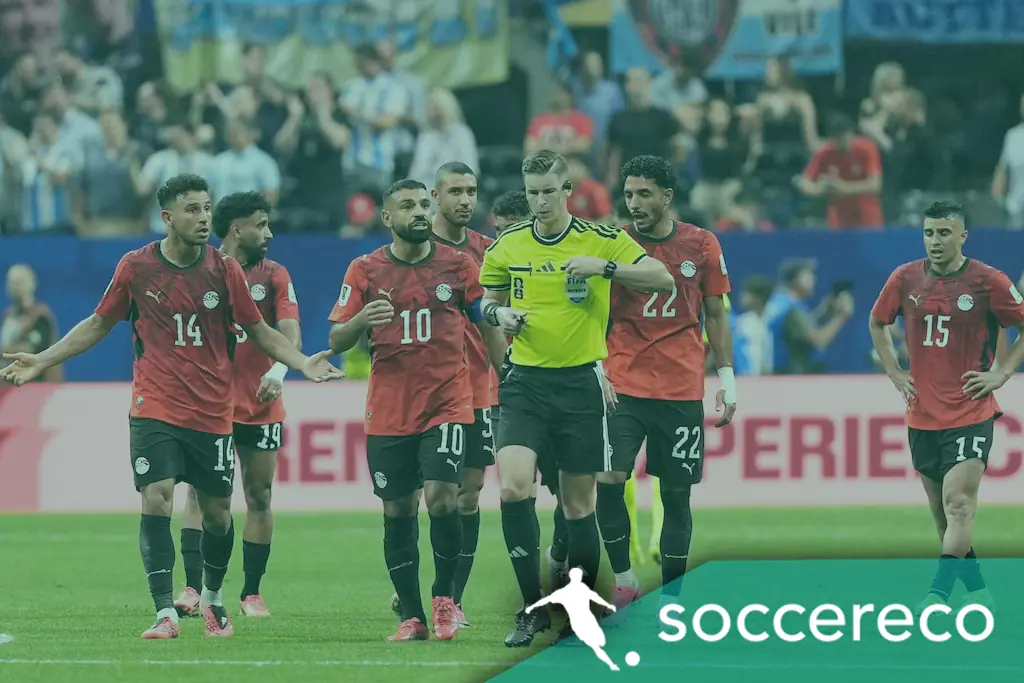
Egyptian FA asks FIFA to remove referee Letexier after Argentina World Cup controversy
Egypt elimination from the 2026 World Cup has turned into one of the most heated refereeing controversies of the knockout stage, after the Egyptian federation moved to file an official complaint with FIFA over the performance of French referee François Letexier in the 3-2 defeat against Argentina.
The match ended with Argentina advancing after a dramatic and emotional contest, but the debate after the final whistle has focused less on the scoreline and more on the decisions that shaped the closing stages. Egypt believe key refereeing calls went against them, including a disallowed goal and the build-up to Argentina late winning goal.
The Egyptian federation is reportedly furious with Letexier and his team, with the case now expected to be taken formally to FIFA. The request is clear: Egypt want the decisions investigated and want the refereeing team excluded from the rest of the tournament.
Argentina survive, Egypt leave furious
Argentina beat Egypt 3-2 in a match that had everything expected from a World Cup knockout tie: tension, goals, controversy, pressure and late drama. For Argentina, it was another step forward in their attempt to defend their status as world champions. For Egypt, it was a painful exit made even harder by the feeling that refereeing decisions played a decisive role.
The result itself was dramatic enough. Egypt pushed Argentina close, stayed in the match and believed they had moments that could have changed the direction of the tie. But the post-match conversation quickly moved toward the role of VAR and the consistency of the decisions made by Letexier.
The main frustration from the Egyptian side concerns 2 moments. The first was the foul given after VAR intervention before a disallowed Egypt goal. The second came before Argentina late 3-2, when Egypt felt Mohamed Salah had been fouled in the penalty area.
Those 2 situations have now become the centre of the controversy, with media across Europe analysing whether the same standard was applied to both teams.
BBC questions consistency of the refereeing
The BBC examined the refereeing decisions and focused particularly on the question of consistency. According to the analysis, referees at the tournament have been instructed to allow a certain level of football contact in order to keep matches flowing and avoid constant interruptions.
"The referees have been told to allow football contact in order to keep the tempo in matches. It can be argued that the foul given on VAR advice before the disallowed Egypt goal was indeed a foul. But this is not in line with how the rest of the tournament has been refereed. If you have allowed such actions to go in previous matches, you have to do the same now."
That assessment does not necessarily say the decision was impossible to defend. Instead, it points to a deeper issue: whether the threshold used in this match was the same as the threshold used throughout the competition.
This is often the central problem in major tournament refereeing. A single decision can be explained by the laws of the game, but players, coaches and supporters expect decisions to follow the same pattern from match to match. When the standard appears to change in a knockout game, frustration grows quickly.
For Egypt, that is exactly the issue. They believe the decision to disallow their goal was judged with a strictness that had not been applied in similar situations earlier in the tournament.
The disallowed Egypt goal becomes the first flashpoint
The foul before the disallowed Egypt goal became one of the defining moments of the match. VAR advised Letexier to review the action, and the goal was eventually ruled out.
From one perspective, the contact could be interpreted as a foul. That is why some analysts accept that the decision had a legal basis. But the frustration comes from how physical contact has been managed in other matches at the World Cup.
If similar challenges had been allowed elsewhere, Egypt expected the same approach. Instead, they saw a major attacking moment taken away from them after video review. In a knockout tie decided by one goal, that type of decision becomes enormous.
Football matches at this level are often shaped by tiny details. A disallowed goal does not only remove a score from the board. It changes momentum, confidence and the emotional balance of the game. For Egypt, the decision created a sense that the match was slipping away through refereeing interpretation rather than only football action.
The Salah incident adds to the anger
The second major talking point came before Argentina late 3-2 goal. Egypt felt Mohamed Salah had been fouled in the penalty area before the winning move developed.
The BBC also looked at that moment and compared it with the foul given before the disallowed Egypt goal. The analysis suggested that the nature of the contact was similar, but that the location changed the VAR threshold.
"It was the same type of foul as the one before the disallowed Egypt goal, but with one crucial difference. Salah was inside the penalty area, so the VAR had to look at a potential penalty situation. That means there is a higher threshold for VAR intervention."
This explanation shows why the controversy is complex. VAR does not intervene in every possible foul. In penalty situations, the standard for overturning or recommending a review is often higher because the decision would directly award a spot-kick.
However, that technical explanation has not calmed Egypt anger. From their point of view, 2 similar contacts produced 2 different outcomes. One removed an Egypt goal. The other did not stop Argentina winning goal.
"If the action involving Salah had taken place outside the penalty area, the VAR should have intervened for consistency, and Argentina winning goal may have been disallowed."
That line has fuelled the debate. It suggests that the same type of action might have been treated differently depending on where it happened, even though the football contact itself was comparable.
Egyptian federation prepares official FIFA complaint
According to BILD, the Egyptian federation is preparing to file an official complaint with FIFA. The mood inside the federation is described as furious, with Letexier blamed for the elimination.
"They are furious and place the full blame for the elimination on the referee. The federation is demanding an investigation into Letexier decisions and has asked FIFA to exclude this refereeing team for the rest of the tournament."
The request to exclude the refereeing team from the remainder of the World Cup is a strong move. It shows that Egypt are not simply asking for clarification. They are asking FIFA to take disciplinary or administrative action by removing Letexier and his team from future appointments in the tournament.
Such complaints are not unusual after controversial knockout matches, especially when a team feels that a major tournament run has been ended by refereeing decisions. But the demand to bar the officials for the rest of the competition raises the level of the dispute.
For FIFA, the situation creates a delicate issue. The governing body must defend the integrity of its refereeing process while also reviewing whether the match was handled correctly. Even if FIFA does not accept the Egyptian request, the controversy is likely to remain part of the story of Argentina victory.
French media defend Letexier
While Egypt and several foreign outlets questioned the decisions, French media have largely defended Letexier. As a French sports newspaper, L Equipe focused closely on the performance of the referee and took a supportive position.
"Under pressure, he faced a huge task. He awarded a clear penalty to Argentina and correctly disallowed an Egypt goal with the help of VAR."
L Equipe argued that Letexier handled the match well under difficult circumstances. The newspaper described him as a referee who stood firm despite pressure and made the major decisions correctly.
That view contrasts sharply with the Egyptian reaction. It also shows how refereeing controversies are often interpreted through national and emotional lenses. In Egypt, Letexier is seen as the central reason for elimination. In France, his performance is being defended as calm and correct.
The phrase used by L Equipe, that he stood firm, is important. It frames the referee not as someone who lost control, but as someone who remained composed in a high-pressure World Cup match.
RMC Sport also backs the French referee
RMC Sport, another French outlet, also supported Letexier. Its analysis focused on the pressure surrounding the match and the way the referee managed the atmosphere.
"The media and fans from Argentina feared him and were ready to criticise at the first sign of a mistake, but the Frenchman did not lose his composure."
RMC Sport suggested that Letexier handled a difficult environment without being influenced by external pressure. The outlet also praised his communication in the final stages of the match.
"In the closing stages, Letexier even showed pedagogical skills during his conversation with the Egypt head coach and his brother."
That detail points to the emotional temperature of the match. The final minutes were not only about football. They were about protests, explanations, frustration and the need for the referee to manage the benches as well as the players on the pitch.
For French observers, Letexier passed that test. For Egypt, the same moments are viewed through the lens of decisions they believe were decisive and unfair.
Marca highlights 2 similar moments with different outcomes
In Spain, Marca added to the debate by placing 2 videos side by side: the foul before the disallowed Egypt goal and the alleged foul before Argentina 3-2 goal.
"2 moments, 2 different outcomes. The situations were relatively similar, but one moment would ultimately seal the comeback victory of the world champions."
This comparison has become one of the most powerful images of the controversy. Rather than focusing only on the laws of the game, it asks a simpler question: why did 2 comparable moments lead to such different consequences?
That is the question many Egypt supporters are asking. If the first contact was enough to cancel a goal, why was the second not enough to stop the move that led to Argentina winner?
The answer may lie in VAR protocol, penalty thresholds and referee interpretation. But for supporters and federations, technical explanations often feel insufficient when the result is elimination from the World Cup.
The problem of VAR thresholds
The controversy also highlights one of the biggest issues with VAR: the difference between correcting clear mistakes and re-refereeing the match. VAR is designed to intervene only in certain situations, but the meaning of a clear and obvious error remains debated.
In the Egypt case, the disallowed goal followed a review that judged contact as a foul. In the Salah incident, the possible foul happened inside the penalty area, where VAR needed to decide whether the referee had clearly missed a penalty.
That distinction may be correct within the protocol, but it can look inconsistent to viewers. Football fans often judge actions by what they see on the pitch, not by different VAR thresholds depending on the location or consequence of the decision.
That is why this controversy has grown so quickly. It is not only about Letexier. It is about how VAR is understood, how consistency is applied and how much contact is allowed in World Cup knockout matches.
Argentina move on, but debate follows them
For Argentina, the most important fact is that they are through. They survived a difficult match, found the late goal and continue their World Cup campaign. But the manner of the victory means the debate will follow them into the next round.
Argentina will not be concerned by that in sporting terms. Knockout football is about survival, and the world champions found a way to survive. But the controversy adds another layer to the narrative around their campaign.
Opponents, media and supporters will continue to discuss whether Egypt were treated harshly by the officiating team. That will not change the result, but it will influence the way the match is remembered.
For Egypt, the pain is very different. They were close to a famous result and now leave the tournament with the belief that key decisions stopped them from pushing Argentina even further.
Egypt feel robbed of a historic chance
The anger from the Egyptian federation is easy to understand when viewed through the scale of the moment. A World Cup knockout match against Argentina is not an ordinary fixture. It is a chance to create history, to eliminate the world champions and to produce one of the great results in national team football.
When that chance disappears after disputed decisions, the frustration becomes much deeper than a normal defeat. Egypt did not lose quietly. They left with a complaint, a sense of injustice and a demand for FIFA to act.
The players and staff will know that matches are not decided by one incident alone, but they will also know that in a 3-2 game, every major decision carries huge weight. The disallowed goal and the Salah incident will be replayed and discussed long after the final whistle.
That is why the federation has decided to take the matter beyond post-match comments. By filing an official complaint, Egypt are trying to force a formal review of what happened.
Letexier under the spotlight
François Letexier now finds himself at the centre of one of the biggest refereeing debates of the tournament. Some outlets believe he handled the pressure well. Others believe his decisions lacked consistency and had a decisive impact on the result.
This is the difficult reality for referees at a World Cup. Every major call is reviewed from multiple angles, analysed by former officials, debated by journalists and judged emotionally by millions of supporters.
Letexier decision-making will now be assessed by FIFA, at least internally, as part of the usual review process. Whether that leads to any action remains to be seen, but Egypt request has ensured that his role in the match will remain under intense scrutiny.
For the referee, the French media support may offer some defence, but the controversy is unlikely to disappear quickly. The match had too many important moments and too much at stake.
FIFA faces pressure to respond
FIFA now faces pressure from the Egyptian federation to respond to the complaint. Even if the governing body does not publicly agree with Egypt, it may still need to address the wider issue of refereeing consistency and VAR thresholds.
Major tournaments rely on trust in officiating. When a federation claims that a referee should be barred from the rest of the tournament, the issue becomes institutional as well as sporting.
FIFA will want to avoid a situation where refereeing debates overshadow the knockout rounds. At the same time, it cannot ignore a formal complaint from a national federation after such a high-profile match.
The decision on whether Letexier and his team receive another appointment may now be watched closely. Any future involvement could be interpreted as FIFA backing the referee. Any absence could be seen by some as a quiet acknowledgement of the controversy.
A controversy that will not fade quickly
Argentina 3-2 Egypt will be remembered as a dramatic World Cup knockout match, but also as a game dominated by questions around VAR and refereeing consistency.
The BBC questioned whether the foul before the disallowed Egypt goal matched the standard applied during the rest of the tournament. BILD reported that the Egyptian federation will complain officially to FIFA and demand that Letexier team be excluded from the rest of the competition. French outlets L Equipe and RMC Sport defended the referee, while Marca highlighted the similarity between 2 key moments that produced different outcomes.
That range of reactions shows why the debate is so intense. There is no single shared interpretation of the match. Instead, there are competing readings shaped by protocol, national perspective, emotion and the pressure of a World Cup elimination.
Argentina move forward, Egypt go home, and Letexier becomes one of the most discussed referees of the tournament. For Egypt, the defeat is not just a result. It is a grievance. For FIFA, it is now a case to manage carefully as the World Cup moves deeper into its decisive stages.