Ronald Koeman has announced his departure as head coach of the Netherlands national team. His side were knocked out of the World Cup overnight from Monday to Tuesday by Morocco after penalties. Koeman began his second spell in charge in January 2023.
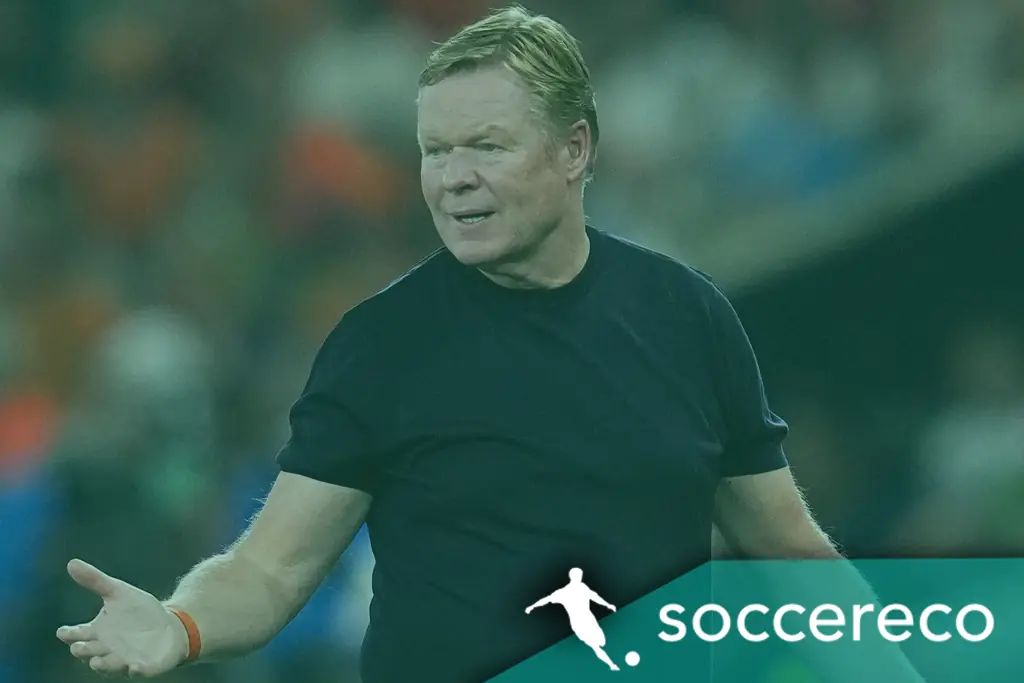
Koeman announces Netherlands departure after painful World Cup exit against Morocco
Ronald Koeman has announced that he will step down as head coach of the Netherlands national team after Oranje were knocked out of the 2026 World Cup by Morocco following a penalty shootout. The decision brings an end to his second spell in charge of the Dutch national team, a period that included a European Championship semi-final but ended with deep disappointment on the World Cup stage.
The Netherlands had entered the tournament with ambition and expectation, but their campaign came to an abrupt end in the round of 32. After a 1-1 draw with Morocco, the match was decided from the penalty spot, where Oranje were unable to survive. Shortly afterwards, Koeman made it clear that the KNVB must begin the search for a new national team coach.
For Koeman, it is a painful conclusion to a second period as Netherlands coach. He returned to the role in January 2023, taking over a team that still had major quality but also carried the pressure of Dutch footballs long-standing expectations. The objective was not only to compete, but to bring Oranje closer to the final stages of major tournaments again.
A second spell that started with renewed belief
Koeman began his second spell as national team coach in 2023, having previously led the Netherlands from the beginning of 2018 until mid-2020. His first period in charge had helped restore some stability to Oranje after difficult years for the national team. However, that spell ended earlier than planned when he left the KNVB to take over as coach of Barcelona.
His return in 2023 was therefore seen as a familiar and logical choice. Koeman knew the Dutch football environment, understood the demands around the national team and had already worked with several players during his earlier period in charge. There was a sense that his experience could help the Netherlands remain competitive at the highest level.
Under his leadership, Oranje reached the semi-finals of Euro 2024. That run gave his second spell a strong moment of credibility, even though the Netherlands eventually lost to England. Reaching the last 4 of a major European tournament showed that the team still had the ability to compete with the best sides in Europe.
However, the 2026 World Cup has now changed the tone of his departure. Instead of leaving after a deep tournament run, Koeman walks away following a knockout defeat that will be remembered as a major disappointment for Dutch football.
World Cup campaign ended far earlier than expected
The Netherlands did manage to get through the group stage, but their route was not entirely convincing. Oranje drew against Japan and recorded victories over Sweden and Tunisia, which was enough to keep them alive in the tournament. Still, the performances did not fully remove doubts about the teams rhythm, consistency and attacking fluency.
In major tournaments, surviving the group stage is only the first part of the job for a country like the Netherlands. The real judgement often starts in the knockout rounds, where one bad night can end everything. Against Morocco, that is exactly what happened.
The match finished 1-1, leaving both teams to settle the tie through penalties. For Oranje, it became the decisive moment of the tournament. The Netherlands could not finish the job, Morocco held their nerve, and Koemans side were sent home much earlier than planned.
The elimination was especially painful because the Netherlands had reached the semi-finals at Euro 2024 only 2 years earlier. That created hope that the team could go far again in 2026. Instead, the World Cup ended with frustration, questions and a coaching change.
Koeman decides the KNVB must look for a new coach
After the defeat to Morocco, Koeman decided that the KNVB should begin looking for a new national team coach. His announcement makes clear that he believes the team now needs a different direction after a disappointing World Cup campaign.
For the KNVB, the decision creates an immediate and important task. The next coach will inherit a squad with talent, but also a team that has just suffered a damaging elimination. The challenge will not simply be to replace Koeman. It will be to rebuild confidence, sharpen the teams identity and prepare Oranje for the next international cycle.
The timing of the departure also matters. A World Cup exit always brings emotional reaction, but a coaching change turns disappointment into a wider discussion about the future. The KNVB must now assess what kind of profile is needed: an experienced international coach, a tactically modern club coach or someone already connected to the Dutch football structure.
Koemans decision gives the federation clarity, but it also leaves a major responsibility. Dutch football expects style, competitiveness and results. The next appointment will have to deal with all 3.
A long Netherlands record behind only Bob Glendenning
Despite the disappointing ending, Koemans place in the history of the Netherlands national team remains significant. In total, he was in charge of Oranje for 64 matches across his 2 spells. Only 1 Netherlands national team coach managed more games: Bob Glendenning, who had 87.
That statistic shows the scale of Koemans connection with the national team. He was not a short-term figure or a temporary solution. Across 2 different periods, he became one of the most experienced coaches in Oranje history.
His record will now be judged with mixed feelings. On one hand, he helped guide the Netherlands to a Euro 2024 semi-final and remained a central figure in the national team structure for years. On the other hand, his second spell ends with a World Cup campaign that failed to meet expectations.
That contrast is what will define much of the debate around his departure. Koeman was respected, experienced and deeply linked to Dutch football, but the final image of his time in charge will be the penalty shootout defeat against Morocco.
Morocco defeat leaves Oranje with difficult questions
The loss to Morocco will force the Netherlands to look at more than just the coaching position. Oranje had enough quality to survive the group stage, but the knockout exit raises questions about how the team performed under pressure, how chances were created and whether the side had enough control in decisive moments.
Penalty shootouts can be cruel, but they rarely erase the wider story of a match or a tournament. The Netherlands did not do enough to avoid that risk. Once the game reached penalties, the margin became extremely small, and Morocco were the team that handled it better.
For Dutch supporters, the frustration will be familiar. The Netherlands have often had talented squads, strong individuals and moments of impressive football, but the country is still waiting for the ultimate prize at World Cup level. Every tournament exit therefore carries extra emotional weight.
This defeat will feel even heavier because it came in the round of 32. Oranje were not beaten in a semi-final or a final. They were stopped before the tournament had truly reached its decisive stages. That is why Koemans departure feels like more than a normal end of cycle.
Euro 2024 progress was not repeated in 2026
The contrast between Euro 2024 and the 2026 World Cup is one of the key points in Koemans second spell. At the European Championship, the Netherlands reached the semi-finals before losing to England. That result suggested that the team had the structure and quality to compete deep into tournaments.
The World Cup told a different story. Although Oranje beat Sweden and Tunisia and drew with Japan, the campaign never became the kind of convincing run that supporters hoped for. The defeat to Morocco turned concern into conclusion.
Major tournament football is often judged by timing. A coach can survive criticism if the team is moving forward, but a disappointing World Cup exit changes the atmosphere quickly. In Koemans case, the Morocco match became the point at which continuation no longer looked like the right path.
A new era now begins for the Netherlands
Koemans departure means the Netherlands are entering another period of transition. The next coach will have to build on what remains useful from the current cycle while also correcting the weaknesses exposed at the World Cup.
The squad still has enough quality to compete internationally, but the next step must be clearer. Oranje need a defined playing identity, greater consistency and the ability to turn control into results in knockout matches. Those are the areas that will shape the next phase.
For Koeman, the ending is disappointing, but his overall relationship with the national team remains important. He led the Netherlands in 64 matches, returned for a second spell when the KNVB needed stability and took Oranje to a European Championship semi-final. That history will not disappear, even if the final chapter is painful.
For the Netherlands, however, the focus now moves forward. The defeat to Morocco has ended the World Cup dream, Koeman has announced his departure, and the KNVB must now decide who will lead Oranje into the next era.