The current use of VAR is causing concern for Roberto Rosetti. In the view of UEFA refereeing chief, some video referee decisions have gone too far. We want to return to the original idea behind VAR.
UEFA Wants VAR to Return to Its Original Purpose
UEFA refereeing chief Roberto Rosetti has admitted that the current use of VAR is causing growing concern and believes the system has moved too far away from the principles on which it was originally introduced. Speaking at the launch of Clear Line, a new UEFA platform designed to help supporters understand refereeing decisions and the circumstances in which VAR should intervene, Rosetti acknowledged that frustration with video refereeing has become widespread across European football. Rather than abandoning the technology, UEFA wants to redefine the way it is used, placing greater responsibility back in the hands of the on-field referee and limiting intervention to situations involving genuinely clear mistakes. Rosetti recently discussed the issue with senior refereeing officials from England, Germany, Spain, Italy and France as UEFA attempts to create a more consistent approach across the continent.
The Italian was unusually direct when discussing the current level of dissatisfaction. "We realise that there is currently no satisfaction anywhere with the influence VAR is having on football," Rosetti said, according to the BBC. One of UEFA's biggest concerns is the tendency for officials to analyse incidents in extreme detail, sometimes using repeated slow-motion images and different camera angles to search for infringements that were barely noticeable when the action occurred at normal speed. Rosetti believes that approach risks changing the nature of refereeing by turning every complicated moment into a technical investigation rather than allowing officials to assess what actually happened within the context of the match. "Context is extremely important. This is football, not PlayStation. We have to be very careful with that. The referee must control the match, while VAR is there for clear mistakes," he explained.
UEFA Wants Fewer Interventions and More Authority for Referees
Rosetti's comments suggest UEFA wants to move VAR away from the idea that every questionable decision must be reviewed until officials can find a technically perfect answer. The original principle was that video technology should correct clear and obvious mistakes rather than effectively re-referee matches from a control room. Over time, however, the boundaries between those 2 ideas have become increasingly difficult to define. Decisions involving marginal contact, possible fouls during attacking moves and handball situations can result in long checks, while supporters are sometimes left waiting without knowing what officials are examining. Rosetti wants the referee on the pitch to remain the central authority and believes VAR should become less visible when the original decision is reasonable.
That change would inevitably mean accepting that some decisions remain subjective. Football contains numerous incidents where there is no completely objective answer, particularly when referees have to judge the intensity of contact, the intention behind a challenge or whether a player's arm was in a natural position. UEFA's approach appears to be that VAR should not attempt to eliminate every difference of opinion. If an incident can reasonably be interpreted in more than one way, the initial decision made by the referee should carry greater weight. Video intervention would then be reserved for situations where the available footage demonstrates that an important decision was clearly incorrect.
Handball Remains One of VAR's Biggest Problems
Handball continues to be one of the areas generating the most controversy because similar incidents can still produce different decisions from one competition to another. Changes in interpretation over recent years have also made it difficult for players and supporters to understand exactly when contact between the ball and an arm should result in a free-kick or penalty. Rosetti acknowledged that complete uniformity may never be possible because refereeing inevitably involves human judgement, but UEFA wants the Laws of the Game to be applied in a more consistent manner. "The idea is to apply the Laws of the Game more consistently," he said. "Football is not perfect and sometimes similar situations will continue to be interpreted differently. But at least we are working on it together."
The distinction is important because UEFA is not promising that every referee across Europe will reach exactly the same conclusion when confronted with identical footage. Instead, the objective is to reduce unnecessary differences and establish clearer principles that officials can follow. That is one of the reasons Rosetti met with refereeing representatives from Europe's major leagues. Domestic competitions have developed their own habits regarding VAR, and those differences can become particularly noticeable when players move between league football and UEFA competitions. A challenge considered worthy of intervention in one competition may be allowed to stand in another, creating confusion among players, coaches and supporters. UEFA hopes closer cooperation between the major leagues can gradually reduce those inconsistencies.
Rosetti Wants VAR Checks Completed Much Faster
The amount of time required to reach decisions is another major concern. Rosetti believes that once a VAR review begins to extend beyond approximately 90 seconds, the credibility of the referee can start to suffer. The longer officials spend examining footage, the more difficult it becomes to argue that the mistake was clear in the first place. A lengthy review can also damage the rhythm of a match, leaving players standing around and supporters inside the stadium uncertain about what is happening. Rosetti therefore wants officials to work with clear footage and a limited number of replays rather than repeatedly analysing the same incident from every possible angle.
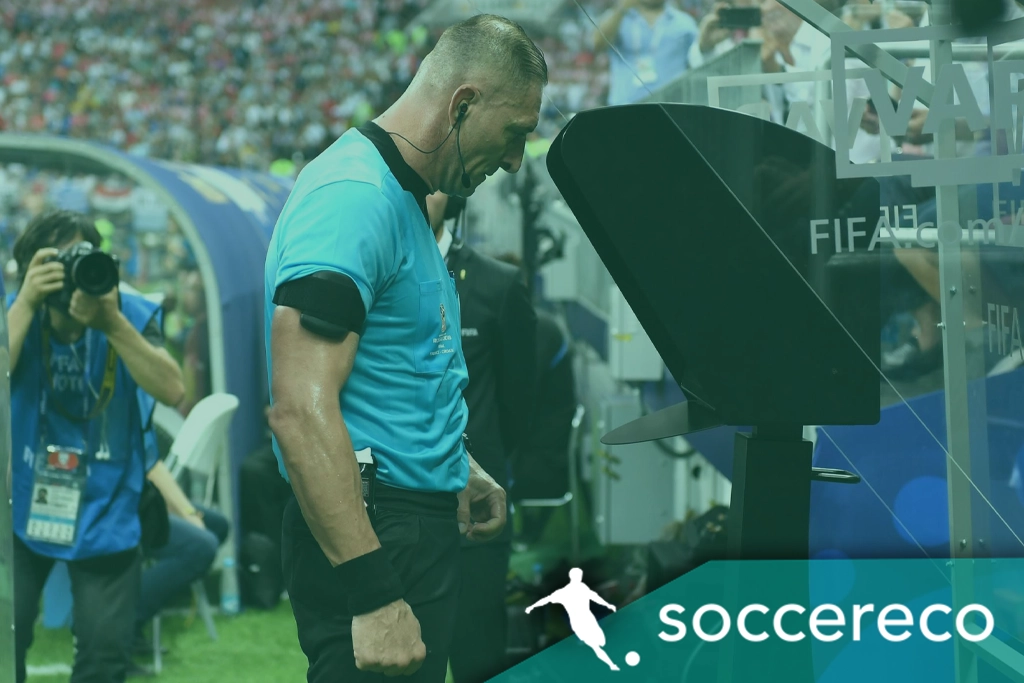
UEFA's preferred reviewing process is deliberately straightforward. Referees should first be shown a still image that identifies the relevant moment, before seeing the incident at half speed and then again at normal speed. The final replay is particularly important because slow motion can exaggerate contact and make challenges appear more serious than they looked when they actually happened. "Clear images, without too many replays. That is very important to us," Rosetti said. The intention is not to prevent officials from using the technology available to them, but to ensure that video analysis supports the referee rather than replacing normal football judgement.
Clear Line Aims to Explain Decisions to Supporters
The launch of Clear Line forms part of UEFA's attempt to improve understanding of how refereeing decisions are made. One of the persistent criticisms of VAR has been the gap between what officials know inside the video operations room and what supporters understand while watching the match. Even when a decision is technically correct, confusion can remain if there is no clear explanation of why the referee changed the original call or why VAR decided not to intervene. UEFA intends to use the new platform to explain the principles behind these situations, including when video officials are expected to become involved and when the referee's original judgement should be respected.
Rosetti's overall message is that UEFA does not want more technology or more intervention. It wants VAR to become simpler, quicker and closer to its original purpose. The former elite referee even referred to Diego Maradona's famous Hand of God goal when illustrating the type of unmistakable error that video technology was designed to prevent. Situations of that nature require intervention because the mistake is obvious and can have a decisive effect on the result. UEFA believes the problems begin when the same system is used to examine marginal incidents for several minutes in search of something that nobody initially considered a clear error.
"We are no longer satisfied with the way VAR is being used. We want to return to the original idea and put referees back at the centre of the game," Rosetti said. That represents a significant admission from UEFA's refereeing chief and suggests changes in philosophy could follow across European competitions. VAR is not going away, but UEFA wants officials to intervene less frequently, make decisions faster and give greater importance to what happens at full speed on the pitch. The challenge will be applying those principles consistently enough that players, coaches and supporters can understand where the line for intervention has actually been drawn.