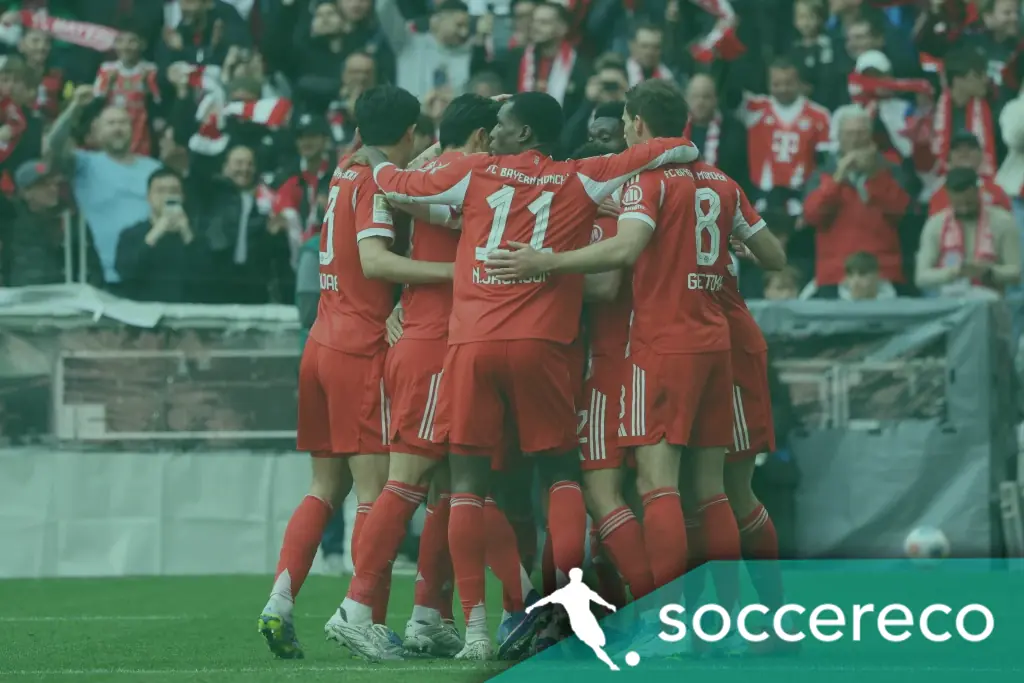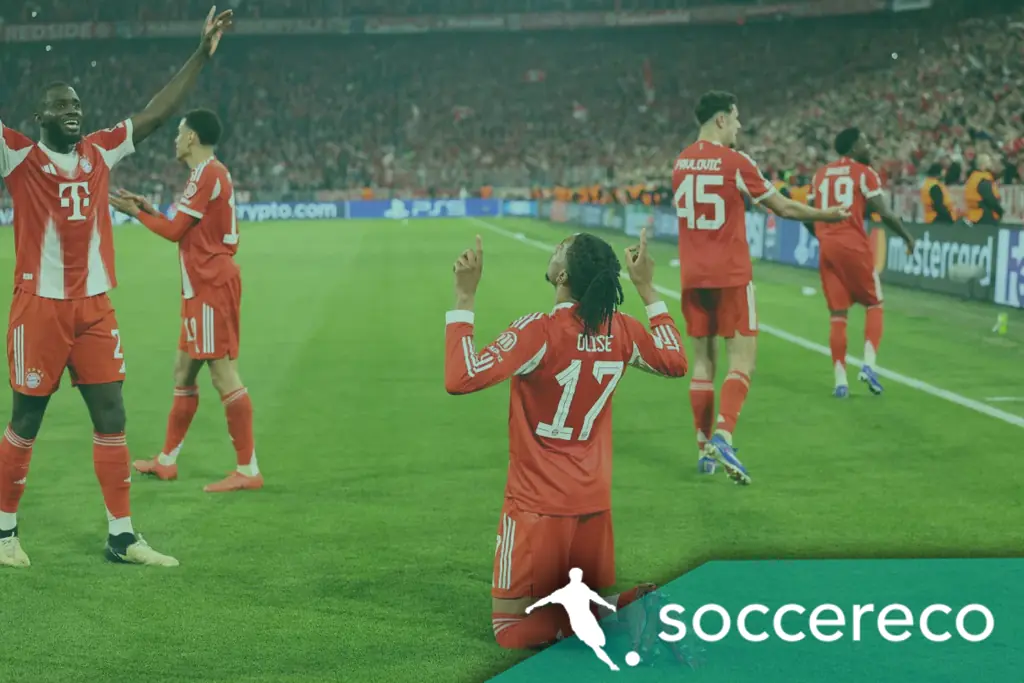
Atalanta coach Raffaele Palladino has no regrets about his approach in the match against Bayern Munich. His team lost 1-6 at home to the German champions in the Champions League round of 16. Panic also spread across several Italian media outlets.

Atalanta Bergamo suffered a crushing 1-6 home defeat to Bayern Munich on Tuesday night in the Champions League round of 16, a result that sent shockwaves through Italian football and triggered a fierce reaction in the national media.
What was expected to be a difficult European test for the Italian side quickly turned into a brutal lesson against one of the most powerful and technically refined teams in the competition.
Despite the scale of the defeat, coach Raffaele Palladino showed no sign of retreating from his footballing principles after the match. Speaking to Sky Sport Italia, he admitted the obvious superiority of Bayern on the night but insisted he had no regrets about the tactical choices made before kick off.
First of all, I have to congratulate Bayern, Palladino said. They have a strong team, they were impossible to play against. We can learn from this experience. I would play exactly the same way again if I had the chance. With this style of play, we reached the Coppa Italia semi finals and we are still competing strongly in the league.
That statement summed up the mood from the Atalanta camp after a humiliating evening. There was disappointment, of course, but also a determination not to abandon an identity that has brought the team this far. Palladino made it clear that one painful result, even one of this magnitude, would not suddenly force his side into a complete rethink.
Atalanta chose to remain loyal to their aggressive man to man structure, a system designed to pressure opponents high up the pitch, disrupt their rhythm and create direct duels all over the field. Against many opponents, that approach can be brave, intense and effective. Against Bayern, however, it became a dangerous gamble. The German champions repeatedly found spaces, escaped pressure with ease and exposed every weakness in transition. What usually looks like courage and tactical conviction instead came across as vulnerability.
Palladino, though, defended the idea behind it. We simply do not want to change our tactics. We are not going to switch to zonal defending. I have never seen players with so much quality as today, I was impressed. You can try something different, but they will still hurt your team, he explained.
It was a striking admission. On one hand, it highlighted the enormous respect Bayern commanded. On the other, it underlined a sense of inevitability that many observers found troubling. Palladino was effectively saying that Atalanta were beaten not because they chose the wrong path, but because Bayern operate at a level beyond what his players could cope with, whatever the setup.
That may sound defeatist to some, but it also reflects a broader reality in European football. Teams from leagues outside the top financial elite are often forced to choose between compromise and conviction. They can try to protect themselves with a more conservative system, or they can trust the style that carried them there. Atalanta chose conviction. Bayern punished them without mercy.
Captain Marten de Roon also stood firmly behind the game plan, even after such a devastating scoreline. His post match comments suggested that the dressing room is trying to frame the defeat not as a collapse of identity, but as an extreme test against the highest possible level of opposition.
Maybe it was a bold tactic, but we tried it, De Roon said. If you lose, then it is better to lose this way. We have to learn from this. This is the strongest team in the Champions League, and we must come out of this difficult night stronger.
De Roon words revealed both realism and resilience. He did not attempt to disguise the severity of the result, but he also refused to turn it into a crisis of belief. For senior players, that kind of reaction is crucial after a heavy European defeat. The risk after a match like this is that the psychological damage spreads beyond the competition itself and begins to affect domestic form, confidence levels and dressing room unity.
That is why the coming weeks may matter even more than the ninety minutes against Bayern. A heavy defeat can either destroy momentum or sharpen a teams sense of purpose. Much will depend on how Atalanta respond in Serie A and in the Coppa Italia. Palladino pointed specifically to those achievements when defending his philosophy, and he will now need results in those competitions to reinforce his argument.
The Italian media wasted little time turning Atalanta collapse into a broader indictment of the state of Serie A. What happened in Bergamo was not treated merely as one bad night for one team. Instead, it was portrayed as another alarming sign that Italian club football is losing ground against Europes strongest forces.
Gazzetta dello Sport, the biggest sports newspaper in Italy, offered one of the harshest verdicts. This is the state of our league. Not Atalanta, but Italian football as a whole was made to look ridiculous today. Our only club in the Champions League was humiliated by Bayern Munich. Atalanta only confirms the negative spiral.
That reaction captured a growing anxiety in Italy. For many years, Serie A could still lean on its history, tactical culture and famous clubs to maintain an image of relevance at the highest level. But in modern football, reputation alone no longer protects anyone. European competition tends to expose the gap between heritage and current power, and when an Italian side loses 1-6 at home, there is nowhere to hide.
Tuttosport echoed the same concern in equally severe terms. This is the state of our football. Atalanta were humiliated by Bayern, Juventus were knocked out by the Turks of Galatasaray, Inter by the Norwegians of FK Bodø Glimt, and Napoli did not even finish among the best 24 teams in Europe.
Whether those assessments are too emotional or brutally honest depends on perspective, but the underlying message is clear. The concern is no longer just about isolated eliminations. It is about a pattern. Italian clubs are increasingly being measured not against their own proud past, but against the present strength of Germany, England, Spain and even ambitious clubs from smaller leagues that are improving faster.
The phrase used by the Italian press again and again was the gap. The gap in quality. The gap in intensity. The gap in investment. The gap in tactical flexibility. The gap in individual talent. Against Bayern, all of those differences were visible. The German side looked faster in thought, cleaner in possession, sharper in movement and more ruthless in front of goal. Atalanta, by contrast, looked brave but overmatched.
That is what made the result so painful for observers in Italy. It was not just the scoreline. It was the sense that Bayern never truly looked stretched. Even when Atalanta tried to be aggressive, Bayern appeared calm. Even when they were pressed, they escaped. Even when there was space to attack, they defended with authority. It felt less like a battle between equals and more like a demonstration of what modern elite football looks like when it meets a side that still believes organisation and spirit can bridge every technical difference.
For Atalanta themselves, the challenge now is to protect perspective. A defeat of this size can distort everything. It can make months of good work seem meaningless. It can invite criticism of every player, every selection and every tactical principle. But clubs that compete on multiple fronts have to resist that spiral. Palladino did exactly that in his public comments. He accepted the pain, praised the opponent and insisted that the teams broader path remains valid.
There is logic in that stance. Reaching the latter stages of domestic cup competition and remaining competitive in the league does not happen by accident. Those achievements are usually built on trust in a clear idea, consistent work on the training ground and players who understand their roles. One terrible European night does not automatically erase all of that. At the same time, refusing to change anything at all can also be dangerous if the lesson of the defeat is ignored.
That may be the most important question left by the match. Can Atalanta remain faithful to their identity while still learning from what Bayern exposed? There is a difference between abandoning a philosophy and refining it. Man to man football can be effective, but only if the distances are right, the pressing triggers are precise and the players can win enough duels. Against opponents with extraordinary technical quality, pure commitment is often not enough. Adjustments do not necessarily mean surrender. Sometimes they simply mean survival.
From a wider Italian perspective, the result will continue to be discussed as a symbol of a deeper problem. Serie A still produces competitive teams, intense matches and tactically rich football, but the elite level of the Champions League increasingly demands more than structure and tradition. It demands squads filled with top class athletes, high value depth, tactical adaptability and players who can decide games individually under pressure. Bayern had all of that in abundance. Atalanta did not.
That is why the headlines in Italy were so dramatic. This was not only about losing. Italian clubs have lost in Europe before and will lose again. This was about the manner of the defeat, the lack of resistance once Bayern took control, and the uncomfortable feeling that the best of Serie A is still too far from the best of Europe.
The warning from the media was severe. The gap with the rest of Europe is starting to become clear, because we can no longer hide behind our glorious past. Get ready, this will only get worse. It is unthinkable that an Italian club will win the Champions League again in the near future.
That may be an exaggerated conclusion made in the heat of a humiliating evening, but it reflects the frustration of a country that still expects to matter at the highest level. When a Champions League campaign ends with a 1-6 home defeat, emotion will always take over. Whether that emotion becomes useful criticism or empty panic will depend on what Italian clubs do next.
For Atalanta, the immediate task is simpler and harder at the same time. They must recover, protect the dressing room, and make sure this defeat becomes a lesson rather than a scar. Palladino has chosen defiance over panic. De Roon has chosen accountability over excuses. The fans, meanwhile, will expect a response not in words, but on the pitch.
The final score, Atalanta Bergamo 1, Bayern Munich 6, will remain a painful reminder of just how ruthless elite European football can be. But the real significance of the night may only become clear in the weeks and months ahead. If Atalanta bounce back strongly, this will be remembered as a brutal but useful lesson. If they falter, it will be seen as the night their limits were exposed in the harshest possible way.