Igor Tudor lasted seven matches as Tottenham Hotspur manager. After five defeats in that run, the club hierarchy sacked him on Sunday after just 44 days in charge.
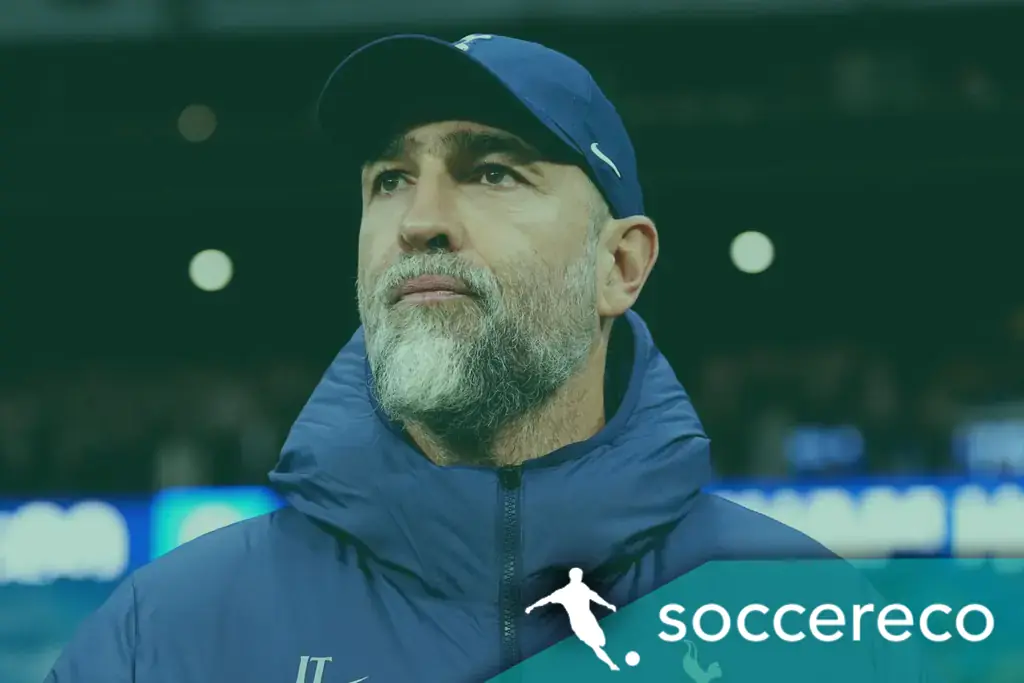
Tottenham sack Igor Tudor after disastrous seven game spell leaves club on edge of relegation zone.
Tottenham Hotspur have dismissed Igor Tudor after a disastrous spell in charge that failed to deliver the reaction the club desperately needed and instead dragged the team even deeper into danger near the bottom of the Premier League table. The Croatian coach was appointed after Thomas Frank was removed because of growing relegation concerns, with the Tottenham board hoping a change in leadership could restore calm, improve performances and bring points at a crucial stage of the season. Instead, the opposite happened. Results remained poor, confidence continued to fall and the pressure around the club grew with every passing match.
Tudor arrived in North London with a difficult task and very little margin for error. Tottenham were already in a worrying position when he took over, sitting in sixteenth place and facing a growing sense of instability across the squad. The expectation was that a fresh voice on the training ground and a more direct approach on matchdays could steady the team and prevent the season from sliding into a full survival battle. That improvement never came. By the time the board made its latest decision, Tottenham had fallen to seventeenth place and were sitting only one point above the relegation zone.
That context explains why the club moved quickly. For a side with far greater ambitions at the start of the campaign, this is now a season defined by anxiety rather than progress. Tottenham are no longer looking up the table in search of European qualification. They are looking over their shoulder at the teams below them and counting every remaining fixture as if it could shape the future of the club. In that environment, every poor performance feels heavier, every defeat creates more panic and every managerial decision becomes more urgent.
A brutal start that immediately raised doubts
The Tudor era never truly got started in a positive way. His first game in charge ended in a painful 1 to 4 defeat against Arsenal, a result that immediately intensified the pressure around him. Losing a North London derby is always a major blow because of the rivalry, the emotion and the expectation attached to the fixture, but the scale and nature of that defeat made it even more damaging. Tottenham looked vulnerable, disjointed and unable to cope with the quality and intensity of their opponents. Instead of producing the bounce that clubs often hope for after a managerial change, the team looked just as fragile as before.
That opening setback quickly became part of a wider collapse. Tottenham then lost the next three matches in a row, leaving Tudor with one of the worst starts any manager could imagine in such a high pressure role. The defeats did not simply hurt the club in terms of points. They also deepened the impression that the squad had not responded to the change in the dugout. There was no clear sign of a stronger defensive structure, no obvious increase in belief and no evidence that Tottenham had found the clarity needed to survive a tense end to the season.
When a club makes a change because of relegation fears, the expectation is usually immediate practicality. The board does not ask for perfection. It asks for stability, discipline and enough points to pull clear of danger. Tottenham did not get that under Tudor. Instead, the atmosphere became more strained and the feeling around the club was that time was slipping away faster than solutions were appearing.
European elimination made the situation even worse
The problems under Tudor were not limited to domestic football. Tottenham also suffered a damaging Champions League exit that added another layer of disappointment to an already troubled spell. In the round of sixteen, they were beaten 5 to 2 by Atletico Madrid in the first leg, a result that left the tie almost beyond recovery. Conceding five goals in a knockout match is always a major failure, particularly for a side that needed strong performances to rebuild belief and credibility. Tottenham were exposed too often, lacked control in crucial moments and paid a heavy price.
They did win the return leg 3 to 2, but that result changed very little. The first leg deficit had already done most of the damage, and the second leg victory was not enough to prevent elimination from Europe. In fact, it became a strange footnote in the Tudor spell because it ended as the only win Tottenham managed during his time in charge. Rather than being remembered as a turning point, it was treated as a result with limited value because the bigger outcome had already been decided.
That Champions League exit was important for more than one reason. It did not just remove Tottenham from a major competition. It also removed one of the few possible sources of optimism that could have helped change the mood around the team. Clubs in crisis sometimes use Europe as a platform to reset their mentality, but Tottenham could not do that. Once the elimination was confirmed, full attention returned to the Premier League and to a table that looked more dangerous every week.
Just one league point showed the depth of the decline
The most alarming number from the Tudor spell was not the number of matches, or even the number of defeats. It was the return in the Premier League. Tottenham collected only one point under his leadership, and that solitary point came against the Liverpool side coached by Arne Slot. Under normal circumstances, a draw against Liverpool might be viewed as a respectable result. In the context of a relegation fight, however, it was nowhere near enough. Tottenham needed momentum, consistency and signs of life. Instead, they remained trapped in a run that kept them too close to the bottom three.
League tables become especially cruel at this stage of a season. There is little room for excuses and even less room for patience. Every dropped point increases the pressure because recovery opportunities become fewer. Tottenham are now seventeenth, just one point above the relegation zone, and that position explains why the board saw the situation as too serious to ignore. This is no longer a story about underachievement alone. It is a story about genuine danger.
That sense of danger has grown because the problems have looked both tactical and psychological. On the pitch, Tottenham have appeared too easy to break down and too uncertain when opponents press aggressively or attack with speed. Off the pitch, the squad has looked like a group carrying the weight of a difficult season without the confidence that usually helps teams escape these situations. The managerial change was supposed to bring a sharper edge and a more controlled response. Instead, the tension continued to rise.
Nottingham Forest defeat became the final blow
The final straw for the Tottenham hierarchy appears to have been the 0 to 3 home defeat against Nottingham Forest. Losing at home is always damaging when a team is fighting near the bottom, but losing in such clear fashion, with so much at stake, made the result feel even more severe. Tottenham needed urgency, aggression and a display that showed they understood the magnitude of the moment. What they produced instead was another performance that convinced many observers the team was not moving forward under Tudor.
The Forest defeat was especially painful because home matches are often seen as the most realistic opportunity to collect points during a tense survival run. Supporters expect the team to show intensity, commitment and control in those games. Tottenham failed to do that, and the scoreline reflected the scale of the problem. A 3 goal defeat at home, while sitting so close to the relegation zone, left the board with little reason to believe that patience would suddenly be rewarded.
In football, there comes a point when a board decides that doing nothing is the bigger risk. That appears to have been the case here. Tottenham have now accepted that a short term shock may offer a better chance of survival than continuing with a project that was producing neither results nor convincing performances. It is a drastic step, but it is also one that reflects how serious the club believes the situation has become.
Backroom changes underline the scale of the reset
Tudor is not leaving alone. Tottenham have also confirmed the immediate departures of goalkeeping coach Tomislav Rogic and fitness coach Riccardo Ragnacci. Those exits underline that this is not a minor adjustment but a broader reset behind the scenes. The club statement thanked Igor Tudor, Tomislav Rogic and Riccardo Ragnacci for their effort and commitment during the past six weeks, acknowledging the work they put in during a highly difficult period.
The statement also carried a human note at a painful moment for Tudor personally. After the defeat against Nottingham Forest, the coach was informed that his father had passed away. That detail adds sadness to an already difficult ending and reminds everyone involved that football stories often unfold alongside events far more important than results and league tables. Even in a period dominated by scrutiny, criticism and pressure, that personal loss changes the emotional context around the end of his time at Tottenham.
Why Tottenham acted so quickly
Some managerial changes happen because a long term project has stalled. Others happen because a club feels it is running out of time. This looks very much like the second case. Tudor lasted only seven matches, which is an exceptionally short spell, but the results were severe enough for Tottenham to believe they could not wait any longer. No manager can expect much time when the team is hovering just above the relegation zone and showing so little sign of improvement.
The brutal reality is that Tottenham did not appoint Tudor to build for next season. They appointed him to fix an emergency. From the point of view of the board, that emergency has only become more serious. The team have fallen from sixteenth to seventeenth, the gap to the bottom three remains dangerously small and the football has not offered enough evidence that better days were just around the corner. In such circumstances, even six weeks can feel like a very long time.
For supporters, this latest change also raises deeper questions about the direction of the club. A team that expected to compete much higher up the table is now changing managers while fighting to avoid relegation. That gap between expectation and reality is one of the reasons the mood has become so tense. Every failed decision now feels more significant because the consequences are no longer just about finishing below target. They are about protecting Premier League status.
Attention now turns to the next manager
With Tudor gone, attention immediately shifts to who Tottenham will trust next. According to reports in the English media, Roberto De Zerbi is one of the names being mentioned as a possible successor. That is a notable link because De Zerbi is associated with a clear football identity, bold tactical ideas and an ability to impose a recognisable style. Whether Tottenham move in that direction or consider other candidates, the next appointment will be one of the most important decisions the club has made in recent years.
The challenge for any new coach will be immediate and unforgiving. There will be no time for a slow transition or a long tactical education. The first objective will be simple: collect enough points to move Tottenham away from the relegation zone. That means restoring confidence quickly, organising the side more effectively and reducing the number of mistakes that have defined this difficult stretch. It also means handling a dressing room that has lived through a season of disappointment, pressure and instability.
Tottenham still have time to rescue the campaign, but the margin is now extremely thin. The club cannot afford more drift, more confusion or more damaging setbacks. Every remaining fixture will carry huge weight, and the pressure on whoever takes charge next will begin immediately. Survival has become the priority, and that fact alone shows how dramatic the fall has been.
A short and painful chapter in a troubled season
The Tudor spell will be remembered as a brief but highly damaging chapter in an already troubled Tottenham season. He arrived with the task of restoring order to chaos, yet the chaos remained. His first game ended in a heavy derby defeat, the losses continued, the Champions League campaign ended, only one league point was collected and the club slipped even closer to the bottom three. By the end, Tottenham had seen enough and decided that another change was their only realistic option.
Whether that decision proves to be the right one will depend entirely on what comes next. For now, the facts are stark. Tottenham are seventeenth in the Premier League, just one point above the relegation zone, and have entered the closing stage of the season in a position few would have imagined. Tudor has gone, his staff have gone with him and the club must now search for a new voice capable of preventing the crisis from becoming an historic collapse.