Zinédine Zidane has expressed his delight after being appointed France head coach. The 54-year-old former international succeeds Didier Deschamps and has signed a contract through to the 2030 World Cup.
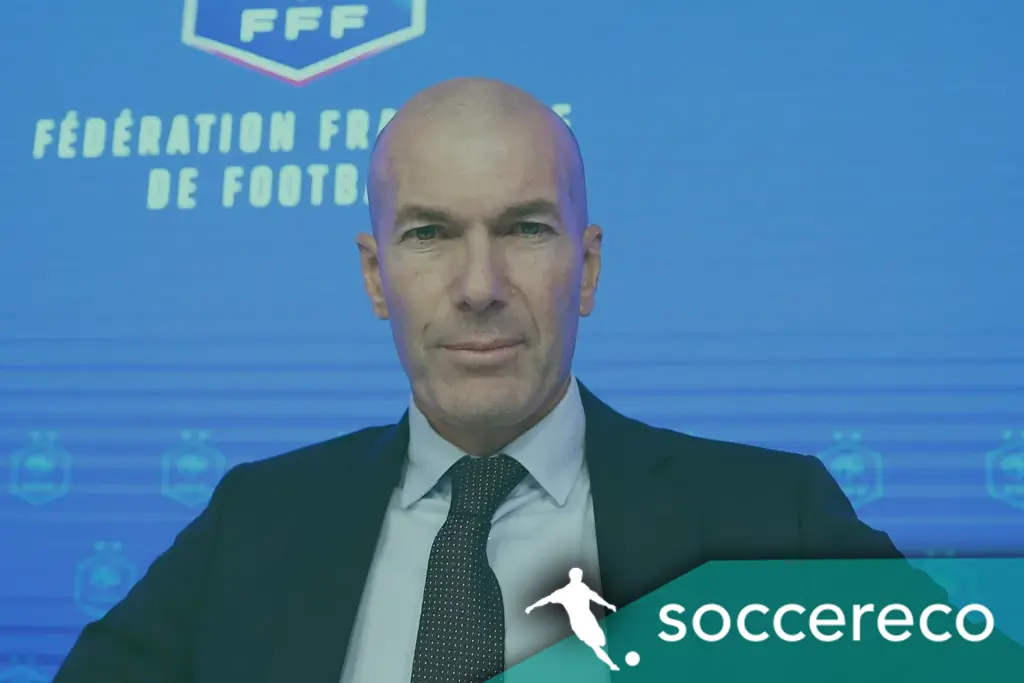
Zinédine Zidane sets out major ambitions after becoming France head coach
Zinédine Zidane has spoken of his pride and determination after being appointed head coach of the French national team, describing the opportunity to lead Les Bleus as one of the greatest honours of his career. The 54-year-old succeeds Didier Deschamps and has signed a contract that will take him through to the 2030 World Cup, beginning a new era for a national side accustomed to competing for the biggest trophies in international football. Zidane will officially begin his role on 1 August, giving him responsibility for guiding France through the Nations League, the qualification campaign for Euro 2028 and, provided the team secure their place, the 2030 World Cup.
The appointment brings together one of the most important figures in French football and the national team he represented with such distinction during his playing career. Zidane has never hidden the emotional significance that France holds for him, and his first comments after accepting the position reflected both his personal connection to Les Bleus and his understanding of the expectations that now accompany the job. He made it clear that becoming national coach is not simply another professional opportunity, but a responsibility with a special meaning because of his history with the country and the importance of the team to French supporters.
“I have said it many times: there is nothing greater than the French national team. It is therefore a great pleasure and, naturally, an enormous source of pride to become the head coach of this France team,” Zidane said. His words captured the emotion surrounding an appointment that has been discussed repeatedly throughout the years. Zidane has long been regarded as a natural future candidate for the role, but he has now been given the opportunity to turn that expectation into a new coaching project.
The former Real Madrid coach arrives with an exceptional record from his previous experience in management. Zidane led the Spanish club to three consecutive Champions League triumphs, an achievement that established him as a coach capable of succeeding under the greatest pressure. Managing Real Madrid required him to handle elite players, intense media attention and the constant expectation of winning, all of which should provide valuable preparation for the demands of the French national team.
International football will nevertheless present a different type of challenge. Zidane will have far less daily contact with his players than he enjoyed at club level, meaning every training camp and every tactical session will need to be carefully planned. He will also be required to make difficult squad selections from a large group of talented French players, many of whom are competing at leading clubs across Europe. The ability to create unity quickly and communicate clear ideas will be central to his chances of success.
Zidane acknowledged the importance of the responsibility he is accepting and thanked those involved in the decision to appoint him. “I would like to thank president Philippe Diallo, the executive committee and the French Football Federation for the trust they have placed in me,” he said. “I also want to acknowledge the 14 years that Didier Deschamps and his staff dedicated to the French national team. Today, I am also thinking of all my former coaches. It goes without saying that I have great ambitions for the French national team.”
His tribute to Deschamps was an important part of his first public statement. Zidane is not arriving to rebuild a national team without foundations, but to succeed a coach who spent 14 years shaping the identity and competitive standards of Les Bleus. That long period brought continuity to the national side and created a working structure that Zidane will now inherit, assess and gradually adapt according to his own ideas.
Following such a long-serving coach can be complicated because a national team often becomes closely associated with the methods and personality of the person in charge. Zidane will need to respect the work completed before his arrival while also making it clear that a new cycle has begun. Some elements of the previous structure may remain useful, while others may change as the new coach introduces his own tactical priorities, communication style and expectations.
Zidane’s reference to his former coaches also revealed how seriously he views the significance of the moment. Throughout his career, he worked under many different personalities and experienced a wide range of approaches to leadership, preparation and team management. Those experiences helped shape the coach he later became at Real Madrid and will now influence the way he leads France. The national-team position represents another stage in that development, but it is also a return to an environment that played a defining role in his football career.
The French Football Federation has presented the appointment as a decision based on more than Zidane’s reputation. FFF president Philippe Diallo expressed complete confidence in the new coach and emphasised the values that he believes Zidane will bring to the position. For the federation, his arrival provides not only a high-profile figure capable of inspiring supporters, but also someone with direct experience of succeeding at the highest level of the game.
“The appointment of Zinédine Zidane as head coach of the French national team is a source of immense pride for the French Football Federation,” Diallo said. “Zinédine Zidane has built an exceptional career through talent, hard work, humility and the pursuit of perfection. These are also values associated with the French national team, and they are values we want to represent together over the next four years.”
Diallo’s comments underline the importance of Zidane’s personality to the decision. His playing and coaching careers were built around technical quality, but the federation also highlighted his discipline, humility and demanding standards. Those qualities will be essential in a role where he must manage established stars while also creating opportunities for younger players attempting to establish themselves in the national side.
The next four years will require Zidane to balance immediate results with longer-term planning. France are expected to compete strongly in every tournament, leaving little room for a prolonged transition period. At the same time, the coach must prepare a squad capable of remaining competitive through to 2030, which could require gradual changes in personnel and the integration of a new generation.
His first challenge will be to establish a clear relationship with the existing group. The players will arrive with experience of working under Deschamps and may be accustomed to particular tactical responsibilities and routines. Zidane will need to explain which principles will remain, which will change and how every player fits into his plans. The limited time available during international breaks makes that communication especially important.
There will also be considerable interest in the style of football Zidane wants France to play. During his time at Real Madrid, he demonstrated tactical flexibility rather than limiting his teams to one rigid system. His sides were able to control possession, attack quickly and adjust their approach depending on the opponent. A similar level of adaptability could become an important feature of his work with Les Bleus, particularly in tournament football where teams face very different tactical challenges in a short period.
France possess the talent to play in several ways, but Zidane’s task will be to create a balanced structure rather than simply selecting the most famous individuals. International squads often contain several players who perform similar roles for their clubs, making it necessary for the coach to find combinations that complement one another. Zidane will be judged on whether he can turn individual quality into a functioning team capable of controlling matches and responding effectively when circumstances change.
His experience of managing a dressing room filled with leading players should be valuable. At Real Madrid, Zidane worked with footballers who were accustomed to starting important matches and receiving significant responsibility. He had to make difficult selection decisions while maintaining unity and ensuring that those outside the starting line-up remained prepared to contribute. The France role will demand the same type of authority, as several high-level players will inevitably be disappointed whenever squads and starting teams are announced.
Zidane’s relationship with the media will also form an important part of his new position. The French national team attracts constant attention, and every selection, tactical decision and result will be closely examined. His calm public manner may help him manage that pressure, but the national-team role can create intense debate because supporters often hold strong opinions about which players should be included and how the side should perform.
The appointment is also likely to create renewed excitement around Les Bleus. Zidane remains one of the most recognisable personalities in French football, and his return to the national setup will carry considerable emotional significance for many supporters. That enthusiasm can provide positive momentum at the beginning of his tenure, although it will also increase expectations. His history with France means that he will be welcomed warmly, but his success will ultimately be measured through performances and results.
Zidane becomes the 18th head coach of France since Henri Guérin took charge in 1964. That history places him in a line of coaches who have each faced the challenge of representing a country with enormous football tradition and a deep pool of talent. His name carries unusual weight because of everything he achieved as a player, but the demands of the role will require him to build a separate legacy as national coach.
His official start on 1 August will mark the beginning of a detailed planning period before his first competitive commitments. Zidane will need to evaluate the available players, speak with key members of the squad and work with the federation to finalise the structure surrounding the team. His technical staff will not be presented until early September, meaning decisions about the coaches, analysts and other specialists who will support him are still to be completed.
The composition of that staff will be closely watched because international management depends heavily on preparation completed away from the brief training camps. Analysts must study opponents, medical staff need to communicate with clubs and assistants must help the head coach maintain contact with a large number of potential squad members. Zidane will require a trusted group capable of implementing his ideas and providing detailed information throughout the season.
Once that structure is in place, attention will turn to the Nations League. The competition will provide Zidane with an early opportunity to work with the squad in meaningful matches and test his ideas against strong opposition. Although every result matters when coaching France, those fixtures may also be used to evaluate different partnerships and identify which players are best suited to the new system.
The qualification campaign for Euro 2028 will then become a central objective. France will be expected to secure their place, but qualification football can still produce difficult moments, particularly when opponents defend in compact numbers and allow little space. Zidane’s team will need to show patience, tactical intelligence and consistency rather than relying only on individual quality.
Euro 2028 will represent the first major international tournament of his tenure, provided France qualify as expected. That competition will offer the clearest indication of how far the team has progressed under his leadership. Tournament football places unique demands on a coach, with limited recovery time, little margin for error and the possibility that one difficult match can end an entire campaign.
Zidane’s long-term contract means the federation is also looking beyond that tournament towards the 2030 World Cup. The agreement gives him time to develop the squad over several years, but it also establishes the World Cup as the ultimate point of the project. France must first qualify, and Zidane was careful not to treat participation as automatic, but the expectation will be for Les Bleus to arrive at the tournament as serious contenders.
Planning for 2030 will require constant evaluation of the squad’s development. Some established players may remain central to the team throughout the cycle, while others could gradually lose their places as younger alternatives emerge. Zidane will need to make those transitions at the correct time, preserving experience without preventing the next generation from progressing.
The depth available to France creates an advantage but can also complicate decisions. Leaving a talented player out of the squad can quickly become a major topic of discussion, while introducing too many changes at once risks weakening continuity. Zidane must develop clear criteria based on form, tactical suitability, fitness and behaviour within the group.
His reputation may help him communicate difficult decisions. Players are likely to respect what he achieved and understand that he has experienced the pressure of major international tournaments himself. However, reputation alone will not be enough to maintain authority over four years. Zidane will need to build trust through consistency, honesty and a clear sporting vision.
The new coach will also have to decide how much he wants France’s identity to reflect his own career. Zidane was celebrated for technical control, intelligence and calmness in possession, but coaching requires solutions based on the characteristics of the available squad rather than personal preference alone. His Real Madrid teams showed that he is willing to be pragmatic, and that flexibility could help him make the most of France’s different attacking, midfield and defensive options.
There will be pressure to produce attractive football, particularly because the squad contains so much technical and athletic ability. However, Zidane will understand that international tournaments are usually decided by balance, discipline and the management of decisive moments. His greatest challenge may be finding a structure that allows France’s creative players to express themselves without leaving the team exposed defensively.
The transition from Deschamps to Zidane will inevitably generate comparisons between the two coaches. Deschamps’ 14-year tenure created a clear reference point, and every early decision made by his successor will be analysed in relation to what came before. Zidane will need to avoid becoming trapped by those comparisons and focus instead on establishing an identity that reflects his own understanding of the squad.
His respectful comments about Deschamps suggest that he does not intend to present the change as a rejection of the previous era. By recognising the work of the former coach and his staff, Zidane acknowledged the stability and standards he is inheriting. That approach may help make the transition smoother, especially for players who spent many years working within the previous setup.
The federation’s public support gives Zidane a strong starting position. Diallo described the appointment as a source of pride and clearly linked the coach’s values with those the FFF wants the national side to represent. That unity between the leadership and the coach will be important when difficult periods arrive, as even the strongest teams experience setbacks over a four-year cycle.
Zidane’s return to coaching will also attract attention beyond France. His previous success at Real Madrid ensured that he remained one of the most discussed coaches even during his time away from management. Taking charge of Les Bleus now places him back at the centre of elite football and gives him the opportunity to demonstrate whether his club achievements can be followed by success at international level.
The role may suit certain aspects of his management style. Zidane was often praised for his ability to understand players, maintain calm in difficult moments and create confidence within high-pressure environments. International coaching offers fewer training sessions but places enormous importance on relationships and the emotional management of a squad during tournaments. Those areas could allow him to use some of his strongest qualities.
There are still many practical decisions to be made before his first match. The technical staff must be confirmed, the initial squad selected and the first tactical priorities communicated to the players. Zidane will also need to decide which members of the existing setup remain involved and how the federation’s wider performance structure will support his plans.
For now, the dominant feeling is one of pride and ambition. Zidane has accepted a position that has long appeared to be part of his future, and he has done so with a clear awareness of the responsibility involved. His contract through to the 2030 World Cup gives him a defined period in which to shape the next phase of French football.
The expectations will be enormous because France possess the talent and recent experience to challenge for every major title. Zidane is not being asked merely to manage a transition or maintain stability. The federation and supporters will expect him to compete for trophies, develop the next generation and ensure that Les Bleus remain among the strongest national teams in the world.
His first comments showed that he shares those ambitions. Zidane spoke with respect for Deschamps, gratitude towards the federation and pride in becoming national coach, but he also made clear that he is not returning for sentimental reasons alone. He wants to build a successful team and believes France should continue aiming for the highest level.
The official beginning of his tenure on 1 August will bring an end to the anticipation and start the practical work. From that point, every selection and training camp will contribute to the project that is intended to lead France through the Nations League, Euro 2028 qualifying and towards the 2030 World Cup. Zidane has already achieved historic success as both a player and a club coach. His next challenge is to create another important chapter with the French national team, this time from the technical area.