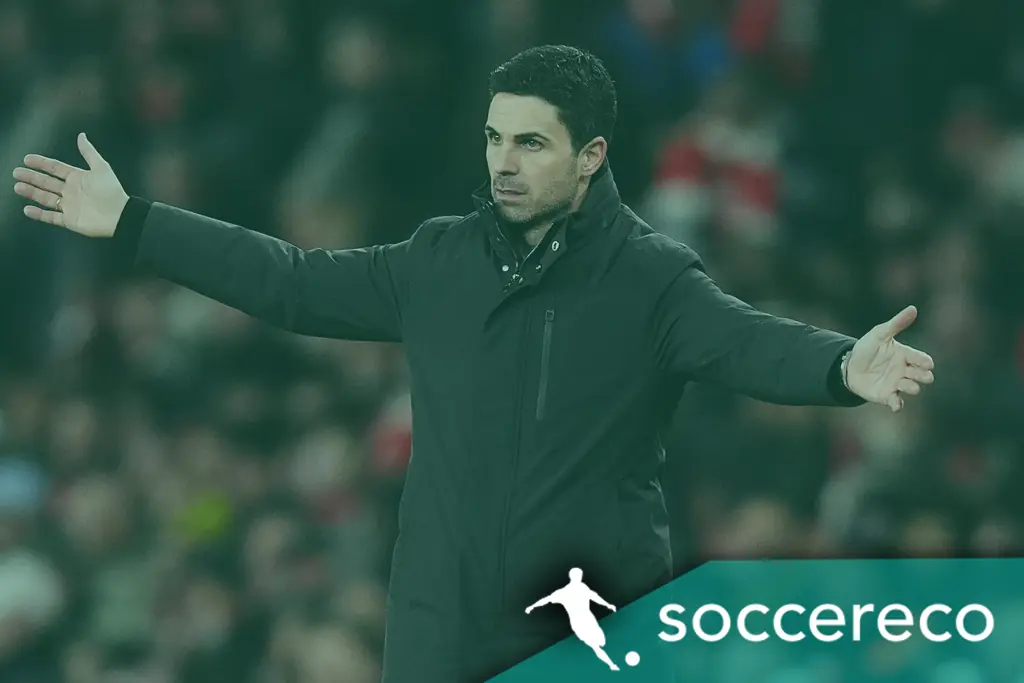
Mikel Arteta is a satisfied manager at Arsenal. The Spaniard has built up a comfortable lead in the race for the Premier League title and saw the competition drop points on New Year’s Day. However, the coach is not yet counting his chickens.
AFC Bournemouth vs Arsenal takes place at 18:30 on 03-01-2026, and it arrives at a moment when Arsenal’s title narrative is starting to feel more concrete than speculative.
With the season moving into January, the league table, the fixture list, and the psychological rhythm of a campaign begin to matter as much as form itself. Arsenal’s position at the top gives them a clear advantage, but the tone from Mikel Arteta remains deliberately controlled: satisfied with where his side stands, yet insistent that nothing meaningful is achieved unless the next match is won.
Arsenal have not lifted the English league title since 2004, a season still referenced for its rarity and symbolism. The unbeaten run that year turned the team into a benchmark of domestic dominance and resilience. Two decades later, the club is again being discussed in terms that go beyond “progress” and “project.” The current situation is simple and significant: Arsenal hold a 4-point lead over their closest challengers, Manchester City. In a league where momentum can swing quickly and where late-season pressure tests even the best squads, a gap like that offers breathing space, but not comfort. That is why Arteta’s message has been consistent: enjoy the position, but do not trust it.
Several data models are now giving Arsenal close to an 80% chance of finishing the job, a figure that reflects both their points cushion and the reliability they have shown across the season. The number is striking, but it also creates a new kind of challenge. When external expectations rise, every draw feels like a collapse and every narrow win is judged against the standard of a champion-in-waiting. Arteta, aware of that dynamic, has pushed back against any suggestion that the title can be calculated in advance. His comments ahead of Bournemouth were framed around evolution, standards, and the ruthless simplicity of the next result.
“This is where we are right now, yes. I’m very happy with our position,” Arteta said, before quickly adding that it can still be better. The point is not to deny progress, but to demand more control, more consistency, and more maturity in the way Arsenal manage games. That ambition matters because January is rarely about producing the most attractive football. It is about surviving the calendar, winning when the legs are heavy, and maintaining clarity when injuries, rotation, and fatigue start shaping lineups.
The Bournemouth away trip fits that profile. It is the sort of fixture that can look straightforward on paper and turn uncomfortable within 15 minutes if intensity drops or the game state turns against you. Away matches in the Premier League routinely punish lapses: a loose pass that invites pressure, a set-piece conceded at the wrong moment, or a transition defended half-heartedly. For a team leading the table, these are exactly the games that define whether the challenge is real. Arsenal’s advantage will not be protected by reputation. It will be protected by habits: sprinting back after losing the ball, defending the box with urgency, being clinical when chances arrive, and staying patient when they do not.
Arteta’s emphasis on consistency is not rhetorical. In title races, the difference between first and second is often a short sequence of matches where the leader avoids the small slip that rivals cannot. “We know how difficult it is to beat opponents in the Premier League,” he said, underlining that the calendar still shows about 5 months to play. That timeline is crucial. In early January, the league is not won, but it can be made harder to lose. Each victory reduces uncertainty, forces chasing teams into riskier approaches, and strengthens the belief inside the dressing room that pressure is a privilege rather than a threat.
From a tactical perspective, the Bournemouth test should demand a balance between control and aggression. Arsenal will want sustained possession, but not sterile dominance. The challenge is to progress the ball with purpose, create high-quality chances rather than hopeful shots, and stay protected against counters. Bournemouth, like many teams at home, will likely look to disrupt rhythm, press in short bursts, and target moments where Arsenal’s structure is stretched. That makes game management central: slowing the tempo when needed, drawing fouls, winning second balls, and using set-pieces and restarts intelligently.
This is also the stage of the season where squad depth becomes a competitive advantage. Arsenal’s ability to rotate without losing cohesion has been one of the quiet factors behind their strong position. Title-winning sides are rarely dependent on 11 players. They are dependent on a squad that can carry the same tactical principles even when personnel changes. January, with its tight schedule and physical toll, will test whether Arsenal can keep their intensity while staying fresh enough to maintain performance levels.
The psychological dimension should not be underestimated either. A 4-point lead can change how opponents approach the game against you. Some teams become more conservative, hoping for a low-scoring contest decided by one moment. Others become more aggressive, sensing that any points taken off a title leader is a statement. Arsenal must be ready for both. The ability to score first, and to respond calmly if they concede, is often what separates champions from contenders. Arteta’s repeated focus on “winning the next game” is partly about blocking out the noise, but it is also about simplifying the mental load for players who are now being treated like favorites every week.
Bournemouth vs Arsenal, then, is not just a fixture on a crowded schedule. It is another checkpoint in a campaign that is starting to carry the weight of history and expectation. Arsenal have the lead, the models, and the momentum. What they need, as their manager keeps stressing, is the discipline to treat this match with the same urgency as the last one, and the same focus as the next one.
If Arsenal take 3 points at 18:30 on 03-01-2026, it will not decide the title. But it will reinforce the patterns that titles are built on: consistency, control, and the refusal to look too far ahead.