Benfica lost 1-0 at home to Real Madrid in the first leg of the Champions League play-off, with Vinicius Junior scoring after the break and the second leg set for 25 February at the Bernabeu.
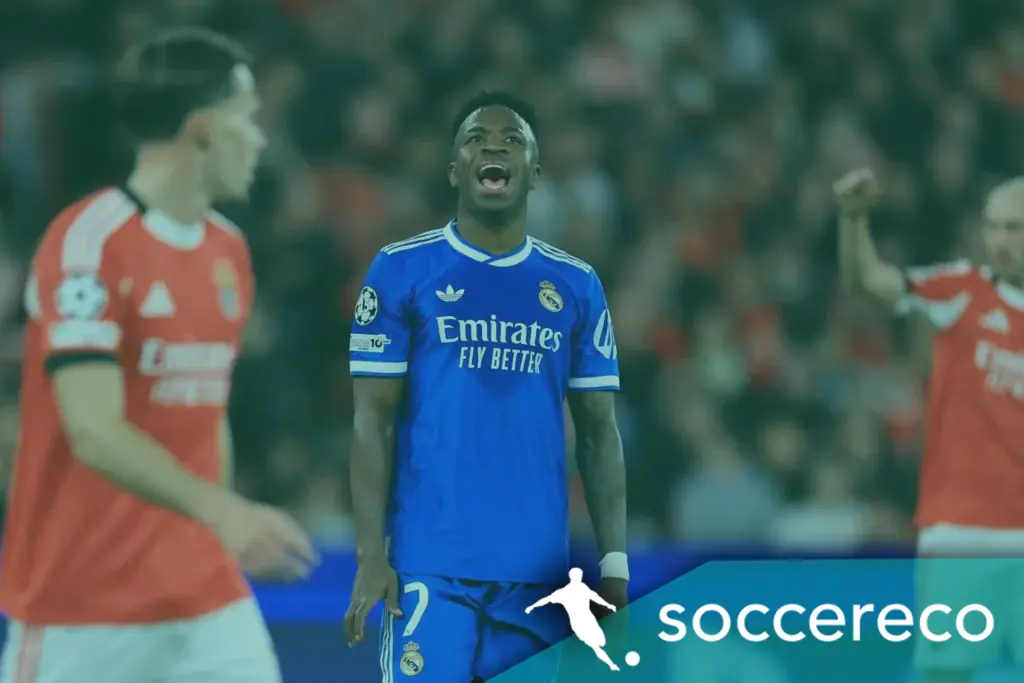
Benfica suffered a 1-0 home defeat to Real Madrid on Tuesday in the first leg of the Champions League play-off, leaving the Portuguese side with work to do ahead of the return match in Spain.
The contest at Estadio da Luz was tight and often tense, with both teams approaching the night aware that a single moment could tilt the balance of the tie. Benfica tried to set an early rhythm with aggressive pressing and quick switches of play, looking to push Real Madrid back and force turnovers in advanced areas. Real Madrid, as expected, were comfortable absorbing pressure for spells, choosing their moments to break forward with pace and quality in transition.
The decisive moment arrived shortly after the interval. In the 50th minute, Vinicius Junior found the net to give Real Madrid the lead and, ultimately, the advantage in the tie. The goal changed the dynamic of the match immediately. Benfica were forced to take more risks in search of an equaliser, while Real Madrid became even more willing to sit in a compact shape and pick opportunities to counter.
The setting added an extra layer of narrative. Estadio da Luz had recently been a happy hunting ground for Benfica against the same opponents, after a dramatic 4-2 win on 28 January that helped secure a place in the Champions League play-off. That result fed belief among Benfica supporters that another big European night was possible, and the atmosphere reflected that expectation before kick-off. This time, however, Real Madrid managed the match more effectively and limited the space Benfica needed to play at speed.
After the goal, the match was halted for around 10 minutes following an alleged racist insult involving Prestianni and Vinicius Junior. The stoppage heightened the tension in the stadium and disrupted the flow of the game at a key stage, with Benfica trying to respond to conceding and Real Madrid keen to protect their lead. Incidents of this nature are treated with increasing seriousness across European football, and the extended pause underlined how quickly a match can shift from sporting intensity to a broader disciplinary and regulatory issue.
When play resumed, Benfica pushed for a way back into the contest. The home side looked to increase tempo, sending more bodies forward and attempting to stretch Real Madrid through wide areas. Crosses and cutbacks became a more frequent feature as Benfica searched for the final pass or the kind of second-ball situation that can produce a scrappy equaliser. Real Madrid, for their part, remained disciplined, keeping defensive distances tight and focusing on preventing clear chances rather than chasing a second goal recklessly.
The 1-0 scoreline leaves the tie finely poised, but it is clearly more favourable for Real Madrid given the second leg will be played at Santiago Bernabeu in Madrid on 25 February. Benfica now face a familiar European challenge: producing a strong away performance against elite opposition, with the added pressure of knowing that conceding in Spain would complicate the task further.
For Benfica, the priorities going into the return match are clear. The team will need to balance ambition with control, because opening up too early can invite the kind of counterattacking threat that Real Madrid can punish. At the same time, Benfica cannot afford to be passive for long spells, since the aggregate deficit requires a goal to bring the tie level. Much may depend on how effectively Benfica can build attacks without losing structure, and whether the side can create chances that force Real Madrid into uncomfortable defending.
Real Madrid, meanwhile, travel into the second leg with a narrow but valuable lead and the option to play the game in several ways. They can protect the advantage with patience, trusting their defensive organisation and game management, or they can look to strike early to widen the cushion and force Benfica into a high-risk approach. With a player like Vinicius Junior capable of deciding moments in transition, Real Madrid can be content to wait for the right openings.
The stakes are high beyond the tie itself. The winner of the play-off will advance to the Champions League round of 16, where Sporting or Manchester City await. That potential reward adds extra pressure to the second leg, since progressing would set up a heavyweight knockout pairing and offer a major opportunity for momentum and prestige.
With one goal separating the sides after the first leg, the return match in Madrid promises a high-intensity night, shaped by tactical choices, individual moments, and the ability of each team to handle pressure when the margin for error is so small.