The Manchester City manager paid a huge compliment to his Portuguese Fulham counterpart ahead of facing him again in the Premier League on Wednesday.
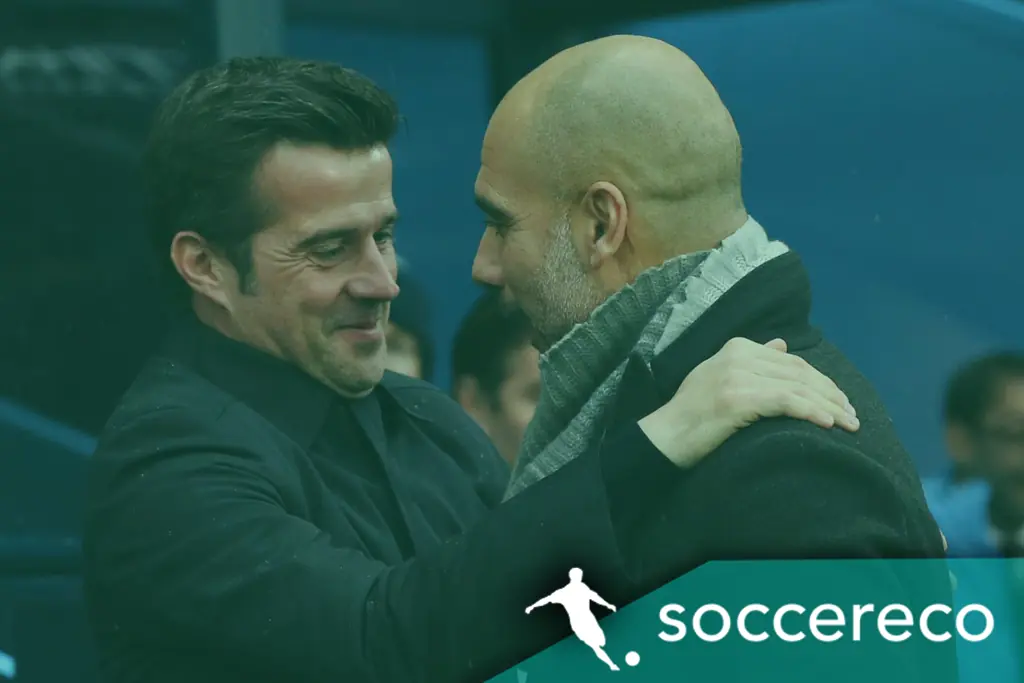
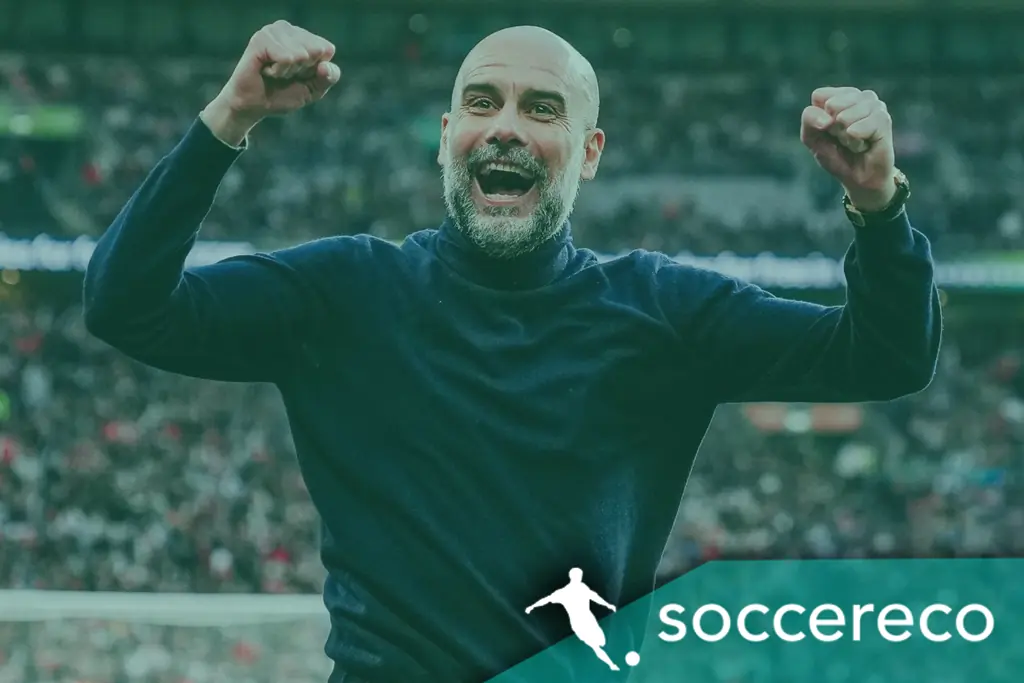
Pep Guardiola, Manchester Citys manager, went far beyond the usual pre match courtesy when discussing Marco Silva on Tuesday, delivering one of the strongest public endorsements he has ever made about an opposing coach.
Speaking ahead of the Premier League matchday 26 clash at the Etihad, Guardiola did not merely praise Fulham’s recent results or individual players, but instead focused on the structure, identity and evolution of the team under the Portuguese manager, making it clear that this was admiration rooted in tactical detail rather than politeness.
The timing of the praise was significant. With the 2026 FIFA World Cup drawing closer and the Premier League entering its decisive phase, pressure is mounting on City as they continue to chase Arsenal at the top of the table. Yet rather than framing the Fulham game as a routine must win fixture, Guardiola chose to elevate the opponent, underlining how difficult a test Silva has made Fulham, particularly against elite sides.
In previewing Wednesdays game, Guardiola highlighted how Fulham have evolved season after season under Silva, stressing that their improvement is visible not just in points accumulated, but in the way they control games. According to the City manager, Fulham have developed clearer positional play, sharper automatisms in midfield and attack, and a level of composure that allows them to manage difficult moments without panic. These are hallmarks Guardiola typically associates with top level coaching.
He pointed to the precision of Fulhams movements, the speed with which they progress the ball, and the consistency of their patterns in possession as evidence that Silva is imprinting a clear footballing identity. For Guardiola, this is often the dividing line between a good coach and a great one: not simply adapting to opponents, but building a system that players believe in and execute instinctively.
Silva, who currently has Fulham sitting 10th in the Premier League, has overseen a period of stability and growth at Craven Cottage that contrasts sharply with the clubs previous cycles of promotion and relegation. Under his guidance, Fulham have become a side that can dominate lesser opponents while also competing intelligently against the leagues elite, avoiding the passive low block approach that often traps mid table teams in survival mode.
Guardiolas most striking comment was his assertion that Silva is destined to become one of the best managers in world football within a few years. Coming from a coach widely regarded as one of the most influential figures in the modern game, this was not a throwaway line. Guardiola rarely projects future greatness unless he sees the foundations already in place: tactical clarity, adaptability, man management, and the ability to transmit ideas under pressure.
That pressure, of course, is something Guardiola knows well, and it framed his response when asked about the potential implications of the Fulham game in the title race. With Arsenal not playing until later in the round, a City victory would temporarily reduce the gap at the top to three points. Yet Guardiola flatly rejected the premise of framing the match around mathematics and scenarios.
He used the question to critique what he sees as an increasingly extreme narrative around modern football, where every result is treated as definitive. Guardiola argued that interviews before matches have become dominated by hypothetical collapses and exaggerated consequences, insisting that chasing points in February is not the same as deciding titles in May. His message was clear: Citys focus is on performance level, not emotional swings driven by weekly table positions.
This mentality has been central to Citys sustained success under Guardiola. Rather than allowing external narratives to dictate urgency or fear, he consistently emphasizes process, control and repetition of standards. In that sense, his praise for Silva also felt like recognition of a coach operating with similar principles, albeit at a different level of resources.
Beyond the immediate Fulham matchup, Guardiola also offered insight into Citys internal development, notably praising young Uzbek defender Abdukodir Khusanov. Signed from Lens just over a year ago, Khusanov has been adapting not only to the Premier League, but to the linguistic and tactical demands of Guardiolas system. Guardiola highlighted the defenders improving command of English as a key factor in his progression, noting that communication is critical in a defensive unit built on synchronization rather than individual duels.
The comment, delivered with humor, masked a serious point: City defenders are required to make constant decisions under pressure, coordinate the offside line, manage rest defense, and react instantly to transitions. Intelligence, both footballing and cognitive, is non negotiable. Guardiola made it clear that Khusanov is meeting those demands, reinforcing the idea that Citys squad depth is being quietly reinforced for the future.
Guardiola also touched on Fulham through the lens of Oscar Bobb, who joined the London club from City in the January transfer window. Bobb, a product of FC Portos academy before moving to England, is viewed by Guardiola as a player with elite potential. However, Guardiola framed his future in stark terms: talent alone is insufficient. Whether Bobb becomes a top level player will depend on his ambition, consistency and willingness to embrace responsibility.
That statement doubles as a reflection of Guardiolas broader philosophy. At City, opportunity exists, but only for those who meet relentless standards daily. Fulham, in Bobbs case, represents a platform to translate promise into authority, something Guardiola clearly believes is possible if the player commits fully.
As for the match itself, Guardiola made it clear that he expects Fulham to arrive at the Etihad well organized, brave in possession, and tactically disciplined. Silvas teams are known for pressing selectively rather than relentlessly, choosing moments to disrupt buildup while maintaining a compact defensive structure. Fulham are also increasingly dangerous in transition, particularly when opponents over commit in advanced areas.
For City, that means controlling the rhythm of the game will be essential. Guardiola sides thrive when they dictate tempo, but they are vulnerable when transitions become chaotic. Fulhams ability to exploit space quickly could therefore be a decisive factor if City lose structural balance.
In many ways, Guardiolas comments reframed the fixture entirely. Rather than a title chasers routine home game, it became a meeting between one of the eras defining managers and a coach he believes is on the path to joining footballs elite. For Marco Silva, such public validation enhances his growing reputation beyond England, reinforcing his status as one of the most respected Portuguese coaches of his generation.
For Fulham, it is both recognition and challenge. Praise from Guardiola carries weight, but it also raises expectations. The task now is to justify that respect on the pitch, in one of the most demanding environments in European football.
Updated: 03:29, 10 Feb 2026