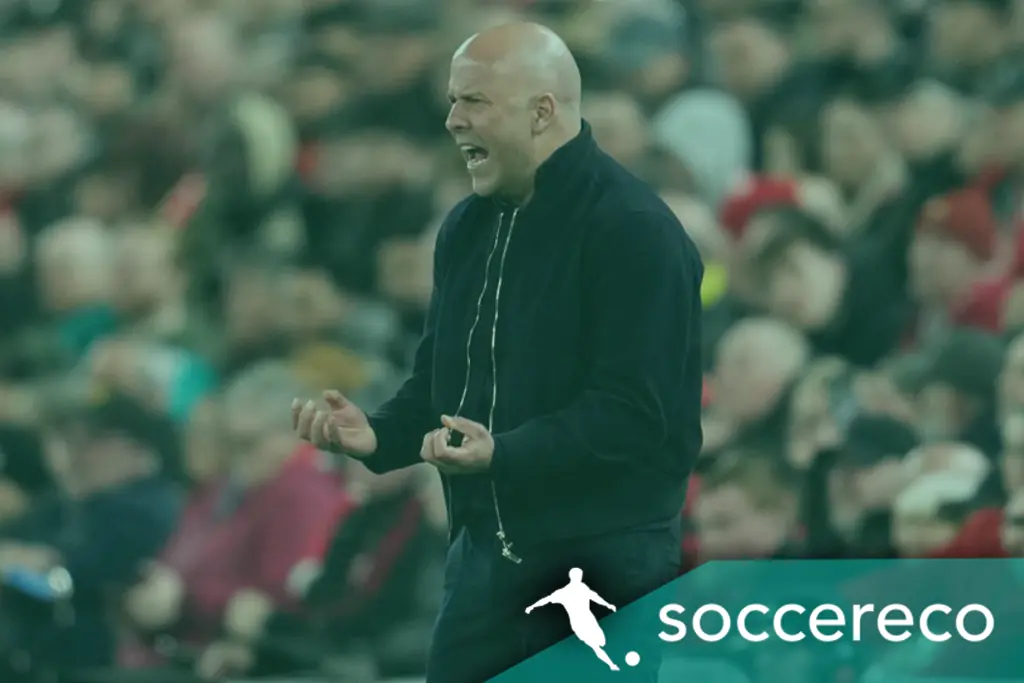
Arne Slot knows he must cherish the time he has with Virgil van Dijk, because he still has a year and a half left on his contract at Liverpool. In the meantime, the club already seems to be preparing for the future with the arrival of top talent Jérémy Jacquet, much to Slot’s delight.
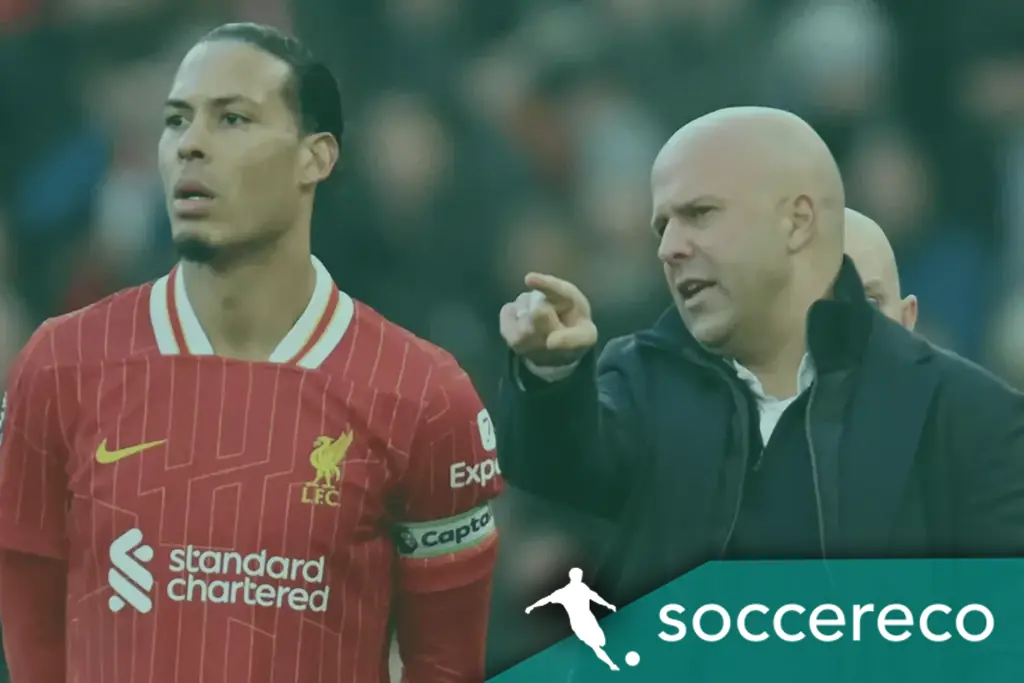
Virgil van Dijk has been the fixed point in the heart of Liverpool defence for eight seasons, and his importance is still visible every time the team takes the field.
In a campaign where rotation, injuries, and fixture congestion have forced almost every club to improvise, Van Dijk has been the rare constant. Across 34 matches in all competitions, he has played every single minute, a workload that underlines not only his fitness but also the level of trust placed in him by Arne Slot. The only moments of respite came in the League Cup ties against Southampton and Crystal Palace, where Liverpool could afford to manage his minutes without compromising the bigger priorities.
At 34, Van Dijk remains one of the first names on the team sheet because his influence goes far beyond defending a box. He sets the line, dictates spacing, and constantly manages the risk of transitions with his positioning. Even when Liverpool press high and leave space behind, his reading of the game helps the entire structure breathe. He is also the calm reference point for partners around him, whether that means a full back stepping into midfield, a midfielder dropping into the first line, or a younger defender needing direction when the tempo spikes. That leadership has been central to Liverpool staying stable through matches that can quickly become chaotic in the modern Premier League.
The contract situation adds another layer to the conversation. Van Dijk is under contract until the summer of 2027, but Slot has spoken openly about the reality that no player lasts forever at a club, even one as iconic as Van Dijk has been at Anfield. Slot made it clear that he wants to cherish the time he has with his captain, not as an emotional statement, but as a practical acknowledgement that planning must start before the decline arrives. Van Dijk has not publicly clarified his long term intentions, and that uncertainty naturally fuels speculation. But within elite clubs, succession planning is rarely a reaction. It is a process that runs in parallel with winning now.
That is why Slot framed the discussion around continuity rather than replacement drama. He explained that there will be life after Van Dijk in the coming years, but also stressed that this is true for every position. The message is simple: Liverpool cannot build its future around a single pillar, even if that pillar has carried the weight of a title winning era. The best teams plan for the long term without sacrificing the short term, and that means recruitment, development, and tactical flexibility all have to align.
The timing of these comments is not accidental. Liverpool are approaching a major test, a headline match against Manchester City on 08-02-2026 at 17:30. Games like this magnify every detail: defensive spacing, build up under pressure, and the ability to defend one on one situations when the press is bypassed. Against City, Van Dijk role becomes even more critical because the opposition can punish a single lapse with ruthless efficiency. He is the defender who can manage wide isolations, step out to intercept without losing control of the line, and organise the rest defence when Liverpool commit numbers forward.
Slot also used the moment to point toward the club strategic work in the market, especially the signing of highly rated French defender Jeremy Jacquet, who will arrive in the summer for a reported 60 million euros from Stade Rennais. The fact that Jacquet has already been labelled as a potential new Van Dijk says more about the expectations placed on young centre backs than it does about any realistic comparison. Van Dijk is not just a profile, he is a unique blend of physical dominance, anticipation, composure in distribution, and leadership. Those attributes take time to develop, and even elite talents need an environment that protects them while they learn.
Still, the logic behind the signing is clear. Liverpool want a defender with the athleticism to defend large spaces, the technical quality to play out under pressure, and the ceiling to grow into a leading role. Slot described Jacquet as a huge talent and highlighted that Liverpool were not alone in wanting him. That detail matters because it suggests Liverpool are competing successfully for top targets in a market where elite young defenders are in demand. Slot also thanked those involved in making the deal happen, adding that it shows the club model works. In other words, Liverpool are trying to build an ecosystem where scouting, recruitment, coaching, and pathway planning connect into a coherent strategy rather than isolated decisions.
For Liverpool, the most important point is that Jacquet arrival does not need to mean immediate handover. A well managed transition can be gradual: learning alongside Van Dijk, taking minutes in selected fixtures, and absorbing the standards required at the top of the Premier League. If Van Dijk continues to perform at his current level, Liverpool can be patient. If the schedule forces rotation, they can be prepared. Either way, the ideal scenario is that Liverpool keep winning now while building a defensive core that can sustain the next cycle.
All of this frames Van Dijk current season in an even brighter light. Playing every minute across 34 matches is not only a statistic, it is evidence that he remains essential in the present, even as Liverpool plan for the future. The City match will be another stage for that reality. Liverpool may be preparing for the next chapter, but for now, the story still runs through their captain at the back.
Updated: 12:02, 5 Feb 2026