Danny Makkelie refereed the first leg between Atlético Madrid and Arsenal in the Champions League semi-finals on Wednesday evening, but had an unfortunate night, to say the least. The Dutch referee took centre stage by pointing to the spot three times, although one of those decisions was overturned. Arsenal manager Mikel Arteta had little praise for Makkelie afterwards. I am very upset.
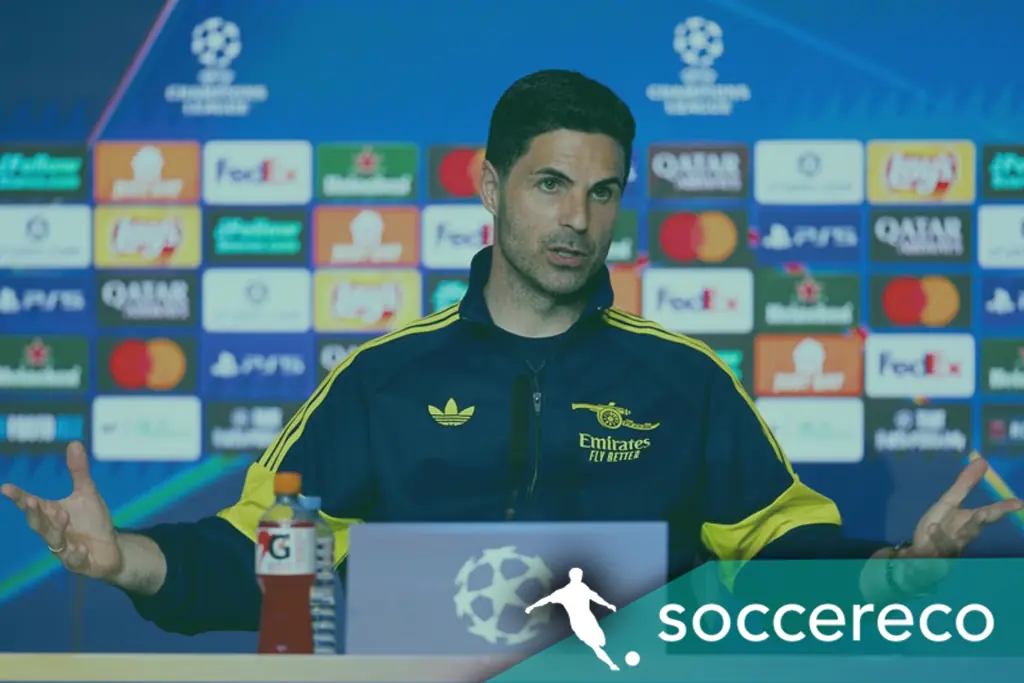
Arteta furious as Arsenal feel robbed by late VAR intervention in Madrid
Arsenal left Madrid with a 1-1 draw against Atlético Madrid, but the result was almost pushed into the background by the controversy that surrounded Danny Makkelie and the late penalty decision that was eventually overturned after a VAR review. For Mikel Arteta, the frustration was obvious. The Arsenal manager did not try to hide his anger after the match and made it clear that he believed his team had been denied a major opportunity to take control of the Champions League semi-final tie.
The match had already been tense, physical and emotionally charged, exactly as many expected from a European knockout night involving Atlético Madrid. Diego Simeone’s side are rarely easy opponents in this type of fixture, especially in their own stadium, and Arsenal knew before kick-off that they would have to deal with pressure, aggression, tactical interruptions and a hostile atmosphere. Even so, Arteta clearly felt that the biggest talking point after the final whistle should not have been Atlético’s defensive resistance or Arsenal’s missed chances, but the decision-making of the officiating team.
A late penalty call that changed the mood of the night
The key incident arrived in the closing stages, when substitute Eberechi Eze went down inside the penalty area after contact from David Hancko. Makkelie initially had no hesitation. The Dutch referee pointed to the spot, giving Arsenal what looked like a golden chance to score a potentially decisive second goal in the tie. In real time, the decision appeared to be supported by visible contact, and the reaction of the Atlético Madrid players was relatively muted, something that later became an important part of the debate.
For Arsenal, the moment seemed clear. Hancko had caught Eze, the forward had been impeded inside the box and the referee had made his decision on the pitch. In Arteta’s view, that should have been the end of the matter. However, VAR official Dennis Higler advised Makkelie to review the incident on the pitchside monitor. After watching the footage repeatedly, Makkelie reversed his original decision, leaving Arsenal players, staff and supporters stunned.
That reversal was the moment that completely altered the tone of the post-match discussion. Instead of focusing only on Arsenal’s performance, the resilience shown by Atlético or the balance of the tie heading into the second leg, the spotlight fell on the officials. Arteta’s anger was not just about the decision itself, but about the process that led to it. He appeared particularly frustrated by the idea that a call made on the field could be overturned despite clear contact between defender and attacker.
Arteta makes his anger clear after the final whistle
When Arteta appeared in front of the TNT Sports cameras after the match, he was visibly irritated. The Arsenal manager is usually careful with his words when speaking about referees, especially in major European fixtures, but this time he allowed his frustration to show. He said he had spoken to his players in the dressing room and had tried to understand the logic behind the decision, but could not accept it.
Arteta insisted that the incident involved clear contact and argued that the referee had no reason to change his decision after seeing the footage so many times. From his perspective, the review did not reveal a clear and obvious mistake. Instead, it only confirmed that Hancko had made contact with Eze. That, for the Arsenal manager, made the reversal impossible to justify.
The Spaniard described himself as very upset and called the situation unacceptable at this level. Those words reflected not only the emotion of the moment, but also the importance of the occasion. In a Champions League semi-final, fine margins can define an entire season. A penalty in the final minutes could have given Arsenal a 2-1 away win and a powerful advantage heading into the second leg. Instead, they were forced to settle for a draw and a lingering sense of injustice.
Why Arsenal felt the decision should have stood
Arsenal’s frustration came from a simple argument: if there is contact inside the area and the referee has already awarded the penalty, VAR should only intervene if the original decision is clearly wrong. Arteta and his players did not believe that threshold had been met. Hancko’s movement was awkward, Eze’s foot was caught and the attacker lost balance inside the box. That, in their view, was enough to support the original penalty call.
The situation also raised a broader question about the use of VAR in elite football. Supporters, managers and former players often complain that the system is no longer being used only to correct obvious errors. Instead, some believe it has encouraged officials to re-referee incidents frame by frame, slowing the game down and creating confusion over what is actually considered a clear mistake.
In this case, the fact that Makkelie reportedly watched the incident several times only added to Arsenal’s frustration. If a referee needs repeated views to decide whether his original call was wrong, many would argue that the evidence is not clear enough to overturn it. That was the essence of Arteta’s complaint. He did not simply disagree with the final decision. He questioned whether VAR should have become involved at all.
Atlético reaction added fuel to the debate
One of the details highlighted after the match was the reaction of the Atlético Madrid players. According to BBC analyst Chris Sutton, their lack of major protest after the initial penalty decision was telling. In football, players often react instantly when they feel a decision is unfair, especially in a match of this magnitude. The fact that Atlético did not surround the referee or strongly dispute the call suggested, in Sutton’s view, that even they knew the contact was significant.
Sutton argued that player reaction can sometimes reveal a lot about an incident. While it should never be the main basis for a decision, the immediate body language of defenders and attackers often tells a story. In this case, the lack of outrage from Atlético was seen by some as an indication that the penalty was not a shocking decision at all.
The moment Makkelie walked towards the VAR monitor, however, the mood changed. In modern football, when a referee is sent to the screen, many already expect the original decision to be overturned. Sutton said he would have liked to see Makkelie stand by his call with more authority, especially because he had been well positioned and had made the decision in real time.
Gerrard and Keown question the pressure on Makkelie
Steven Gerrard, working as an analyst for TNT Sports, also focused on the pressure surrounding the referee. He suggested that Diego Simeone’s presence and influence may have played a role in the atmosphere around the decision. Simeone is one of the most intense managers in European football, known for his animated touchline behaviour and ability to energise both his players and the crowd.
Gerrard’s point was not that Simeone did anything unusual for a manager in such a high-stakes game, but rather that referees must have the strength to separate emotion from decision-making. In his view, once a referee makes a call and the evidence does not clearly prove him wrong, he must have the courage to stay with his original decision.
Former Arsenal defender Martin Keown agreed with that assessment. Speaking on the BBC, Keown said he believed Makkelie had given in to pressure. He argued that the referee did not even need to go to the screen because the contact was obvious and Hancko’s challenge was clumsy. For Keown, the incident was not complicated enough to require a lengthy review.
A frustrating night for Arsenal despite a solid result
In purely sporting terms, a 1-1 draw away to Atlético Madrid in the first leg of a Champions League semi-final is not a disastrous result. Arsenal remain very much alive in the tie and will feel confident about their chances at home. However, the emotional impact of the late penalty reversal made the draw feel like a missed opportunity rather than a positive away result.
Arteta’s side had shown maturity for long periods. They dealt with Atlético’s physical approach, competed well in midfield and created moments of danger against a team that is famously difficult to break down. The penalty awarded just before half-time had already given Arsenal a foothold in the contest, and the late decision could have allowed them to leave Spain with a significant advantage.
Instead, Arsenal must now prepare for the return leg with the feeling that they should have had more. That can work in 2 ways. It may fuel the players and create an even stronger atmosphere in the second leg, or it may become a source of frustration if the team allows the controversy to dominate the build-up. Arteta will know that his players must use the anger positively rather than carry it as a distraction.
Makkelie under scrutiny after a difficult European night
For Danny Makkelie, the match will likely be remembered as a difficult evening. The Dutch referee was at the centre of several major decisions, including multiple penalty calls, and the late reversal ensured that his performance would be heavily analysed. Referees in Champions League semi-finals are always under intense pressure, but this was exactly the type of incident that brings VAR and officiating standards back into the spotlight.
The main criticism was not simply that Makkelie changed his mind. Referees are allowed to correct decisions when clear evidence proves they have made an error. The problem, according to Arsenal and several pundits, was that the footage did not appear to show a clear mistake. Instead, it showed an incident that could reasonably be interpreted as a foul. In that situation, many felt the original decision should have carried more weight.
The controversy also reflects a wider issue in European football. VAR was introduced to reduce major errors, but debates like this show that the system still depends heavily on interpretation. Slow-motion replays can make contact look softer or more exaggerated, depending on the angle. Referees must then decide whether the contact is enough for a foul, whether the attacker has gone down naturally and whether the original decision was clearly wrong. None of that is as simple as the technology was once expected to make it.
The tie remains open, but the tension has increased
With the score level at 1-1, everything remains open ahead of the second leg. Arsenal will believe they have enough quality to finish the job, especially in front of their own supporters. Atlético, meanwhile, will travel with the confidence that they survived a difficult night and avoided defeat despite being placed under pressure at key moments.
However, the controversy has added an extra layer of tension to the tie. Arsenal will feel wronged, Arteta will use that frustration to motivate his squad and Atlético will likely embrace the siege mentality that Simeone has built so often in European competition. The second leg now promises to be even more intense, not only because of the scoreline, but because of the emotion created by the events in Madrid.
For Arteta, the message was clear. He believed Arsenal were denied a clear penalty, he believed the referee went against the correct use of VAR and he believed the decision was unacceptable for a match of this importance. Whether UEFA and neutral observers agree or not, the incident has already become one of the defining talking points of the semi-final.
Arsenal still have the chance to settle the matter on the pitch. But after a night in which the referee, VAR and a late overturned penalty dominated the headlines, the return leg will now carry even more pressure, more emotion and a stronger sense that this tie is far from finished.