Esteban Andrada receives a 13-match ban after punching Huesca captain Jorge Pulido during Zaragoza derby clash, with further suspensions also issued.
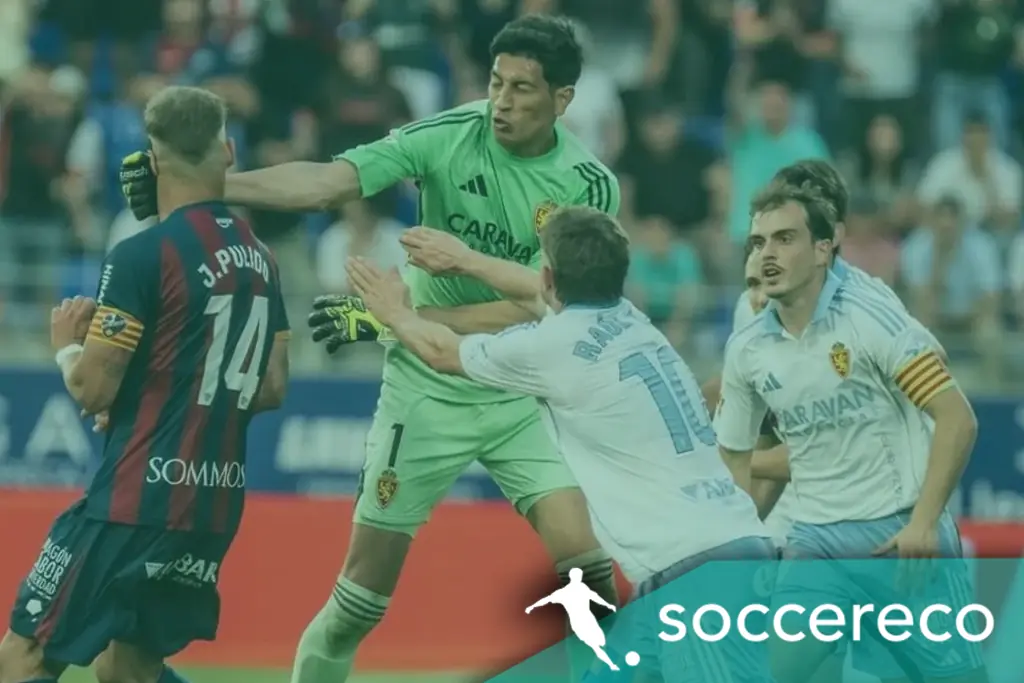
Esteban Andrada has received one of the strongest disciplinary punishments of the Spanish football season after being handed a 13-match suspension for his actions during the Segunda División clash between Huesca and Zaragoza.
The Argentine goalkeeper was sanctioned following a violent incident in the final moments of the Aragonese derby, a match that had already been tense on the pitch before ending with scenes that quickly overshadowed the football itself.
The punishment imposed on Andrada is made up of 12 matches for the aggression against an opponent and 1 additional match linked to his sending-off for two yellow cards. As a result, the goalkeeper will not play again this season and will also miss the opening 8 matches of the 2026/27 campaign. For Zaragoza, it is a major sporting blow, especially given the importance of having an experienced goalkeeper available during decisive moments of the season and at the beginning of the next one.
The disciplinary case centred on the incident involving Jorge Pulido, the Huesca captain, who was struck in the face by Andrada after the goalkeeper had already been dismissed. According to the disciplinary assessment, Andrada did not simply react in the middle of a normal football action. The report described a deliberate movement towards the opposing player, followed by a jump and a punch, which led the committee to consider the aggression as especially serious.
The official version of events placed particular emphasis on the attitude shown by the Zaragoza goalkeeper. The committee considered that Andrada adopted an aggressive posture and acted with intention, rather than being involved in a confused or accidental collision. That distinction was decisive in the severity of the punishment, because the regulations treat premeditated aggression far more seriously than spontaneous pushing, protesting or isolated unsporting conduct.
The incident took place in the closing stages of a derby that was already charged with emotion. Matches between Huesca and Zaragoza naturally carry a high competitive temperature, and this one was no exception. The rivalry, the pressure of the league table and the frustration created by events on the pitch all contributed to a tense atmosphere. However, the disciplinary body made it clear that none of those factors could justify the escalation that occurred after the red card.
After being sent off for a second yellow card, Andrada moved towards Pulido and struck him in the face. The blow caused a bruise on the left cheekbone of the Huesca defender, adding a physical consequence to an already serious disciplinary matter. The images of the incident spread quickly beyond Spain, turning a Spain Segunda División derby into an international talking point and placing Andrada at the centre of a storm of criticism.
For the disciplinary committee, the key element was not only the punch itself, but the sequence that preceded it. The report judged that Andrada had enough time and distance to avoid the confrontation. Instead, he ran towards the opposing captain and delivered the blow. That was interpreted as evidence of premeditation, which explains why the punishment went far beyond a normal red card suspension.
The decision also sends a clear message about the standards expected in Spanish football. While tension, protests and confrontations are common in matches of high importance, physical aggression of this nature is treated as a line that cannot be crossed. The committee classified the case among the most serious forms of assault covered by the disciplinary regulations, making the 12-match ban for the punch the central part of the sanction.
Andrada will now face a long period away from competition. Missing the rest of the current season is already damaging, but the suspension extending into the first 8 games of the following campaign increases the impact considerably. It affects not only the player, but also the planning of Zaragoza, who must now prepare for a significant spell without one of their senior figures.
From a sporting perspective, the timing could hardly be worse. Goalkeepers are often central to defensive stability, and losing an experienced option for so many matches forces the coaching staff to rethink their plans. Zaragoza will need to rely on other alternatives in goal, while also dealing with the reputational consequences of an incident that has attracted attention for all the wrong reasons.
The punishment also places Andrada in a difficult personal position. Beyond the suspension, he will have to rebuild his image after an episode that will inevitably be associated with his name for some time. Players are often judged not only by their performances, but also by how they behave in moments of pressure. In this case, the disciplinary ruling leaves little room for doubt about how seriously the authorities viewed his conduct.
Huesca were also affected by the fallout from the derby. Goalkeeper Dani Jiménez received a 4-match suspension for his involvement in the confusion that followed the incident. Although his sanction was far lighter than that of Andrada, it still underlines how quickly the final minutes of the match moved from sporting tension into a broader disciplinary problem.
Zaragoza player Tasende was also punished, receiving a 2-match ban. His sanction was another consequence of the confrontations that broke out after the original incident. The disciplinary decisions show that the committee did not view the scenes as the responsibility of only 1 player, even though Andrada clearly received the heaviest punishment because of the nature of his action.
The case has also reopened the debate about player discipline in emotionally charged matches. Derbies often create a different atmosphere from regular league games, with more pressure from supporters, more provocation on the pitch and a greater sense of local pride at stake. Even so, professional players are expected to maintain control, especially once the ball is no longer in play and after a sending-off has already been shown.
For many observers, the most damaging aspect of the episode was the fact that it happened after Andrada had already been expelled. At that point, the goalkeeper was no longer part of the match in sporting terms and should have been leaving the pitch. Instead, the situation escalated further, turning a dismissal into a much more serious disciplinary case.
The severity of the ban reflects the importance of protecting players from violent conduct. Football authorities have increasingly tried to make clear that aggression away from the normal flow of play will be punished strongly, particularly when there is visible intent and a physical impact on the opponent. In this case, the injury to Pulido, even if not described as severe, reinforced the seriousness of the action.
The incident also created an unwanted distraction for both clubs. Instead of the post-match discussion focusing on tactics, performance or the result, attention shifted almost entirely to the punch, the confrontation and the possible consequences. That kind of controversy can linger inside a dressing room, especially when suspensions affect future matches and force changes to the team structure.
For Zaragoza, the priority will now be to move forward without allowing the situation to define the remainder of the season. The club must deal with the absence of Andrada and ensure that the squad remains focused on the competitive objectives still in front of them. At the same time, there will likely be internal reflection on how such a situation developed and how similar episodes can be avoided in the future.
For Huesca, the incident also leaves consequences, particularly with Dani Jiménez unavailable for 4 matches. Even though Pulido was the player struck, the broader confrontation meant that Huesca did not escape disciplinary punishment. That will be frustrating for the club, which will feel affected both by the aggression suffered by its captain and by the sanctions that followed the collective confusion.
Andrada, meanwhile, faces a long wait before returning to the pitch. A 13-match suspension is not just a short disciplinary interruption. It is a major break in rhythm, confidence and competitive continuity. When he does return, he will do so under scrutiny, with many remembering the incident more quickly than his saves or performances.
The Aragonese derby will therefore be remembered less for the football played and more for the final moments that spiralled out of control. What should have been a hard-fought Segunda División match between two regional rivals became a disciplinary case with national and international attention. The image of Andrada striking Pulido has become the defining moment of the match.
The ruling from the Spanish disciplinary committee is clear in its message: aggression of this type carries serious consequences. Andrada will pay a heavy price, Zaragoza will have to adapt without him, and the incident will remain a reminder of how quickly emotion can damage a player, a team and the reputation of a match.