A draw against Algeria was enough for Austria to progress at the World Cup, and a draw against Algeria is exactly what they got. But few people saw the manner of it coming. There is plenty of disbelief in the Austrian media, although there was hardly any talk of a comfortable mutually beneficial draw.
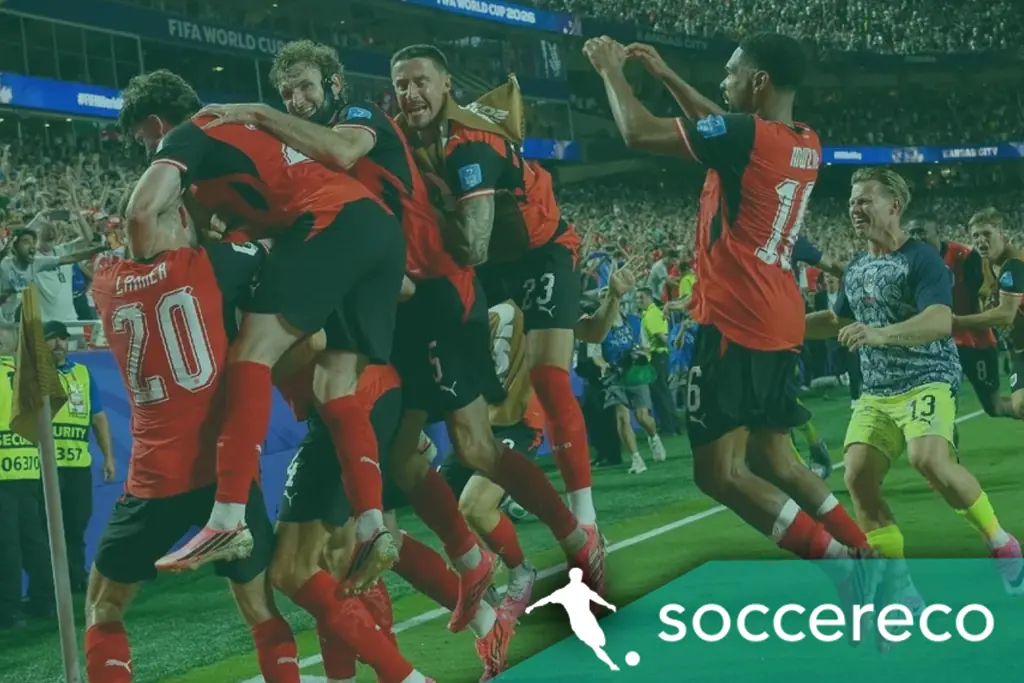
Austria in ecstasy after chaotic 3-3 World Cup finale against Algeria
Austria reached the knockout stage of the World Cup after one of the most dramatic finishes of the tournament, drawing 3-3 with Algeria in a match that had tension, confusion, celebration and suspicion all packed into one unforgettable night.
A draw was enough for Austria to go through, and a draw was exactly what Ralf Rangnick team eventually secured. But this was nothing like the calm, controlled, mutually beneficial result that some had imagined before kick-off. Instead of a quiet 0-0, Algeria and Austria produced a wild 3-3 draw that left players exhausted, supporters stunned and the Austrian media trying to make sense of what had just happened.
The Austrian newspaper Krone described the evening as "a trip to hell and back", a phrase that captured the emotional violence of the final minutes. Austria were heading for defeat late in the game, with Algeria leading 3-2 in stoppage time. At that point, the World Cup dream looked close to slipping away. Then Sasa Kalajdzic appeared with the late goal that changed everything.
That goal did more than rescue Austria. It sent the national team into the next round, transformed the mood of an entire country and caused heartbreak elsewhere. Iran were eliminated because of the result, and in Austrian reports that painful exit was also highlighted. After a tournament already filled with difficult circumstances and obstacles for Iran, the late Austrian equaliser became the final blow.
For Iran, Austria became the biggest nightmare of the group. They had already lived through a complicated World Cup, but nothing hurt more than seeing Austria score so late and take the result that pushed them out. Football can be brutal in that way. One goal in another match, scored in the final moments, can decide the fate of a country watching from elsewhere.
For Austria, however, it was pure release. The players celebrated as if they had won far more than a draw. In practical terms, they had. This was not just one point. This was survival. This was qualification. This was the difference between a painful early exit and another World Cup night to prepare for.
Kalajdzic, the man who scored the decisive late goal, was still trying to process everything when he appeared in front of the Österreichischer Rundfunk camera after the match. His words sounded like those of a player still caught between shock and joy.
"You only need one moment, and that came...", Kalajdzic said, visibly still affected by the celebrations around him.
The matchwinner also joked about the physical cost of being the hero. His teammates had surrounded him after the equaliser and again after the final whistle, hitting him on the head in celebration as they thanked him for saving the campaign.
"I think I got about 500 hits on the head as a thank you. I should probably speak to the doctor and ask whether I need to go to hospital, maybe I have a concussion", Kalajdzic said with a laugh.
It was a humorous moment after a night filled with nerves. The striker had delivered exactly when Austria needed him most. In tournament football, those moments define careers. A player can be quiet for long stretches, but if he appears at the right time and puts the ball in the net, the story changes forever.
The final scoreline also made the pre-match rumours look strange. Before the game, there had been talk that Algeria and Austria could settle for a draw because both teams had something to gain from that result. Once the match finished 3-3, those rumours naturally returned. But anyone who watched the chaos of the game saw a very different picture from a calm agreement between two sides.
This was not a slow, lifeless match where both teams passed the ball sideways for 90 minutes and accepted the outcome. It was a nervous, open and dramatic game that could have gone in several directions. There were goals, late drama and moments when both sides looked exposed. It did not feel like a planned result. It felt like a World Cup match losing control of itself.
Ralf Rangnick made that clear after the match. The Austria coach rejected any suggestion of a mutually beneficial draw and insisted his team had gone fully for the result. He also noted that people had expected a 0-0, while the reality was the complete opposite.
"Everyone expected a 0-0, but this was the opposite of a goalless draw. We went for it completely", Rangnick said.
That statement was important for Austria. The final result may have suited both teams in different ways, but the match itself did not follow the pattern of a comfortable arrangement. Austria were in danger. Algeria were ahead. The game opened up. The final minutes were emotional and unpredictable. A 3-3 draw with a late equaliser is not the kind of result that looks controlled from the inside.
Rangnick himself could barely believe what he had witnessed. Speaking on national television, he admitted that at 2-3 in stoppage time, he thought the situation was almost over. Austria were running out of time, and at that point the margin between qualification and elimination was brutally thin.
"At 2-3 in stoppage time, it is normally over", Rangnick said. "This is unbelievable, I have never experienced anything like it. Please do not ask me how I experienced the final phase. This match could also have ended 6-6. We will analyse it later, now it is time to celebrate."
That was the mood in the Austria camp. Analysis could wait. Tactical details could wait. Mistakes, defensive gaps and strange phases of possession could be discussed later. In the immediate aftermath, the only thing that mattered was that Austria were still alive at the World Cup.
Even former Austria international Andreas Herzog, who won 103 caps for his country, was pulled into the madness. Working as an analyst, Herzog became part of the celebrations with the current squad, but he did not escape without damage. The players embraced him, jumped around him and dragged him into the emotional chaos of the moment.
"I think I have to sue a few players, there are tears in my suit", Herzog joked on national television.
Herzog did not want to spend too long discussing the unusual nature of the match, but he did admit that it had been a "strange game". His explanation was simple: there had been so much "constant passing of the ball around" that the rhythm became difficult to read.
That description fits the tension of the occasion. Both teams knew the draw could matter. Both teams also knew that one mistake could destroy everything. At times, the ball moved around without much urgency. At other times, the match suddenly exploded into danger. It was not a normal World Cup game. It was shaped by the table, by fear, by calculation and finally by complete emotional release.
For Algeria, the late Austrian goal was not entirely unfavourable. By conceding it, Algeria finished third in Group J and avoided Spain in the round of 32. That difficult assignment now belongs to Austria. Algeria, instead, will face Switzerland in the first knockout round.
That detail added another layer to the story. Austria celebrated because the goal kept them alive. Algeria accepted a final position that gave them a different path. Iran were eliminated by the same moment. One goal created three different emotional realities: joy for Austria, a manageable route for Algeria and despair for Iran.
Austria now move on to face Spain, one of the most demanding opponents in the tournament. It is a brutal reward for survival. After the ecstasy of the late equaliser, Rangnick and his players will quickly have to return to work. Spain will not offer the same kind of chaotic game. Austria will need discipline, energy and a much cleaner defensive performance.
Still, that problem belongs to another day. The immediate feeling in Austria is one of disbelief and joy. The team were seconds away from a very different story. Instead, Kalajdzic found the moment, the ball hit the net and the entire mood changed.
The 3-3 draw will be remembered not as a simple qualification result, but as a night when Austria lived through almost every emotion possible. They were in danger, they were saved, they were questioned and then they celebrated. Rangnick could not fully explain it. Kalajdzic joked about needing medical attention. Herzog joked about damaged clothing. The media called it a trip to hell and back.
That is why this match will stay in the memory. It had the strange rhythm of a game influenced by the group table, but also the madness of a knockout match. It had suspicion before kick-off, drama during stoppage time and huge consequences after the final whistle.
Austria did not qualify quietly. They did not walk calmly into the next round. They stumbled, suffered, fought and then found one final moment. In World Cup football, that is often enough. One moment can save a team, eliminate another and rewrite the entire story of a group.
For Rangnick, the detailed analysis can come later. For now, Austria have earned the right to celebrate. They survived the chaos, reached the knockout stage and gave their supporters a night of football that was anything but ordinary.