Manchester United face mounting pressure after a 4-1 defeat to Como, with Michael Carrick under scrutiny as Nagelsmann and Hurzeler emerge as possible replacements.
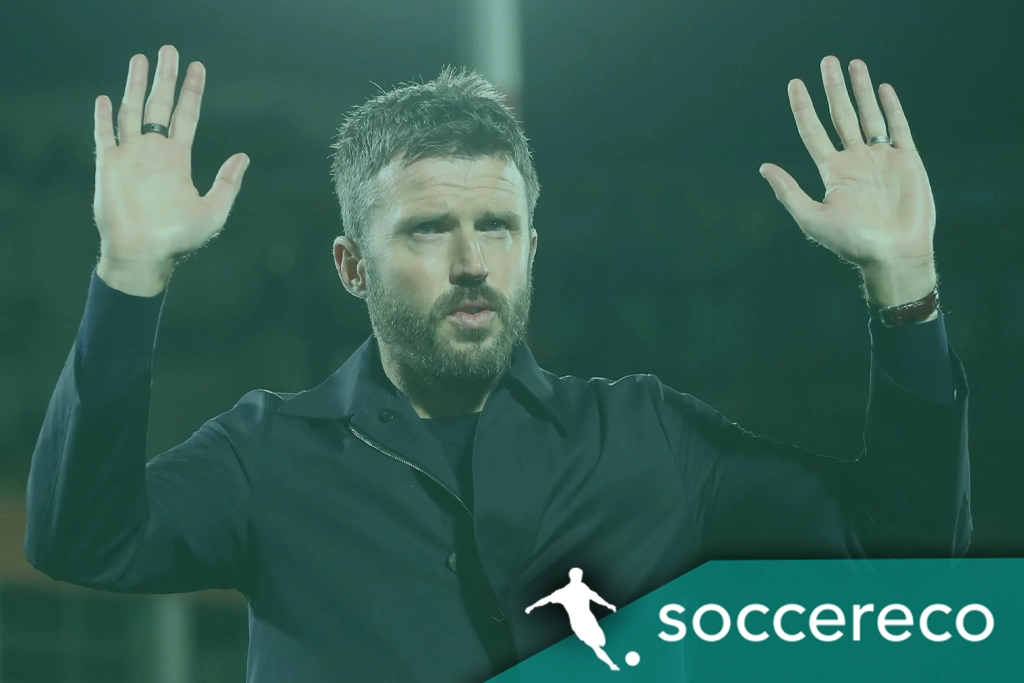
Michael Carrick under mounting pressure at Manchester United as Nagelsmann emerges after humiliating Como defeat
Michael Carrick is facing growing uncertainty over his future as Manchester United manager following a humiliating 4-1 defeat away to Como in the Champions League, a result that extended the club's winless run to 7 matches and intensified concerns about the direction of the team. With United struggling in both domestic and European competition, speculation surrounding a possible managerial change has increased, while captain Bruno Fernandes has publicly questioned aspects of the team's tactical approach.
The defeat in Italy represented another damaging moment in an increasingly difficult start to the season for the Red Devils. Having won only 1 of their opening 7 Premier League matches, Manchester United occupy 13th place with just 7 points, a position far below the expectations traditionally associated with one of England's biggest clubs. Their European campaign has offered little encouragement, with 1 victory and 2 defeats leaving Carrick's side 21st in the Champions League league-phase standings.
According to speculation in the English media, former Germany national team manager Julian Nagelsmann is among the candidates being considered as a potential replacement should United decide to make a change. The German coach has reportedly attracted interest from Old Trafford in the past, and his current availability following his departure from the national team could make him an appealing option. Brighton manager Fabian Hürzeler has also been mentioned, with his side currently occupying third place in the Premier League.
However, the most immediate concern for Manchester United is not the identity of a possible successor but the significant deterioration in performances under Carrick. The manager was visibly frustrated after the defeat against Como, insisting that tactical systems are ineffective when players fail to demonstrate the physical commitment required to recover possession and defend as a collective unit. His comments followed a critical assessment from Bruno Fernandes, who suggested that United had allowed their opponents too much freedom and lacked the courage and intensity necessary to respond after conceding an early goal.
Manchester United crisis deepens after 4-1 Champions League defeat to Como
Manchester United travelled to Italy hoping to improve their position in the Champions League and bring an end to a sequence of disappointing results. Instead, the encounter with Como exposed further weaknesses and raised new questions about the team's tactical organisation, defensive intensity and ability to react when matches begin badly.
The 4-1 defeat was particularly damaging because of the margin of the result and the circumstances surrounding the performance. United once again found themselves struggling after conceding early, a problem that Bruno Fernandes subsequently identified as a recurring feature of the team's recent displays.
For a club attempting to restore confidence after a difficult opening to the campaign, another heavy defeat provides more than a temporary setback. It creates additional scrutiny around the coaching staff, increases pressure on individual players and makes the next fixture even more important.
United have now gone 7 matches without victory, a run that illustrates the scale of the difficulties currently facing Carrick. The team have struggled to establish consistency, while their defensive performances have become a particular source of concern.
Conceding 4 goals in an important European encounter inevitably raises questions about how effectively the team are organised without possession. However, the comments from Fernandes and Carrick suggest that the problems extend beyond individual defensive errors.
Both men identified shortcomings in the way United applied pressure and responded to opposition attacks, although they placed different emphasis on the reasons behind those weaknesses.
The defeat has also increased the urgency surrounding the club's next decisions. Manchester United cannot afford to allow their disappointing results to become an accepted pattern, especially when their domestic position is already creating concern and their European campaign remains uncertain.
Michael Carrick faces growing questions about his future at Old Trafford
For Michael Carrick, the defeat against Como has intensified what is becoming an increasingly difficult period in charge of Manchester United. The former midfielder faces the challenge of reversing poor results while also convincing the club's hierarchy that he remains capable of addressing the problems affecting the squad.
The situation is particularly demanding because the expectations at Old Trafford are considerably greater than simply avoiding another disappointing performance. Manchester United are expected to compete near the top of the Premier League and remain competitive against Europe's strongest clubs.
Instead, their opening results have left them in the lower half of the domestic standings and outside the leading positions in the Champions League.
After 7 Premier League matches, United have collected only 7 points from a possible 21. Their record of 1 victory underlines the difficulty they have experienced turning performances into results, while 13th place reflects a level of inconsistency that is difficult to reconcile with the club's ambitions.
In Europe, the picture is similarly uncomfortable. United have taken 3 points from their opening 3 Champions League matches, with 1 win and 2 defeats leaving them 21st in the league phase.
Although the season remains at an early stage, these figures create substantial pressure on the coaching staff. Every additional disappointing result risks making recovery more complicated, particularly as players begin to operate under increasing scrutiny.
There has been no confirmation in the information reported that Carrick has been dismissed or that Manchester United have formally appointed a successor. Nevertheless, speculation about alternative managers demonstrates how quickly confidence in a coaching project can become uncertain when results fail to meet expectations.
Carrick's immediate challenge is therefore to produce a convincing response on the pitch. Improved performances, greater defensive stability and a return to winning results would provide the strongest argument for continuing with the current approach.
Julian Nagelsmann emerges as possible Manchester United replacement
Julian Nagelsmann is among the most prominent names being discussed in connection with the Manchester United managerial position following the defeat against Como.
The German coach, who previously managed the Germany national team, is reportedly available after leaving that role. His situation could make him an attractive candidate if United's decision-makers conclude that a change of manager is necessary.
According to the reports, Nagelsmann has been approached by Manchester United in the relatively recent past, suggesting that the club has previously considered his profile. That reported interest has now returned to attention as speculation about Carrick's position increases.
Nagelsmann has established a reputation as a manager associated with detailed tactical preparation, flexible systems and demanding collective organisation. His approach places considerable emphasis on the relationships between players, the positioning of the team and the coordination required to press opponents effectively.
Those characteristics are particularly relevant to the problems United experienced against Como. Bruno Fernandes criticised the lack of pressure applied to opposition players, while Carrick acknowledged that the team had failed to execute its defensive responsibilities with sufficient intensity.
A coach with Nagelsmann's tactical profile would naturally attract attention when a team is struggling in precisely those areas.
However, appointing a new manager would not automatically resolve Manchester United's problems. Changing tactical principles requires time, and the success of any approach depends on the abilities, physical condition and commitment of the players available.
The German coach's availability may simplify one aspect of a potential appointment, but it does not establish that negotiations are taking place or that an agreement is imminent.
For now, Nagelsmann remains a reported candidate rather than a confirmed successor.
Fabian Hurzeler also linked with Manchester United job
Another name receiving attention is Fabian Hürzeler, whose work at Brighton has reportedly placed him among the candidates being discussed as a possible replacement for Carrick.
Brighton's position in the Premier League provides a striking contrast with United's current difficulties. The Seagulls occupy third place, while Manchester United sit 13th, making Hürzeler's performance an obvious subject of interest.
His inclusion in the speculation reflects the value clubs increasingly place on managers who demonstrate the ability to establish clear tactical principles and obtain consistent results within demanding competitive environments.
Brighton's progress under Hürzeler has strengthened his reputation, but moving from a club with an established working structure to Manchester United would present a different challenge.
At Old Trafford, a manager must contend with enormous public expectations, a squad containing internationally recognised players and constant scrutiny of both results and team selection.
There is also a significant distinction between considering Hürzeler as a potential candidate and actually securing his appointment. Unlike Nagelsmann, he is currently managing another Premier League club, meaning any approach would involve additional contractual and professional considerations.
No agreement or formal approach has been confirmed in the reports described, and Brighton's current position provides no reason to assume that their manager is preparing to leave.
Nevertheless, the mention of Hürzeler alongside Nagelsmann indicates that the discussion surrounding United's future has moved beyond Carrick's immediate performance and towards the different managerial profiles that might be considered if the club chooses another direction.
Bruno Fernandes delivers critical assessment of Manchester United performance
Manchester United captain Bruno Fernandes was particularly direct when analysing the defeat against Como, identifying a familiar problem that has repeatedly placed his team at a disadvantage.
Speaking to TNT Sports after the match, the Portuguese international expressed frustration with United's tendency to begin games poorly and concede before they have established any meaningful control.
"It's not the first time we've started badly and conceded a goal very early," Fernandes admitted.
His criticism did not stop with the opening stages of the match. The midfielder also questioned the team's intensity without possession and its movement when attempting to construct attacking situations.
"We didn't put enough pressure on the players with the ball, we didn't move well when we had possession, and very little went right for us," he explained.
Those comments offer an uncomfortable assessment of a performance in which United struggled with several fundamental aspects of their game.
Pressing effectively is not simply a matter of individual effort. Players must recognise when to advance towards an opponent, understand which passing options need to be closed and coordinate their movements to prevent the opposition from escaping pressure.
When that organisation fails, opponents can retain possession with greater comfort and gradually establish confidence in their ability to control the match.
Fernandes believes United allowed Como too much freedom, contributing to a situation in which the Italian side were able to play with increasing assurance.
His observations were particularly significant because they came from the club captain, a player expected to help communicate the team's standards and provide leadership during difficult periods.
Rather than attempting to minimise the defeat, Fernandes acknowledged that Manchester United had failed to perform at the required level.
Early goals continue to damage Manchester United confidence
One of Bruno Fernandes's strongest criticisms concerned the psychological consequences of conceding early in matches.
The Portuguese midfielder suggested that Manchester United have repeatedly allowed disappointing starts to influence the remainder of their performances, making it more difficult for the team to respond with composure and confidence.
"When you concede early, you start playing with a feeling that you've already lost. It's difficult to get out of that situation, to be brave, to keep possession and to make something happen," Fernandes explained.
His comments illustrate the difficult balance between tactical organisation and the confidence required to execute it effectively.
When a team concedes in the opening stages, players face an immediate challenge. They must remain disciplined enough to avoid leaving additional spaces while also demonstrating the attacking ambition required to recover the result.
That response becomes especially difficult when a side has already experienced a prolonged run without victory.
Players may become increasingly cautious, concerned that another mistake will make the situation worse. At the same time, the pressure to equalise can encourage rushed decisions and reduce the patience required to develop effective attacking moves.
Fernandes appeared to recognise that tension in his assessment.
"If we can't do those things, it becomes extremely difficult to turn things around," he warned.
The captain's argument was not simply that conceding an early goal makes winning more difficult. He was suggesting that United's reaction has become an additional problem, with the team struggling to recover its confidence and establish the rhythm necessary to challenge opponents.
For Carrick, improving that response is essential. Manchester United cannot expect to control every match from the opening whistle, and their ability to recover from difficult situations will be an important measure of whether the squad is progressing.
Bruno Fernandes questions Manchester United defensive tactics
Fernandes also addressed a more sensitive subject by discussing the defensive instructions given to the team against Como.
The Manchester United captain suggested that the coaching staff had opted against applying strict individual marking, instead allowing certain spaces to remain available while attempting to recover possession through a more patient defensive structure.
"It's a decision made by the coaching staff not to mark players individually and sometimes to leave space behind, trying to recover the ball by waiting for the opposition," Fernandes stated.
He then explained why he believed that approach had contributed to United's difficulties.
"But sometimes, when you give teams like this that much space, they grow in confidence," he added.
The comments represented an unusually detailed public assessment of a tactical decision made by the manager and his coaching staff.
Fernandes did not explicitly demand that Carrick change the system or suggest that every problem resulted from the instructions. However, he clearly questioned whether allowing Como time and space had been an effective approach.
The distinction between different defensive strategies is important. Man-to-man pressing requires players to follow or engage specific opponents, while more position-oriented systems focus on controlling areas of the pitch and limiting available passing routes.
Both approaches can be effective when executed properly. Problems arise when players fail to coordinate their movements, leave passing lanes open or respond too slowly to changes in possession.
Fernandes's analysis suggests that United were unable to prevent Como from finding comfortable routes through the pitch, allowing the home side to develop attacks with insufficient resistance.
That observation places the tactical choices of the coaching staff under scrutiny, although it does not establish that a different system would necessarily have produced a better result.
Michael Carrick responds to criticism with warning about player commitment
Michael Carrick did not attempt to disguise his frustration when responding to the defeat and the questions surrounding his team's performance.
Although Fernandes had highlighted the defensive approach, the United manager directed much of his criticism towards the intensity and commitment demonstrated by the players.
Carrick argued that the effectiveness of any tactical strategy depends on the willingness of the team to carry out its responsibilities, particularly when opponents are able to move the ball beyond the initial line of pressure.
"In the second half, we pressed man-to-man at half intensity, and we ended up conceding a goal because of it," Carrick declared.
The observation was important because it addressed the very issue raised by Fernandes. The captain had questioned the decision not to apply more individual pressure, while Carrick suggested that the team had attempted a version of that approach during the second half without demonstrating the required commitment.
In the manager's view, simply switching to a more aggressive pressing system does not solve defensive problems if players fail to perform their duties with sufficient intensity.
He reinforced the point with a direct criticism of the team's defensive work.
"Whatever tactical system you play, if you don't run back, you're not going to win," Carrick said.
The statement reflected a broader concern about the team's response after losing possession.
Recovering defensive positions is a fundamental responsibility, especially when a team commits players forward in pursuit of attacking opportunities. If midfielders and forwards fail to retreat quickly enough, defenders can become exposed against opponents attacking with numerical advantages.
Carrick's comments indicated that he considered those failures unacceptable regardless of the system being employed.
Differences between Carrick and Bruno Fernandes highlight United tactical problems
The contrasting assessments offered by Fernandes and Carrick have attracted attention because they appear to place responsibility on different aspects of Manchester United's performance.
Fernandes questioned whether the team should have adopted a more aggressive approach towards Como's players in possession. Carrick, meanwhile, argued that even when United attempted man-to-man pressure, the lack of intensity prevented it from working.
However, the comments do not necessarily demonstrate an irreparable disagreement between the captain and manager.
Both acknowledged that United's defensive performance was inadequate, and both identified insufficient pressure as a significant weakness.
The principal difference concerned why that problem occurred.
Fernandes focused on how the tactical approach allowed the opposition to build confidence. Carrick emphasised the players' failure to execute defensive responsibilities with the physical commitment required.
Those explanations can overlap. A team may begin with a strategy that does not sufficiently restrict the opposition and then compound the problem through inconsistent pressing or poor recovery runs.
For United, the more important question is whether the coaching staff and players can identify a collective solution.
Publicly discussing tactical disagreements may create additional pressure, especially when results are already disappointing. Nevertheless, the remarks also reveal the level of frustration inside a squad that understands its performances are falling short of expectations.
There is no confirmed evidence from these statements that Fernandes has lost confidence in Carrick or that a confrontation has occurred behind the scenes. The available comments show differing interpretations of the defeat rather than proof of a wider dressing-room dispute.
What is beyond doubt is that Manchester United need to improve the relationship between tactical instructions and their execution on the pitch.
Manchester United pressing problems go beyond formations
The debate surrounding United's defensive approach illustrates a broader tactical problem. Pressing is often discussed as a choice between aggressive man-to-man marking and a more conservative system, but effective defending involves several interconnected responsibilities.
Players must know when to close down an opponent, which passing routes to protect and how the team should respond when the first line of pressure is beaten.
If a single player advances without support, the opposition may exploit the space left behind. If the entire team remains too passive, opponents can progress with little resistance and establish control.
The challenge is finding the right balance between intensity and organisation.
Against Como, Fernandes believed United were not aggressive enough when confronting the ball carrier. His criticism suggested that the Italian side were able to build possession without facing the level of disruption he considered necessary.
Carrick's response indicated that the problem persisted even when the team attempted a different pressing approach.
That combination raises questions about communication and collective understanding, particularly during transitions between attacking and defensive phases.
When possession is lost, players must react immediately. Some may need to apply pressure to delay the opposition, while others retreat into positions that protect the most dangerous areas.
These movements require coordination. Individual effort is valuable, but running aggressively in the wrong direction or without adequate support can create as many problems as a lack of movement.
For Carrick, improving those details will be critical if United are to become more difficult to play against.
The coaching staff must also consider whether the demands of the tactical system are being communicated clearly and whether the available players are suited to executing those instructions consistently.
Premier League struggles increase pressure on Manchester United management
Manchester United's problems against Como cannot be viewed in isolation from their domestic campaign.
The Red Devils have won only 1 of their opening 7 Premier League matches, collecting 7 points and occupying 13th place. That record represents a disappointing start for a club expected to compete for leading positions in English football.
The issue is not simply the number of points dropped. When a team struggles to win consistently, every match becomes increasingly important, while individual errors and tactical decisions receive greater scrutiny.
A prolonged sequence of disappointing results can also affect the confidence of players, making it harder to produce the decisive moments required to change momentum.
United are now facing the challenge of rebuilding belief while competing against opponents who recognise their current vulnerability.
The Premier League is particularly unforgiving when teams lose consistency. A poor run can quickly create a substantial gap to clubs collecting points regularly, while the pressure to recover may lead to further changes in selection and tactics.
Brighton's third-place position under Hürzeler adds an interesting dimension to the speculation surrounding Carrick. The contrast highlights how significantly outcomes can differ between clubs during the opening weeks of a campaign.
However, comparing league positions alone does not establish which manager would produce better results at Old Trafford. Manchester United's problems involve a combination of squad performance, tactical execution and the demands associated with the club's environment.
Any decision about Carrick's future would therefore require an assessment of whether the present difficulties can be addressed within the current structure or whether a new approach is necessary.
Champions League qualification remains uncertain after Como humiliation
United's European position has also become a source of concern following the defeat in Italy.
With 1 victory and 2 defeats from their opening 3 Champions League matches, the Red Devils have collected only 3 points and currently occupy 21st place in the league-phase standings.
Under the competition's format, the top 8 teams qualify directly for the round of 16, while those finishing from ninth to 24th must contest knockout play-offs. Teams outside the top 24 are eliminated.
United remain within the qualifying positions for the play-offs at this stage, but their lowly standing leaves little room for complacency.
The heavy defeat against Como has also damaged their goal difference, a factor that can become important when teams finish level on points in the overall standings.
For Carrick, the immediate objective must be to restore competitiveness in the remaining European fixtures and prevent the club from becoming increasingly dependent on late results to secure progression.
However, qualification will require more than isolated moments of attacking quality. United need greater defensive organisation and the ability to control matches for sustained periods.
Fernandes's comments about the team's movement in possession are relevant in that respect. When a side cannot retain the ball effectively, it becomes more difficult to dictate the pace of a match and reduce the number of attacking opportunities available to opponents.
Similarly, defensive problems can place additional pressure on the forward line by forcing the team to chase games after conceding early.
Those weaknesses have combined to create an uncomfortable European campaign, increasing the importance of the club's next Champions League performances.
Manchester United must restore defensive organisation and intensity
The next stage of Carrick's work will require more than identifying who was responsible for the defeat against Como.
The manager must establish a defensive approach that the team can execute consistently, regardless of the opposition or circumstances during a match.
That includes improving the coordination of pressing movements, the speed of defensive recovery and the positions players occupy when the team loses possession.
United must also become more effective at responding to difficult starts. Fernandes's admission that early goals create an immediate sense of defeat is concerning because competitive teams need the resilience to recover from setbacks without abandoning their organisation.
Conceding first does not inevitably lead to defeat, but it requires a composed response and clear understanding of how to regain control.
The responsibility for producing that improvement is shared. Carrick and his coaching staff must provide instructions suited to the squad, while the players must demonstrate the commitment and concentration necessary to execute them.
That is why the discussion between Fernandes and Carrick is significant. It highlights 2 essential elements of football performance that cannot be separated completely.
Tactical organisation provides a framework, but intensity and discipline determine whether that framework functions effectively against competitive opponents.
Manchester United appear to be struggling with both.
Whether Carrick can resolve those weaknesses quickly enough may prove decisive in determining how much confidence the club's hierarchy retains in his management.
Could changing manager solve the problems at Manchester United?
The speculation surrounding Nagelsmann and Hürzeler raises a wider question about the direction Manchester United should take if their disappointing results continue.
Appointing a new manager can introduce different tactical methods, alter the atmosphere within a squad and create an opportunity to reassess established roles. It can also bring short-term uncertainty as players attempt to adapt to new instructions.
In United's situation, any successor would inherit a team struggling with defensive organisation, inconsistent possession and the psychological consequences of repeated disappointing results.
Those difficulties would not disappear simply because a different coach arrived at Old Trafford.
Nagelsmann's reputation for tactical preparation could make him an interesting candidate, particularly given the defensive coordination problems highlighted after the Como match.
Hürzeler's work at Brighton, meanwhile, offers an example of a manager producing strong domestic results through an established team structure.
However, Manchester United would still need to determine whether either profile suited their squad, expectations and longer-term sporting plans.
Replacing Carrick could represent a significant strategic decision rather than merely a response to one heavy defeat.
The club's hierarchy would also have to consider the importance of continuity, the time required for any new manager to implement changes and the practical circumstances surrounding potential appointments.
At present, the reported candidates remain subjects of media speculation. There is no confirmed appointment, and Carrick continues to face the immediate responsibility of improving Manchester United's performances.
Bruno Fernandes leadership becomes increasingly important during crisis
As Manchester United captain, Bruno Fernandes occupies a central position in the team's efforts to recover from its disappointing run.
His post-match comments demonstrated considerable frustration, but they also reflected the standards he believes the squad must meet.
Fernandes criticised United's lack of pressure, poor movement in possession and difficulty responding after conceding early. Those observations go beyond individual mistakes and describe problems affecting the team's overall performance.
The Portuguese midfielder also acknowledged how difficult it becomes for players to demonstrate confidence when the team repeatedly starts matches at a disadvantage.
His challenge as captain is to help turn that frustration into a constructive response.
Leadership in difficult periods involves more than demanding improvement publicly. Players must communicate effectively during matches, support teammates and demonstrate the concentration required to restore confidence.
Fernandes remains an influential figure within the squad, and his assessment of the Como defeat will inevitably attract attention because of his status.
However, his comments should not automatically be interpreted as an attempt to undermine Carrick.
The captain's criticism concerned the performance and tactical approach used during the match, while the manager responded by emphasising the players' responsibility to carry out defensive duties.
Both perspectives indicate that United are failing to meet the standards expected of them.
The challenge now is to establish a united response rather than allow differing public explanations to become another source of instability.
Carrick needs immediate response as scrutiny intensifies at Old Trafford
Michael Carrick's position has become increasingly vulnerable because Manchester United's disappointing results are no longer confined to a single competition.
The Red Devils are struggling in the Premier League, where they have collected just 7 points from 7 matches, and have made an unconvincing start to their Champions League campaign.
The 4-1 defeat against Como has intensified those concerns, particularly because the performance exposed weaknesses that members of the team themselves consider recurring problems.
Carrick's reaction demonstrated that he is unwilling to accept the lack of intensity displayed by his players. His insistence that no tactical system can succeed without effective defensive recovery was a direct message about the commitment required to compete at this level.
Nevertheless, the manager must also find solutions that translate into improved results.
Public criticism may communicate dissatisfaction, but Manchester United will ultimately be judged by what happens on the pitch.
A successful response would require greater organisation, improved decision-making and the ability to compete with confidence even when matches do not begin according to plan.
That task becomes more difficult when speculation about possible replacements dominates the conversation surrounding the club.
Reports linking Nagelsmann and Hürzeler with the managerial position add another layer of pressure, even though no change has been confirmed.
For Carrick, the most effective way to address that speculation is to demonstrate that the current coaching staff can reverse the team's decline.
The coming performances will therefore carry significance beyond the immediate results, offering an indication of whether United are beginning to respond to the problems exposed in Italy.
Manchester United future uncertain as Nagelsmann and Hurzeler links grow
Manchester United's disappointing start to the season has reached another critical moment following the heavy Champions League defeat against Como.
The 4-1 result extended the team's winless sequence to 7 matches and increased the pressure on Michael Carrick, whose position is now the subject of growing speculation in the English media.
Julian Nagelsmann has emerged as a reported candidate for the managerial position, with his availability following his departure from the Germany national team potentially making him an attractive option. Brighton manager Fabian Hürzeler has also been linked, supported by his team's impressive third-place position in the Premier League.
However, the discussion surrounding possible replacements should not obscure the problems Manchester United must address immediately.
The club have won only 1 of their opening 7 Premier League matches, leaving them 13th with 7 points, while their Champions League record of 1 victory and 2 defeats has placed them 21st in the league-phase standings.
Those results have been accompanied by concerning performances, particularly in defence and during the transitions between possession and non-possession.
Bruno Fernandes's criticism after the Como defeat highlighted the team's inability to apply sufficient pressure, its poor movement with the ball and the psychological difficulty created by repeatedly conceding early goals.
The captain also questioned aspects of the tactical approach, suggesting that allowing opponents too much space had contributed to their confidence.
Carrick responded by insisting that the players had failed to execute their defensive responsibilities with the necessary intensity, arguing that tactical adjustments offer little protection when a team does not recover its positions or press effectively.
The contrasting explanations demonstrate the challenges currently facing Manchester United. The coaching staff must establish a more effective collective structure, while the players must improve their concentration, communication and physical commitment.
For now, Carrick remains at the centre of the effort to reverse the team's decline, but the growing discussion surrounding Nagelsmann and Hürzeler shows how seriously the club's disappointing results are being viewed.
Whether Manchester United decide to preserve continuity or eventually pursue a different managerial direction remains uncertain. What is clear is that the current performances are falling considerably short of expectations, and the pressure will continue to increase unless the team produces a convincing improvement.
The defeat in Como was not simply another disappointing result. It exposed deeper questions about Manchester United's tactical identity, defensive organisation and ability to respond to adversity. Finding answers to those problems has become an urgent priority at Old Trafford, with Carrick's future increasingly intertwined with the team's ability to recover.