For Luis Enrique, 2025 has become a year to never forget. He turned Paris Saint-Germain into a perfect whirlwind, with winning the Champions League as the crowning highlight.
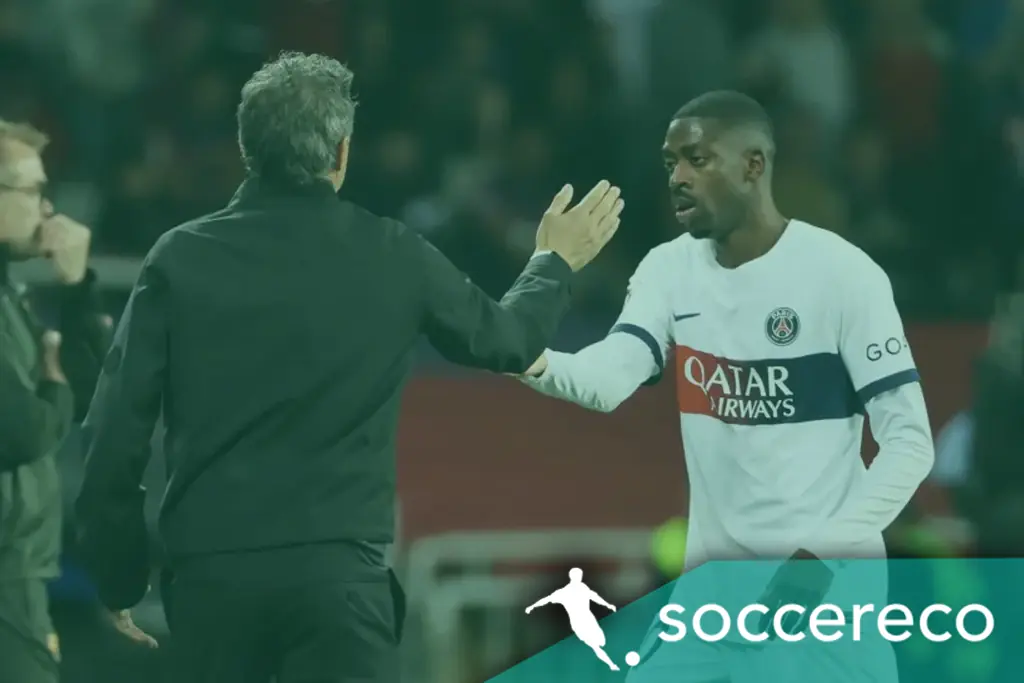
Luis Enrique joining Paris Saint-Germain in the summer when Neymar, Lionel Messi, Sergio Ramos and Marco Verratti all left was no accident.
It was a deliberate change of era, almost a controlled identity reset. PSG wanted to move away from a star-centred model and toward something built around the collective, a system, and a demanding day-to-day culture. Luis Enrique, in turn, has always been a coach who prioritises control through repeatable behaviours: coordinated pressing, short distances between lines, intensity without the ball, and the idea that the team must always matter more than the individual.
Even before he took the job, he had made his discomfort with PSG’s superstar culture clear. For him, elite football is not a marketing exercise. It is an industry of habits, discipline and competitive humility. In his view, teams that depend on celebrity status inevitably create exceptions, and exceptions are the enemy of structure. The moment a player is allowed to opt out of defensive work, the entire chain breaks: pressing triggers become inconsistent, the midfield loses its reference points, and the defensive line has to absorb transitions that should never exist in the first place. Luis Enrique arrived to remove those exceptions and rebuild the club’s competitive logic.
That is also why his relationship with Kylian Mbappé, in his first season, became such a defining subplot. Mbappé was the remaining symbol of the old PSG, the last true megastar around whom everything could still revolve. Luis Enrique saw him as almost uncoachable, not because Mbappé lacked quality, but because the environment around him made full coaching difficult. When a team is accustomed to being rescued by one player, the coach’s standards become negotiable. And Luis Enrique does not negotiate standards.
The tension became most visible in a recorded conversation where Luis Enrique delivered a blunt message about leadership. He did not ask Mbappé for more goals, more dribbles or more decisive moments. He asked for something more uncomfortable and, in his mind, more valuable: leadership in pressing and defending. The Michael Jordan reference was not about celebrity, it was about mentality. The coach’s point was simple: greatness is not only what you do when you have the ball. Greatness is what you impose on the game when you do not. Pressing is a form of dominance. Defending is a form of authority. And if the best player does it with conviction, everyone else follows.
That conversation happened in the heat of a Champions League knockout context, where small details decide everything. A quarter-final second leg is not the moment for inspirational quotes, it is the moment for total commitment. Luis Enrique wanted his striker to be the first defender. He wanted his biggest name to behave like the team’s most relentless worker. Not because it looks good, but because it builds a machine: a team that squeezes space, forces mistakes, wins the ball high, and attacks a disorganised opponent before they can reset.
But in that first season, PSG were still in transition. A culture does not disappear overnight, and habits take time to replace. The coach could demand discipline, but he also had to manage the psychological gravity that a superstar carries. That is why the phrase “insane machine” mattered: it was not a description of what PSG already were, it was a promise of what they could become if the entire group bought into a shared effort.
The season after, that promise turned into reality, and the crucial change was not just tactical. It was structural and cultural. The “machine” emerged fully when PSG no longer had to balance the needs of a superstar era with the demands of a collective era. And the face of the new PSG was not Mbappé, but Ousmane Dembélé.
Dembélé as the attacking leader tells you everything about what Luis Enrique values. He is not the archetypal “carry the club on your back” superstar. He is instead the type of forward who can be turned into a system weapon: pace, chaos, directness, but also willingness to run, chase, close angles and start the defensive action. In Luis Enrique’s PSG, the front line does not simply wait for service. It hunts. It forces defenders into rushed decisions. It sets the rhythm. It decides whether the opponent can breathe.
And that is exactly what the Champions League final against Inter showed in the most brutal way possible. A 5–0 final is not just a victory; it is a statement that one team controlled every layer of the match. PSG did not win because Inter made one mistake. They won because Inter were never allowed to settle into their patterns. Their defenders did not have clean passing lanes. Their midfield did not have time to turn. Their forwards did not receive in comfortable zones. Every normal reference point Inter rely on was disrupted by pressure, speed and relentless second efforts.
The scoreboard reflected a deeper reality: PSG were the better team before they scored, and they became unstoppable after they scored. Once they took the lead, the match became a demonstration of how a modern elite team kills hope. Not by sitting deep and protecting a lead, but by pressing harder, keeping the ball longer, and attacking again and again in waves. Inter were forced to defend for extended periods, and when they tried to escape, PSG’s counter-press collapsed on them immediately. That is how heavy defeats happen at this level: not from lack of quality, but from being trapped in a game you cannot change.
Within that context, Dembélé’s role was not only about attacking output. It was about the tone of aggression. The way he pressed, the way he closed down, the way he forced hurried passes and uncomfortable touches, turned Inter’s defenders into players who were constantly reacting instead of thinking. This is why Luis Enrique’s praise focused on pressing. He was essentially redefining what he considers Ballon d’Or behaviour: not just the final action, but the actions that make the final action possible.
That framing is important because it completes the narrative arc from the Mbappé conversation. With Mbappé, Luis Enrique was asking for a transformation: from a world-class attacker into a complete leader who drives the team’s defensive identity. With Dembélé, he found a player who could embody the role more naturally, less as an ideological conversion and more as a behavioural match. Dembélé did not need to be convinced that pressing is leadership; he could show it through his running.
The bigger story, then, is not about one player replacing another. It is about PSG replacing a model. Luis Enrique arrived to dismantle a club logic that prioritised individual status, and to replace it with a professional logic where everyone is judged by the same demands. The Champions League triumph, and especially the way the final unfolded, served as proof that this approach can reach the highest level. It was not a romantic victory built on moments. It was an engineered victory built on a system.
Ultimately, Luis Enrique’s PSG became what he promised: a machine. A team that attacks with freedom but defends with obsession, that plays with flair but runs with discipline, and that turns humility into a competitive advantage. When the first line presses like it matters, the rest of the team becomes braver. When the striker defends like a leader, everyone else feels compelled to match the standard. And when that happens, the opponent is not just beaten. They are overwhelmed.