Throw away your World Cup qualifying campaign and still reach the finals; Sweden have that chance on Tuesday. If they beat Poland, Sweden will join the group that includes the Netherlands. The story behind the Swedes remarkable campaign.
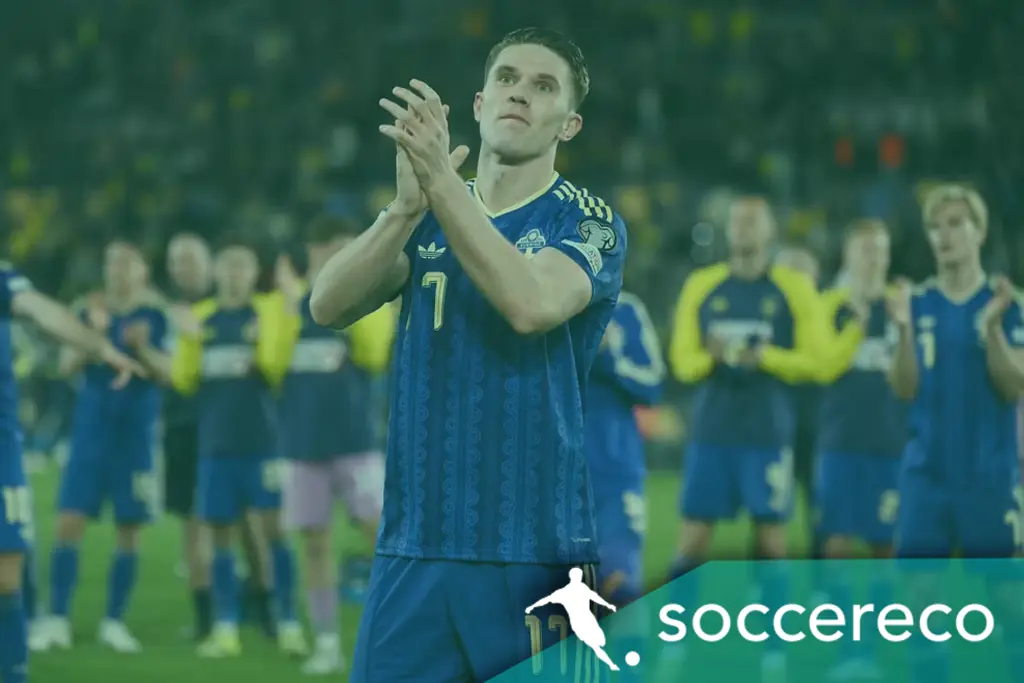
Sweden can still reach the World Cup despite a disastrous qualifying campaign
Sweden face Poland today at 20:45 in one of the most remarkable matches of the current World Cup cycle. It is a fixture loaded with tension, pressure and huge consequences, because the winner will secure a place at the 2026 World Cup and move into a group featuring the Netherlands, Japan and Tunisia. For Sweden, simply being in this position already feels extraordinary. After taking only 2 points from 6 matches in the main qualifying group, very few would have imagined that the Scandinavian side would still have a real route to the final tournament.
That is what makes this story so unusual. In normal circumstances, a campaign like this would have ended months ago in disappointment and criticism. Sweden finished bottom of a four team group behind Switzerland, Kosovo and Slovenia, recording one of the most underwhelming qualifying runs of any European nation with ambitions of reaching the World Cup. Yet football has its twists, and Swedens earlier Nations League success left the door slightly open. They stepped through it in the play offs, and now they are just one win away from turning failure into qualification.
On paper, Sweden looked more than capable of avoiding this kind of drama. The squad contains quality, experience and attacking power. Anthony Elanga offers speed and direct running from wide areas. Viktor Gyokeres has developed into one of the most dangerous forwards in Europe, bringing strength, movement and a constant goal threat. Alexander Isak remains the headline attacking talent, with technical quality and composure in front of goal. Behind them, Victor Lindelof provides leadership in defence, while Isak Hien adds physical presence and aggression. It is not a perfect squad, but it is certainly one that seemed strong enough to navigate a group containing Switzerland, Kosovo and Slovenia.
There was even more reason for optimism because Sweden had arrived in qualifying with momentum. They had won their Nations League group unbeaten, giving supporters fresh belief that a new cycle could bring stability and progress. Under coach Jon Dahl Tomasson, there was hope that Sweden could combine tactical organisation with a more proactive style. The draw looked manageable, and there was a realistic expectation that Sweden would at least fight for the top places. Instead, almost everything that could go wrong did go wrong.
The warning sign came immediately. A 2-2 draw with Slovenia was disappointing rather than disastrous, but it set the tone for what followed. Sweden failed to build on that result and quickly lost control of the group. Defeats against Kosovo and Switzerland exposed defensive weaknesses, lack of consistency and an inability to manage key moments. Even more damaging was the second loss to Kosovo, a result that made recovery extremely difficult and left the team chasing a qualification campaign that was already slipping away.
As pressure increased, results did not improve. The team looked fragile, confidence dropped and the sense of a promising project began to disappear. Tomasson paid the price and was removed from his position, with the federation deciding that a drastic change was needed if there was to be any chance of salvaging the campaign. Graham Potter was then appointed in an effort to bring calm, structure and fresh ideas to a squad that had lost direction.
Potter arrived with a reputation for intelligent coaching and long term planning, but he inherited an almost impossible situation. He was not able to rescue Sweden during the group stage. The numbers remained brutal. Sweden lost 4-1 to Switzerland, drew again with Slovenia and ended the section in fourth place with only 2 points and a goal difference of minus 8. For a team with World Cup ambitions, it was a deeply disappointing return.
| Team | P | Pts | GD |
|---|---|---|---|
| Switzerland | 6 | 14 | +12 |
| Kosovo | 6 | 11 | +1 |
| Slovenia | 6 | 4 | -5 |
| Sweden | 6 | 2 | -8 |
Under normal rules, that would have been the end. But the Nations League offered Sweden an alternative route. Because they had topped their group in that competition, they were granted access to the play offs. It was a lifeline that many struggling nations dream about but very few manage to use well. Sweden were given a second chance, and to their credit they made it count when it mattered most.
In the play off semi final, Sweden defeated Ukraine on Thursday to keep the dream alive. That victory did more than just move them one step closer to the World Cup. It also gave the squad a sense of belief that had been missing for much of the qualifying campaign. For the first time in a long while, Sweden looked like a team with direction, purpose and emotional resilience. It was exactly the sort of result Potter needed, both for his own authority and for the confidence of a dressing room that had spent much of the year under heavy scrutiny.
That renewed faith is one reason why the mood around the national team has changed so quickly. The Swedish federation have shown strong trust in Potter, extending his contract earlier this month until mid 2030 even though he had still not won a match at that stage. It was a bold decision and, to some observers, a surprising one. But it also reflected a belief that the problems were deeper than a single coach and that Sweden needed continuity rather than panic. Now that Sweden are one game away from the World Cup, that decision looks more understandable.
The challenge against Poland will still be enormous. Poland have the experience, the physical level and the discipline to make this a very difficult contest. Finals of this nature are rarely open or easy to control. They are often shaped by nerves, one decisive moment, one mistake, or one piece of quality. Sweden will need more than talent. They will need composure, tactical discipline and a clinical edge in both penalty areas.
The attacking names in the squad give them hope. Gyokeres and Isak can change games quickly, while Elanga can stretch defences and create transitions. If Sweden can play with intensity while avoiding the defensive lapses that damaged the group phase, they have enough quality to hurt Poland. At the same time, the pressure is unique. A team that looked out of the race now stands on the verge of qualification. That can inspire, but it can also weigh heavily if the match becomes tense.
Whatever happens, the path Sweden have taken is already one of the strangest stories of this World Cup qualification cycle. To collect just 2 points in 6 games and still reach a decisive play off final is extraordinary. To now have the chance to join a World Cup group with the Netherlands, Japan and Tunisia makes it even more dramatic. Sweden were written off, changed coach, survived through a secondary route and have somehow kept the dream alive. All that remains is one final step against Poland.