After Borussia Dortmund’s draw against FK Bodø/Glimt in the Champions League, Nico Schlotterbeck gave a scathing interview. The captain of Die Schwarzgelben felt that everyone was playing their own game and that the substitutes lost every ball.
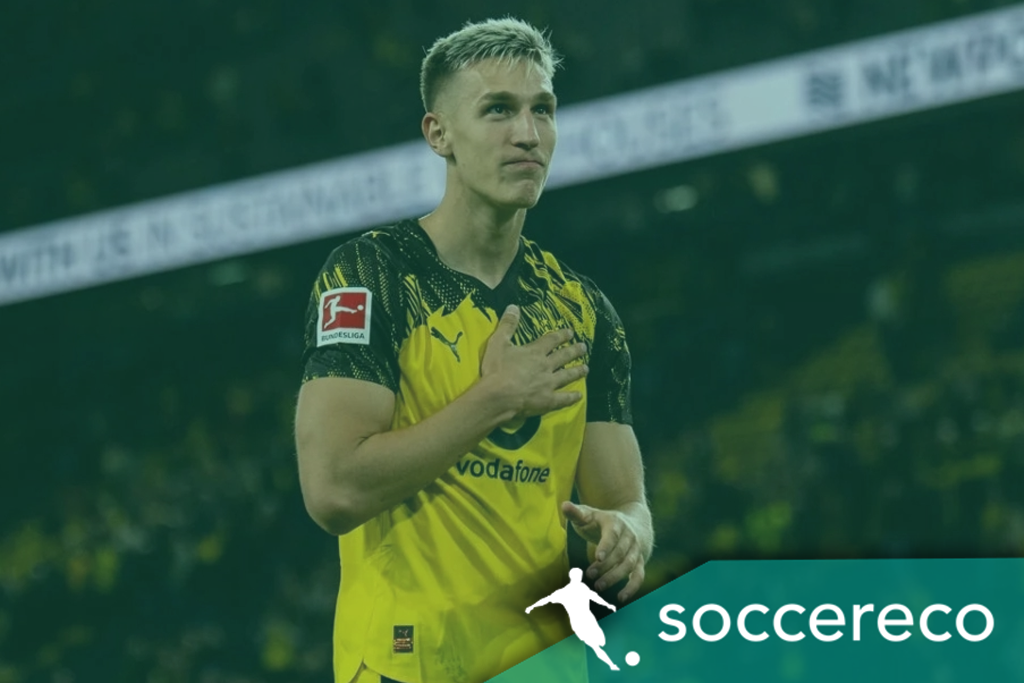
On Wednesday evening at Signal Iduna Park, Borussia Dortmund once again failed to turn superiority on paper into a calm and controlled European performance.
Against a spirited FK Bodø/Glimt side, the Bundesliga club repeatedly lost grip on a match that seemed within reach, and the mood after the final whistle reflected that loss of control far more than the actual scoreline might suggest.
Dortmund took the lead on two separate occasions against the Norwegian champions, yet twice allowed Bodø/Glimt to come back into the game. The contest eventually ended in a 2-2 draw, a result that felt more like a defeat for the home crowd and for a dressing room that is fully aware of how tight the margins are in the new Champions League format.
After the opening goal for the Germans, Nico Schlotterbeck’s frustration started to boil over. Instead of building on the advantage, Dortmund began to play with a casual edge that quickly turned into sloppiness. The captain later described how the team slipped into extremely careless football, with technical errors in basic first touches and passing sequences that repeatedly handed momentum back to the visitors. Simple receptions of the ball were miscontrolled, possession was squandered in non-pressured zones and the overall structure of the team became increasingly stretched.
From Schlotterbeck’s point of view, the biggest problem was not a single tactical detail but the overall mentality on the pitch. He felt that too many players were focused on their own actions instead of the collective plan. Rather than moving as one unit, Dortmund appeared fragmented, with large gaps between the lines and a lack of coordinated pressing. The centre-back saw a side in which individuals tried to solve situations alone, ignoring patterns worked on in training and leaving team mates exposed to Norwegian transitions.
His criticism did not stop with the starting eleven. Schlotterbeck also turned his attention to the substitutes, which is unusual in public comments from a captain at the highest level. In his view, the players who came off the bench failed to bring the necessary energy and sharpness. He pointed out that too many duels were lost, both in the air and on the ground, and that second balls almost always fell to Bodø/Glimt once the changes were made. When a player enters the match around the sixtieth minute, the captain argued, the expectation is thirty minutes of maximum intensity, pressing with full conviction and showing a clear desire to decide the match in favour of Dortmund.
On Wednesday, that impact was missing. Karim Adeyemi and Serhou Guirassy were introduced in the sixty seventh minute to add speed and goal threat, while Emre Can and Julian Ryerson followed in the seventy seventh minute to bring fresh legs and stability. Instead of shifting the dynamic, however, the substitutions did not prevent Dortmund from letting another lead slip and from repeatedly inviting Bodø/Glimt back into promising positions. For Schlotterbeck, it was a worrying sign of a lack of winners mentality in key moments.
Sporting director Sebastian Kehl moved quickly to calm the waters after the final whistle. He acknowledged that the defender’s words came out of deep disappointment and immediate frustration. From Kehl’s perspective, this was above all a case of a captain letting off steam after a demanding European evening, rather than the start of a serious conflict inside the squad. The former midfielder underlined that emotional reactions directly after a match are common at top clubs and that discussions will continue internally, behind closed doors, where they belong.
Beyond the emotional outburst, the broader sporting context makes this draw particularly sensitive. Dortmund are currently in tenth place in the Champions League table, with a gap of just one point to Atlético Madrid in eighth. In the new league-style format, finishing eighth or higher is crucial, since those positions guarantee direct access to the round of sixteen and avoid an extra two-legged play-off in the knockout phase. Falling below that line means additional matches in an already crammed calendar, more travel, more pressure and an increased risk of elimination before the true business end of the competition.
For a club that also fights annually for a top four place in the Bundesliga and aims to progress deep into domestic cup competitions, even a single unnecessary play-off can have significant consequences. Extra midweek fixtures affect rotation, injury risk and fatigue levels across the squad. That is why dropped points at home against supposedly lesser opponents feel so costly. The 2-2 against Bodø/Glimt is not only a statistical setback, it is a warning sign about focus and mentality in games that Dortmund are expected to control.
The reaction in the coming weeks will therefore be decisive. Head coach and staff will have to address both the technical issues, such as the quality of first touches and positional discipline, and the psychological aspects raised by the captain. A clear internal discussion about accountability, intensity from the bench and adherence to the game plan is likely to follow. Whether Schlotterbeck’s public comments serve as a wake-up call or create tension depends largely on how the dressing room processes his criticism.
Amid the disappointment, Dortmund supporters did receive one piece of positive news on the night. Marco Reus, a club icon of the modern era, made his return to Signal Iduna Park in a new role. Working as an analyst for DAZN, Reus was present as it was confirmed that he will act as an ambassador for his former club. The long-serving attacker, who carried the armband himself for years and became a symbol of loyalty at Dortmund, watched the match from the famous Gelbe Wand, surrounded by the stand that once sang his name week after week.
His new ambassadorial position strengthens the emotional connection between club and fanbase. Reus embodies both the highs and lows of Dortmund’s recent history; he has experienced title races, painful near misses and memorable European nights. Having him associated with the club in an official role sends a signal that Dortmund wants to preserve its identity and values even as the team navigates sporting turbulence.
For now, however, the focus returns quickly to the pitch. Dortmund must respond to this setback with a performance that shows structure, aggression and unity, and that restores confidence among supporters and within the squad. The 2-2 draw against FK Bodø/Glimt will be remembered less for the scoreline itself and more for the captain’s unusually sharp verdict. The coming fixtures will reveal whether those words were simply an emotional outburst or the starting point for a necessary reset in Dortmund’s Champions League campaign.