
England's Under-15 team walks off against the Republic of Ireland after alleged racist abuse, prompting FIFA to investigate the abandoned match.
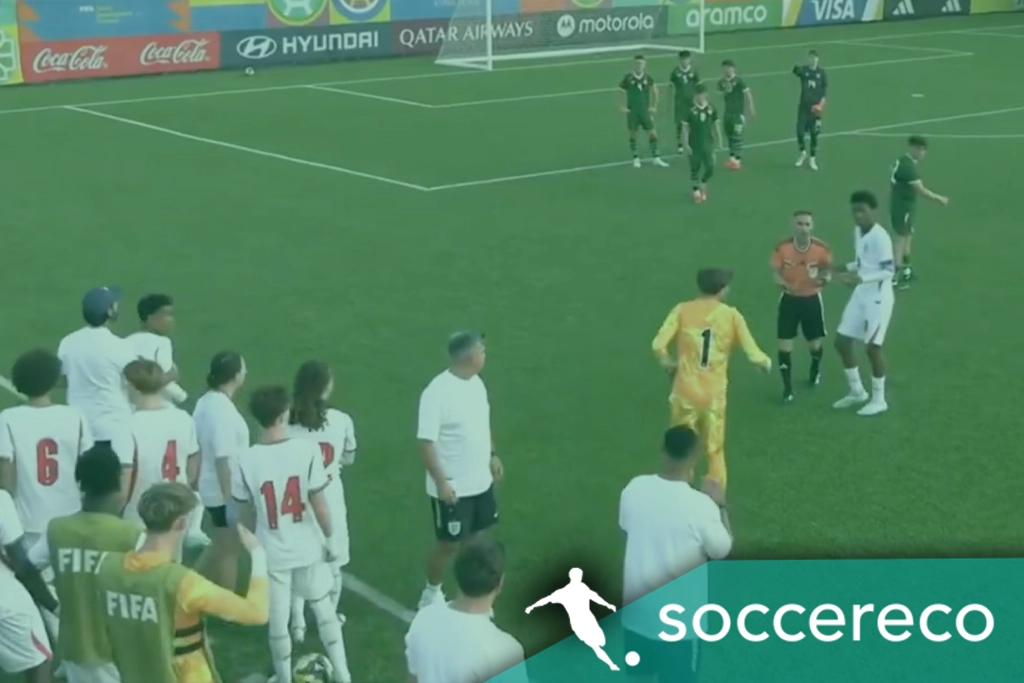
England Under-15s walk off pitch after alleged racist abuse against Republic of Ireland as FIFA launches investigation
England's Under-15 national team walked off the pitch during a World Cup match against the Republic of Ireland on Monday following allegations that an English player had been subjected to racist abuse by an opponent. The incident brought the international youth fixture to an abrupt end and prompted an investigation by FIFA, football's world governing body.
According to reports in the English media, England Under-15 coach Matt Thorpe made the decision to withdraw his players in the 40th minute after a member of his squad reported that an Irish opponent had directed a racist insult towards him. England were trailing 4-1 when the match was stopped, but the scoreline quickly became secondary to the allegations and the circumstances surrounding the team's withdrawal.
The England player alleged that he had been called a "monkey" during the encounter. The accusation was immediately denied by a member of the Republic of Ireland's coaching staff, leaving conflicting accounts of the incident that will now require examination by the relevant football authorities.
FIFA subsequently confirmed that the match had been abandoned after England declined to continue playing. A spokesperson for the governing body stated that the fixture was brought to an end "following England's refusal to continue playing", while an investigation was launched into the circumstances surrounding the incident.
The case has raised serious questions about how allegations of racism should be handled during international youth competitions, particularly when the players involved are minors. It also highlights the difficult decisions facing coaches and match officials when an allegation of discriminatory behaviour emerges during a competitive fixture.
With the investigation ongoing, no final determination has been announced regarding the allegation. The circumstances surrounding the reported incident, the response of the teams and the consequences of abandoning the match remain matters for the appropriate authorities to establish.
England coach Matt Thorpe withdraws team in the 40th minute
The extraordinary scenes unfolded during Monday's meeting between England and the Republic of Ireland, with the English side attempting to recover from a difficult opening period.
By the 40th minute, Ireland had established a 4-1 advantage and appeared to be in a strong position from a sporting perspective. However, the match took an unexpected turn when an England player reported that he had been racially abused by an opponent.
According to the account published by the English media, the allegation was brought to the attention of England's coaching staff, prompting Matt Thorpe to withdraw his players from the field.
The decision effectively brought the match to an end, with England refusing to resume play following the reported incident.
For a national team coach, abandoning an international fixture represents a significant decision. Competitive matches involve tournament regulations, sporting responsibilities and the expectations of players who have worked towards representing their country.
However, situations involving allegations of discriminatory abuse introduce considerations that extend beyond the immediate result.
Coaches responsible for youth teams must consider the welfare of their players, their ability to continue participating and the circumstances in which the allegation has been made.
In this case, Thorpe's decision demonstrated that the England staff regarded the reported incident as sufficiently serious to stop their team's involvement in the match.
The precise conversations between the England coaching staff, the match officials and the opposing team have not been publicly established in the information available.
What has been reported is that England left the pitch in the 40th minute and did not return to complete the fixture.
Racism allegation immediately disputed by Irish coaching staff
At the centre of the controversy is an allegation made by an England Under-15 player, who reported that an opponent had directed a racist insult towards him during the match.
The allegation concerns language widely recognised as racist and discriminatory, making it an extremely serious matter within the context of an international youth competition.
However, the accusation was immediately denied by a member of the Republic of Ireland's coaching staff.
That denial is an important part of the account because it establishes that the allegation has been disputed from the outset.
At present, the available information does not include a completed investigation, an official finding establishing what was said or a disciplinary decision against the player accused of making the remark.
The distinction between an allegation and a confirmed finding is particularly important when the individuals involved are children.
Young footballers participating in international competitions should be protected from discriminatory behaviour, but they must also be treated fairly when accusations arise.
That means an investigation must consider all relevant evidence before reaching conclusions about individual responsibility.
The allegation should not be dismissed simply because it has been denied, just as the denial should not be ignored because an accusation has been made.
For now, the differing accounts demonstrate why an independent examination of the circumstances is necessary.
The relevant football authorities will need to establish what happened during the match and whether any discriminatory conduct can be substantiated.
FIFA confirms match was abandoned after England refused to continue
FIFA has confirmed that the England versus Republic of Ireland Under-15 fixture was abandoned following the English team's decision not to continue playing.
A spokesperson for football's world governing body described the abandonment as occurring "following England's refusal to continue playing".
The statement establishes the immediate reason the match was not completed, but it should not be interpreted as a conclusion about whether the alleged racist abuse occurred.
Those are separate questions.
The first concerns why the game was abandoned. The second concerns the conduct alleged to have taken place before England left the pitch.
FIFA's investigation will need to examine the reported incident and the available evidence before the governing body can determine whether further action is justified.
The abandonment also creates a sporting issue because the fixture ended before the scheduled conclusion, with the Republic of Ireland leading 4-1.
However, no confirmed decision has been provided regarding how the match will be recorded for competition purposes.
It would therefore be premature to suggest that Ireland will automatically be awarded a victory, that England will be penalised for leaving the pitch or that the match will be replayed.
Such outcomes depend on the applicable competition regulations, the circumstances established by the investigation and any decisions taken by the relevant authorities.
Until those matters are resolved, the official consequences of the abandonment remain uncertain.
What happened during the England and Republic of Ireland Under-15 match?
The information currently available provides a clear outline of the main events, although several important details remain unconfirmed.
England and the Republic of Ireland were competing in an Under-15 World Cup fixture on Monday. Ireland had taken control of the scoreline and were leading 4-1 when the incident was reported.
In the 40th minute, an England player alleged that an Irish opponent had directed a racist insult towards him.
The allegation was disputed immediately by a member of Ireland's coaching staff.
Following the report, England coach Matt Thorpe removed his team from the pitch. The England players did not return to complete the match.
FIFA later acknowledged that the game had been abandoned because England refused to continue and launched an investigation.
Beyond that sequence, several details have not been established in the supplied account.
It is not clear precisely when the alleged words were spoken, whether match officials directly heard the exchange or what evidence has been made available to FIFA.
Nor has it been established whether any formal disciplinary proceedings have begun against an individual player.
These gaps are important because a reliable understanding of the incident depends on more than the initial reports from the teams involved.
An investigation will need to distinguish between what has been alleged, what has been denied and what can ultimately be supported by evidence.
Why allegations of racism are especially serious in youth football
Racism is a serious concern at every level of football, but allegations involving youth players raise additional questions about safeguarding, education and the responsibilities of adults supervising competitive sport.
Under-15 football involves players who are still developing both as athletes and as individuals.
For many participants, representing their country is among the most significant experiences of their young sporting careers. International tournaments offer opportunities to compete against talented opponents, experience different playing styles and develop skills that may support future professional ambitions.
Those opportunities should take place in an environment where players feel respected and protected.
Discriminatory language can undermine that environment, particularly when it targets characteristics such as race or ethnicity.
At the same time, allegations against young players require particular care. Public accusations can have consequences for individuals who have not yet reached adulthood, even before any official determination has been made.
For that reason, preserving confidentiality and avoiding unnecessary identification of the children involved are important considerations.
The current reporting does not identify the England player who made the allegation or the Irish player accused of making the remark.
That restraint is appropriate while the facts remain disputed and the investigation continues.
Football authorities must be able to address serious allegations without exposing minors to avoidable public scrutiny or harassment.
The incident therefore presents a challenge that extends beyond determining the outcome of a single match.
It concerns how international youth football balances the need to confront discrimination with the obligation to protect everyone involved.
England's walk-off places player welfare at centre of controversy
Matt Thorpe's decision to withdraw the England team has become one of the most discussed aspects of the incident.
Walking off the pitch is an unusual response during an international tournament, particularly when a team is already trailing by a significant margin.
However, the fact that England were losing 4-1 does not determine whether the underlying allegation was valid or whether the coaching staff's response was appropriate.
Those questions must be considered independently of the scoreline.
In youth football, coaches have responsibilities that go beyond tactics, substitutions and results.
They are also responsible for helping create an environment in which players can participate safely and report concerns.
When a player alleges discriminatory abuse, coaching staff may face immediate decisions about whether the individual feels able to continue and whether the circumstances allow the match to proceed.
Such decisions can be complicated because the allegation may arise during an emotionally intense period of play, when there is little opportunity for a complete examination of the facts.
The England coaching staff chose to withdraw the team rather than continue the fixture.
That decision has now become part of FIFA's examination of the incident.
It remains important to distinguish between the coach's response to a reported allegation and any eventual finding concerning the conduct of the accused player.
The withdrawal demonstrates how England reacted at the time. It does not, by itself, establish the disputed allegation.
Republic of Ireland face questions after disputed allegation
The Republic of Ireland's Under-15 team were in a commanding sporting position when the match was abandoned, leading England 4-1 in the 40th minute.
However, the focus has shifted away from that performance because of the allegation made against one of the Irish players.
A member of the Irish coaching staff immediately denied the accusation, creating a direct disagreement over the reported incident.
At this stage, the available information does not establish whether the denial was based on the staff member's direct observation, information received from a player or another account of the exchange.
Those details may be relevant to the investigation, but they should not be assumed without confirmation.
For Ireland's players, the circumstances are also difficult because a match that had been progressing in their favour ended unexpectedly and became the subject of international attention.
The player accused of using discriminatory language is entitled to a fair examination of the allegation, particularly given his age.
Similarly, the England player who reported the incident should have the opportunity to provide his account without being subjected to hostility or pressure.
The responsibility for examining the allegations rests with the appropriate officials and disciplinary bodies, rather than supporters attempting to determine guilt through speculation.
The most constructive approach is to allow the evidence to be assessed while recognising the seriousness of the allegation and the importance of protecting the children involved.
What FIFA's investigation could examine
FIFA's investigation will be central to determining what happened during the abandoned match.
Although the governing body has not publicly detailed every step of its inquiry in the available account, investigations into alleged discriminatory incidents may involve several forms of evidence.
These can include official match reports, statements from the players involved, accounts provided by coaches and match officials, and any available audiovisual material.
Each type of evidence can contribute to understanding the circumstances, although its significance depends on what it actually establishes.
For example, a match official's account may help clarify what was reported during play and how the situation was handled. Footage may provide useful context about the positions and interactions of players, although it may not capture every spoken exchange.
Statements from the individuals directly involved could also be important, particularly if there are conflicting recollections of what happened.
Because the incident involves Under-15 players, any interviews or information-gathering procedures should be handled with appropriate safeguarding considerations.
It is not currently known which evidence FIFA has obtained or whether the investigation has reached any preliminary conclusions.
Nor has the governing body announced a confirmed disciplinary outcome.
The process will need to establish whether the allegation can be substantiated under the applicable regulations before any conclusions about individual responsibility or potential sanctions are drawn.
Until then, the matter remains unresolved.
Football's anti-racism commitments face another important test
Professional football has spent years promoting campaigns and policies intended to combat racism and other forms of discrimination.
International governing bodies, national associations and clubs regularly emphasise that discriminatory behaviour is unacceptable, whether it occurs on the pitch, in stadiums or online.
However, the effectiveness of those commitments depends on how incidents are handled when allegations arise during actual competition.
The England and Republic of Ireland Under-15 case illustrates the complexity of that responsibility.
On one hand, players must feel able to report discriminatory language without fearing that their concerns will automatically be ignored.
On the other, football authorities must ensure that disputed allegations are investigated fairly and that disciplinary decisions are based on evidence rather than public pressure.
Both principles are essential to maintaining confidence in the process.
For youth football, education is an additional consideration.
Young players are still learning how to manage the emotional demands of competition, communicate with opponents and accept the responsibilities that accompany representing a club or national team.
Anti-discrimination education can help reinforce appropriate behaviour and explain why certain language is unacceptable, even during moments of frustration or confrontation.
Nevertheless, the existence of general anti-racism initiatives does not determine what happened in this particular match.
That remains a factual question for the investigation.
Could the abandoned England match be replayed?
One of the unresolved sporting questions concerns what will happen to the abandoned fixture.
The Republic of Ireland were leading 4-1 when England left the pitch, but the match did not reach its scheduled conclusion.
FIFA has confirmed the abandonment, yet the information available does not include a final ruling on how the result will be recorded.
In football competitions, abandoned matches can create different administrative questions depending on the tournament regulations and the circumstances surrounding the interruption.
Potential outcomes in such cases can involve recognition of an existing result, a replay or other decisions under the relevant rules.
However, none of those possibilities should be presented as the confirmed outcome of this incident.
Whether the match will be replayed or recorded in a particular way remains uncertain.
The investigation into the alleged racist abuse and the decision about the fixture's sporting status may involve related information, but they are not necessarily identical questions.
Establishing why the match ended is different from determining whether an individual committed a disciplinary offence.
For England and Ireland, clarity from FIFA will be important because tournament participation normally involves schedules, competitive standings and administrative obligations.
For the moment, the only confirmed position in the supplied account is that the match was abandoned after England refused to continue and that FIFA is investigating.
The importance of protecting young players during investigations
The involvement of Under-15 footballers makes the handling of this case especially sensitive.
Unlike established professional players, these individuals are minors taking part in a developmental stage of their sporting careers.
International attention can place considerable pressure on young athletes, particularly when a disputed allegation becomes the focus of media coverage and public discussion.
Those pressures may affect both the player who reports discrimination and the player accused of making an offensive remark.
For that reason, the privacy of the individuals involved should remain an important consideration while the investigation is ongoing.
Public commentary that attempts to identify the children, assign blame without evidence or encourage harassment risks causing unnecessary harm.
The role of adults within the sport is especially important in these circumstances.
Coaches, safeguarding staff and football authorities should ensure that the young players involved receive appropriate support and that their accounts can be considered fairly.
The objective of an investigation is not simply to produce a public conclusion, but to establish the facts through a process that respects the rights and welfare of those involved.
That approach is particularly necessary when competing versions of an incident have emerged.
The seriousness of the alleged language requires attention, while the immediate denial from the Irish coaching staff reinforces the need for careful fact-finding.
England and Ireland incident raises questions about match protocols
The abandonment also highlights the importance of having clear procedures for responding to allegations of discriminatory conduct during international football matches.
When a complaint arises, players and coaches need to understand how it should be reported, who is responsible for assessing the situation and what options are available if a team believes the match cannot safely continue.
At senior level, football authorities have developed procedures intended to help officials respond to reports of racism or other discriminatory behaviour.
In youth competitions, those procedures must also account for the additional safeguarding responsibilities associated with minors.
The events involving England and Ireland demonstrate why clarity is important.
The match ended after England declined to continue, but the supplied account does not specify whether a formal anti-discrimination procedure was initiated before the withdrawal or what discussions took place with the referee.
Without that information, it would be inappropriate to conclude that any particular protocol was followed or breached.
Nevertheless, the incident raises legitimate questions about how coaches, officials and tournament organisers should respond when a serious allegation is made during play.
Those questions include how quickly the complaint can be documented, whether appropriate support is available to the player reporting it and how the rights of the accused individual can be protected.
The answers will depend on the applicable rules and the facts established by FIFA.
Clear communication from the governing body after the investigation could help explain how the incident was assessed and what lessons, if any, should be drawn for future youth competitions.
England's 4-1 deficit becomes secondary to racism investigation
From a purely sporting perspective, the Republic of Ireland had established a commanding position before the match was stopped.
With England trailing 4-1 in the 40th minute, the Irish team appeared to have a substantial advantage.
However, the allegation made by the England player changed the focus of the afternoon entirely.
Instead of discussing the quality of Ireland's attacking performance or England's defensive difficulties, attention turned to the circumstances in which the match had been abandoned.
This distinction matters because the scoreline does not establish anything about the allegation itself.
England's position in the match may provide context for the timing of the withdrawal, but it should not be used as evidence that the accusation was true or false.
Similarly, Ireland's strong performance does not remove the need to investigate a serious complaint, nor does the allegation establish misconduct by the Irish team as a whole.
The focus must remain on the specific reported incident and the evidence available to the authorities.
Until FIFA completes its examination, the sporting circumstances and the disciplinary questions should be considered separately.
FIFA investigation will determine next steps after abandoned youth World Cup match
The next developments in the case will depend on FIFA's investigation and any subsequent decisions concerning the abandoned fixture.
England's decision to leave the pitch has already been confirmed, as has the allegation of racist abuse and its immediate denial by a member of the Irish coaching staff.
However, the governing body has not announced a final finding regarding the reported language.
The available information also leaves the official status of the match unresolved.
FIFA may need to address both the allegation itself and the administrative consequences of England refusing to continue, applying the relevant rules and procedures to the circumstances established.
For the 2 national teams, the episode has created an unwanted distraction from a competition that should primarily offer young players an opportunity to develop and represent their countries.
For the wider football community, it serves as a reminder that protecting players from discriminatory behaviour requires both a willingness to take complaints seriously and a commitment to fair investigations.
Neither principle should be sacrificed because of the intensity of a particular match or the public attention surrounding a controversy.
The welfare of the children involved must remain central throughout the process.
England Under-15 walk-off leaves World Cup fixture unresolved as FIFA examines racist abuse allegation
England's Under-15 World Cup match against the Republic of Ireland ended in extraordinary circumstances on Monday after coach Matt Thorpe withdrew his team following an allegation of racist abuse.
The incident occurred in the 40th minute, with England trailing 4-1. An English player reported that an Irish opponent had directed a racist insult towards him, prompting the coaching staff to remove the team from the pitch.
The allegation was immediately denied by a member of the Republic of Ireland's coaching staff, and no final determination has yet been announced.
FIFA subsequently confirmed that the match had been abandoned following England's refusal to continue and opened an investigation into the incident.
The circumstances have created several unresolved questions, including what was said during the match, how the incident was reported to the officials and what consequences the abandonment may have for the competition.
Those questions require careful examination, particularly because the players involved are minors.
The allegation of discriminatory language is serious and deserves an appropriate response, but the conflicting accounts must be assessed without prejudging the outcome.
England's withdrawal has demonstrated the difficult decisions that can confront coaching staff when player welfare concerns arise during competitive football.
At the same time, the Irish coaching staff's denial makes it essential that the investigation considers all relevant evidence before conclusions are reached.
The match will not be remembered primarily for Ireland's 4-1 lead or England's performance on the pitch. Instead, attention has turned to how football authorities investigate allegations of racism, protect young players and maintain confidence in disciplinary procedures.
Until FIFA announces its findings, the incident remains an unresolved allegation rather than an established case of racist misconduct.
The priority now is a thorough and fair investigation that establishes the circumstances of the reported exchange, safeguards the children involved and provides clarity about the future of the abandoned fixture.