Pep Guardiola made history on Sunday by winning the League Cup with Manchester City at Arsenal’s expense. The Spanish manager won the competition for the fifth time in his career, having previously lifted the trophy in 2018, 2019, 2020 and 2021. No manager has won the League Cup as many times as Guardiola.
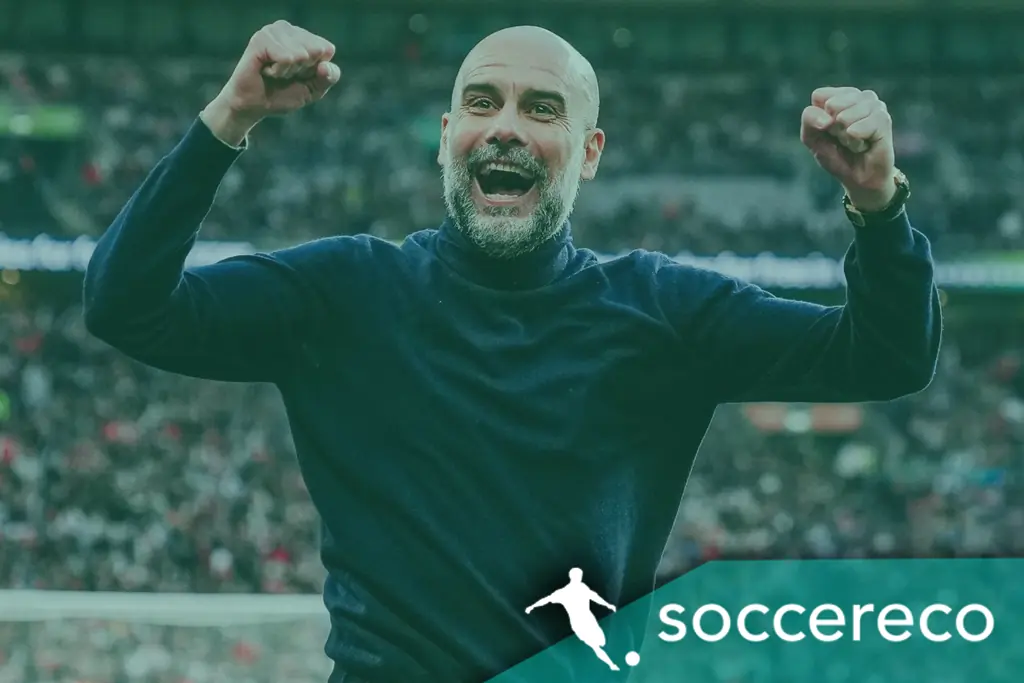
Pep Guardiola made history on Sunday as Manchester City defeated Arsenal 2-0 in the League Cup final, sealing another important moment in an already remarkable managerial career.
The Spanish coach lifted the trophy for the fifth time, having previously won the competition in 2018, 2019, 2020 and 2021, and in doing so set a new record as the most successful manager in the history of the League Cup. It was another landmark achievement for Guardiola, who has built his reputation on relentless consistency, elite standards and an extraordinary ability to keep winning across different eras, different squads and different competitions.
The final itself was another example of City finding a way to deliver when a trophy was on the line. Arsenal started the match with intensity and ambition, pushing City back in the opening stages and trying to impose themselves early. For the first fifteen minutes, Guardiola admitted his side had to withstand real pressure from an opponent he clearly rates very highly. Arsenal showed energy, aggression and the kind of attacking intent expected from one of the strongest teams in Europe, but City gradually absorbed that pressure and grew into the match. Once they settled, the balance shifted. Guardiola believed his team became the stronger side after that difficult opening spell, and the 2-0 result reflected a performance that improved as the final progressed.
For Guardiola, the victory clearly carried emotional weight. He described the achievement as meaningful and stressed that winning trophies is never easy, no matter how strong a team may appear from the outside. That comment says a great deal about his mentality. For a manager who has won league titles, domestic cups and European honours, it might be easy to assume that lifting another cup has become routine. Yet Guardiola continues to speak about winning with the hunger of someone who still feels the effort, the pressure and the sacrifice behind every success. That is one of the reasons his teams remain so competitive. He does not treat trophies as automatic. He knows how hard they are to secure, especially against opponents of Arsenal quality.
His comments after the final also showed the respect he has for the level of competition at the top of European football. Guardiola placed Arsenal alongside Bayern Munich and Barcelona when discussing the strongest sides in Europe, a statement that underlines how highly he values the challenge his team faced in the final. It was not simply a case of City beating an ordinary opponent to collect another domestic cup. In his eyes, this was a significant victory over one of the very best teams around, which is why he attached genuine value to the achievement even while acknowledging that the League Cup does not carry the same prestige as the Premier League or the Champions League.
That balance in his reaction was especially revealing. Guardiola was honest enough to admit that the League Cup is not the biggest prize in the game, but he was equally clear that defeating a team of Arsenal calibre made this success special. In many ways, that captures the essence of elite football management. Not every trophy holds the same status, but every final has its own pressure, its own narrative and its own importance. A manager and a squad cannot afford to be selective with ambition once silverware is within reach. Guardiola may measure the League Cup differently from the Premier League or the Champions League, but that does not make it insignificant. On the contrary, winning it against a direct domestic rival adds sharpness to the triumph and reinforces a culture that refuses to let opportunities pass.
The result also had symbolic importance beyond the trophy itself. In a season where Manchester City and Arsenal are once again involved in a fierce battle at the top level, any win between the two sides carries psychological value. Guardiola made it clear that, if given the choice, he would rather be enjoying a commanding lead in the Premier League table. He openly admitted that he would prefer to be nine points clear of Arsenal, which shows that the league title remains the bigger obsession. Arsenal, he said, still have matters in their own hands. That remark reflects the reality of the title race and also the pressure City are under. While this cup final win offers celebration and a fresh record for Guardiola, it does not remove the central challenge of trying to catch or overtake Arsenal in the league.
That honesty is another key part of Guardiola character. Even after making history, he was not interested in pretending that everything is perfect. He acknowledged the fatigue that has built up over the course of the campaign and said he needs a long break because he is exhausted. That sense of weariness is understandable. Managing at the highest level demands constant focus, endless preparation and the emotional strain of living every match as if it could shape the whole season. Guardiola has spent years operating at that intensity, and moments like this reveal the human cost behind the polished image of success. He even made the point in a humorous but telling way, saying he is not artificial intelligence but a human being. Beneath the medals and records is still a coach who feels pressure, tiredness and relief like anyone else.
His reference to the dropped points against West Ham also showed that his mind is already split between celebration and regret. Even after winning a final and setting a new record, Guardiola was still thinking about the points City left behind in the title race. That is the mentality of a coach who never fully switches off. Success does not erase frustration. One cup win does not make him forget the setbacks that may yet define the season. The West Ham result, in his own words, hurt City, and that pain still lingers even in the glow of another trophy. Yet he also insisted that his side will keep trying, which is exactly what has made Manchester City such a formidable force over the years. They absorb disappointments, recover quickly and continue pushing until the very end.
Ultimately, this was a day that captured the full Guardiola experience. There was history, because no manager had ever won the League Cup five times before. There was quality, because City overcame a difficult start and beat a top-class Arsenal side 2-0 in a major final. There was perspective, because Guardiola recognised that this trophy does not sit above the Premier League or the Champions League. There was emotion, because he admitted the win meant a lot to him and spoke openly about his exhaustion. And there was ambition, because even in victory he could not stop thinking about the title race and the missed opportunities that continue to haunt City campaign.
For Manchester City, this was another trophy and another reminder of the standards Guardiola has established. For Arsenal, it was a painful defeat in a final after a strong opening spell that ultimately did not translate into control of the occasion. For Guardiola himself, it was a record-breaking afternoon that added yet another layer to his legacy. Five League Cups now belong to him, more than any other manager, and that statistic alone says much about his longevity, his excellence and his refusal to let success become ordinary. Even when he downplays the scale of the competition, the achievement remains historic. In a sport where records are hard won and quickly challenged, Guardiola has once again placed his name alone at the top.