Iran held Belgium to a 0-0 World Cup draw amid travel restrictions, a planned FIFA complaint and a standout display from Alireza Beiranvand.
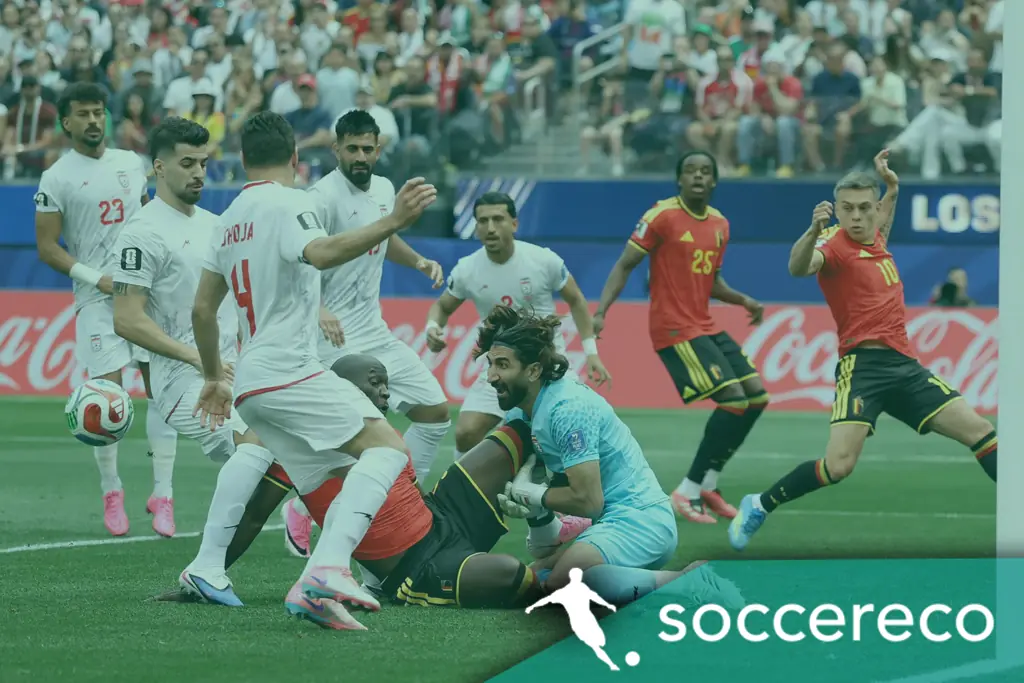
Iran hold Belgium in tense goalless draw after difficult World Cup build-up
Iran earned a hard-fought 0-0 draw against Belgium in a match that became about much more than the final score. On the pitch, it was a disciplined, emotional and resilient performance from a team that had arrived at the game under intense logistical pressure. Off the pitch, it was another chapter in a growing dispute between the Iranian Football Federation and FIFA over the conditions surrounding Iran during the tournament.
Even before kick-off, the Iranian Football Federation had made it clear that it intended to file an official complaint with FIFA. The federation believes Iran has been placed at a competitive disadvantage because the team is not allowed to stay in the United States during the tournament, despite playing group-stage matches there. Instead, Iran has been based in Tijuana, Mexico, forcing players and staff to travel back and forth across the border whenever they have a fixture on American soil.
That situation has created a difficult rhythm for the squad. Tournament football is already demanding, with short recovery windows, intense preparation, media obligations and emotional pressure around every match. For Iran, that burden has been increased by constant travel, border procedures and reduced time to settle in the cities where matches are being played.
After the opening match against New Zealand, Iran had to leave California almost immediately. Ahead of the game against Belgium, the squad was reportedly only allowed to enter the United States 24 hours before kick-off. From the perspective of the Iranian delegation, that is not a normal sporting environment for a team competing at the highest level of international football.
The frustration was visible after the final whistle, but so was pride. Iran had not only avoided defeat against Belgium, it had done so by showing organisation, concentration and an impressive collective spirit. Belgium had more individual quality in attacking areas, but Iran refused to break. Every defensive duel, every clearance and every save seemed to carry extra emotional weight.
Head coach Amir Ghalenoei did not hide his feelings after the match. He praised his players for delivering a result despite what he described as extremely difficult circumstances. For him, the draw was not just a point in the group table. It was a statement about character, sacrifice and the ability of his squad to compete even when the conditions around them were far from ideal.
Ghalenoei said Iran had arrived at the World Cup under the worst possible circumstances, but still managed to achieve a result against a strong Belgium side and a respected coach. His message was clear: Iran may feel unfairly treated away from the pitch, but on it the players have continued to respond with commitment and dignity.
The Iranian coach also underlined the physical cost of the situation. After two demanding matches without defeat, Iran now have to turn their attention to Egypt, another strong opponent in the group. But instead of enjoying a normal recovery period, the squad must prepare for more travel. According to Ghalenoei, the team faces another exhausting journey involving 16 hours, two flights and the pressure of a decisive group match.
For a team in tournament conditions, recovery is not a minor detail. It can influence pressing intensity, defensive concentration, injury risk and decision-making in the final stages of matches. When players are forced into repeated travel cycles, the effects are not only physical. Mental sharpness can also suffer, especially when the schedule leaves little time for tactical work or proper rest.
That is why Iran believes the issue goes beyond inconvenience. The federation argues that these restrictions create an uneven competitive environment. In a World Cup, where margins are often extremely small, even a small difference in rest, preparation or travel can become decisive. Iran feel those margins are being pushed against them.
Jahanbakhsh insists Iran are not asking for special treatment
Alireza Jahanbakhsh, one of the most experienced voices in the squad, also spoke about the situation after the match. The former NEC, AZ, Feyenoord and SC Heerenveen player made it clear that Iran are not demanding preferential treatment. Instead, he presented the request as a basic sporting principle: the team wants to travel with its full staff and have enough time to adapt to the location where it is playing.
His comments reflected a calm but firm frustration. Jahanbakhsh did not frame the situation as an excuse. He did not try to take attention away from the football. But he explained that, at this level, preparation matters. A national team needs its coaches, medical staff, analysts, recovery specialists and support structure around the players. When that structure is disrupted, the whole matchday process becomes harder.
At the same time, Jahanbakhsh also pointed to something deeper within the squad. He said that difficult circumstances often bring out the best in Iranian culture. In his view, the adversity surrounding the team has made the players even closer. The performance against Belgium, he suggested, was proof of that unity.
That was perhaps the most striking aspect of Iran performance. This was not a team playing with self-pity. It was a team playing with defiance. Belgium tried to increase pressure, especially in dangerous areas, but Iran defended with patience and discipline. The players covered for each other, kept their structure and refused to allow frustration to turn into chaos.
In many ways, the match became a test of emotional control. Belgium had the technical quality to punish any lapse in concentration, while Iran knew that one mistake could undo all the work they had done. Yet the Iranian players stayed composed. They absorbed pressure, slowed the tempo when needed and found ways to survive difficult spells.
A message of pride left inside SoFi Stadium
After the final whistle, Iran also left a symbolic message in the dressing room at SoFi Stadium. The note referred to ancient Persia, modern Iran and the spirit of a nation that remains firm. It thanked Los Angeles for its hospitality and stated that Iran had arrived with pride, played with honour and left with dignity.
It was a powerful gesture because it captured the tone of the night. Iran did not leave Los Angeles with three points, but they left with something meaningful. They had resisted Belgium, protected their unbeaten start and turned a difficult situation into a performance built on collective identity.
The message also showed how the team wanted the evening to be remembered. Not only as a football match, but as a moment of representation. For the players, this World Cup is not just about tactics, results and qualification scenarios. It is also about carrying the image of their country in circumstances they believe have tested them unfairly.
That sense of symbolism can be dangerous if it becomes too emotional, but it can also be powerful when channelled properly. Against Belgium, Iran appeared to use it as fuel. Their defensive work had aggression without losing discipline. Their reactions after important saves and clearances showed how invested the group was in every moment.
Beiranvand becomes the hero of the night
While Iran strength came from the collective, goalkeeper Alireza Beiranvand was the outstanding individual figure. Belgium were unable to find a way past him, and several of his saves proved decisive in preserving the 0-0 scoreline. On a night when Iran needed experience, calm and authority, Beiranvand delivered exactly that.
His performance was not only about reflex saves. It was also about presence. A goalkeeper in a game like this has to manage crosses, communicate with defenders, slow the rhythm when necessary and remain focused even after long spells without touching the ball. Beiranvand did all of that with impressive maturity.
Ghalenoei was full of praise for his goalkeeper after the match, describing him as one of the most important goalkeepers in the history of Iranian football. The coach also said Beiranvand had produced one of his best days, with the right level of concentration at crucial moments. In a game where Belgium only needed one opening to change everything, that concentration was priceless.
For Belgium, the result will feel frustrating. A team with their attacking quality expects to win matches like this, especially when facing an opponent dealing with so many off-field complications. But Belgium could not turn pressure into goals. Iran made the game uncomfortable, reduced spaces and forced their opponents into moments of impatience.
The goalless draw leaves Iran with renewed belief before the meeting with Egypt. The challenge now is to recover quickly, both physically and mentally. The travel schedule remains a major concern, and the official complaint to FIFA may keep the issue in the spotlight. But from a purely sporting perspective, Iran have given themselves a platform.
Two matches without defeat in a World Cup group is not an accident. It requires discipline, sacrifice and a clear understanding of what the team can do well. Iran may not have dominated possession or created the cleaner attacking football, but they have shown resilience, organisation and the ability to suffer together.
That can matter enormously in tournament football. Some teams grow into competitions through confidence. Others grow through adversity. Iran, at least for now, appear to be doing the second. The circumstances around them remain difficult, but the draw against Belgium showed that this squad is not ready to let those difficulties define its tournament.
The final whistle at SoFi Stadium brought relief, pride and more questions. Iran will continue to demand answers from FIFA, while Belgium must reflect on a missed opportunity. But the clearest image of the night was of an Iranian team standing firm, led by a brilliant goalkeeper, driven by frustration, and held together by a powerful sense of collective purpose.