Joao Cancelo is set to return to Barcelona from Al Hilal on a season-long loan, with Barca paying a reported 4 million euros, beating Inter to his signature as the Portuguese full-back prioritises a reunion with the Spanish champions.
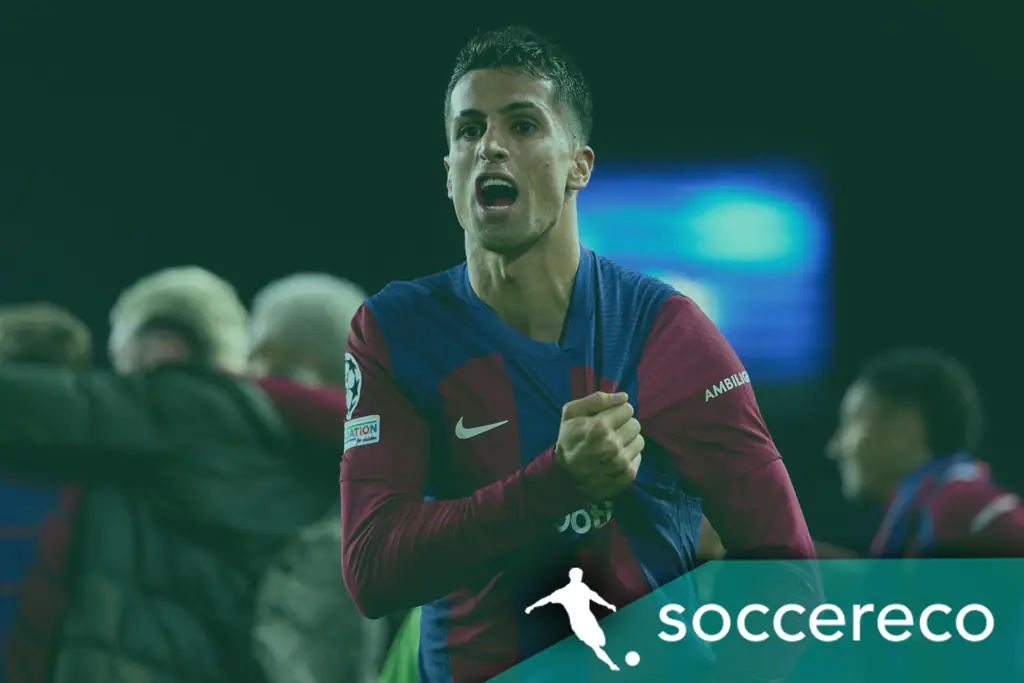
Joao Cancelo is set to return to Barcelona, bringing an end to the uncertainty around his next move after the Catalan club reached an agreement with Al Hilal on Monday.
The Portugal international, now 31, will head back to a team and a city he already knows well, having spent the 2023/24 season at Barca and leaving a clear impression on both the coaching staff and supporters with his technical quality and tactical flexibility.
According to Sport, Barcelona will bring Cancelo in on loan until the end of the season, paying Al Hilal a fee of 4 million euros. From Barcelona’s perspective, that structure is significant. It allows the club to reinforce an important position without taking on the immediate cost and accounting impact of a full transfer, while still adding a player who can raise the level right away. For Al Hilal, the agreement also provides a clean solution that respects the player’s preference and avoids a prolonged saga, particularly if Cancelo was determined to return to elite European football at this stage of his career.
The key element in this deal is that Cancelo clearly prioritised Barcelona, even with other options on the table. Inter, another club he has represented during his career, reportedly also had an agreement with Al Hilal. However, the full-back only had eyes for the Spanish champions. That detail matters because it underlines how strongly Cancelo views his fit at Barcelona, both in terms of playing style and in terms of personal comfort. When a player pushes for one destination in a competitive market, it often accelerates negotiations and simplifies the final steps, especially when the selling club is open to a loan solution.
From a sporting angle, Cancelo’s return gives Barcelona a high-level option on the right side of defence and, depending on the squad’s needs, potentially elsewhere as well. His biggest strength is not simply his ability to defend wide spaces, but the way he can influence games with the ball. Cancelo is comfortable receiving under pressure, progressing play through carries, and combining in tight areas. In teams that dominate possession, that profile can be decisive, particularly against low blocks where the full-back often becomes an auxiliary playmaker. Even when he starts at right-back, Cancelo can drift inside to form an extra midfielder in build-up, step higher to pin opponents back, or underlap into the half-spaces to create overloads.
Barcelona already experienced those qualities during his previous spell. He offers an attacking thrust that can change the rhythm of a match, but he also requires the right collective structure around him. When Cancelo plays aggressively, the team must manage transitions well and ensure there is adequate cover behind him. That is not unique to him, it is a broader tactical trade-off for full-backs who operate high and narrow. In a well-drilled system, the upside can be substantial: quicker progression, stronger chance creation from wide and central channels, and more variety in how the team reaches the final third.
There is also a squad-management logic to the move. Over the course of a long season, depth on the flanks is critical, especially for clubs competing across multiple competitions. Injuries, suspensions, and fixture congestion can quickly expose a thin rotation. Cancelo’s arrival provides Barcelona with an experienced option who can start immediately, but also one who understands what is required at the club in terms of pressure and expectations. That familiarity can reduce adaptation time and allow the coaching staff to integrate him into match plans without a prolonged bedding-in period.
For Cancelo, the decision to leave Al Hilal and return to Barcelona looks like a move driven by competitive priorities. A loan back to La Liga places him in a top European environment, with high-intensity matches, constant tactical demands, and the visibility that comes with playing for Barcelona. It also aligns with the reality that international players often want to remain at the highest level of weekly competition, both for personal ambition and for maintaining rhythm for Portugal duty.
Inter’s reported involvement adds another layer of intrigue. A return to Italy would have been a compelling storyline given his previous connection to the club and Serie A experience, and it would likely have offered a different tactical platform. However, Cancelo’s preference for Barcelona suggests he believes the Catalan side is the best fit for his strengths, and perhaps the best stage for him to make an immediate impact. Barcelona’s status as Spanish champions also strengthens the sporting appeal, because it signals a team expected to compete for the biggest titles and play under maximum scrutiny every week.
Financially, the reported 4 million euro loan fee is a figure that fits Barcelona’s recent pattern of balancing ambition with caution. Rather than committing to a major transfer outlay, the club secures a proven player for a defined period, preserves flexibility for the next window, and can reassess later depending on performance, squad evolution, and market conditions. It is also a pragmatic approach in a landscape where clubs are increasingly careful about long contracts for players in their 30s, even when those players can still deliver at a high level.
Ultimately, Cancelo’s return is about immediacy and fit. Barcelona get a full-back who can contribute in multiple phases of play and offer tactical solutions against different opponents. Cancelo gets a return to a familiar environment where his technical quality is valued and where the football context suits his profile. With the agreement now in place, attention turns to the practical details of his reintegration, his match sharpness, and how quickly he can influence Barcelona’s performances in the decisive months of the season.
Updated: 12:06, 6 Jan 2026