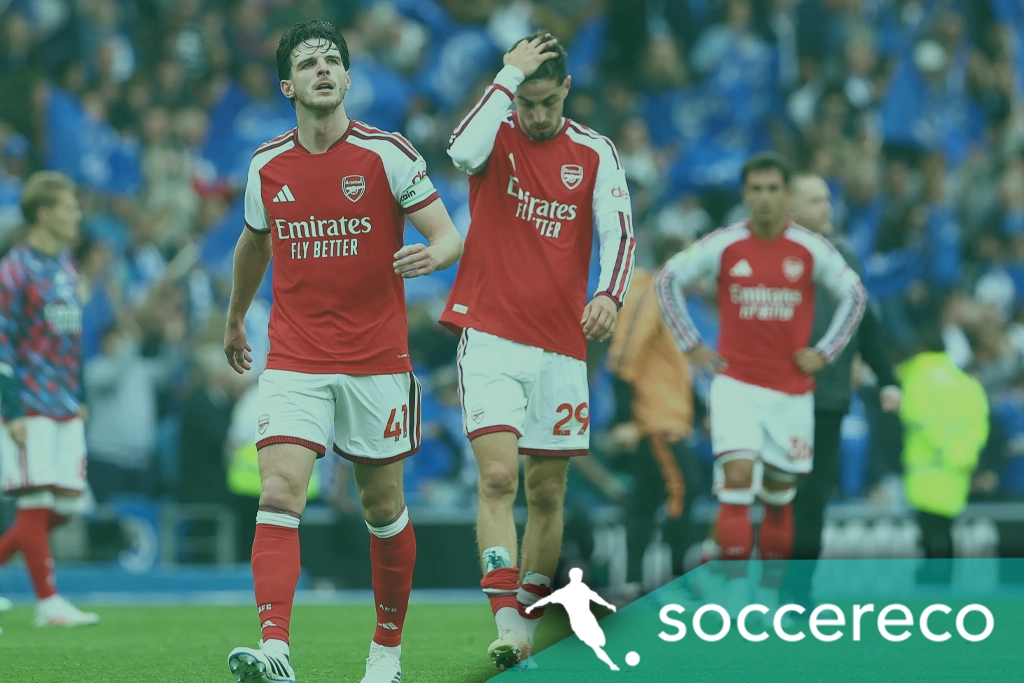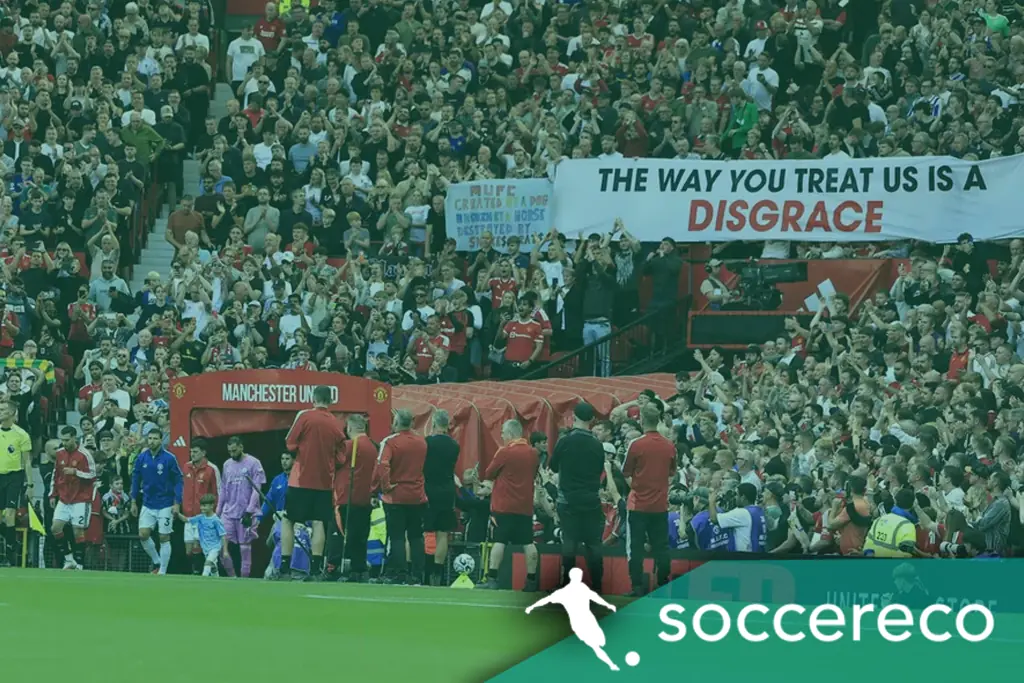
Liverpool impressed in England during the goalless draw against Premier League leaders Arsenal. After a poor run, manager Arne Slot’s side does not want to talk about the league title, but at the Emirates Stadium Liverpool at least played like champions.
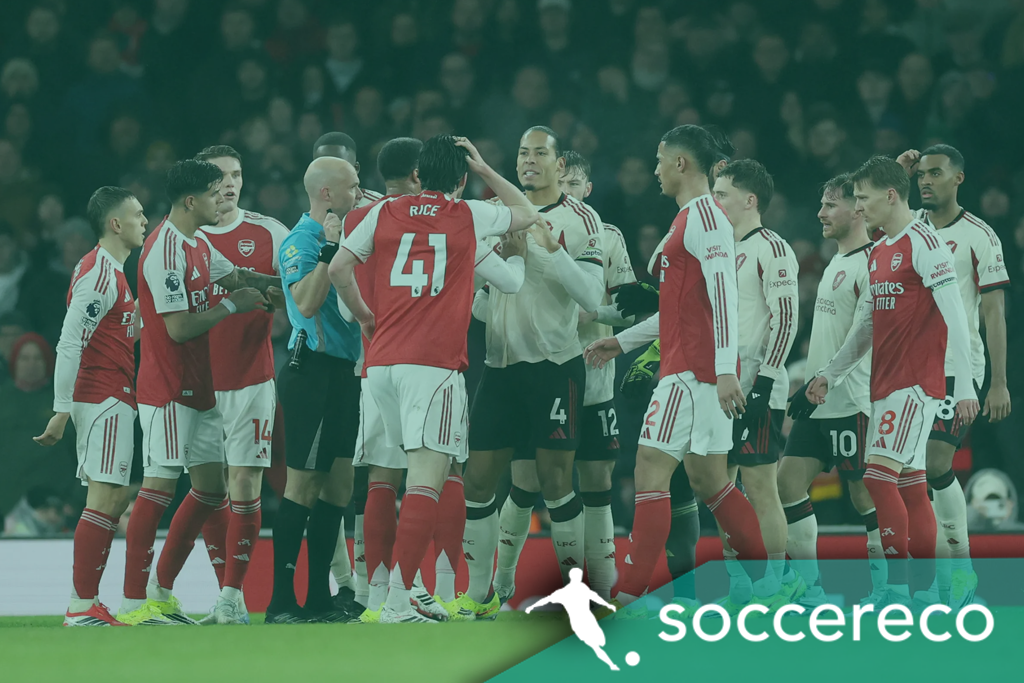
Arsenal and Liverpool played out a 0-0 draw on Thursday evening at the Emirates Stadium, a result that did not deliver goals but did deliver a clearer picture of where both teams currently stand in the title conversation and, just as importantly, in the reality of week-to-week Premier League performance.
Arsenal, the league leaders, were held at home, while Liverpool left North London with a point, an extended unbeaten run, and renewed evidence that their baseline level in big matches is still strong even when their attacking output is not.
Former Liverpool striker Daniel Sturridge, now working as a Sky Sports analyst, framed the game primarily through Liverpool’s resilience and the managerial choices behind it. In his view, this was a match that reflected coaching clarity rather than improvisation. He argued that Arne Slot would be pleased with how his players executed the plan, particularly after an intense opening spell from Arsenal. The first twenty minutes, Sturridge noted, were “tough,” but after that Liverpool’s performance showed “commitment and perseverance,” a phrasing that underlined how much of the contest was about sustaining defensive discipline, winning second balls, and staying mentally present. For Sturridge, Liverpool “once again showed why they were champions last season,” suggesting that, regardless of Liverpool’s recent inconsistency, the squad still retains the habits and standards of a winning group when the stakes rise.
That context matters because the result also carried a statistical weight beyond the scoreline. Liverpool became the first team to take points away from Arsenal at the Emirates in a league match since Manchester City did so back in September. In a season where Arsenal’s home performances have often functioned as a cornerstone of their title push, stopping that run is not trivial. It also reinforces the idea that Liverpool, even amid fluctuation, still have the capacity to disrupt the league’s best teams in their strongest environments.
Slot’s team also extended their unbeaten streak to ten straight matches, which adds another layer to the narrative. The external conversation around Liverpool has included doubts and caution in recent months, partly because the season has not been a steady climb. The contrast with November is particularly sharp. At that point, Liverpool were absorbing defeats at an uncomfortable rate, and the loss to PSV was viewed internally and externally as a low moment, not merely because of the result, but because of what it seemed to say about fragility and confidence. In that period, Liverpool lost nine of twelve matches, an alarming sequence for any elite club. After the PSV defeat in the Champions League, club icon Steven Gerrard delivered a bleak assessment: “This team keeps bleeding.” It was a line that captured the sense of repeated setbacks and the fear that problems were structural rather than temporary.
In the aftermath of the Arsenal draw, the BBC captured the mood with a more balanced, but still cautionary, verdict: “The bleeding has stopped, but that doesn’t mean there are no concerns.” That sentence essentially sums up Liverpool’s current position. They are no longer collapsing, no longer losing matches at the frequency that defined their worst spell, but the team is not yet operating with the attacking authority normally associated with serious title contenders. The most striking illustration of that came from one headline stat: Liverpool did not register a single shot on target.
On the face of it, that sounds almost impossible in a match of this magnitude, especially given that Liverpool did have moments where they looked capable of scoring. Conor Bradley’s first-half effort that struck the crossbar is the obvious example. In the stadium, that feels like a “nearly” moment, the kind that can swing a big game. However, statistically, a shot that hits the woodwork without crossing the line is not counted as on target, because it is not a shot that required a save or resulted directly in a goal. When the final numbers were compiled, Liverpool were left with a rare and uncomfortable entry: zero shots on target across ninety minutes.
Historically, that is an outlier for a club of Liverpool’s profile. It was the first time since March 2010 that Liverpool failed to record a shot on target in a Premier League match. Even more telling is the scale of consistency they had maintained in the meantime. Between a league match against Wigan Athletic in 2010 and this season’s draw against Arsenal, Liverpool played 600 Premier League games and in every single one of those they managed at least one attempt on target. Runs like that do not happen by accident. They reflect a club’s identity, attacking mentality, and minimum acceptable output. That the streak ended in such a high-profile fixture tells two stories at once: Arsenal’s defensive structure is genuinely elite, and Liverpool’s current attacking resources are not fully firing.
Even with that issue, Liverpool have received a measure of sympathy and context-based justification, because their situation is not happening in a vacuum. Mohamed Salah’s absence at the Africa Cup of Nations removes not just goals, but the entire gravitational pull he provides in Liverpool’s attacking ecosystem. Without him, opponents can defend differently, Liverpool’s transitions lose a layer of inevitability, and the attacking responsibility shifts to players who may not command the same respect or deliver the same end product. On top of that, injuries to Alexander Isak and Hugo Ekitiké further reduce options, rotation flexibility, and the ability to change a game from the bench. When you place those absences against the opponent, the challenge becomes even clearer, because Arsenal have, by most defensive metrics, been the best defensive team in the Premier League this season.
That is where the more nuanced part of the analysis begins. Liverpool’s performance was often described as dominant in certain phases, particularly in terms of how they disrupted Arsenal’s rhythm, how they pressed at selected moments, and how they managed the spaces Arsenal usually exploit at home. Yet dominance without threat is an incomplete form of control. The fact that Arsenal’s goalkeeper was not meaningfully tested is, as the BBC put it, evidence of Liverpool’s “problems in attack.” This is not simply about one stat line. It is about the ability to convert possession, territory, and good defensive work into the kind of moments that decide matches: clear chances, forced saves, rebounds, chaos in the six-yard box. Liverpool did enough to avoid defeat and enough to keep Arsenal from their usual home efficiency, but not enough to convince that the attacking mechanism is currently functioning at full capacity.
From Arsenal’s perspective, the match offered a different kind of warning. A goalless draw at home is not a disaster, especially against a top opponent, but it does highlight that even the league leaders can be stalled when an opponent matches them physically and tactically. Arsenal had the early intensity, the crowd, and the home patterns they usually rely on, but they were unable to turn those into a breakthrough. In a title race, these are the margins. Dropped points are not always loud. Sometimes they look like a match where everything is fine, except the scoreboard.
For Slot, the takeaway is likely split in two. He can point to the organisation, the mentality, and the fact his team navigated an elite away fixture without conceding, extending a ten-match unbeaten run and stopping an Arsenal home streak that had stood since September. He can also point to the fact that his team looked like a champion in the way they suffered, adjusted after a difficult opening, and stayed cohesive. But he will also know that Liverpool cannot repeatedly rely on defensive performance alone, particularly if their stated ambition is to compete consistently at the top. The next step is to translate solidity into cutting edge, especially when key forwards are missing and opponents are increasingly comfortable that Liverpool can be kept at arm’s length.
The draw, then, becomes a mirror for both sides. Arsenal remain leaders, but were reminded that control is not the same as victory. Liverpool remain unbeaten for ten, but were reminded that resilience is not the same as threat. In the short term, 0-0 is a point each. Over the longer arc of the season, it is a data point that will be revisited if either team finds themselves one win short, one goal short, or one moment short when the table tightens and the margins become unforgiving.