Manchester United’s board has dismissed manager Rúben Amorim. This was announced on Monday morning. The Portuguese coach had been in charge at Old Trafford since November 2024, when he succeeded interim coach Ruud van Nistelrooij.
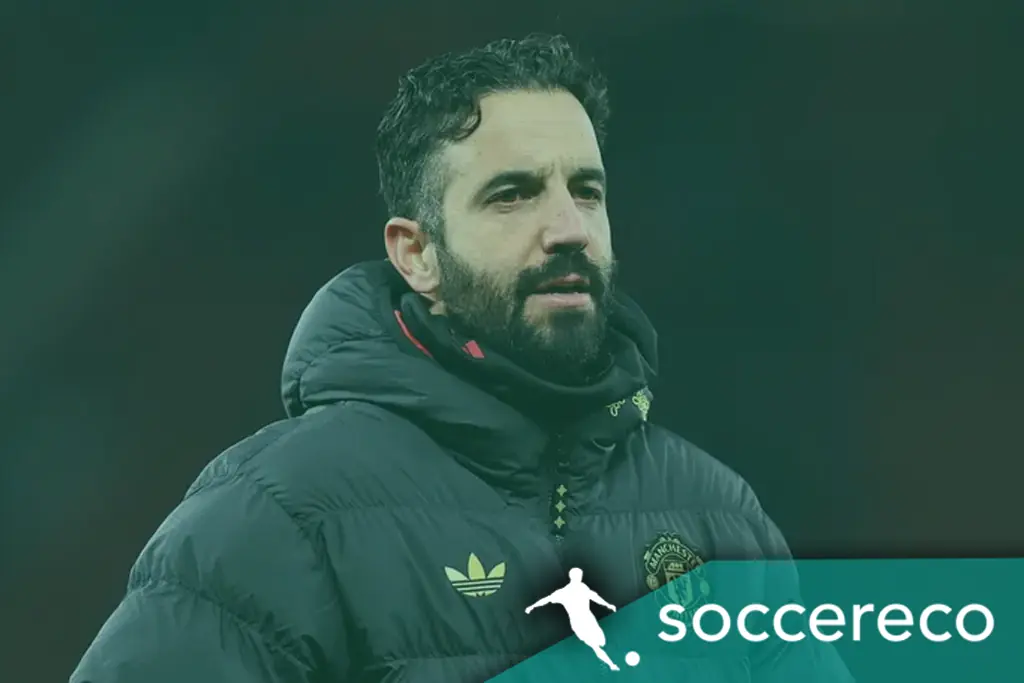
Manchester United have moved to end the tenure of manager Ruben Amorim, dismissing the Portuguese coach on Monday morning and confirming that Darren Fletcher will step in as interim head coach.
The decision follows a turbulent period at Old Trafford that began with Amorim arriving from Sporting Portugal in November 2024, taking over from interim coach Ruud van Nistelrooij, who himself had been appointed after Erik ten Hag was sacked in October 2024.
Amorim leaves with a record that never aligned with the club’s expectations or the scale of the rebuild he was asked to lead. Across 63 matches in charge, United won 25, a return that translates to a win rate under 40 percent. For a club still measured by title races, trophy runs and Champions League qualification, that level of consistency was always going to invite scrutiny. Even with the caveat that United were in a transitional phase, the results, performances and mood around the squad increasingly suggested a project drifting rather than stabilising.
While the dismissal is now official, it had been widely anticipated in the English media, where reporting in recent weeks suggested Amorim’s position was becoming untenable. The narrative was not only about points dropped but also about internal tension. Amorim was described as being on a collision course with the hierarchy, with disagreements reportedly centred on how much authority he held in shaping football operations and day-to-day decision making.
That tension came into sharper focus following the 1-1 draw with Leeds United, when Amorim spoke publicly about the nature of his role. His message, delivered forcefully, was that he had arrived to be the manager in the traditional sense, rather than a coach operating within tighter constraints. He also indicated he would not resign and would continue working until the club replaced him. In modern elite clubs, where responsibilities are often shared between executives, sporting directors and coaching staff, those remarks were interpreted as a clear signal that the relationship between manager and board had become strained, and that a compromise was unlikely.
From a purely sporting perspective, United’s league campaign under Amorim was marked by inconsistency. The team have played 20 Premier League matches this season and dropped points in 12 of them. That pattern is often the difference between a side that competes near the top and one that is forced into the chasing pack, constantly reacting to results elsewhere. Despite that inconsistency, United sit sixth in the table, which suggests the broader league picture has remained tight enough for them to stay within touching distance of their primary objectives. However, for a club that expected to show clearer progress, sixth place likely felt more like a ceiling than a platform.
The early domestic cup elimination amplified the pressure. United were knocked out of the League Cup in the second round after losing on penalties to Grimsby Town, a League Two side. Regardless of circumstance, that type of defeat becomes symbolic. It raises questions about mentality, squad depth, tactical clarity and the overall direction of the project. In major clubs, one particularly damaging cup result can change the temperature around a manager, turning ordinary criticism into something more existential.
Fletcher now inherits that environment. His first assignment is the upcoming league match against Burnley, a fixture that immediately carries weight because it is the first opportunity for the team to show a response. Fletcher’s profile is unusual compared to many interim appointments. He is a former United player, having featured for the first team between 2001 and 2015, and he moved into coaching in 2020. Before Amorim’s dismissal, he was working with the club’s top youth side, which means he arrives with familiarity of the club culture and a direct connection to emerging talent. That can be an advantage in the short term, particularly if the dressing room needs a reset in energy and clarity.
At the same time, the interim label brings its own challenges. Fletcher will need to stabilise performances without the certainty of being the long-term solution. He must decide quickly how much to change and how much to keep. Too much upheaval risks confusion; too little risks repeating the same issues that contributed to Amorim’s downfall. In these circumstances, interim coaches often prioritise simplified roles, improved defensive structure, clearer pressing triggers and a return to basic principles that restore confidence. The immediate aim tends to be visible cohesion rather than tactical experimentation.
The calendar does not allow much time for adjustment. In January, United’s first FA Cup match under Fletcher is scheduled at home against Brighton and Hove Albion, another meaningful test against a well-coached opponent. Cup competitions can serve as a pressure valve if results go well, but they can also become a second front of scrutiny if performances remain uncertain.
A major subplot is that United’s season was expected to benefit from a lighter schedule than several rivals because the club did not qualify for European football this season. That absence was the consequence of finishing fifteenth in the Premier League last season, which was not enough to secure a European spot. The club did reach the Europa League final last season but lost to Tottenham Hotspur. In theory, fewer midweek matches should have enabled more consistent preparation and recovery. In practice, it also removed a potential route to silverware and reduced the margin for error in domestic competitions. When a club lacks European fixtures, the league table becomes even more central to judging progress, which can tighten the spotlight on every dropped point.
The squad dynamics add further complexity, particularly regarding the Dutch contingent. United currently have 3 Dutch players in the first-team group: Matthijs de Ligt, Tyrell Malacia and Joshua Zirkzee. Amorim’s departure is seen as positive news for Malacia, who had spent months training with Fletcher earlier this season and worked his way back toward first-team involvement through the reserves. That prior relationship could translate into more trust and more opportunities, especially if Fletcher places emphasis on players he knows well and believes will respond immediately to his methods.
Zirkzee’s situation is also likely to be impacted. He had been in concrete discussions with AS Roma, reportedly with a view to returning to Serie A. With the coaching situation now changing at Old Trafford, the club’s stance could shift, and so could the player’s perspective. Interim periods often lead to short-term reassessments of squad roles, and a player who seemed likely to leave can suddenly find a path to minutes, responsibility and renewed confidence. For United, that decision will be shaped by multiple factors: the need for goals, the availability of alternatives, the club’s financial planning, and the broader direction set by whoever becomes the permanent manager.
Ultimately, Amorim’s dismissal reflects a familiar pattern at elite clubs: results matter, but alignment matters too. A manager can survive a difficult run if the board believes the strategy is coherent and the working relationship is strong. When both performance and internal cohesion appear compromised, change becomes more likely. Fletcher’s short-term mission is clear: steady the team, deliver immediate results, and keep the season’s key targets within reach while United decide what comes next.
Updated: 10:58, 5 Jan 2026