UEFA does not intend to reschedule PAOK Thessaloniki’s Europa League match against Olympique Lyon. The Greek club asked the European football governing body to postpone the game after 7 supporters died in a road accident while traveling to France.
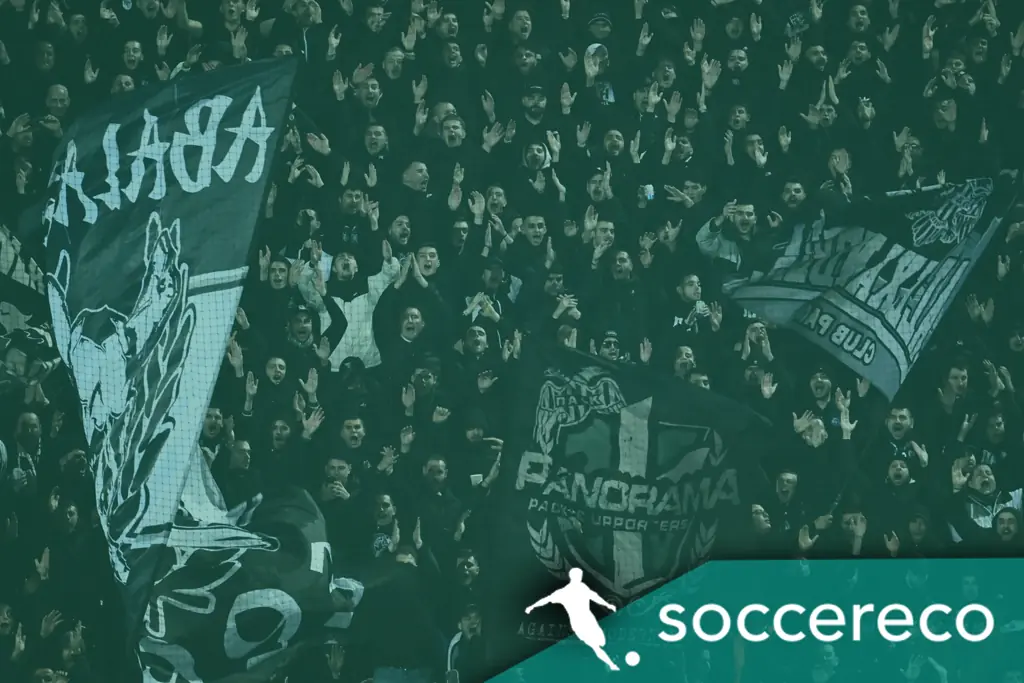
PAOK’s final match of the Europa League league phase was already set up as one of the most demanding nights of their European campaign, an away trip to face Lyon on Thursday, 29-01-2026, at 21:00.
Instead, the build-up has been consumed by grief after a devastating road accident claimed the lives of 7 PAOK supporters travelling to France. The crash, reported to have happened in Romania, also left 3 other fans seriously injured, with 1 of them said to be in critical condition. What should have been the usual mixture of anticipation and tension around a decisive European fixture has turned into shock, mourning, and anger for a club whose identity is inseparable from its supporters.
The scale of the tragedy has hit PAOK hard because the club’s travelling fan culture is more than a tradition. For many, away days in Europe are a statement of loyalty and belonging, built on long journeys, sacrifices, and the feeling of representing Thessaloniki far from home. That is why the news landed like a punch to the stomach. President Ivan Savvidis called it an “unbelievable tragedy,” and the phrasing captured the sense of disbelief that spread rapidly through the fanbase. In moments like this, football becomes secondary, yet the calendar does not stop, and PAOK found themselves confronted with an immediate and painful question: can the match be postponed out of respect and basic humanity?
PAOK attempted to do exactly that. The Greek club requested UEFA to reschedule the game, arguing that the circumstances were exceptional and that the club needed time to respond properly, not only emotionally but also operationally. A tragedy of this kind impacts every level of a club: players, staff, families, supporters, and the wider community. It also complicates travel, coordination, and safety considerations for those still on the move. However, UEFA refused to move the fixture and kept the original date. The result is that the match will be played on Thursday night as planned, even though the atmosphere around it has been transformed into something far heavier than sport.
The decision places PAOK in an impossible emotional space. The team is expected to prepare tactically, recover physically, and compete at a high level while simultaneously processing the death of supporters who were travelling to support them. Players and coaching staff may feel that every detail of the match is now tied to the memory of those who never made it. That can create a powerful sense of motivation, but it can also bring pressure that is difficult to carry. In these situations, clubs often speak about playing “for” the supporters, yet the reality is that grief does not always translate into performance. The psychological weight can disrupt routines, concentration, and the ability to manage key moments under pressure.
Lyon, for their part, have acknowledged the severity of what happened. The French club expressed its deepest condolences and confirmed that a tribute will take place before kick-off to honour the supporters who died. In practical terms, that usually means a formal moment of remembrance inside the stadium, potentially involving a minute of silence, black armbands, and messages on screens, but the central point is clear: the event cannot be treated like a normal match. Lyon’s stance also matters because the host club’s tone helps shape the environment in the stands and signals to everyone that respect comes first.
The tragedy has also resonated beyond football. Kyriakos Mitsotakis, the Prime Minister of Greece, offered condolences to the families of the victims, underlining that this is not simply a sporting story but a national moment of loss. In Greece, clubs like PAOK are cultural institutions, and their supporter bases are deeply woven into local identity. When supporters die in circumstances connected to following their team, the shock spreads far wider than the stadium gates.
From a sporting perspective, the fixture still carries significance, which is part of why the calendar has remained rigid. Lyon are leaders of the Europa League league phase, while PAOK sit 12th, meaning the match has implications for final positioning and momentum. Lyon will want to maintain their status at the top and close out the phase with authority, especially at home. PAOK, even in 12th, still have pride and objectives tied to the table, and results at this stage can influence confidence and the narrative around a campaign. But the truth is that most of the usual pre-match angles are now difficult to talk about in isolation. Team news, form, and tactics are not irrelevant, yet they no longer feel like the main story.
There is also a broader issue that tends to emerge after tragedies linked to supporter travel: how to balance competitive scheduling with human reality. Football’s modern structures are built around fixed calendars, broadcasting slots, and logistical chains that are expensive and complex to change. UEFA often weighs these factors heavily, particularly when many matches are linked in a single matchday schedule. But supporters and clubs frequently argue that exceptional circumstances require exceptional flexibility, and that postponement is sometimes the only respectful response. The refusal to move the match will be viewed by many PAOK fans as cold and procedural, even if UEFA believes it is acting consistently within its framework.
For PAOK supporters, the emotional landscape around this game will be complicated. There will be grief for the lives lost, anxiety for the injured, and a need for solidarity. There may also be questions about how the journey was organised, what exactly happened, and whether anything could have prevented it. Those answers take time, and in the immediate aftermath the focus is usually on support for families and on ensuring the injured receive the best possible care. Still, as the days pass, the demand for clarity typically grows. In tragedies involving travel, communities often search for meaning, accountability, or at least a full understanding of events.
Inside the stadium, Thursday’s match is likely to feel subdued compared to a typical Europa League night, even with the natural intensity of a European fixture. The tribute before the match will frame the occasion, and players on both sides will be keenly aware of why the atmosphere is different. For PAOK, every touch of the ball may feel connected to the supporters who set off believing they would be part of a special away day. For Lyon, there is the responsibility of competing professionally while ensuring the night remains respectful. That balance can be delicate, but it is not unfamiliar in football, a sport that has repeatedly been forced to confront tragedy alongside competition.
In the end, the match will go ahead: Lyon vs PAOK Thessaloniki, Thursday, 29-01-2026, 21:00. But the result will not be the defining memory of this occasion. The defining reality is that a group of supporters lost their lives on the road, others are fighting for recovery, and an entire club is travelling with grief rather than excitement. Whatever happens on the pitch, this fixture will be remembered primarily as a night of remembrance, a night where football tried to continue, but could not escape the shadow of a heartbreaking loss.